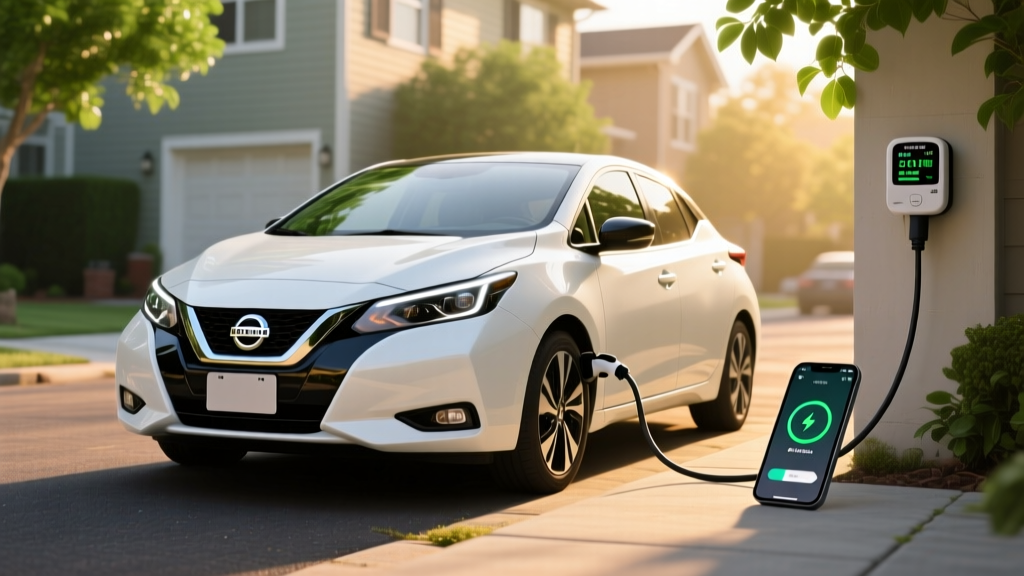
The Nissan Leaf holds a unique place in EV history as one of the first mass-market electric cars, and it remains one of the most affordable new EVs you can buy. But for shoppers focused on efficiency — specifically Nissan Leaf MPG (or more accurately, MPGe) — the numbers tell a nuanced story that depends heavily on which battery pack you choose and how you drive.
This review covers the current-generation Nissan Leaf (2025 model year, as the Leaf continues into its final production cycle before Nissan transitions to new EV platforms). We'll break down the EPA-rated efficiency, real-world range expectations, charging speeds, and total cost picture so you can decide whether this budget-friendly EV fits your daily routine.
Nissan Leaf Efficiency: MPGe and kWh/100 Miles Explained
Because electric vehicles don't burn fuel, the EPA uses MPGe (miles per gallon equivalent) to compare their energy consumption to gasoline vehicles. One gallon of gasoline contains roughly 33.7 kWh of energy, so MPGe tells you how far the Leaf travels on that same energy amount.
| Trim / Battery | Battery (kWh usable) | EPA Combined MPGe | EPA City MPGe | EPA Highway MPGe | kWh per 100 Miles |
|---|---|---|---|---|---|
| S 40 kWh | ~39 kWh | 111 MPGe | 123 MPGe | 99 MPGe | 30 kWh |
| SV Plus 60 kWh | ~59 kWh | 109 MPGe | 121 MPGe | 98 MPGe | 31 kWh |
The standard-range 40 kWh Leaf S delivers slightly better combined efficiency at 111 MPGe, while the larger 60 kWh SV Plus rates at 109 MPGe combined. The difference is marginal — roughly 1 kWh per 100 miles — because the heavier battery pack offsets its additional capacity. Source: EPA fueleconomy.gov.
For context, 111 MPGe is competitive with other entry-level EVs like the Chevrolet Bolt EV (120 MPGe combined) but trails more aerodynamic designs such as the Tesla Model 3 (132 MPGe combined RWD). The Leaf's hatchback shape creates more drag at highway speeds, which is why city MPGe significantly exceeds highway MPGe across both trims.
Real-World Range vs. EPA Estimates
EPA Estimated: 149 miles (40 kWh S) / 212 miles (60 kWh SV Plus)
Real-World Expectation: 120–135 miles highway (40 kWh) / 175–195 miles highway (60 kWh)
Cold Weather (below 32°F): Expect 20–30% range reduction — as low as ~100 miles (40 kWh) or ~150 miles (60 kWh) in freezing conditions with cabin heating.
The EPA's combined range figures assume a mix of city and highway driving at moderate temperatures. In practice, the Leaf's range varies significantly based on three factors:
- Highway driving: The Leaf's relatively upright hatchback profile creates aerodynamic drag that reduces efficiency at 70+ mph. Expect highway range to drop 10–15% below the EPA combined figure.
- Cold weather: Unlike EVs with heat pump systems, the Leaf relies on resistive cabin heating, which draws heavily from the battery. In sub-freezing temperatures, range loss of 20–30% is typical. Preconditioning while plugged in mitigates this somewhat.
- Battery age: The Leaf uses passive air cooling for its battery rather than active liquid thermal management. Over years of DC fast charging and hot-climate use, this can accelerate degradation — a factor we address in the battery section below.
For a daily commuter driving 30–40 miles round trip, even the 40 kWh Leaf provides ample buffer. But if your commute involves sustained highway speeds or you live in a cold-weather region, the 60 kWh SV Plus is the more practical choice.
Charging Speed: DC Fast Charge and Home Level 2
Charging is where the Leaf's age shows most clearly compared to newer EV platforms. The Leaf uses the CHAdeMO DC fast-charging connector — a standard that has largely been supplanted by CCS1 and NACS (Tesla's North American Charging Standard) across the industry.
| Charging Level | 40 kWh (S) | 60 kWh (SV Plus) |
|---|---|---|
| Level 1 (120V household) | ~2 kW / ~5 mi/hr | ~2 kW / ~5 mi/hr |
| Level 2 (240V home/public) | 6.6 kW / ~22 mi/hr | 6.6 kW / ~22 mi/hr |
| DC Fast Charge (CHAdeMO) | 50 kW peak | 100 kW peak |
| 10–80% DC Fast Charge Time | ~40 minutes | ~45 minutes |
| Connector | CHAdeMO + J1772 | CHAdeMO + J1772 |
The 40 kWh Leaf S is limited to 50 kW DC fast charging — a significant bottleneck that makes road trips tedious. The 60 kWh SV Plus doubles that to 100 kW, which is respectable but still trails competitors (the Hyundai Kona Electric peaks at 100 kW, while the Tesla Model 3 reaches 170+ kW on V3 Superchargers).
A critical detail: the Leaf's air-cooled battery means charging speeds can throttle during repeated fast-charge sessions or in hot weather to protect battery health. This phenomenon, sometimes called "Rapidgate" in earlier Leaf generations, is less severe in current models but still relevant if you plan frequent long-distance travel.
For home Level 2 charging, the 6.6 kW onboard charger is adequate — both battery packs reach a full charge overnight in 6–10 hours depending on pack size.
Performance, Drivetrain, and Specs
| Spec | S (40 kWh) | SV Plus (60 kWh) |
|---|---|---|
| Drivetrain | FWD | FWD |
| Horsepower | 147 hp | 214 hp |
| Torque | 236 lb-ft | 250 lb-ft |
| 0–60 mph | ~7.9 seconds | ~6.5 seconds |
| Battery Chemistry | NMC (Lithium-ion) | NMC (Lithium-ion) |
| Battery Warranty | 8 yr / 100,000 mi | 8 yr / 100,000 mi |
The SV Plus's 214 hp gives it genuinely quick acceleration for a compact hatchback, while the base S model's 147 hp is adequate for city and suburban driving. Both use a front-mounted single electric motor driving the front wheels — no all-wheel-drive option is available.
One-pedal driving via Nissan's e-Pedal mode provides strong regenerative braking that can bring the Leaf to a complete stop, reducing brake wear in stop-and-go traffic.
Pricing, Trims, and Federal Tax Credit Eligibility
| Trim | Base MSRP | Est. After §30D Credit |
|---|---|---|
| S (40 kWh) | $28,140 | Varies — see eligibility below |
| SV Plus (60 kWh) | $36,190 | Varies — see eligibility below |
The Leaf remains one of the cheapest new EVs in the US market. However, federal tax credit eligibility under IRS §30D is complex and subject to several requirements:
- MSRP cap: The Leaf qualifies (under the $55,000 sedan/hatchback cap).
- Buyer income cap: AGI must not exceed $150,000 (single) / $300,000 (joint).
- Battery sourcing: Critical mineral and battery component requirements phase in annually. The Leaf's battery is manufactured in Tennessee, which supports domestic sourcing compliance, but final eligibility depends on current-year mineral sourcing percentages.
- Point-of-sale transfer: If eligible, you can transfer the credit to the dealer for an upfront price reduction rather than waiting for a tax refund.
Because battery-sourcing rules tighten each year, always verify current eligibility with your dealer and a tax professional before relying on the full $7,500 credit. Some buyers may qualify for a partial credit or none at all depending on the model year's sourcing compliance.
Interior, Cargo Space, and Technology
The Leaf's cabin is functional but reflects its older platform. The 8-inch touchscreen infotainment system supports Apple CarPlay and Android Auto (wireless on SV Plus). Standard safety tech includes Nissan Safety Shield 360: automatic emergency braking, lane departure warning, blind-spot monitoring, and rear cross-traffic alert.
| Measurement | Value |
|---|---|
| Cargo Volume (rear seats up) | 14.9 cu ft |
| Cargo Volume (rear seats folded) | 23.6 cu ft |
| Front Legroom | 42.1 inches |
| Rear Legroom | 33.5 inches |
Cargo space is modest compared to crossover-style EVs. The 14.9 cu ft trunk is adequate for groceries and carry-on luggage but falls short for family road trips. ProPilot Assist (available on SV Plus) provides SAE Level 2 adaptive cruise control with lane centering — helpful for highway commuting but requiring continuous driver attention.
ProPilot Assist is a driver-assistance system. You must keep your hands on the wheel and eyes on the road at all times. It does not navigate autonomously or handle complex driving scenarios without human oversight.
Pros, Cons, and Who Should Buy the Leaf
- Low starting price — among cheapest new EVs available
- Proven reliability from over a decade of production
- Strong city efficiency (123/121 MPGe city)
- Comfortable ride quality for daily commuting
- Standard fast safety tech across all trims
- CHAdeMO connector — shrinking public network support
- Air-cooled battery — potential long-term degradation concerns
- Modest DC fast-charge speed (50–100 kW)
- Limited highway range, especially in cold weather
- No AWD or towing capability
Best for: Budget-conscious commuters with home Level 2 charging who drive primarily in mild climates and don't need road-trip capability. The Leaf excels as a second car or urban runabout where its low purchase price and efficient city driving shine.
Look elsewhere if: You need a primary family vehicle, live in a cold-weather region, plan frequent long-distance travel, or want access to the growing NACS/Supercharger network. Competitors like the Chevrolet Bolt EV (now discontinued but available used), Hyundai Kona Electric, or Tesla Model 3 offer better range, faster charging, or more versatile platforms.
Frequently Asked Questions
What is the real-world range of the Nissan Leaf?
The 40 kWh Leaf S delivers roughly 120–135 miles on the highway and up to 149 miles in mixed city driving. The 60 kWh SV Plus manages 175–195 miles highway and up to 212 miles combined. Cold weather reduces these figures by 20–30%.
How fast does the Nissan Leaf charge?
At home on a 240V Level 2 charger, both trims add roughly 22 miles of range per hour at 6.6 kW. DC fast charging peaks at 50 kW (S trim) or 100 kW (SV Plus), taking 40–45 minutes for a 10–80% charge. Note: the Leaf uses CHAdeMO, not CCS or NACS.
Does the Nissan Leaf qualify for the $7,500 federal tax credit?
It can, but eligibility depends on current-year battery-sourcing rules, your income (AGI under $150K single / $300K joint), and the vehicle's MSRP (which is under the cap). Verify with your dealer and reference IRS §30D guidelines before purchasing.
Is the Nissan Leaf worth buying over competitors?
If your priority is the lowest possible new-EV purchase price and you have reliable home charging, the Leaf is a strong value. However, its CHAdeMO connector, air-cooled battery, and limited fast-charging speed make it less future-proof than newer platforms using NACS/CCS with liquid thermal management.
How long will the Nissan Leaf battery last?
Nissan warranties the battery for 8 years or 100,000 miles against capacity loss below 70% (9 bars out of 12 on the dash gauge). The air-cooled design may lead to faster degradation in hot climates or with frequent DC fast charging compared to liquid-cooled competitors, but many Leafs have surpassed 100,000 miles with acceptable capacity retention.