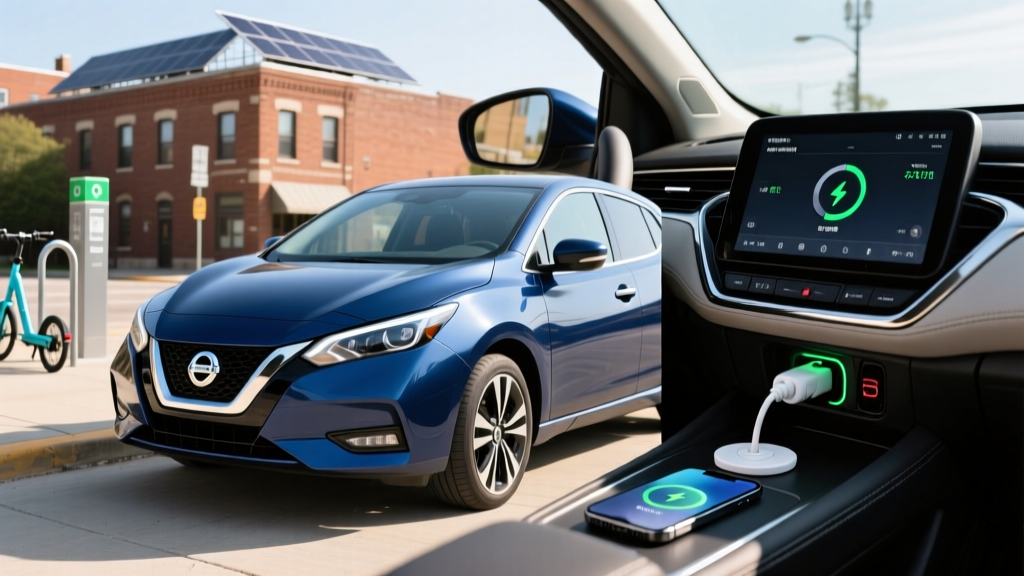
If you're searching for a Nissan Leaf for sale in Milwaukee, you're likely weighing affordability against real-world practicality in a climate that tests every EV's limits. The 2026 Nissan Leaf remains one of the most accessible battery-electric vehicles on the US market, with a starting price that undercuts most competitors and a hatchback body style that punches above its weight for cargo. But Milwaukee's sub-freezing winters and highway-heavy commutes demand a closer look at what the Leaf can — and can't — deliver once you leave the dealer lot.
This review covers the 2026 Nissan Leaf's full spec sheet, real-world range expectations in Wisconsin conditions, charging infrastructure compatibility, federal tax credit eligibility, and whether it still makes sense against newer rivals with NACS ports and longer range.
2026 Nissan Leaf: Quick Specs at a Glance
| Specification | Leaf S (40 kWh) | Leaf SV PLUS (60 kWh) |
|---|---|---|
| EPA Range | 149 miles | 212 miles |
| Battery (usable) | ~39 kWh (NMC) | ~58 kWh (NMC) |
| Motor Output | 147 hp / 236 lb-ft | 214 hp / 250 lb-ft |
| 0–60 mph | ~7.9 sec | ~6.5 sec |
| Drivetrain | FWD (single motor) | FWD (single motor) |
| Max DC Fast Charge | 50 kW (CHAdeMO) | 100 kW (CHAdeMO) |
| 10–80% DCFC Time | ~40 min | ~45 min |
| Level 2 Rate | 6.6 kW (~22 mi/hr) | 6.6 kW (~25 mi/hr) |
| MPGe (combined) | 111 MPGe | 109 MPGe |
| kWh/100 mi | 30 | 31 |
| Cargo (rear seats up) | 23.6 cu ft | 23.6 cu ft |
| Cargo (rear seats folded) | 52.1 cu ft | 52.1 cu ft |
| Base MSRP | ~$28,140 | ~$36,190 |
| Battery Warranty | 8 yr / 100,000 mi | 8 yr / 100,000 mi |
Real-World Range: What Milwaukee Drivers Actually Get
SV PLUS EPA estimate: 212 miles
Expected real-world (mixed driving, moderate temps): ~180–195 miles
Highway-only at 70+ mph: ~160–175 miles
Milwaukee winter (20°F, city + highway mix): ~130–155 miles
The EPA rates the 2026 Leaf SV PLUS at 212 miles of combined range. That figure is achievable in mild weather with a mix of city regenerative braking and moderate-speed suburban driving. However, the Leaf's air-cooled battery thermal management system — a carryover design that distinguishes it from liquid-cooled competitors — means sustained highway driving and extreme temperatures hit range harder than in vehicles like the Hyundai Ioniq 5 or Chevrolet Equinox EV.
In Milwaukee, where January averages hover around 22°F and wind chill regularly drops below zero, expect a 25–35% range reduction during deep winter. The Leaf lacks a heat pump on the S trim (a resistive heater draws significant energy), though the SV PLUS includes a more efficient climate system. If your daily round-trip commute exceeds 80 miles and you can't charge at work, the base 40 kWh Leaf's 149-mile EPA rating becomes genuinely tight in January and February.
For the typical Milwaukee-area commuter driving 30–40 miles round trip with home charging, even the winter-reduced range is manageable. But plan for real efficiency around 31 kWh/100 mi — that's competitive but not class-leading.
Charging Speed: The CHAdeMO Question
| Charging Level | Power / Connector | Miles Added per Hour | Notes |
|---|---|---|---|
| Level 1 (120V) | ~1.4 kW / J1772 | ~3–5 mi/hr | Emergency/trickle only |
| Level 2 (240V) | 6.6 kW / J1772 | ~22–25 mi/hr | Full charge in ~9–10 hr (SV PLUS) |
| DC Fast (CHAdeMO) | 100 kW peak (SV PLUS) | ~120 mi in 30 min (ideal) | Tapers heavily above 80% |
| DC Fast (CHAdeMO) | 50 kW peak (S trim) | ~60 mi in 30 min | Not recommended for road trips |
The Leaf's charging story is its most debated feature in 2026. Nissan continues to use the CHAdeMO DC fast-charging connector while the broader industry — led by Tesla's NACS standard and adopted by Ford, GM, Hyundai, Rivian, and others — has moved to NACS or CCS1. Milwaukee's public DC fast-charging network includes Electrify America, ChargePoint, and Kwik Trip stations, most of which prioritize CCS and NACS connectors. CHAdeMO stalls still exist but are increasingly rare on new installations.
On a compatible CHAdeMO station, the SV PLUS peaks at 100 kW and charges from 10–80% in approximately 45 minutes. However, the Leaf's passive (air-cooled) thermal management means charging speed degrades noticeably in hot weather or on repeated same-day fast charges — a phenomenon known as "Rapidgate" that Nissan has mitigated but not fully eliminated. The charge curve also tapers sharply above 80%, so plan your stops around 80% for efficiency.
At home on a Level 2 J1772 charger (which any licensed electrician can install on a 240V/30A circuit), the 6.6 kW onboard charger replenishes the SV PLUS battery in roughly 9–10 hours. This is adequate for overnight charging and is the primary way most Leaf owners keep their vehicles fueled.
Performance, Ride, and Daily Drivability
The SV PLUS's 214-horsepower front motor delivers a 0–60 mph time of approximately 6.5 seconds — genuinely quick for a compact hatchback and plenty of passing power for I-94 and I-43 merging. The base S trim's 147 hp is adequate for city driving but feels leisurely on highway on-ramps. Both trims are front-wheel drive only; there is no AWD option, which is worth noting for Milwaukee's snowy winters. Quality winter tires (not all-seasons) are strongly recommended.
Ride quality is comfortable and compliant, though the Leaf's platform dates back to 2018 in its current generation. Steering is light and predictable. Regenerative braking is adjustable via the e-Pedal mode, which provides strong one-pedal driving in city traffic — a genuine advantage in stop-and-go congestion on Miller Park Way or downtown.
Interior space is a Leaf strong point: 23.6 cu ft of cargo behind the rear seats and 52.1 cu ft with the 60/40 split folded. Rear legroom measures 33.5 inches, which is tight for tall adults on longer trips but fine for children or shorter commutes. The infotainment system uses an 8-inch touchscreen with wireless Apple CarPlay and wired Android Auto on SV PLUS (the S trim has a smaller display). Nissan's ProPILOT Assist — a Level 2 adaptive cruise and lane-centering system — is available on SV PLUS and competently handles highway driving but requires continuous driver supervision.
Pricing, Trims, and Federal Tax Credit Eligibility
| Trim | Base MSRP | Est. As-Tested (w/ options) | §30D Federal Credit Eligibility |
|---|---|---|---|
| Leaf S (40 kWh) | ~$28,140 | $29,000–$30,500 | Up to $3,750 (battery sourcing dependent) |
| Leaf SV PLUS (60 kWh) | ~$36,190 | $37,500–$40,000 | Up to $3,750 (battery sourcing dependent) |
- Credit amount: Up to $7,500 total, split into $3,750 for battery components + $3,750 for critical minerals. The Leaf's Japan-sourced battery typically qualifies for only one half — yielding ~$3,750.
- MSRP cap: Vehicle must be under $55,000 (sedans/hatchbacks). Both Leaf trims qualify.
- Buyer income cap: AGI must not exceed $150,000 (single) / $300,000 (joint). Check IRS guidelines for current-year thresholds.
- Point-of-sale transfer: Eligible buyers can transfer the credit to the dealer for an immediate price reduction at purchase.
- Battery sourcing: Critical mineral and component requirements tighten annually. Consult the IRS clean vehicle credit page or a tax professional before relying on the full amount.
For Milwaukee buyers, the Leaf SV PLUS at roughly $36,190 before incentives positions it as one of the most affordable 200+ mile EVs available. After a potential $3,750 federal credit and any applicable Wisconsin state incentives, effective pricing drops toward the low $32,000s — undercutting the Chevrolet Equinox EV, Hyundai Kona Electric, and most other competitors by several thousand dollars.
However, note that the base Leaf S at $28,140 with only 149 miles of range and 50 kW charging is difficult to recommend unless your driving is strictly local and your budget is extremely tight. The SV PLUS is the clear value play.
Leaf vs. the Competition: How It Stacks Up in 2026
| Attribute | Nissan Leaf SV PLUS | Hyundai Kona Electric | Chevy Equinox EV 2LT |
|---|---|---|---|
| EPA Range | 212 mi | 261 mi | 319 mi |
| Battery | ~58 kWh NMC | ~65 kWh NMC | ~85 kWh NMC |
| DC Fast Charge | 100 kW (CHAdeMO) | 100+ kW (CCS) | 150 kW (CCS/NACS) |
| 10–80% DCFC | ~45 min | ~43 min | ~30 min |
| Base MSRP | ~$36,190 | ~$34,000 | ~$36,000 |
| Thermal Mgmt | Air-cooled | Liquid-cooled | Liquid-cooled |
| Connector Future | CHAdeMO (legacy) | CCS (adapters avail.) | NACS/CCS |
The Leaf's price advantage has narrowed considerably. The Kona Electric offers more range and a mainstream connector at a similar or lower price. The Equinox EV dramatically outpaces the Leaf on range and charging speed. The Leaf's remaining edge is its cargo versatility as a hatchback and Nissan's established dealer network in the Milwaukee metro area — useful for service and warranty claims.
If you can find a Leaf SV PLUS at a discount (dealer incentives and negotiation can push transaction prices below MSRP), it remains competitive on pure value. But buyers planning to keep their EV past 2030 should weigh the CHAdeMO connector's declining infrastructure support.
Pros and Cons: The Honest Summary
- Affordable entry price, especially after tax credit
- Spacious hatchback cargo area (52.1 cu ft)
- Comfortable ride, easy to park in urban Milwaukee
- e-Pedal one-pedal driving excellent in city traffic
- ProPILOT Assist competent for Level 2 highway assist
- Strong dealer presence for service in Wisconsin
- CHAdeMO connector — declining DCFC infrastructure
- Air-cooled battery limits repeated fast charging and cold performance
- No AWD option — winter traction relies on tires alone
- Base S trim's 149-mi range and 50 kW charging are inadequate for most
- Aging platform (2018-gen) shows in tech and efficiency
- No heat pump on base trim; winter range loss significant
- Real-world highway range well below EPA sticker
Who Should Buy the Nissan Leaf in Milwaukee?
- Choose the Leaf SV PLUS if: You want the most affordable 200+ mile EV, primarily drive in the Milwaukee metro area, have reliable Level 2 home charging, and plan to use DC fast charging sparingly. The hatchback cargo space is a genuine practicality bonus.
- Look elsewhere if: You regularly drive to Madison, Chicago, or the Northwoods and need reliable DCFC access. The CHAdeMO infrastructure gap is real. Also look elsewhere if you need AWD for unplowed suburban streets or if your commute regularly exceeds 100 miles round-trip in winter.
- Avoid the base Leaf S unless: Your daily driving is strictly under 40 miles, you have home charging, and budget is the absolute top priority. The 50 kW charge rate and 149-mile range make it a city-only car.
Frequently Asked Questions
What is the real-world range of the 2026 Nissan Leaf in Milwaukee winters?
Expect 130–155 miles from the SV PLUS (60 kWh) during January and February, depending on temperature, speed, and cabin heat usage. The air-cooled battery and lack of a heat pump on the S trim amplify cold-weather losses compared to liquid-cooled competitors. Preconditioning while plugged in helps preserve range.
How fast does the Leaf charge at home and on DC fast chargers?
On a Level 2 home charger (240V, 6.6 kW), the SV PLUS fully charges in about 9–10 hours — ideal for overnight. On a CHAdeMO DC fast charger, it peaks at 100 kW and reaches 10–80% in roughly 45 minutes. The base S trim is limited to 50 kW DC, making road trips impractical.
Does the 2026 Nissan Leaf qualify for the $7,500 federal EV tax credit?
Partially. Under current IRS §30D rules, the Leaf typically qualifies for approximately $3,750 (one half of the full credit) because its battery components and critical minerals do not fully meet US-sourcing thresholds. Both trims fall under the $55,000 MSRP cap, and buyer income limits apply ($150K single / $300K joint). The credit can be transferred to the dealer at point of sale for an immediate price reduction. Always verify current-year eligibility with a tax professional.
Is the Nissan Leaf worth buying over the Hyundai Kona Electric or Chevy Equinox EV?
On pure value, the Leaf SV PLUS can be the cheapest way into a 200+ mile EV — especially with dealer discounts and tax credits. But the Kona Electric offers more range (261 mi) and a CCS connector, while the Equinox EV delivers 319 miles and 150 kW charging. If you plan to keep the car past 2030, the Leaf's CHAdeMO connector and aging platform are meaningful liabilities. If you're buying for 3–5 years of metro commuting and can charge at home, the Leaf's price advantage is compelling.
Can I use Tesla Superchargers with the Nissan Leaf?
Not natively. The Leaf uses CHAdeMO for DC fast charging and J1772 for Level 2. Tesla's NACS connector is not compatible, and as of 2026, no official CHAdeMO-to-NACS adapter exists from Tesla or major third parties. CHAdeMO-to-CCS adapters exist but are expensive (~$300–$400) and not universally supported at all stations.
How long will the Leaf's battery last?
Nissan warranties the battery for 8 years or 100,000 miles against defects and excessive capacity loss (below 9 bars on the 12-bar capacity gauge, roughly 75% state of health). Real-world data from earlier Leaf generations shows 15–25% degradation over 8–10 years depending on climate and charging habits. Milwaukee's cold winters are actually gentler on battery longevity than hot climates, but frequent DC fast charging accelerates wear on the air-cooled system. Battery replacement, if needed out of warranty, is estimated at $6,500–$9,000.