The Verdict: Who the Nissan Leaf Still Serves Best
The Nissan Leaf remains one of the most accessible battery-electric vehicles on the US market, and its core appeal hasn't changed: affordable entry into EV ownership with predictable daily-driving economics. For 2026, Nissan continues the Leaf in two battery configurations — the standard 40 kWh pack and the extended-range 60 kWh pack (badged as Leaf SV Plus and SL Plus). If you're researching Nissan Leaf mileage, the headline number is an EPA-estimated 212 miles for the SV Plus, but real-world results depend heavily on your commute profile, climate, and charging habits.
This review breaks down the Leaf's range, charging behavior, ownership costs, and where it stands against increasingly competitive rivals like the Chevrolet Bolt EV/EUV, Hyundai Kona Electric, and Tesla Model 3. The Leaf is not a road-trip champion, but for the right buyer — a suburban commuter with home Level 2 charging — it remains a compelling, value-driven option.
2026 Nissan Leaf Specs at a Glance
| Specification | Leaf S / SV (40 kWh) | Leaf SV Plus / SL Plus (60 kWh) |
|---|---|---|
| EPA Range | 149 miles | 212 miles |
| Battery (usable) | ~39 kWh | ~59 kWh |
| Chemistry | NMC (Nickel Manganese Cobalt) | NMC |
| Motor Output | 110 kW / 147 hp | 160 kW / 214 hp |
| 0–60 mph | ~7.9 sec | ~6.5 sec |
| Drivetrain | FWD (single motor) | FWD (single motor) |
| Combined MPGe | 111 MPGe | 109 MPGe |
| Efficiency | 30 kWh/100 mi | 31 kWh/100 mi |
| Max DC Fast Charge | ~50 kW (CHAdeMO) | ~100 kW (CHAdeMO) |
| 10–80% DC Time | ~45 min | ~40 min |
| Level 2 Home Charge Rate | 6.6 kW (~22 mi/hr) | 6.6 kW (~22 mi/hr) |
| Base MSRP | ~$29,235 | ~$37,235 |
| Battery Warranty | 8 yr / 100,000 mi | 8 yr / 100,000 mi |
Nissan Leaf Mileage: EPA Range vs. Real-World Driving
EPA Estimate (SV Plus): 212 miles
Real-World Expectation: 170–195 miles highway (70+ mph); 190–210 miles mixed city/suburban; 140–165 miles in cold weather (below 32°F) with cabin heating.
40 kWh Model: Expect ~120–130 miles highway, ~100–115 miles in freezing conditions.
The EPA range figure is measured under controlled lab conditions that blend city and highway driving at moderate temperatures. In practice, the Nissan Leaf's mileage varies significantly based on three factors:
1. Highway speed. The Leaf's aerodynamic profile is functional but not optimized for high-speed efficiency the way a Tesla Model 3 or Lucid Air is. At 75 mph on the interstate, expect to use roughly 35–37 kWh/100 mi, which drops the 60 kWh model's effective range to around 160–175 miles. City driving with frequent regenerative-braking opportunities pushes efficiency closer to the EPA's 31 kWh/100 mi rating or even below it.
2. Cold weather. The Leaf uses a resistive PTC heater rather than a heat pump, which is a meaningful efficiency penalty in winter. Below freezing, cabin heating alone can draw 3–5 kW continuously. Combined with the natural reduction in lithium-ion battery performance at low temperatures, expect a 25–35% range reduction in sustained cold-weather driving. Owners in northern climates consistently report 140–165 real-world miles from the SV Plus in January and February.
3. Battery preconditioning (or the lack thereof). The Leaf does not offer active battery thermal preconditioning for DC fast charging. This means that in cold or very hot conditions, your initial fast-charge session may start at significantly reduced power until the pack warms or cools through use. This doesn't affect range directly, but it affects how quickly you can recover miles on a road trip.
For context, fueleconomy.gov lists the 2025/2026 Leaf SV Plus at 109 MPGe combined (31 kWh/100 mi), which is competitive but trails the most efficient compact EVs like the Hyundai Kona Electric (120+ MPGe) and Tesla Model 3 RWD (~132 MPGe).
Charging Speed: The Leaf's Biggest Limitation
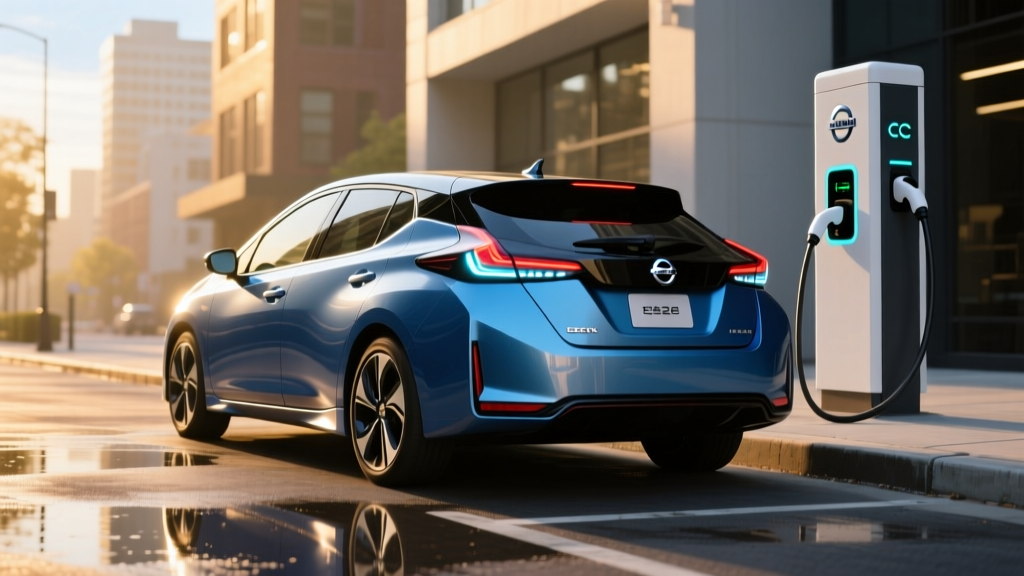
Charging infrastructure compatibility is where the 2026 Nissan Leaf faces its most significant competitive disadvantage. The Leaf uses the CHAdeMO DC fast-charging connector, which has been largely abandoned by the broader industry in favor of CCS1 and, increasingly, the Tesla NACS standard. As of 2026, Electrify America, EVgo, and most major networks have shifted investment to CCS/NACS stalls, and CHAdeMO availability at new public stations is limited.
| Charging Level | Power / Rate | Miles Added per Hour | Notes |
|---|---|---|---|
| Level 1 (120V household) | ~1.4 kW | ~4–5 mi/hr | Emergency/trickle only; ~40+ hr for full charge (60 kWh) |
| Level 2 (240V home/public) | 6.6 kW (onboard charger) | ~22 mi/hr | Full charge in ~9 hr (60 kWh); ideal overnight |
| DC Fast (CHAdeMO, 40 kWh) | Peak ~50 kW | ~120–150 mi/hr (peak) | 10–80% in ~45 min; tapers sharply above 80% |
| DC Fast (CHAdeMO, 60 kWh Plus) | Peak ~100 kW | ~180–200 mi/hr (peak) | 10–80% in ~40 min; peak sustained only briefly |
A few critical nuances for prospective Leaf owners:
- Peak kW is not sustained kW. The 60 kWh Leaf may briefly hit 100 kW on a compatible CHAdeMO charger, but the charge curve tapers quickly. From 10–60% SoC, you'll see strong power; from 60–80%, it drops substantially. Plan for ~40 minutes for a 10–80% session, not the ~25 minutes that peak-kW marketing might imply.
- No NACS adapter solution exists for CHAdeMO. Unlike CCS vehicles, which can access Tesla Superchargers via a Magic Dock or OEM NACS adapter, CHAdeMO Leaf owners cannot use the Supercharger network. This is a meaningful road-trip limitation as Tesla's network is the most reliable and extensive in the US.
- Home charging is straightforward. A 240V Level 2 home charger (like a ChargePoint Home Flex or Emporia Vue) on a 40A or 48A circuit will fully replenish the Leaf overnight. Installation typically runs $500–$2,000 depending on panel proximity and local permitting, but the Leaf's 6.6 kW onboard charger means you don't need a 48A dedicated circuit — a 30A circuit (delivering 24A continuous, or ~5.8 kW) will still fully charge overnight.
Performance and Driving Dynamics
The Leaf SV Plus delivers 214 horsepower and 250 lb-ft of torque from a single front-mounted motor. The 0–60 mph time of approximately 6.5 seconds is adequate for highway merging and passing, though it trails the Tesla Model 3 RWD (~5.8 sec) and Hyundai Ioniq 6 (~5.1 sec AWD). The 40 kWh model's 147 hp feels noticeably softer, particularly at highway speeds above 65 mph.
Ride quality is comfortable and compliant — Nissan tuned the Leaf's suspension for daily comfort rather than sportiness. Cabin noise is well-managed at city speeds but wind noise becomes apparent above 70 mph. The Leaf's e-Pedal mode enables one-pedal driving with aggressive regenerative braking, though it does not bring the vehicle to a complete hold on inclines the way some competitors do.
Notably, the Leaf remains front-wheel drive only. There is no AWD option, which limits its appeal in snow-belt states compared to dual-motor competitors.
Interior, Cargo, and Technology
The Leaf's cabin is practical and functional if not class-leading in materials or design. Key dimensions:
- Cargo volume: 23.6 cu ft behind rear seats; 38.5 cu ft with rear seats folded
- Rear legroom: 33.5 inches (tight for tall adults on long trips)
- Front headroom: 41.2 inches
- Infotainment: 8-inch touchscreen (SV/S) or 12.3-inch touchscreen (SL Plus) with wireless Apple CarPlay and wired Android Auto
- Driver assists: Nissan ProPILOT Assist (adaptive cruise + lane centering, SAE Level 2), automatic emergency braking, blind-spot warning, rear cross-traffic alert
ProPILOT Assist is a driver-assistance system, not a self-driving feature. You must keep your hands on the wheel and remain fully engaged at all times. It handles lane centering and adaptive cruise on highways competently but does not navigate interchanges, stoplights, or urban streets autonomously.
The Leaf's standout tech feature is its affordability-to-feature ratio: the SL Plus trim includes a 360-degree camera, Bose audio, and leather seats at a price point well below comparable luxury EV trims. The drawback is that Nissan's infotainment system feels a generation behind the native-EV platforms from Tesla, Hyundai, and Rivian in responsiveness and over-the-air update capability.
Pricing, Tax Credits, and Ownership Costs
| Trim | Base MSRP | §30D Federal Credit (potential max) | Effective Price (if eligible) |
|---|---|---|---|
| Leaf S (40 kWh) | ~$29,235 | Up to $3,750* | ~$25,485 |
| Leaf SV (40 kWh) | ~$31,235 | Up to $3,750* | ~$27,485 |
| Leaf SV Plus (60 kWh) | ~$37,235 | Up to $3,750* | ~$33,485 |
| Leaf SL Plus (60 kWh) | ~$40,735 | Up to $3,750* | ~$36,985 |
*Federal tax credit amounts shown are illustrative maximums based on partial critical-mineral and battery-component sourcing compliance. Actual credit varies. Always verify current eligibility on irs.gov and consult a tax professional.
The Nissan Leaf's federal tax credit situation requires careful attention. Under IRS §30D rules, eligibility depends on several factors:
- MSRP cap: The Leaf qualifies as a "passenger car" with a $55,000 MSRP ceiling — all trims clear this easily.
- Buyer income cap: Modified AGI must not exceed $150,000 (single), $225,000 (head of household), or $300,000 (joint).
- Battery sourcing: The credit is split into two halves ($3,750 for critical minerals, $3,750 for battery components). The Leaf's battery supply chain has historically relied on Japanese and Chinese sourcing, which may limit the component half due to Foreign Entity of Concern (FEOC) restrictions effective 2024+. Check the DOE/Fuel Economy tax credit list for current qualification status.
- Point-of-sale transfer: As of 2024, eligible buyers can transfer the credit to the dealer at purchase, reducing the out-of-pocket price immediately rather than waiting for a tax refund.
Destination charges (~$1,095), state registration, and home charger installation should be budgeted on top of MSRP. Total out-the-door cost for an SV Plus with a home Level 2 setup typically lands between $34,000–$38,000 before credits, depending on your state and dealer.
Pros, Cons, and Key Competitors
Pros
- Low entry price — one of the cheapest new EVs in the US
- Comfortable ride and quiet city driving
- Proven platform with extensive service history
- Strong regenerative braking (e-Pedal)
- 8-year/100,000-mile battery warranty
- Hatchback cargo versatility (23.6 cu ft)
Cons
- CHAdeMO connector — dwindling public DC fast-charging access
- No Tesla Supercharger compatibility (no NACS adapter path)
- No active battery thermal management (passive air cooling)
- No heat pump — significant cold-weather range loss
- FWD only — no AWD option
- Modest DC fast-charge speed vs. 200+ kW competitors
- Rear seat legroom is tight for adults
The Leaf's most direct competitors in 2026 include:
- Chevrolet Bolt EV/EUV: Similar price, slightly more range (259 mi EPA), CCS connector, and GM's Ultium-platform successor is expected with NACS. The Bolt has better DC charging infrastructure access.
- Hyundai Kona Electric: 261-mile EPA range, CCS charging (up to ~100 kW), heat pump standard, and more modern infotainment. Priced slightly higher but offers better road-trip viability.
- Tesla Model 3 RWD: ~$38,990 base, 272-mile range, 170 kW Supercharger access, and vastly superior charging network. More expensive but meaningfully more capable for multi-state travel.
- Volkswagen ID.4: Larger crossover, 275-mile range, CCS with ~170 kW peak DC charging. Better family vehicle but $10,000+ more expensive.
Is the 2026 Nissan Leaf Worth Buying?
Choose the Leaf if: You have reliable home Level 2 charging, your daily round-trip commute is under 80 miles, you rarely take road trips over 150 miles, you live in a mild climate, and you want the lowest-cost entry into a new EV with a full manufacturer warranty.
Look elsewhere if: You need reliable public DC fast charging for apartment/condo living, you frequently drive in sub-freezing temperatures, you take regular road trips beyond 200 miles, or you want access to the Tesla Supercharger network. The CHAdeMO connector is the Leaf's most consequential limitation in 2026.
The Leaf is an honest, transparent value proposition. Nissan isn't trying to make it something it's not — it's a commuter appliance with low running costs, decent cargo space, and proven reliability. The NHTSA has historically given the Leaf strong safety ratings, and long-term ownership forums report battery degradation that's manageable (typically 10–15% capacity loss over 5–7 years for the 60 kWh pack, though passive cooling accelerates degradation in hot climates like Arizona and Texas).
If your use case aligns — daily commuting, home charging, mild weather, budget-first mindset — the Leaf delivers exactly what it promises. If you need versatility beyond that, the charging-connector issue alone should push you toward a CCS or NACS-equipped alternative.
Frequently Asked Questions
What is the real-world range of the Nissan Leaf?
The 60 kWh Leaf SV Plus is EPA-rated at 212 miles. In real-world mixed driving, expect 185–200 miles in temperate conditions. Highway driving at 70+ mph drops this to 170–195 miles. In sustained cold weather (below 32°F), plan for 140–165 miles due to the resistive heater and reduced battery performance. The 40 kWh model delivers roughly 120–140 real-world miles depending on conditions.
How fast does the Nissan Leaf charge at home and on DC?
At home on a 240V Level 2 charger, the Leaf charges at 6.6 kW, adding roughly 22 miles of range per hour. A full charge takes about 6 hours (40 kWh) or 9 hours (60 kWh). On DC fast charging via CHAdeMO, the 60 kWh model peaks around 100 kW with a 10–80% session taking approximately 40 minutes. The 40 kWh model peaks at ~50 kW, taking ~45 minutes for 10–80%.
Does the Nissan Leaf qualify for the federal EV tax credit?
The Leaf may qualify for a partial or full §30D federal tax credit (up to $7,500), depending on battery-component and critical-mineral sourcing compliance, your income level, and the vehicle's MSRP (all Leaf trims are under the $55,000 car cap). Battery sourcing rules have tightened significantly under FEOC restrictions, and the Leaf's Japanese/Chinese supply chain may limit eligibility. Verify current status on irs.gov before purchasing and consult a tax professional.
Is the Nissan Leaf worth buying vs. competitors in 2026?
The Leaf is worth buying if your priority is the lowest possible new-EV price and you have home charging. For anyone relying on public DC fast charging or taking regular road trips, the CHAdeMO connector is a serious disadvantage compared to CCS and NACS-equipped vehicles like the Chevrolet Bolt, Hyundai Kona Electric, or Tesla Model 3. The Leaf's lack of a heat pump and passive battery cooling also make it less suitable for extreme climates.
How long will the Nissan Leaf battery last?
Nissan warranties the Leaf battery for 8 years or 100,000 miles against capacity loss below 9 bars (approximately 70% state of health). Real-world data from Leaf owner communities shows the 60 kWh pack typically retains 85–90% capacity after 5 years in moderate climates. In hot climates (Arizona, Texas, Southern California), degradation can be faster due to the passive air-cooling system. Replacement costs, if needed out of warranty, range from $6,500–$9,000 for the 40 kWh pack and $9,000–$14,000 for the 60 kWh pack, though these figures vary by source and availability.
Can I use Tesla Superchargers with a Nissan Leaf?
No. The Nissan Leaf uses the CHAdeMO DC fast-charging connector, and there is no commercially available CHAdeMO-to-NACS adapter. Tesla Superchargers (which use NACS) are not accessible to Leaf owners. Your public DC fast-charging options are limited to stations with CHAdeMO connectors, which are becoming increasingly rare as networks prioritize CCS and NACS deployment.