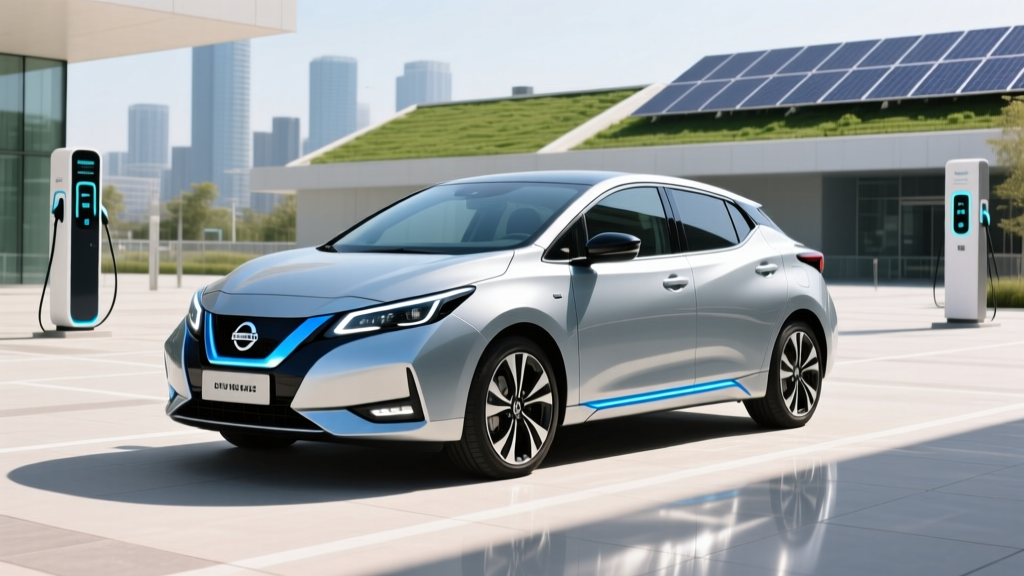
The Nissan LEAF holds a unique place in electric-vehicle history as one of the first mass-market EVs sold globally, and it remains one of the most affordable new electric cars available in the United States. For buyers researching origins and supply-chain transparency, the question of where the Nissan LEAF is manufactured has a straightforward answer with important nuance for US buyers.
Since the second-generation LEAF debuted for the 2018 model year, Nissan has assembled the US-market LEAF at its Smyrna, Tennessee vehicle assembly plant, with lithium-ion battery packs produced at the adjacent Decherd, Tennessee powertrain plant. This domestic production footprint matters for buyers evaluating build quality, parts availability, and — critically — federal tax credit eligibility under IRS §30D battery-sourcing rules.
Below is our full 2026-model-year review covering real-world range, charging speeds, pricing after incentives, and how the LEAF stacks up against newer competitors.
2026 Nissan LEAF Specifications at a Glance
| Specification | LEAF S (40 kWh) | LEAF SV PLUS (60 kWh) |
|---|---|---|
| EPA Range | 149 miles | 212 miles |
| Battery Capacity (usable) | ~39 kWh, NMC | ~60 kWh, NMC |
| Max DC Fast Charge | 50 kW (CHAdeMO) | 100 kW (CHAdeMO) |
| 10–80% DC Charge Time | ~40 minutes | ~45 minutes |
| Level 2 Home Charging | 6.6 kW (~25 mi/hr) | 6.6 kW (~25 mi/hr) |
| Motor Output | 147 hp / 236 lb-ft | 214 hp / 250 lb-ft |
| 0–60 mph | ~7.9 seconds | ~6.5 seconds |
| Drivetrain | FWD (single motor) | FWD (single motor) |
| EPA Efficiency (combined) | 111 MPGe | 109 MPGe |
| Cargo Volume | 23.6 cu ft (rear seats up) | 23.6 cu ft (rear seats up) |
| Base MSRP | ~$28,140 | ~$36,140 |
Where Exactly Is the Nissan LEAF Built?
The US-market Nissan LEAF is manufactured at Nissan's Smyrna, Tennessee vehicle assembly plant — the same facility that produces the Nissan Rogue and Infiniti QX60. The lithium-ion battery cells and packs for the LEAF are assembled at Nissan's Decherd, Tennessee powertrain plant, approximately 70 miles south of Smyrna. This dual-Tennessee production arrangement has been in place since the 2013 model year, when Nissan shifted US LEAF production from Oppama, Japan to Smyrna.
For buyers outside the United States, LEAF production also occurs at Nissan's Oppama plant in Yokosuka, Japan, and the Sunderland plant in the United Kingdom for European markets. However, vehicles sold through US dealerships are overwhelmingly Tennessee-built.
Why this matters for tax credits: Domestic battery assembly at Decherd has historically helped the LEAF meet the critical-minerals and battery-component sourcing requirements under IRS §30D. However, eligibility fluctuates based on evolving mineral-sourcing rules. Always verify current-year qualification on the IRS website or with a tax professional before assuming the full credit applies.
Real-World Range: What the EPA Number Doesn't Tell You
EPA Estimated Range: 212 miles (SV PLUS, 60 kWh)
Real-World Expectation: Plan for roughly 180–195 miles in mixed highway driving at 70 mph. In sustained cold weather (below 30°F), expect a 20–30% reduction, bringing usable range down to 150–170 miles. City driving with heavy regenerative braking can match or slightly exceed the EPA figure.
The LEAF SV PLUS uses a 60 kWh (usable) NMC (nickel-manganese-cobalt) lithium-ion battery pack. The base LEAF S carries a smaller 40 kWh pack rated at 149 miles EPA. Nissan has not transitioned the LEAF to LFP chemistry, which would trade some energy density for longer cycle life and lower cost — a move competitors like the Tesla Model 3 Standard Range have made.
The LEAF lacks active liquid battery thermal management, relying instead on passive air cooling. In practice, this means sustained highway driving in hot climates or repeated DC fast-charge sessions can trigger "Rapidgate" — Nissan's thermal-protection protocol that throttles charge speed to prevent cell overheating. Cold-weather range loss is also more pronounced than in EVs with active thermal management systems, such as the Hyundai Kona Electric or Chevrolet Bolt EV.
Charging Speed: The CHAdeMO Limitation
Charging infrastructure compatibility is one of the LEAF's most significant ownership considerations in 2026.
| Charging Level | Power / Connector | Speed (miles added per hour) | Notes |
|---|---|---|---|
| Level 1 (120V household) | ~1.4 kW / J1772 | ~4–5 mi/hr | Emergency/overnight top-up only |
| Level 2 (240V home/public) | 6.6 kW / J1772 | ~25 mi/hr | Full charge overnight (~9 hours for SV PLUS) |
| DC Fast (SV PLUS) | 100 kW peak / CHAdeMO | ~190 mi/hr (peak) | 10–80% in ~45 min; taper above 80% |
| DC Fast (S trim) | 50 kW peak / CHAdeMO | ~95 mi/hr (peak) | 10–80% in ~40 min |
The LEAF uses the CHAdeMO DC fast-charging connector standard, which has been steadily losing ground in North America to the CCS1 standard and Tesla's NACS (now adopted by Ford, GM, Rivian, and most major automakers for 2025+ models). As of 2026, Electrify America stations have largely phased out CHAdeMO connectors, and Tesla Superchargers have never supported CHAdeMO natively.
This means LEAF owners rely primarily on EVgo, ChargePoint, and independent CHAdeMO-equipped stations for DC fast charging. Before purchasing a LEAF, map the CHAdeMO fast-charger availability along your common routes using apps like PlugShare. If your road-trip corridors are underserved by CHAdeMO, this is a meaningful limitation.
At home, the LEAF's onboard charger maxes out at 6.6 kW on Level 2, which is adequate for overnight replenishment but slower than the 11.5 kW onboard chargers found in competitors like the Hyundai Kona Electric and Volkswagen ID.4.
Performance, Interior, and Technology
The LEAF SV PLUS delivers 214 horsepower and 250 lb-ft of torque from a front-mounted single electric motor driving the front wheels. The 0–60 mph sprint takes approximately 6.5 seconds — brisk enough for confident highway merging but not sporty by modern EV standards. The base LEAF S produces 147 hp and hits 60 mph in about 7.9 seconds.
Ride quality is comfortable and compliant, with a soft suspension tune that absorbs road imperfections well. However, the LEAF's platform dates to 2010 (updated in 2018), and it shows in some areas:
- Infotainment: An 8-inch touchscreen with Apple CarPlay and Android Auto is standard. The interface is functional but dated compared to the large, responsive displays in newer EVs.
- Driver Assistance: Nissan's ProPILOT Assist (available on SV PLUS) provides adaptive cruise control with lane centering — a competent SAE Level 2 system that requires hands-on-wheel supervision at all times. It is not autonomous driving.
- One-Pedal Driving: Nissan's e-Pedal mode provides aggressive regenerative braking, allowing near-single-pedal operation in city traffic, though it does not bring the car to a complete hold indefinitely like some competitors.
- Cargo Space: 23.6 cubic feet behind the rear seats, expanding to approximately 30.0 cu ft with seats folded. This is competitive for the hatchback segment.
- Passenger Room: Front legroom is 42.1 inches; rear legroom is 33.5 inches — adequate for adults on shorter trips but tighter than a crossover like the ID.4.
Pricing, Trims, and Federal Tax Credit Eligibility
| Trim | Base MSRP | Est. After §30D Credit* | Key Features |
|---|---|---|---|
| LEAF S (40 kWh) | ~$28,140 | ~$20,640 (if eligible) | 149-mi range, 50 kW DC, basic infotainment |
| LEAF SV PLUS (60 kWh) | ~$36,140 | ~$28,640 (if eligible) | 212-mi range, 100 kW DC, ProPILOT Assist, heat pump |
*Federal tax credit eligibility under IRS §30D depends on multiple requirements that change periodically:
- MSRP cap: The LEAF qualifies as a passenger car (cap: $55,000) — both trims clear this easily.
- Buyer income cap: Modified AGI must not exceed $150,000 (single), $225,000 (head of household), or $300,000 (joint).
- Battery sourcing: Critical-mineral and battery-component percentages must meet annually escalating thresholds. Domestic Decherd battery assembly has historically helped, but mineral sourcing rules tighten each year.
- Point-of-sale transfer: Eligible buyers can transfer the credit to the dealer at purchase for an immediate price reduction rather than waiting for tax filing.
Always confirm current-year eligibility at fueleconomy.gov or with a qualified tax professional before relying on the credit in your purchase budget.
LEAF vs. the Competition: Is It Still Worth Buying?
Pros
- Among the lowest starting MSRPs of any new EV in the US
- Proven, reliable powertrain with over a decade of real-world data
- Comfortable ride quality and easy daily-drivability
- US-built (Tennessee) with strong parts availability
- Simple, intuitive controls — low learning curve for first-time EV buyers
Cons
- CHAdeMO connector limits DC fast-charger access as networks shift to NACS/CCS
- Passive air-cooled battery leads to charge throttling and higher cold-weather range loss
- Aging platform — interior tech and design feel dated vs. 2025+ competitors
- FWD only — no AWD option for snow-belt buyers
- 6.6 kW Level 2 onboard charger is slower than segment norms
The LEAF's closest competitors include the Chevrolet Bolt EV/EUV (if still available new), the Hyundai Kona Electric (CCS, liquid-cooled battery, ~261-mile range), and the Tesla Model 3 (NACS, Supercharger access, ~341-mile range). The Kona Electric and Model 3 both offer more modern platforms, faster charging, and broader fast-charger network access — but at higher starting prices.
If your budget is firm around $30,000 or less, you primarily drive in urban and suburban settings with reliable home charging, and you rarely take road trips exceeding 150 miles one-way, the LEAF SV PLUS remains a practical, affordable entry point into EV ownership. If you need highway road-trip capability, live in extreme climates, or want access to the Tesla Supercharger network, the price premium for a Kona Electric or Model 3 is justified.
Warranty and Long-Term Battery Outlook
Nissan provides the following coverage for the 2026 LEAF:
- Battery Warranty: 8 years / 100,000 miles against capacity loss below 9 bars (out of 12) on the dashboard capacity gauge — roughly equivalent to ~66% of original capacity.
- Powertrain Warranty: 5 years / 60,000 miles (motor, inverter, reduction gear).
- Bumper-to-Bumper: 3 years / 36,000 miles.
The battery warranty threshold (66% retention) is less generous than the industry-standard 70% retention over 8 years / 100,000 miles used by most competitors. Real-world degradation data from first-generation LEAFs shows that the passively cooled battery does degrade faster than liquid-cooled packs, particularly in hot climates. Second-generation LEAFs (2018+) have shown improved longevity, but buyers in Arizona, Texas, or Southern California should monitor State of Health (SoH) via the dashboard bar display or third-party tools like LEAF Spy.
Full battery replacement costs for the LEAF typically range from $6,500 to $9,000 depending on pack size and labor, based on industry pricing. This is lower than many competitors due to the LEAF's smaller battery and simpler pack design, but it remains a significant out-of-warranty expense.
Who Should Buy the 2026 Nissan LEAF?
Choose the LEAF if:
- You want one of the most affordable new EVs on the market
- Your daily commute is under 80 miles round-trip with reliable home Level 2 charging
- You rarely take road trips longer than 150 miles one-way
- You value simplicity, comfort, and a low learning curve over cutting-edge tech
- You prefer a US-built vehicle with strong domestic parts availability
Look elsewhere if:
- You need frequent DC fast charging on long highway trips (CHAdeMO access is shrinking)
- You live in a very hot or very cold climate where passive battery cooling hurts range and charge speed
- You want AWD, the latest infotainment, or a modern dedicated-EV platform
- You want access to the Tesla Supercharger network (NACS)
Frequently Asked Questions
Where is the Nissan LEAF manufactured for the US market?
The US-market Nissan LEAF is assembled at Nissan's Smyrna, Tennessee vehicle plant, with battery packs produced at the Decherd, Tennessee powertrain plant. This has been the case since the 2013 model year.
What is the real-world range of the 2026 Nissan LEAF?
The LEAF SV PLUS carries a 212-mile EPA estimate. In real-world highway driving at 70 mph, expect approximately 180–195 miles. In cold weather below 30°F, range can drop to 150–170 miles due to the lack of active battery thermal management.
How fast does the LEAF charge at home and on DC fast chargers?
On a 240V Level 2 home charger, the LEAF charges at 6.6 kW, adding roughly 25 miles of range per hour. DC fast charging peaks at 100 kW (SV PLUS) via CHAdeMO, reaching 10–80% in approximately 45 minutes. Note that CHAdeMO availability is declining at public charging networks.
Does the 2026 Nissan LEAF qualify for the $7,500 federal EV tax credit?
Eligibility under IRS §30D depends on current-year battery-sourcing rules, buyer income limits ($150K single / $300K joint MAGI), and the $55,000 MSRP cap for passenger cars. The LEAF meets the MSRP cap, but battery-sourcing eligibility can change. Verify at irs.gov or with a tax professional before purchase.
Is the Nissan LEAF worth buying over the Hyundai Kona Electric or Tesla Model 3?
The LEAF wins on upfront affordability, with an MSRP thousands less than both competitors. However, the Kona Electric offers a longer EPA range (~261 mi), CCS fast-charging, and liquid battery cooling. The Model 3 offers Supercharger network access and ~341 miles of range. If budget is the top priority and your driving is local, the LEAF is compelling. For road trips and extreme climates, competitors are stronger choices.
What is the biggest drawback of owning a Nissan LEAF in 2026?
The CHAdeMO fast-charging connector is the LEAF's most significant liability. As North American charging networks consolidate around NACS and CCS, CHAdeMO stations are becoming less common, limiting road-trip practicality. The passively cooled battery and aging platform are secondary concerns.