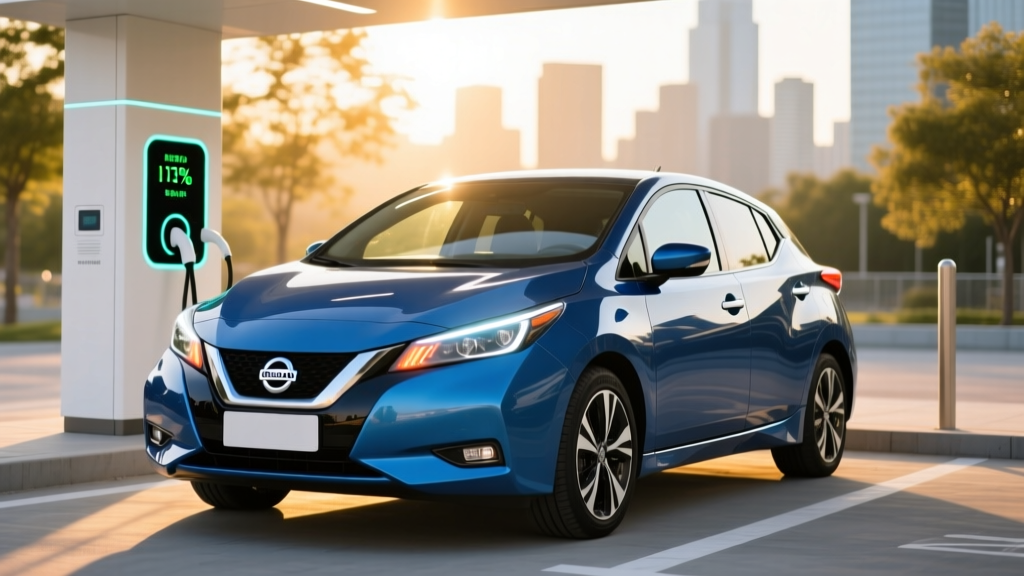
The Nissan Leaf holds a unique place in EV history. Launched in the U.S. for the 2011 model year, it was the first mass-market, purpose-built electric vehicle most American drivers ever encountered. Over 165,000 Leafs have been sold in the United States alone, which means we now have more than a decade of real-world battery degradation data to evaluate. If you're researching Nissan Leaf lifespan—whether as a prospective new buyer, a used-EV shopper, or a current owner wondering how many miles remain—you've come to the right place.
This review covers the 2025 model year (the latest confirmed as of early 2026), examines battery longevity data across both generations, and puts the Leaf's specs, charging, pricing, and tax-credit eligibility under the microscope. Nissan has confirmed the Leaf will continue through at least the 2026 model year in the U.S., though a next-generation crossover replacement is widely expected afterward.
2025 Nissan Leaf: Core Specifications
| Specification | Leaf S (40 kWh) | Leaf SV Plus / SL Plus (60 kWh) |
|---|---|---|
| Battery Capacity (usable) | ~39 kWh | ~59 kWh |
| Battery Chemistry | NMC (laminated pouch cells) | NMC (laminated pouch cells) |
| EPA Range | 149 miles | 212 miles (SV Plus) |
| MPGe (combined) | 111 MPGe | 104 MPGe |
| Efficiency (kWh/100 mi) | 30 kWh/100 mi | 32 kWh/100 mi |
| Motor Output | 110 kW (147 hp) | 160 kW (214 hp) |
| 0–60 mph | ~7.9 seconds | ~6.5 seconds |
| Drivetrain | FWD (single motor) | FWD (single motor) |
| DC Fast Charge (peak) | ~50 kW (CHAdeMO) | ~100 kW (CHAdeMO) |
| Level 2 Charge Rate | 6.6 kW onboard charger | 6.6 kW onboard charger |
| Cargo Volume (rear seats up) | 23.6 cu ft | 23.6 cu ft |
| Cargo Volume (rear seats folded) | 30.0 cu ft | 30.0 cu ft |
| Base MSRP | ~$29,135 | ~$37,285 (SV Plus) |
| Battery Warranty | 8 yr / 100,000 mi | 8 yr / 100,000 mi |
Battery Degradation: What 14 Years of Data Tells Us
The single biggest question in any Nissan Leaf lifespan discussion is battery health. Unlike most modern EVs that use liquid-cooled battery packs, the Leaf relies on passive air cooling for its lithium-ion NMC (nickel manganese cobalt) pouch cells manufactured by AESC (now Envision AESC). This design choice keeps weight and cost down but has measurable consequences for long-term degradation, particularly in hot climates and under frequent DC fast-charging use.
First-Generation Leaf (2011–2017, 24 kWh and 30 kWh)
Early 24 kWh Leafs have shown the most pronounced degradation. Data aggregated from owner reports on platforms like LeafSpy and the MyNissanLeaf forums indicate that 2011–2015 models in hot climates (Arizona, Texas, Southern California) commonly lost 20–35% of original capacity within 5–7 years. A 2013 Leaf that started with roughly 75 miles of range could realistically deliver 50–55 miles by year eight in Phoenix heat. The 30 kWh pack introduced for 2016 showed faster-than-expected degradation in some units, with Nissan issuing a firmware update and, in some cases, replacement packs under warranty.
Second-Generation Leaf (2018–Present, 40 kWh and 60 kWh)
The redesigned 2018+ Leaf with the 40 kWh and 62 kWh (marketed as "60 kWh") packs uses updated NMC chemistry with improved thermal stability. Owner data through 2025 suggests these packs degrade more gracefully: approximately 10–15% capacity loss over 5 years / 60,000 miles for the 40 kWh pack under moderate use, and slightly less for the 60 kWh variant, likely because drivers cycle through a smaller percentage of the total pack daily. However, the passive cooling system still means that frequent DC fast charging in summer heat accelerates wear. Owners who rely primarily on Level 2 home charging and avoid consistent 100% state-of-charge storage report the best longevity outcomes.
Real-World Range vs. EPA Sticker
EPA 212 miles (SV Plus 60 kWh): Expect approximately 175–195 miles in mixed highway driving at 70 mph. In cold weather (below 32°F), range can drop to 140–160 miles due to cabin heating demands and reduced battery efficiency. The Leaf lacks a heat pump (it uses resistive PTC heating), which amplifies winter range loss compared to competitors like the Hyundai Kona Electric or Chevrolet Bolt EV.
EPA 149 miles (S 40 kWh): Real-world highway range sits around 120–130 miles; cold-weather commuting may yield 95–110 miles.
Charging Speed: The Leaf's Persistent Weakness
Charging capability is where the Leaf falls furthest behind the 2025 EV competition. Nissan continues to use the CHAdeMO DC fast-charging connector rather than the CCS1 standard adopted by most non-Tesla automakers or the NACS connector now spreading across the industry. This matters for two reasons: CHAdeMO infrastructure is shrinking as networks prioritize CCS and NACS, and the Leaf's peak charge rates are modest.
| Charging Level | Leaf S (40 kWh) | Leaf SV/SL Plus (60 kWh) | Miles Added per Hour |
|---|---|---|---|
| Level 1 (120V, 12A) | ~1.4 kW | ~1.4 kW | ~4–5 mi/hr |
| Level 2 (240V, 32A) | 6.6 kW | 6.6 kW | ~22–25 mi/hr |
| DC Fast Charge (peak) | ~50 kW | ~100 kW | N/A (session-based) |
| DC Fast Charge 10–80% (est.) | ~45–50 min | ~40–45 min | N/A |
The 60 kWh Leaf's charge curve peaks near 100 kW only briefly at low state-of-charge (around 10–20%), then tapers significantly. From 50% to 80%, sustained rates often drop to 40–55 kW. Compared to a Hyundai Ioniq 5 (which sustains 200+ kW and does 10–80% in ~18 minutes), the Leaf's road-trip charging experience is noticeably slower. For daily commuting on home Level 2, the 6.6 kW onboard charger replenishes the 60 kWh pack from empty in roughly 9.5 hours, which is adequate for overnight charging.
Practical note: The CHAdeMO connector's declining availability is a genuine concern for 2026 buyers. Electrify America has largely stopped expanding CHAdeMO stalls, and some regional networks have removed them entirely. Before purchasing a Leaf, verify your local DC fast-charging options using PlugShare or the DOV Alternative Fuels Station Locator.
Performance, Interior, and Daily Usability
The Leaf drives like a comfortable, softly-tuned compact hatchback. The SV Plus's 214 hp and 250 lb-ft of torque deliver confident highway merging and a 6.5-second 0–60 time that feels quicker than the number suggests thanks to instant electric torque. The regenerative braking system (Nissan's e-Pedal mode) enables one-pedal driving in city traffic, though it doesn't bring the car to a complete hold at all speeds the way some competitors do.
Inside, the 2025 Leaf retains a conventional layout with an 8-inch touchscreen infotainment system supporting wireless Apple CarPlay and wired Android Auto. The SV Plus and SL Plus trims add features like Nissan ProPILOT Assist (a SAE Level 2 driver-assistance system combining adaptive cruise control and lane centering), a 360-degree camera, and Bose audio on the SL Plus. The ProPILOT system is competent for highway cruising but requires hands-on-wheel engagement at all times—it is not a hands-free system like GM's Super Cruise.
Passenger space is adequate for four adults: front legroom measures 42.1 inches, rear legroom 33.5 inches. The 23.6 cu ft cargo area behind the rear seats is competitive with a Volkswagen Golf, though the Leaf's cargo floor sits high because the battery pack is mounted underneath. There is no front trunk (frunk).
Notable Drawbacks
- CHAdeMO connector in a market shifting to NACS/CCS limits future charging access.
- No liquid cooling on the battery pack—accelerated degradation risk in hot climates and under heavy DC fast-charging.
- No heat pump—resistive cabin heating causes significant winter range loss.
- Modest DC fast-charge speed makes long road trips tedious compared to 800V-architecture competitors.
- Rear seat doesn't fold completely flat, limiting long-cargo utility.
Pricing, Tax Credits, and Ownership Costs
The 2025 Nissan Leaf starts at approximately $29,135 for the S trim (40 kWh) including destination charge, making it one of the least expensive new EVs available in the U.S. The SV Plus (60 kWh) begins around $37,285, and the range-topping SL Plus lands near $40,000.
| Trim | Base MSRP | Federal Tax Credit (§30D) | Effective Price (est.) |
|---|---|---|---|
| Leaf S (40 kWh) | $29,135 | Up to $3,750* | ~$25,385 |
| Leaf SV Plus (60 kWh) | $37,285 | Up to $3,750* | ~$33,535 |
| Leaf SL Plus (60 kWh) | $39,985 | Up to $3,750* | ~$36,235 |
*Federal tax credit amounts reflect IRS §30D rules as of early 2026 and are subject to battery-component and critical-mineral sourcing requirements, buyer income caps ($150K single / $300K joint MAGI), and MSRP caps ($55,000 for cars). The Leaf's assembled-in-Japan status and battery sourcing have historically limited it to a partial credit (often $3,750 rather than the full $7,500). Always verify current eligibility on IRS.gov or through your dealer's point-of-sale transfer process. Consult a tax professional for your specific situation.
On the ownership-cost side, the Leaf's low purchase price and minimal maintenance requirements (no oil changes, reduced brake wear from regen) keep running costs low. Electricity at the U.S. average of ~$0.16/kWh makes the 60 kWh Leaf cost roughly $5.12 per 100 miles to fuel, compared to ~$12–14 per 100 miles for a 30 MPG gas car at $3.50/gallon. Insurance premiums tend to be moderate—typically $1,200–$1,600 annually depending on region and driving record, per industry averages.
Battery Warranty and Replacement Considerations
Nissan provides an 8-year / 100,000-mile lithium-ion battery capacity warranty on the Leaf. The warranty guarantees the battery will retain at least 9 bars out of 12 on the dashboard capacity gauge (roughly 66–70% of original capacity) during the warranty period. If degradation drops below this threshold, Nissan will repair or replace the pack. In practice, relatively few second-generation Leafs have fallen below 9 bars within the warranty window under normal use.
For out-of-warranty battery replacement, expect costs between $6,500 and $9,000 (parts and labor) for a 40 kWh pack and $9,000 to $14,000 for the 60 kWh pack, based on dealer quotes and third-party EV shop pricing as of 2025. Refurbished and salvaged packs are sometimes available for $3,500–$6,000 through independent EV repair shops, though availability varies. Given that a well-maintained second-generation Leaf pack can reasonably last 150,000–200,000 miles before degradation becomes functionally limiting, most owners will not face a replacement during their ownership.
According to fueleconomy.gov, modern lithium-ion EV batteries are generally designed to outlast the vehicle's useful life under normal conditions, though the Leaf's passive cooling makes it a slight outlier compared to liquid-cooled competitors.
Pros
- Lowest new-EV starting price in the U.S. market
- Comfortable, quiet ride quality for a compact hatchback
- Proven platform with 14+ years of real-world reliability data
- Adequate 212-mile range (SV Plus) for commuting and errands
- Standard ProPILOT Assist on Plus trims (competent L2 highway assist)
- Low running and maintenance costs
Cons
- CHAdeMO connector limits future DC fast-charging access
- Passive battery cooling increases degradation risk in heat
- No heat pump—significant winter range penalty
- Slow DC fast charging vs. modern competitors
- Partial (not full) federal tax credit due to sourcing rules
- Dated interior design compared to newer EV platforms
Who Should Buy the Nissan Leaf in 2026?
The Leaf is best understood as a budget-friendly commuter EV for drivers with reliable home charging and moderate daily mileage. If your round-trip commute is under 80 miles, you charge at home overnight on Level 2, and you live in a temperate or cool climate, the Leaf SV Plus offers strong value—particularly if you can access the partial federal credit or a state incentive.
It is not the right choice for frequent road-trippers (slow charging + CHAdeMO scarcity), hot-climate drivers who DC fast-charge regularly (passive cooling degradation risk), or buyers who want the latest 800V charging architecture. If those describe you, consider the Hyundai Kona Electric, Chevrolet Equinox EV, or a used Tesla Model 3 instead.
How the Leaf Compares to Key Competitors
| Attribute | Nissan Leaf SV Plus | Hyundai Kona Electric | Chevrolet Bolt EV (used/CPO) |
|---|---|---|---|
| EPA Range | 212 mi | 261 mi | 259 mi |
| Battery (kWh) | ~59 kWh | ~65 kWh | ~65 kWh |
| DC Fast Charge Peak | ~100 kW (CHAdeMO) | ~100 kW (CCS/NACS) | ~55 kW (CCS) |
| Battery Cooling | Passive air | Liquid | Liquid |
| Heat Pump | No | Yes (SEL+) | No |
| Starting Price (new) | $37,285 | $34,075 | Discontinued (used market) |
| Tax Credit Eligibility | Partial ($3,750) | Partial to full* | Used-EV credit ($4,000) |
*Kona Electric credit eligibility varies by battery sourcing and model year—check IRS.gov.
The Kona Electric is the Leaf's closest new-car rival and wins on range, battery cooling, and charging-standard longevity. The Bolt EV, though discontinued after 2023, remains a strong used-EV value with liquid cooling and CCS compatibility, and qualifies for the $4,000 used-EV credit under §25E if purchased through a dealer for under $25,000.
Frequently Asked Questions
How many miles can a Nissan Leaf last before the battery needs replacing?
Based on owner data from 2018–present models, a well-maintained second-generation Leaf battery can deliver 150,000 to 200,000 miles before degradation reduces range enough to become impractical for daily use (below ~70% of original capacity). First-generation (2011–2017) packs in hot climates may require attention sooner, sometimes around 80,000–120,000 miles. Proper care—avoiding consistent 100% charges, minimizing DC fast charging in heat, and garaging when possible—extends pack life significantly.
Does the Nissan Leaf qualify for the full $7,500 federal tax credit?
No. As of early 2026, the Leaf typically qualifies for a partial credit of $3,750 under IRS §30D, due to battery-component and critical-mineral sourcing requirements that the Leaf's Japan-assembled, AESC-supplied pack does not fully meet. Buyer income caps ($150,000 single / $300,000 joint modified AGI) and the $55,000 MSRP cap for passenger cars also apply. The credit can be transferred to the dealer at point of sale for an immediate price reduction. Always confirm current eligibility on IRS.gov before purchasing.
Is the CHAdeMO connector a dealbreaker for buying a Leaf?
It depends on your use case. If you charge primarily at home and only need DC fast charging a few times a year, it's manageable—you can plan around the remaining CHAdeMO stations on your routes. If you rely on public fast charging regularly or take frequent road trips, the declining CHAdeMO infrastructure is a genuine problem. The industry has clearly moved to CCS1 and NACS, and CHAdeMO availability will continue shrinking.
Should I buy a new Leaf or a used one?
A used 2019–2023 Leaf SV Plus with under 40,000 miles can be found for $15,000–$22,000 and may qualify for the $4,000 used-EV credit (§25E) if purchased through a licensed dealer and meeting income requirements. The value proposition of a used Leaf is excellent if you verify battery health (request a LeafSpy capacity report). A new Leaf makes sense only if you want the full warranty, the latest ProPILOT features, and can access the $3,750 new-EV credit.
What is the real-world range of the Nissan Leaf in winter?
For the 60 kWh SV Plus (EPA 212 miles), expect 140–160 miles in sustained below-freezing temperatures. The Leaf uses resistive PTC cabin heating rather than a heat pump, which draws significant energy from the battery. Preconditioning the cabin while still plugged in at home mitigates some of this loss. The 40 kWh S model (EPA 149 miles) may deliver only 95–110 miles in similar conditions.
Is the Nissan Leaf worth buying versus its competitors?
The Leaf is worth buying if your priorities are lowest possible new-EV price, home charging access, and a proven commuter platform. It is not worth buying if you need long road-trip range, fast DC charging, future-proof connector compatibility, or hot-climate battery longevity. The Hyundai Kona Electric and Chevrolet Equinox EV are stronger all-around choices for most buyers willing to spend slightly more.
Sources: fueleconomy.gov – 2025 Nissan Leaf | IRS.gov – Clean Vehicle Credits | Nissan USA – Leaf Specifications