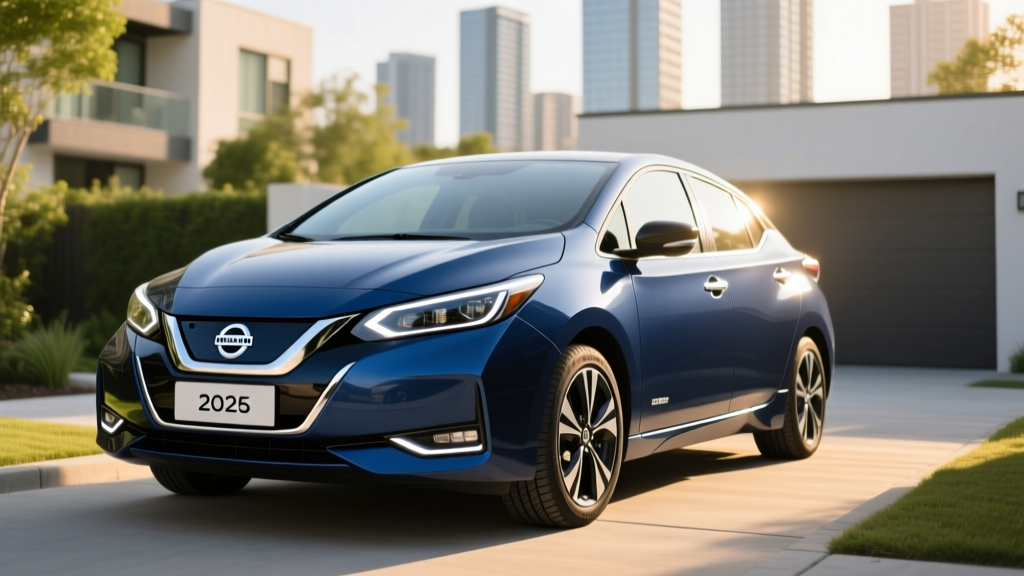
The Nissan Leaf remains one of the most accessible entry points into electric vehicle ownership. As we move through 2026, the Leaf continues to offer competitive pricing and practical daily usability, though its aging platform shows limitations compared to newer rivals. For buyers considering a Nissan Leaf lease, understanding the real-world performance, charging infrastructure compatibility, and tax credit eligibility is crucial before signing on the dotted line.
Quick Verdict: Who Should Lease the Nissan Leaf?
The 2026 Nissan Leaf makes the most sense for urban commuters and suburban drivers with reliable home charging access. If your daily driving stays under 80 miles and you have a garage where you can install a Level 2 charger, the Leaf delivers predictable, low-cost transportation. However, frequent road trippers, those in extreme cold climates, or drivers without home charging options should look elsewhere—the Leaf's CHAdeMO connector limits public fast-charging access, and its real-world highway range falls noticeably short of the EPA estimate.
Range, Battery, and Real-World Efficiency
| Specification | Leaf S (40 kWh) | Leaf SV Plus (60 kWh) |
|---|---|---|
| Battery Capacity | 40 kWh (usable) | 60 kWh (usable) |
| Battery Chemistry | NMC (Nickel Manganese Cobalt) | NMC (Nickel Manganese Cobalt) |
| EPA Estimated Range | 149 miles | 212 miles |
| Real-World Highway Range | ~115-125 miles | ~165-180 miles |
| Cold Weather Range (20°F) | ~95-105 miles | ~135-150 miles |
| EPA Efficiency | 111 MPGe (30 kWh/100mi) | 109 MPGe (31 kWh/100mi) |
The Leaf's passive air-cooling system for the battery is its Achilles' heel. Unlike liquid-cooled competitors, the Leaf's battery temperature rises during repeated fast charging or hot-weather driving, triggering "Rapidgate"—Nissan's software limit that drastically reduces charging speed to protect the battery. This makes the Leaf poorly suited for back-to-back road trips or DC fast charging in summer heat.
Charging Speed and Infrastructure
| Charging Level | Power | Time (10-80%) | Miles Added per Hour |
|---|---|---|---|
| Level 1 (120V household) | 1.4 kW | N/A (overnight only) | ~4-5 miles |
| Level 2 (240V home charger) | 6.6 kW | ~7 hours (full charge) | ~22-25 miles |
| DC Fast Charge (CHAdeMO) | Up to 100 kW peak | ~45 minutes (SV Plus) | N/A |
The Leaf uses the CHAdeMO connector for DC fast charging—a standard that has largely lost the format war to CCS and Tesla's NACS. While CHAdeMO stations still exist, new installations overwhelmingly favor CCS or NACS, limiting your public charging options. The 100 kW peak charge rate sounds respectable, but the Leaf rarely sustains it. Expect charging to taper significantly after 60% state of charge, and thermal throttling can reduce speeds to 40-50 kW in warm conditions.
For home charging, the 6.6 kW onboard charger is adequate for overnight replenishment. A full charge from empty takes roughly 7 hours on the SV Plus—perfect for drivers who plug in each evening. However, if you need faster turnaround between drives, the Leaf's charging speed becomes a bottleneck.
Performance and Driving Dynamics
The base Leaf S produces 147 horsepower and 236 lb-ft of torque from its front-mounted electric motor, delivering a 0-60 mph time of approximately 7.9 seconds. The SV Plus bumps output to 214 hp and 250 lb-ft, cutting the sprint to 7.0 seconds. Both models use front-wheel drive—there's no all-wheel-drive option, which matters for snow-belt buyers.
Acceleration feels peppy around town thanks to instant electric torque, but the Leaf runs out of breath at highway speeds. The ride quality is comfortable and compliant, though the steering lacks precision compared to newer EVs. One-pedal driving via the e-Pedal system works well for city traffic, though it doesn't bring the car to a complete stop—you'll still need the brake pedal for final halts.
Pricing, Lease Deals, and Tax Credit Eligibility
| Trim Level | Base MSRP | Estimated Monthly Lease (36 mo) | Federal Tax Credit Eligibility |
|---|---|---|---|
| Leaf S (40 kWh) | $28,140 | $250-320/month | Up to $3,750 (partial) |
| Leaf SV Plus (60 kWh) | $36,140 | $350-420/month | Up to $3,750 (partial) |
The 2026 Nissan Leaf qualifies for a partial federal tax credit of up to $3,750 under IRS §30D rules. The Leaf meets the battery component manufacturing requirement but fails the critical minerals sourcing threshold, which disqualifies it from the full $7,500 credit. To claim any credit, buyers must also meet income caps: $150,000 single filers, $225,000 head of household, $300,000 joint filers. The vehicle's MSRP must also stay under $55,000 for sedans (the Leaf qualifies).
For lease customers, the tax credit situation is more complex. Under current IRS guidance, the leasing company (lessor) claims the commercial clean vehicle credit, not the lessee. Some manufacturers pass this savings through as a "lease cash" incentive that reduces your monthly payment, but this isn't guaranteed. Check with Nissan dealers about current lease incentives and whether any tax credit benefit is factored into the advertised payment.
Destination charges, dealer fees, and optional packages can add $1,500-3,000 to the final price. As-tested pricing for a well-equipped SV Plus typically lands around $38,000-40,000 before incentives.
Interior Space, Technology, and Safety
The Leaf's interior is functional but dated compared to 2026 competitors. The 8-inch touchscreen infotainment system supports Apple CarPlay and Android Auto, but the interface feels slow and the display resolution lags behind modern standards. Physical buttons for climate controls are a welcome ergonomic choice, though the overall cabin materials skew toward hard plastics.
Passenger space remains competitive: front legroom measures 42.1 inches, rear legroom 33.5 inches. Cargo capacity stands at 23.6 cubic feet behind the rear seats, expanding to 30.0 cubic feet with seats folded (the SV Plus loses some space to the larger battery). The rear seats don't fold completely flat, limiting utility for larger items.
Nissan's ProPILOT Assist provides SAE Level 2 driver assistance with adaptive cruise control and lane centering. It works adequately on highways but requires constant driver supervision—this is not autonomous driving. The system lacks the sophistication of GM's Super Cruise or Ford's BlueCruise, which offer hands-free operation on mapped roads. Automatic emergency braking, blind-spot monitoring, and rear cross-traffic alert come standard.
Warranty Coverage
Nissan provides an 8-year/100,000-mile warranty on the battery and electric powertrain components. The battery warranty guarantees the pack will retain at least 70% of its original capacity during the coverage period. Given the Leaf's history of battery degradation in hot climates (a legacy issue from earlier generations), this warranty provides important peace of mind, though the passive cooling system remains a concern for long-term battery health.
The basic vehicle warranty covers 3 years/36,000 miles, which is average for the segment. Some competitors offer longer basic coverage.
Pros and Cons
Pros
- Low starting price and accessible monthly lease payments
- Comfortable ride quality for daily commuting
- Proven reliability with extensive service network
- Standard DC fast charging capability
- Competitive cargo space for the hatchback segment
Cons
- CHAdeMO connector limits public charging access
- Passive battery cooling causes thermal throttling
- Real-world highway range significantly below EPA estimate
- Dated infotainment and interior design
- No all-wheel-drive option
- Only partial federal tax credit eligibility
Competitive Comparison: Leaf vs. Key Rivals
The Leaf faces stiff competition from newer designs. The Chevrolet Bolt EV (discontinued but available used) and Bolt EUV offer similar pricing with CCS charging and longer range. The Hyundai Kona Electric provides 258 miles of EPA range and faster charging. The Tesla Model 3, while more expensive, delivers superior range, charging speed, and Supercharger network access.
For lease shoppers focused purely on minimizing monthly cost, the Leaf S remains one of the cheapest new EVs available. But value extends beyond the payment—charging convenience, range confidence, and long-term usability matter. If you can stretch your budget slightly, the Kona Electric or a used Model 3 often provide better overall ownership experiences.
Final Verdict: Is a Nissan Leaf Lease Worth It?
A 2026 Nissan Leaf lease makes sense for a specific buyer profile: budget-conscious commuters with home charging, predictable daily routes under 80 miles, and minimal road-trip needs. The low monthly payment and partial tax credit keep costs manageable, while the proven platform delivers reliable transportation.
However, the Leaf's CHAdeMO connector, thermal limitations, and dated technology make it increasingly difficult to recommend over more modern alternatives. If you anticipate needing public fast charging, regularly drive in hot climates, or want the flexibility for longer trips, invest in a competitor with better charging infrastructure compatibility and thermal management.
Before signing any lease, verify the actual monthly payment includes all fees, confirm whether any tax credit benefit flows through to your payment, and honestly assess your daily driving needs against the real-world range figures—not the EPA sticker.
Frequently Asked Questions
What is the real-world range of the 2026 Nissan Leaf?
The EPA estimates 149 miles for the base 40 kWh model and 212 miles for the SV Plus 60 kWh version. In real-world highway driving, expect 115-125 miles (base) and 165-180 miles (SV Plus). Cold weather reduces these figures by 20-30%.
How fast does the Nissan Leaf charge at home and on DC fast chargers?
On a Level 2 home charger (240V, 6.6 kW), the Leaf adds about 22-25 miles per hour, with a full charge taking roughly 7 hours. DC fast charging peaks at 100 kW but rarely sustains that rate—a 10-80% charge takes approximately 45 minutes under ideal conditions, longer in hot weather due to thermal throttling.
Does the 2026 Nissan Leaf qualify for the federal EV tax credit?
The Leaf qualifies for a partial credit of up to $3,750 under IRS §30D rules, not the full $7,500. Eligibility depends on your income (under $150k single/$300k joint) and the vehicle's MSRP (under $55k for sedans). For leases, the leasing company claims the credit—ask your dealer if any savings pass through to your payment.
Is the Nissan Leaf worth leasing over competitors?
The Leaf offers one of the lowest entry prices in the EV market, making it attractive for budget-focused buyers with home charging and short commutes. However, competitors like the Hyundai Kona Electric provide better range, faster charging, and more modern technology for slightly higher payments.
What are the biggest drawbacks of the Nissan Leaf?
The CHAdeMO charging connector limits public charging access as the industry standardizes on CCS and NACS. The passive battery cooling system causes thermal throttling during repeated fast charging or hot weather. Real-world highway range falls noticeably short of EPA estimates, and the interior technology feels dated compared to 2026 rivals.
Can I road trip in a Nissan Leaf?
While possible, road trips in the Leaf require careful planning due to limited CHAdeMO charging infrastructure and thermal throttling that slows charging speeds. For frequent long-distance travel, consider a vehicle with CCS or NACS charging and liquid-cooled battery management.
Sources: EPA fuel economy data from fueleconomy.gov, IRS tax credit guidelines from irs.gov, Nissan specifications from manufacturer press materials.