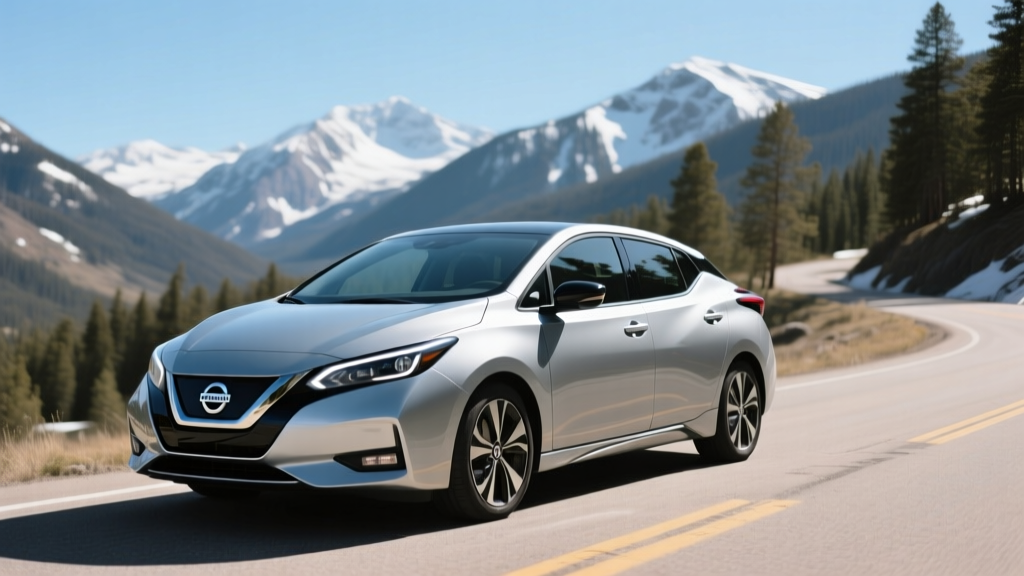
Colorado's EV incentives and growing charging network make it one of the most attractive states to go electric. But if you're researching a Nissan Leaf lease in Colorado, you need to weigh some hard truths against the attractive lease pricing. The 2026 Nissan Leaf remains one of the most affordable new EVs on the market, yet its aging platform — particularly its CHAdeMO charging connector and passive battery thermal management — creates real ownership trade-offs that Colorado's climate amplifies.
After spending time with the Leaf's specs, ownership data, and Colorado's unique incentive landscape, here's the unvarnished breakdown of what leasing this EV actually looks like in the Centennial State.
2026 Nissan Leaf: Core Specifications at a Glance
| Specification | Leaf S (40 kWh) | Leaf SV Plus (60 kWh) |
|---|---|---|
| EPA Range | 149 miles | 214 miles |
| Battery Capacity (Usable) | ~39 kWh, NMC | ~60 kWh, NMC |
| Motor Output | 110 kW (147 hp) | 160 kW (214 hp) |
| 0–60 mph | ~7.9 seconds | ~6.5 seconds |
| Drivetrain | FWD (single motor) | FWD (single motor) |
| Max DC Fast Charge | ~50 kW (CHAdeMO) | ~100 kW (CHAdeMO) |
| Level 2 Charge Rate | 6.6 kW (J1772) | 6.6 kW (J1772) |
| EPA Efficiency | 111 MPGe (30 kWh/100mi) | 109 MPGe (31 kWh/100mi) |
| Cargo Volume (rear seats up/down) | 23.6 cu ft / 31.6 cu ft | |
| Base MSRP (2026) | $28,140 | $36,190 |
| Battery Warranty | 8 years / 100,000 miles (capacity loss) | |
Real-World Range: What Colorado Drivers Should Actually Expect
The 2026 Leaf SV Plus carries an EPA-estimated 214 miles of range. However, real-world results vary significantly based on conditions Colorado drivers face daily:
- Highway driving (70–80 mph): Expect ~165–185 miles. The Leaf's aerodynamics and single-speed reduction gear don't favor sustained high-speed travel.
- Cold weather (below 32°F): Colorado winters can cut range by 20–35%. A 214-mile Leaf may deliver only 140–170 miles on a freezing Front Range commute. The Leaf lacks a heat pump — it uses resistive cabin heating, which draws heavily from the traction battery.
- Mountain elevation (I-70 corridor): Climbing to Eisenhower Tunnel (11,158 ft) consumes energy aggressively, though regenerative braking on descents partially recovers it. Net impact on a round-trip mountain drive: plan for 15–25% range reduction vs. flat terrain.
- Mild city driving (50–70°F): You can approach or slightly exceed the 214-mile EPA figure in stop-and-go traffic with regen braking active.
The Leaf 40 kWh (S trim) is more constrained. Its 149-mile EPA rating drops to roughly 100–120 miles in Colorado winter — essentially limiting it to short urban commutes with reliable home charging.
Charging Speed: The CHAdeMO Problem in 2026
This is where a Nissan Leaf lease in Colorado requires the most careful consideration. The Leaf uses the CHAdeMO DC fast-charging standard, while the North American market has overwhelmingly shifted to NACS (Tesla's connector, now adopted by Ford, GM, Hyundai, Rivian, and others) and CCS1.
| Charging Level | Leaf S (40 kWh) | Leaf SV Plus (60 kWh) | Miles Added per Hour |
|---|---|---|---|
| Level 1 (120V, 12A) | ~1.4 kW | ~1.4 kW | ~4–5 mi/hr |
| Level 2 (240V, 30A) | 6.6 kW | 6.6 kW | ~22–25 mi/hr |
| DC Fast (CHAdeMO 50 kW) | ~50 kW peak | N/A (uses 100 kW) | ~100 mi in 30 min (40 kWh) |
| DC Fast (CHAdeMO 100 kW) | N/A | ~100 kW peak | ~140 mi in 30 min |
| 10–80% DC Fast Time | ~40 minutes | ~45 minutes | — |
Several critical charging realities for Colorado Leaf owners:
- CHAdeMO infrastructure is shrinking. Electrify America has largely standardized on CCS and NACS. While some EA stations still carry CHAdeMO connectors, new installations often omit them. According to the PlugShare database, CHAdeMO availability in Colorado is concentrated along the I-25 and I-70 corridors but is noticeably thinner than CCS/NACS options.
- No NACS adapter exists for CHAdeMO. Unlike CCS owners who can use a NACS-to-CCS adapter for Tesla Supercharger access, CHAdeMO vehicles have no path to the Supercharger network. This is a significant road-trip limitation.
- Passive thermal management. The Leaf uses air-cooled battery thermal management rather than active liquid cooling. During repeated DC fast charges (or hot-weather fast charging), the battery can heat-soak, causing charge speeds to throttle dramatically — sometimes called "Rapidgate." In Colorado's summer heat along I-70, this matters.
- Home Level 2 charging is adequate. At 6.6 kW, a full charge from empty takes roughly 9 hours (60 kWh) or 6 hours (40 kWh). For overnight home charging, this works fine. A licensed electrician should install a NEMA 14-50 outlet or hardwired Level 2 station; expect $500–$2,000 for installation depending on your panel capacity.
Pricing, Lease Deals, and Colorado Tax Credit Eligibility
The Leaf's affordability is its strongest argument. Here's how the pricing landscape looks for a 2026 model:
| Cost Factor | Leaf S (40 kWh) | Leaf SV Plus (60 kWh) |
|---|---|---|
| Base MSRP | $28,140 | $36,190 |
| As-Tested (with packages/destination) | ~$30,500 | ~$39,500 |
| Federal §30D Tax Credit (purchase) | $0–$7,500* | $0–$7,500* |
| Colorado State EV Tax Credit | $5,000 (purchase) or $3,750 (lease) for MSRP under $80,000 | |
| Estimated Lease (36 mo/10k mi) | ~$199–$299/mo | ~$299–$399/mo |
*Federal §30D credit eligibility depends on multiple factors. See the tax credit section below.
Does the Nissan Leaf Qualify for the Federal EV Tax Credit?
Under current IRS §30D rules, the Nissan Leaf's federal credit eligibility is uncertain and may be $0 for 2026. Here's why:
- Battery sourcing requirements: The Leaf's battery cells (manufactured by Envision AESC, historically in Tennessee) must meet critical-mineral and battery-component thresholds that tighten each year. Nissan has not publicly confirmed 2026 §30D compliance for the Leaf.
- MSRP cap: The Leaf passes easily — the cap is $55,000 for sedans/hatchbacks.
- Buyer income cap: Modified AGI must not exceed $150,000 (single) / $300,000 (joint). Most Leaf buyers qualify.
- Point-of-sale transfer: If eligible, the credit can be applied at the dealer as an immediate price reduction, including on leases (the lessor claims the credit and passes it through).
Lease advantage: Under the commercial clean vehicle credit (§45W), leased EVs can qualify for a $7,500 credit passed through the lessor regardless of battery sourcing rules that apply to purchases. This "lease loophole" has been a major driver of Leaf lease deals. However, Congress has debated closing this provision — consult a tax professional and verify current rules before signing.
Colorado's state credit is more straightforward: the state offers a $5,000 income tax credit for purchasing a new EV under $80,000 MSRP, or a $3,750 credit for leasing. This stacks with any federal benefit and is a major reason a Nissan Leaf lease in Colorado can be compelling.
Performance, Interior, and Daily Usability
The Leaf SV Plus's 214 hp and 250 lb-ft of torque provide confident highway merging and around-town punch. The 0–60 mph time of roughly 6.5 seconds is adequate — not thrilling, but competitive with other affordable EVs. The FWD layout means no AWD option, which matters for Colorado's snow and ice. However, the Leaf's low center of gravity (battery pack under the floor) and standard traction/stability control, combined with quality winter tires, make it manageable in most Front Range winter conditions.
Interior space is reasonable for the segment:
- Front legroom: 42.1 inches
- Rear legroom: 33.5 inches (tighter than a Bolt EUV or Kona Electric)
- Cargo (rear seats up): 23.6 cu ft — enough for weekly groceries or two carry-ons
- Cargo (rear seats folded): 31.6 cu ft — limited compared to crossover competitors
Tech and driver assists: The 2026 Leaf includes an 8-inch touchscreen with wireless Apple CarPlay and Android Auto, Nissan ProPILOT Assist (adaptive cruise + lane centering — SAE Level 2, requires driver engagement), automatic emergency braking, blind-spot warning, and rear cross-traffic alert. It's competent but a generation behind the larger screens and more sophisticated ADAS suites in the Hyundai Kona Electric or Chevrolet Bolt EUV.
Battery Longevity, Warranty, and Degradation
Nissan provides an 8-year/100,000-mile battery capacity warranty that covers the pack if it drops below 9 bars (out of 12) on the capacity gauge — roughly translating to ~66% of original capacity. This is a weaker warranty threshold than most competitors, who guarantee 70% retention.
The Leaf's NMC (nickel-manganese-cobalt) battery chemistry delivers good energy density but is more sensitive to heat cycling than LFP (lithium iron phosphate). The passive air-cooling system is the Leaf's Achilles' heel for long-term battery health:
- Expected degradation: Data from long-term Leaf owners and fleet studies show ~10–15% capacity loss over 5 years / 75,000 miles in moderate climates. Colorado's temperature swings (hot summers, cold winters) may push this toward the higher end of that range.
- DC fast charging impact: Frequent DC fast charging without liquid cooling accelerates degradation. If you plan to rely heavily on public DC charging, expect faster capacity loss than owners who primarily charge at home on Level 2.
- Replacement cost: A new Leaf battery pack replacement runs approximately $6,500–$9,000 (parts and labor), though most leased vehicles will never reach this point.
For lessees, battery degradation is largely the lessor's problem — you return the car at lease end. This is actually one argument for leasing a Leaf rather than buying: you transfer the long-term battery risk to Nissan Motor Acceptance Corporation.
How the Leaf Stacks Up Against Key Competitors
| Spec | 2026 Nissan Leaf SV Plus | 2026 Chevy Bolt EUV | 2026 Hyundai Kona Electric |
|---|---|---|---|
| EPA Range | 214 mi | 247 mi | 261 mi |
| Battery | 60 kWh, NMC | 65 kWh, NMC | 64.8 kWh, NMC |
| DC Fast Charging | 100 kW (CHAdeMO) | 115 kW (CCS/NACS) | 100+ kW (CCS/NACS) |
| Thermal Management | Passive (air) | Active (liquid) | Active (liquid) |
| Base MSRP | $36,190 | ~$28,800 | ~$33,550 |
| Connector | CHAdeMO | NACS (adapter for CCS) | NACS/CCS |
| Cargo (seats up) | 23.6 cu ft | 16.3 cu ft | 25.8 cu ft |
The competitive picture is challenging for the Leaf. The Chevrolet Bolt EUV offers more range, liquid-cooled battery, NACS connector (Supercharger access), and a lower starting price. The Hyundai Kona Electric provides superior range, active thermal management, and modern connector options.
The Leaf's remaining advantages are its hatchback cargo flexibility, proven long-term reliability record (the nameplate dates to 2010), and aggressive lease pricing that dealers use to move inventory. If you can secure a Leaf SV Plus lease under $250/month after Colorado incentives, the value proposition holds — but you're accepting the CHAdeMO limitation and passive cooling trade-off.
Who Should (and Shouldn't) Lease a Nissan Leaf in Colorado
Choose the Nissan Leaf lease if:
- You have reliable home Level 2 charging and a commute under 60 miles round-trip
- You want the lowest possible monthly EV payment and plan to leverage Colorado's state credit
- You primarily drive in the Denver-Boulder-Fort Collins metro corridor where CHAdeMO stations still exist
- You prefer returning the car at lease end rather than holding long-term battery risk
- You value hatchback cargo space over crossover styling
Look at competitors instead if:
- You take regular road trips on I-70 to the mountains or I-25 to Wyoming/New Mexico
- You need Tesla Supercharger access for travel flexibility
- You live in a rural Colorado area with limited CHAdeMO public charging
- You want AWD for serious winter mountain driving (consider the Subaru Solterra or Hyundai Ioniq 5 AWD)
- You plan to keep the vehicle beyond 5 years (buy, not lease, a liquid-cooled competitor)
- Among the lowest MSRP of any new EV
- Comfortable ride quality and quiet cabin
- Standard ProPILOT Assist and comprehensive safety suite
- Hatchback utility with fold-flat rear seats
- Strong Colorado state incentive stacking
- Lease transfers battery degradation risk to lessor
- CHAdeMO connector — shrinking public charging access
- Passive air-cooled battery — degradation and Rapidgate risk
- No AWD option for Colorado snow/ice
- No heat pump — significant winter range loss
- Federal §30D credit uncertain due to battery sourcing
- Aging platform and interior tech vs. newer competitors
Frequently Asked Questions
What is the real-world range of the 2026 Nissan Leaf in Colorado?
The SV Plus (60 kWh) is EPA-rated at 214 miles, but expect roughly 165–185 miles on the highway and as low as 140–170 miles in sub-freezing Colorado winter conditions due to the lack of a heat pump. The 40 kWh S trim drops to about 100–120 miles in winter.
How fast does the Nissan Leaf charge at home and on DC fast chargers?
On a 240V Level 2 home charger at 6.6 kW, expect a full charge in ~9 hours (SV Plus) or ~6 hours (S). DC fast charging peaks at 100 kW (SV Plus) or 50 kW (S) via CHAdeMO, with a 10–80% charge taking approximately 40–45 minutes. Note that charge speeds taper significantly above 80% SoC, and passive cooling can cause throttling on repeated fast charges.
Does the 2026 Nissan Leaf qualify for the $7,500 federal EV tax credit?
Eligibility is uncertain. The Leaf passes the MSRP cap ($55,000 for hatchbacks) and most buyers meet income limits, but the battery's critical-mineral and component sourcing may not satisfy 2026 thresholds under IRS §30D. However, leasing may qualify under the §45W commercial credit "lease loophole" — verify with your dealer and a tax professional before signing.
How much does a Nissan Leaf lease cost in Colorado after incentives?
Lease pricing varies by dealer and credit tier, but typical 2026 Leaf SV Plus leases run $299–$399/month (36 months, 10,000 miles/year) before incentives. Colorado's $3,750 lease credit (applied as a capital cost reduction) can lower monthly payments by roughly $100/month over the lease term, potentially bringing a well-negotiated SV Plus lease to ~$200–$300/month.
Is the Nissan Leaf worth leasing vs. buying a Chevrolet Bolt EUV or Hyundai Kona Electric?
If your priority is the absolute lowest monthly payment and you have home charging with a short commute, the Leaf lease can be compelling — especially with Colorado incentives. But the Bolt EUV offers more range, NACS/Supercharger access, liquid cooling, and a lower MSRP. The Kona Electric provides better range and modern charging infrastructure. For most Colorado buyers planning road trips or long-term ownership, the competitors are stronger choices. The Leaf lease makes sense as a budget commuter car you'll return in three years.
Can I charge a Nissan Leaf at Tesla Superchargers?
No. The Leaf uses the CHAdeMO DC fast-charging connector, and there is no commercially available adapter to connect a CHAdeMO vehicle to a Tesla NACS Supercharger. CCS-to-NACS adapters exist for CCS vehicles, but CHAdeMO is electrically and physically incompatible. You'll rely on Electrify America, EVgo, ChargePoint, and other networks that still maintain CHAdeMO connectors.
How does Colorado's altitude affect the Nissan Leaf?
Electric motors don't lose power at altitude the way internal combustion engines do (no air intake needed), so performance is unaffected. However, climbing to high elevation (e.g., Denver to Vail via I-70) consumes substantial energy. Plan for roughly 15–25% additional energy use on mountain routes, partially offset by regen braking on descents. Cabin heating at altitude further reduces range in winter.
Sources: EPA Fuel Economy – Nissan Leaf, IRS Clean Vehicle Credits (§30D), NHTSA – 2026 Nissan Leaf