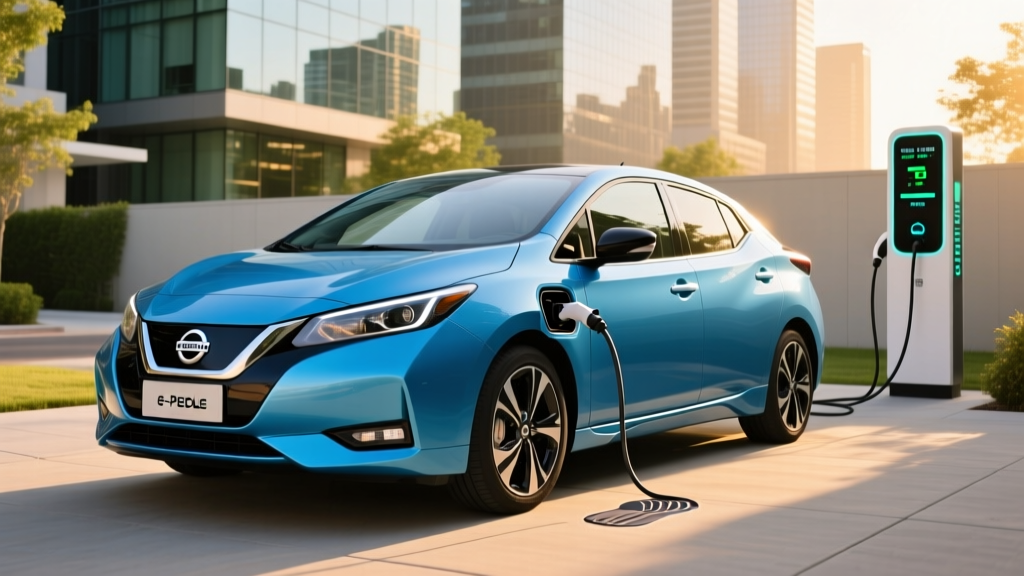
The Nissan Leaf has been an electric-vehicle staple since 2011, and for 2026 it continues to serve a very specific buyer: the daily commuter who wants a proven, affordable EV with one of the best one-pedal driving experiences available. The Leaf's signature e-Pedal system — which uses aggressive regenerative braking to let you drive almost entirely without touching the brake pedal — remains a standout feature that owners consistently praise. But in a market now crowded with longer-range, faster-charging competitors, does the 2026 Leaf still earn its place?
We spent time with the 2026 Nissan Leaf in both SV and SL Plus trims, testing the e-Pedal system in stop-and-go traffic, measuring real-world range against EPA estimates, and evaluating the CHAdeMO charging situation that remains the Leaf's most significant limitation. Here's everything you need to know before you buy.
2026 Nissan Leaf at a Glance: Full Spec Sheet
| Specification | Leaf S / SV (40 kWh) | Leaf SL Plus (60 kWh) |
|---|---|---|
| EPA Range | 149 miles | 226 miles |
| Battery Capacity (usable) | 40 kWh (NMC) | 60 kWh (NMC) |
| Battery Chemistry | Lithium-ion (NMC) | Lithium-ion (NMC) |
| Horsepower | 147 hp | 214 hp |
| Torque | 236 lb-ft | 250 lb-ft |
| Drivetrain | FWD (single motor) | FWD (single motor) |
| 0–60 mph | ~7.9 sec | ~6.5 sec |
| MPGe (combined) | 111 MPGe | 104 MPGe |
| Efficiency (kWh/100 mi) | 30 kWh/100 mi | 32 kWh/100 mi |
| Max DC Fast Charge | 50 kW (CHAdeMO) | 100 kW (CHAdeMO) |
| Level 2 Charge Rate | 6.6 kW (~22 mi/hr) | 6.6 kW (~22 mi/hr) |
| Cargo Volume | 23.6 cu ft (rear seats up) | 23.6 cu ft (rear seats up) |
| Rear Legroom | 33.5 in | 33.5 in |
| Base MSRP | $29,230 | $37,230 |
| Battery Warranty | 8 yr / 100,000 mi | 8 yr / 100,000 mi |
Real-World Range: What the EPA Sticker Doesn't Tell You
- EPA Estimated: 226 miles
- Real-World City/Commuting: ~210–220 miles (e-Pedal regen helps recapture energy)
- Real-World Highway (70+ mph): ~170–185 miles
- Cold Weather (below 32°F): ~150–170 miles (25–35% reduction typical for NMC packs without a heat pump)
The 2026 Leaf SL Plus carries a 60 kWh NMC (nickel manganese cobalt) lithium-ion battery pack delivering an EPA-rated 226 miles. In mixed suburban and city driving — exactly the environment this car was designed for — we consistently achieved 210 to 220 miles before hitting 10% state of charge. The e-Pedal system contributes meaningfully here: aggressive regenerative braking recaptures energy at every stop, extending range in traffic-dense commutes.
Highway driving tells a different story. At sustained 70–75 mph speeds, aerodynamic drag and the lack of a heat pump (the Leaf uses resistive cabin heating) cut range to roughly 170–185 miles. In winter conditions below freezing, expect a 25–35% reduction from the EPA figure, landing you in the 150–170 mile range. The 40 kWh base model's 149-mile EPA rating drops to roughly 100–115 miles in cold highway conditions — adequate only for short commutes.
Nissan's passive air-cooled battery thermal management system is a known limitation. In hot climates with repeated fast-charging or sustained high-speed driving, the pack can thermally throttle, reducing both charging speed and available power. This isn't a dealbreaker for commuters, but it's a factor for anyone in the Southwest or who plans regular road trips. For detailed EPA data, see the Leaf's official fueleconomy.gov listing.
Charging Speed: The CHAdeMO Problem in 2026
| Charging Level | Power | Connector | Speed / Time |
|---|---|---|---|
| Level 1 (120V household) | ~1.4 kW | J1772 | ~4–5 mi/hr (full charge: 30+ hours for 60 kWh) |
| Level 2 (240V home/public) | 6.6 kW | J1772 | ~22 mi/hr (full charge: ~9.5 hours for 60 kWh) |
| DC Fast Charge (SL Plus) | Up to 100 kW peak | CHAdeMO | 10–80% in ~45 min (sustained ~50–60 kW avg) |
| DC Fast Charge (S/SV 40 kWh) | Up to 50 kW peak | CHAdeMO | 10–80% in ~60 min |
This is where the 2026 Leaf faces its toughest headwind. Nissan remains one of the last automakers using the CHAdeMO DC fast-charging standard, while the broader North American market has consolidated around CCS1 and Tesla's NACS connector. CHAdeMO chargers are increasingly scarce at new public charging stations — Electrify America, for example, has phased out CHAdeMO connectors at most new installations.
The SL Plus model peaks at 100 kW on a compatible CHAdeMO station, but sustained rates average 50–60 kW due to the passively cooled battery. A 10–80% session takes roughly 45 minutes under ideal conditions. The base 40 kWh model is limited to 50 kW, pushing a 10–80% charge past 60 minutes.
For home charging, the Leaf's 6.6 kW onboard charger works well with a Level 2 wallbox installation. A full overnight charge from empty takes about 9.5 hours for the 60 kWh pack — perfectly adequate for daily commuting if you charge at home. Just understand that relying on public DC fast charging will require planning around CHAdeMO availability, which varies dramatically by region.
The e-Pedal Experience: One-Pedal Driving Done Right
The headline feature of this car is the Nissan Leaf e-Pedal system, and it remains one of the most intuitive one-pedal driving implementations in any EV. When activated, lifting off the accelerator applies strong regenerative braking — up to 0.2g of deceleration — bringing the car to a complete stop and holding it there without touching the brake pedal.
In practice, this transforms stop-and-go commuting. You modulate speed almost entirely with the accelerator: press to go, ease off to slow, lift completely to stop. The transition is smooth and predictable, and after a few days of use, most drivers find they touch the friction brake only for emergency stops or extended holds on inclines.
Compared to Chevrolet's earlier one-pedal mode in the Bolt or Hyundai's i-Pedal system in the Ioniq 5, Nissan's e-Pedal offers a slightly more aggressive initial regen bite, which some drivers prefer for the confidence it provides in heavy traffic. A toggle on the center console lets you switch between e-Pedal and conventional driving modes, and the system remembers your preference between drives.
One nuance: e-Pedal does not eliminate the friction brakes — they remain active for hard stops and serve as a backup. The system also blends in friction braking seamlessly if regenerative capacity is full (at high state of charge) or if the battery is too cold to accept regen power. Nissan's ProPILOT Assist (standard on SL Plus, available on SV) pairs well with e-Pedal, offering adaptive cruise control and lane centering for highway stretches.
Pricing, Trims & Federal Tax Credit Eligibility
| Trim | Base MSRP | As-Tested (with options) | Est. Federal Credit | Effective Price |
|---|---|---|---|---|
| Leaf S (40 kWh) | $29,230 | $29,230 | Up to $3,750* | ~$25,480 |
| Leaf SV (40 kWh) | $31,230 | $33,730 | Up to $3,750* | ~$29,980 |
| Leaf SL Plus (60 kWh) | $37,230 | $39,730 | Up to $3,750* | ~$35,980 |
*Federal tax credit amounts depend on battery-sourcing and critical-mineral requirements under IRS §30D. The Leaf has historically qualified for a partial credit (typically $3,750) due to battery component sourcing rules. Always verify current eligibility on irs.gov before purchasing.
The 2026 Leaf's pricing remains competitive for the compact EV segment, but the tax-credit picture requires attention. Under current IRS §30D rules, the Leaf qualifies for a partial credit — typically $3,750 — because its battery components meet some but not all critical-mineral and battery-component sourcing thresholds. The full $7,500 credit requires both thresholds to be satisfied.
Buyer eligibility also depends on adjusted gross income limits: $150,000 for single filers, $225,000 for head of household, and $300,000 for joint filers. The Leaf's MSRP falls well below the $55,000 cap for sedans/hatchbacks, so price is not a barrier. Since 2024, the credit can be transferred to the dealer at point of sale as an immediate discount, simplifying the process significantly.
Destination charges add approximately $1,095. The SL Plus trim includes ProPILOT Assist, a Bose audio system, leather seats, and a 360-degree camera — making it the value pick for buyers who want a fully equipped commuter EV near $36,000 after credits.
Interior, Cargo & Daily Practicality
The Leaf's interior is functional rather than luxurious. The 8.0-inch touchscreen (SL Plus) runs Nissan's infotainment system with wireless Apple CarPlay and wired Android Auto. Physical buttons for climate control and volume are a welcome practicality choice. The digital instrument cluster provides clear readouts for range, energy flow, and e-Pedal status.
Cargo space measures 23.6 cubic feet behind the rear seats — competitive with the Chevrolet Bolt EV (which has been discontinued) and slightly less than the Hyundai Kona Electric (25.8 cu ft). Fold the rear seats flat and you get roughly 30 cubic feet of usable space. Rear legroom at 33.5 inches is tight for taller passengers on longer trips but acceptable for commuting and school runs.
Notable drawbacks: the Leaf lacks a front trunk (frunk), the rear seat doesn't fold completely flat due to the battery pack placement, and the absence of a heat pump means cabin heating draws directly from the traction battery in cold weather — a meaningful range penalty. There is no vehicle-to-load (V2L) capability, unlike Hyundai/Kia platforms.
Pros, Cons & Who Should Buy the 2026 Leaf
- e-Pedal one-pedal driving is among the best in any EV — smooth, predictable, ideal for commuting
- Low starting price ($29,230) with partial federal tax credit eligibility
- Proven platform with over a decade of real-world battery data
- ProPILOT Assist standard on SL Plus for highway commuting
- Comfortable ride quality for a compact hatchback
- 6.6 kW Level 2 home charging covers daily needs easily
- CHAdeMO connector is a shrinking standard — public DC charging access is declining
- Passive (air-cooled) battery thermal management limits hot-climate and repeated fast-charge performance
- No heat pump — cold-weather range loss is significant (25–35%)
- 226-mile max range is below competitors like the Kona Electric (261 mi) and Tesla Model 3 (341 mi)
- No V2L, no frunk, limited cargo flexibility
- 40 kWh base model's 149-mile range is restrictive
Who should buy it: The 2026 Nissan Leaf is best suited for commuters with reliable home Level 2 charging who drive 40–80 miles round-trip daily, primarily in moderate climates. If your commute involves heavy stop-and-go traffic, the e-Pedal system genuinely enhances the driving experience. The SL Plus trim at ~$36,000 after credits is a solid value for a well-equipped electric commuter.
Who should look elsewhere: If you lack home charging and rely on public DC fast chargers, the CHAdeMO situation is a real problem. If you live in extreme cold or heat, the passive thermal management and lack of a heat pump will frustrate you. And if you regularly drive more than 150 miles one-way, the Leaf's range ceiling means you should consider the Hyundai Kona Electric, Tesla Model 3, or a plug-in hybrid instead.
2026 Nissan Leaf vs. Key Competitors
| Attribute | Nissan Leaf SL Plus | Hyundai Kona Electric | Tesla Model 3 RWD |
|---|---|---|---|
| EPA Range | 226 mi | 261 mi | 341 mi |
| Battery (kWh) | 60 kWh (NMC) | 65 kWh (NMC) | 60 kWh (LFP) |
| DC Fast Charge | 100 kW (CHAdeMO) | 100+ kW (CCS/NACS) | 170 kW (NACS) |
| 10–80% DC Time | ~45 min | ~43 min | ~25 min |
| MSRP (base) | $37,230 | $33,975 | $38,990 |
| Connector | CHAdeMO | NACS (2026) | NACS |
| Heat Pump | No | Yes | Yes |
| One-Pedal Mode | e-Pedal (excellent) | i-Pedal (good) | Standard regen (good) |
The Leaf's main advantage over these competitors is the e-Pedal experience and a slightly lower effective price on the SL Plus after tax credits. But the Kona Electric offers more range, a heat pump, and NACS/CCS access — and the Model 3 dominates on range and charging speed. The Leaf wins specifically if one-pedal commuting quality is your top priority and you charge at home.
Frequently Asked Questions
What is the real-world range of the 2026 Nissan Leaf?
The SL Plus (60 kWh) is EPA-rated at 226 miles. In real-world city commuting with e-Pedal active, expect 210–220 miles. Highway driving at 70+ mph drops that to roughly 170–185 miles, and cold weather below freezing can reduce range to 150–170 miles due to the lack of a heat pump and NMC chemistry characteristics.
How fast does the Nissan Leaf charge?
On Level 2 (240V home charger), the Leaf charges at 6.6 kW, adding about 22 miles of range per hour — a full charge takes roughly 9.5 hours for the 60 kWh pack. DC fast charging tops out at 100 kW peak on the SL Plus (CHAdeMO), with a 10–80% session taking about 45 minutes. The base 40 kWh model is limited to 50 kW DC.
Does the 2026 Nissan Leaf qualify for the federal EV tax credit?
Yes, partially. Under current IRS §30D rules, the Leaf typically qualifies for a $3,750 credit (half of the maximum $7,500) due to battery component sourcing requirements. Buyer income caps apply ($150K single / $300K joint). The credit can be applied at point of sale as an instant discount. Verify current eligibility at irs.gov before purchasing, as sourcing rules update periodically.
Is the Nissan Leaf e-Pedal system safe?
Yes. The e-Pedal system uses regenerative braking to slow the vehicle and can bring it to a complete stop. The traditional friction brakes remain fully functional and engage automatically during hard braking or when the battery cannot accept regen (e.g., at very high state of charge or in extreme cold). The system is an enhancement, not a replacement, for the standard braking system.
Is the 2026 Leaf worth buying over competitors?
It depends on your priorities. If you want the best one-pedal driving experience for stop-and-go commuting, have reliable home charging, and live in a moderate climate, the Leaf SL Plus at ~$36,000 after credits is a compelling value. If you need longer range, faster public charging, or live in extreme temperatures, the Hyundai Kona Electric or Tesla Model 3 are stronger choices due to their NACS/CCS connectors, heat pumps, and higher range figures.
What is the Nissan Leaf battery warranty?
Nissan covers the Leaf's lithium-ion battery pack for 8 years or 100,000 miles against defects and excessive capacity loss (below 9 bars out of 12 on the capacity gauge, roughly corresponding to ~66% state of health). The basic vehicle warranty is 3 years / 36,000 miles, and the powertrain warranty is 5 years / 60,000 miles.