Quick Verdict: The Leaf's Value Proposition in 2026
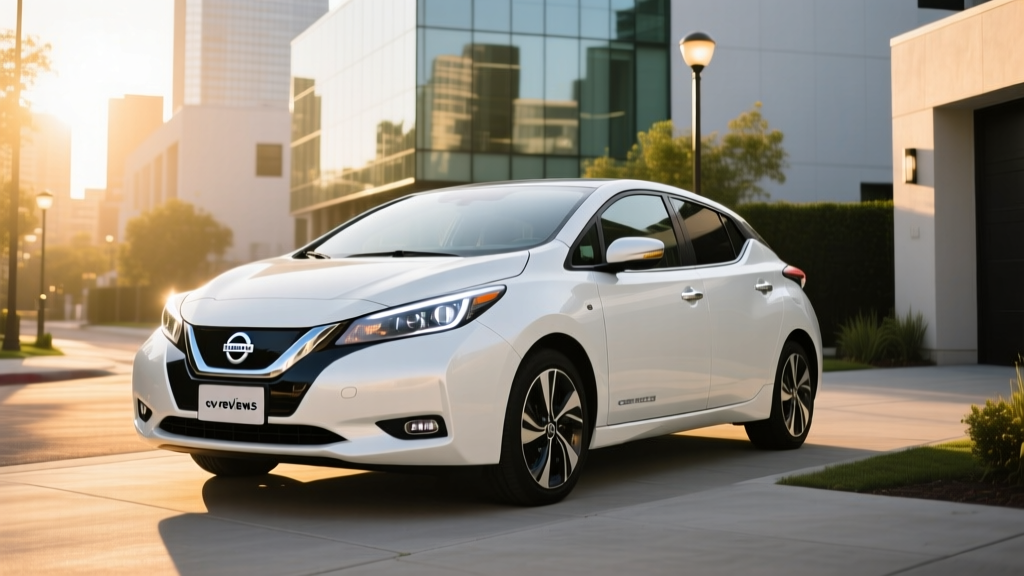
The Nissan Leaf remains one of the most affordable new electric vehicles on the US market, and finding competitive deals on the Nissan Leaf in 2026 is easier than with most EVs simply because dealer inventory tends to sit longer. Nissan's pioneering hatchback starts at $28,140 for the S trim and tops out around $37,290 for the SV Plus — before any federal, state, or dealer incentives. For budget-conscious buyers who primarily commute and have reliable home charging access, the Leaf delivers practical daily range at a price that undercuts nearly every competitor.
But the Leaf's age is showing. Its CHAdeMO fast-charging connector is increasingly orphaned as the industry standardizes on NACS, its air-cooled battery pack limits sustained fast-charging performance, and real-world highway range falls noticeably short of the EPA sticker. If you understand these trade-offs going in, a well-negotiated Leaf deal can represent outstanding value per mile of electric range.
Nissan Leaf Specs at a Glance
| Specification | Leaf S (40 kWh) | Leaf SV Plus (60 kWh) |
|---|---|---|
| Base MSRP | $28,140 | $37,290 |
| EPA Range | 149 miles | 212 miles |
| Battery (usable) | 40 kWh, NMC | 60 kWh, NMC |
| Horsepower | 147 hp | 214 hp |
| 0–60 mph | ~7.9 sec | ~6.5 sec |
| Drivetrain | FWD, single motor | FWD, single motor |
| Max DC Fast Charge | 50 kW (CHAdeMO) | 100 kW (CHAdeMO) |
| 10–80% DC Time | ~40 min | ~45 min |
| Level 2 Charge Rate | 6.6 kW (~22 mi/hr) | 6.6 kW (~22 mi/hr) |
| MPGe (combined) | 111 MPGe | 109 MPGe |
| kWh/100 mi | 30 kWh | 31 kWh |
| Cargo Volume | 23.6 cu ft (rear seats up) / 38.5 cu ft (folded) | |
| Rear Legroom | 33.5 inches | |
| Battery Warranty | 8 years / 100,000 miles (capacity loss) | |
| Powertrain Warranty | 5 years / 60,000 miles | |
Source: EPA / fueleconomy.gov and Nissan USA specifications.
Real-World Range: What the EPA Sticker Doesn't Tell You
Leaf S (40 kWh): EPA 149 miles → Expect ~120–135 miles on the highway at 70 mph; ~100–115 miles in freezing temperatures with cabin heat.
Leaf SV Plus (60 kWh): EPA 212 miles → Expect ~175–195 miles highway at 70 mph; ~150–170 miles in sub-30°F conditions.
City driving with regenerative braking recovers more energy, often matching or slightly exceeding EPA estimates in stop-and-go traffic.
The Leaf's range figures are respectable for its price class, but several factors compress real-world usability. The air-cooled battery pack lacks the active liquid thermal management found in competitors like the Hyundai Kona Electric or Chevrolet Bolt EV. This means two things: first, in hot climates (Arizona, Texas, Southern California), sustained high-speed driving or repeated fast charging can cause the battery to thermally throttle, reducing both range and charge speed. Second, in cold weather, the Leaf uses a resistance heater rather than a heat pump, which draws significantly more energy from the pack — expect 20–30% range loss below freezing.
For a 40-mile round-trip commute with home charging, even the base Leaf S provides ample buffer. The SV Plus with its 212-mile EPA rating comfortably handles 100-mile daily round trips with range to spare. But if you regularly drive 200+ mile highway stretches or live in extreme climates, the Leaf's real-world limitations become more pronounced.
Charging: The CHAdeMO Problem
| Charging Level | Power / Rate | Miles Added per Hour | Notes |
|---|---|---|---|
| Level 1 (120V) | ~1.4 kW | ~4–5 mi/hr | Emergency/trickle only |
| Level 2 (240V) | 6.6 kW | ~22 mi/hr | Full charge overnight (~9 hrs for SV Plus) |
| DC Fast (S trim) | 50 kW peak | ~150 mi/hr (peak) | 10–80% in ~40 min; CHAdeMO |
| DC Fast (SV Plus) | 100 kW peak | ~280 mi/hr (peak) | 10–80% in ~45 min; CHAdeMO |
The Leaf uses CHAdeMO for DC fast charging — and this is the single biggest ownership consideration in 2026. The North American charging infrastructure has overwhelmingly adopted the NACS (Tesla) connector as the standard, with CCS1 as the secondary option. CHAdeMO stations are not being built out, and many existing CHAdeMO stalls at Electrify America and other networks are being phased out or left unmaintained.
What this means practically: if you rely on public DC fast charging for road trips, your options are narrowing. You may arrive at a charging station with 8 NACS/CCS stalls and only 1 CHAdeMO plug — which may be out of service. Nissan does not currently offer a factory CHAdeMO-to-NACS adapter, though third-party solutions have emerged.
For home Level 2 charging, the Leaf's 6.6 kW onboard charger is adequate. A full charge of the SV Plus's 60 kWh pack takes roughly 9 hours on a 240V/32A home charger, which works fine for overnight replenishment. This is where most Leaf owners do 90%+ of their charging, and the CHAdeMO limitation is irrelevant at home (Level 2 uses the standard J1772 connector, which all EVs share).
The air-cooled battery also affects charging behavior. On hot days or after highway driving, the Leaf may reduce DC fast-charge power to protect the cells — a phenomenon known as "Rapidgate" that has been documented since the 2019 model year. Expect sustained fast-charge rates to be well below the 100 kW peak, particularly above 60% state of charge where the curve tapers significantly.
Performance, Ride, and Daily Drivability
The Leaf SV Plus's 214 hp and 250 lb-ft of instant torque provide respectable acceleration — the 0–60 mph time of roughly 6.5 seconds is quick enough for confident highway merging. The base S trim's 147 hp is adequate for city driving but feels more leisurely at highway speeds. Both trims are front-wheel drive with a single motor, so there's no AWD option for snow-belt buyers.
Ride quality is comfortable and compliant, with a soft suspension tuned for commuting rather than cornering. The low center of gravity from the under-floor battery pack gives the Leaf stable handling, though the steering is numb and the overall driving experience is appliance-like — functional but uninspiring. The cabin is quiet at city speeds but wind and tire noise become noticeable above 65 mph.
Nissan's ProPILOT Assist (standard on SV Plus, available on S) provides SAE Level 2 driver assistance — lane centering and adaptive cruise control. This is a driver-assist system, not autonomous driving; you must keep your hands on the wheel and eyes on the road at all times. It works well on well-marked highways but is less sophisticated than GM's Super Cruise or Ford's BlueCruise, which offer hands-free operation on mapped roads.
Pricing, Trim Levels, and Finding the Best Leaf Deals
| Trim | MSRP | Typical Dealer Discount | Est. Out-the-Door (pre-credit) |
|---|---|---|---|
| S (40 kWh) | $28,140 | $1,500–$3,000 | ~$25,500–$27,000 |
| SV (40 kWh) | $31,530 | $2,000–$3,500 | ~$28,500–$30,000 |
| SV Plus (60 kWh) | $37,290 | $2,500–$4,000 | ~$33,500–$35,500 |
Dealer discounts vary by region and inventory levels. Check local Nissan dealer inventory and negotiate from invoice price.
The Leaf's relatively slow sales velocity compared to the Tesla Model 3, Hyundai Ioniq 5, or even the Chevrolet Equinox EV means dealers are often motivated to negotiate. In many markets, you can find $2,000–$4,000 off MSRP without excessive haggling, particularly on the SV Plus trim. End-of-month and end-of-quarter timing improves your leverage, as do manufacturer-to-dealer incentives that Nissan periodically offers.
Nissan frequently offers lease deals on the Leaf that can be exceptionally competitive — sometimes as low as $199–$249/month with modest money down. For buyers who want the lowest monthly payment on a new EV and don't mind returning the car after 36 months, Leaf leases are among the best deals in the EV market.
Federal Tax Credit Eligibility (§30D)
- MSRP cap: The Leaf qualifies — all trims are well under the $55,000 cap for sedans/hatchbacks.
- Buyer income cap: MAGI must not exceed $150,000 (single), $225,000 (head of household), or $300,000 (joint).
- Battery sourcing: Critical minerals and battery component requirements phase in annually. As of 2026, strict sourcing rules may reduce or eliminate the full $7,500 credit for vehicles with Japan-sourced battery cells. Check the latest IRS guidance at irs.gov before purchasing.
- Point-of-sale transfer: You can transfer the credit to the dealer at purchase for an immediate price reduction, rather than waiting to claim it on your tax return.
- Lease loophole: If you lease, the §45W commercial credit may apply to the leasing company, which may pass savings through as a lower monthly payment — regardless of your personal income or the battery sourcing rules.
Tax credit rules change frequently. Consult a tax professional and verify current eligibility at irs.gov before making a purchase decision.
The Leaf's Japan-assembled battery pack has historically struggled with the §30D critical-minerals and battery-component sourcing requirements that have tightened each year since 2023. In some recent tax years, the Leaf has qualified for only $3,750 (half credit) or potentially $0, depending on the specific model year's supply chain. Always verify current eligibility before assuming a $7,500 reduction. That said, the lease pathway often sidesteps these restrictions entirely.
Interior, Cargo, and Technology
The Leaf's interior is functional but dated compared to 2026 competitors. The 8-inch touchscreen infotainment system supports Apple CarPlay and Android Auto (wireless on SV trims), but the display resolution and interface responsiveness lag behind what Hyundai, Kia, and Tesla offer. Physical buttons for climate control and volume are a practical plus — no menu-diving to adjust the temperature.
Cargo space is a genuine strength: 23.6 cubic feet behind the rear seats expands to 38.5 cubic feet with the 60/40 split rear seats folded. That's competitive with small crossovers and significantly more than the Chevrolet Bolt EV (16.3 cu ft). The hatchback design makes loading bulky items easy.
Rear-seat legroom at 33.5 inches is adequate for adults on shorter trips but tight for taller passengers on longer drives. The front seats are comfortable with decent bolstering, and the driving position is car-like and intuitive. There is no frunk (front trunk) — the space under the hood houses the power electronics and charging equipment.
Standard safety technology includes automatic emergency braking with pedestrian detection, lane departure warning, blind-spot monitoring (SV and above), and rear cross-traffic alert. The Leaf earned strong safety ratings from NHTSA with a 5-star overall rating in prior model-year testing.
Leaf vs. the Competition: Is It Worth Buying?
| Metric | Nissan Leaf SV Plus | Hyundai Kona Electric | Chevrolet Bolt EV |
|---|---|---|---|
| Base MSRP | $37,290 | ~$34,000 | ~$27,800 |
| EPA Range | 212 mi | 261 mi | 259 mi |
| DC Fast Connector | CHAdeMO | NACS / CCS | CCS |
| Max DC Charge | 100 kW | ~100 kW | 55 kW |
| Thermal Mgmt | Air-cooled | Liquid-cooled | Liquid-cooled |
| Cargo (seats up) | 23.6 cu ft | 25.5 cu ft | 16.3 cu ft |
The Leaf's strongest competitive advantage is cargo volume — its hatchback design offers more usable space than the Bolt EV and rivals small crossovers. Its base-S pricing also undercuts most competitors, particularly after dealer discounts.
However, the Kona Electric offers significantly more range (261 vs. 212 miles), liquid battery thermal management for better longevity and charging consistency, and the NACS connector for future-proofed charging access. The Bolt EV, while discontinued after the 2025 model year, remains available as a used-EV option with 259 miles of range and a lower price point — and qualifies for the $4,000 used-EV credit.
Choose the Leaf if: You prioritize cargo space, want the lowest possible new-EV price (especially via lease), charge primarily at home, and live in a moderate climate where air-cooled battery limitations are less impactful.
Look elsewhere if: You need reliable public fast-charging access for road trips, live in extreme heat or cold, want the latest infotainment tech, or plan to keep the vehicle 8+ years and want liquid-cooled battery longevity.
Pros, Cons, and Who Should Buy the Leaf
- Lowest new-EV starting price in the US market
- Excellent cargo capacity for a hatchback (23.6 cu ft)
- Strong dealer discount and lease deal availability
- Comfortable ride quality for daily commuting
- Proven reliability — the Leaf has been in production since 2011
- Simple, intuitive controls with physical buttons
- CHAdeMO connector is a dying standard in North America
- Air-cooled battery limits fast-charge speed and hot-climate performance
- No heat pump — significant cold-weather range loss
- Dated infotainment and interior design
- No AWD option
- Lower EPA range than competitors in the SV Plus trim
- Federal tax credit eligibility uncertain due to battery sourcing
Best for: Budget-focused commuters with home charging who drive less than 100 miles daily, live in moderate climates, and want a practical hatchback with generous cargo space. The Leaf is an excellent second car for a household that has another vehicle for long road trips.
Not ideal for: Apartment dwellers without home charging (CHAdeMO public infrastructure is shrinking), frequent road-trippers, buyers in extreme-temperature regions, or anyone who wants a modern, tech-forward EV experience.
Frequently Asked Questions
What is the real-world range of the Nissan Leaf?
The Leaf S delivers about 149 miles EPA, but expect 120–135 miles in real-world highway driving and as little as 100–115 miles in freezing weather. The SV Plus rates at 212 miles EPA, translating to roughly 175–195 highway miles and 150–170 miles in cold conditions. City driving with regenerative braking can match or slightly exceed EPA estimates.
How fast does the Nissan Leaf charge at home and on DC fast chargers?
On a Level 2 home charger (240V), the Leaf charges at 6.6 kW, adding roughly 22 miles of range per hour — a full charge takes about 6 hours for the S and 9 hours for the SV Plus. DC fast charging peaks at 50 kW (S) or 100 kW (SV Plus) via CHAdeMO, with 10–80% taking approximately 40–45 minutes. However, the air-cooled battery can throttle charge speeds in warm conditions.
Does the Nissan Leaf qualify for the $7,500 federal EV tax credit?
Eligibility is uncertain and varies by model year. The Leaf's Japan-sourced battery cells face strict §30D critical-minerals and component requirements that have tightened annually. In recent years, the Leaf has qualified for a partial credit ($3,750) or none at all. Verify current status at irs.gov. Leasing may bypass these restrictions via the §45W commercial credit.
Is the Nissan Leaf worth buying in 2026 vs. competitors?
If your priority is the lowest new-EV price and you charge at home, the Leaf — particularly with dealer discounts or a competitive lease — is a rational choice. But the Hyundai Kona Electric offers more range, liquid battery cooling, and a NACS connector for similar money. The Leaf's CHAdeMO connector and air-cooled battery are significant long-term disadvantages as charging infrastructure evolves.
How long will the Nissan Leaf battery last?
Nissan warranties the Leaf battery for 8 years/100,000 miles against capacity loss below 9 bars (of 12) on the capacity gauge, which roughly equates to ~66% original capacity. Real-world data from high-mileage Leaf owners shows the air-cooled pack typically retains 80–85% capacity after 5 years and 60,000–80,000 miles in moderate climates. Hot climates accelerate degradation. A full battery replacement, if needed out of warranty, costs approximately $6,500–$9,000.
Can I road-trip in a Nissan Leaf?
It's possible but increasingly inconvenient. The CHAdeMO connector limits you to a shrinking subset of DC fast-charging stations, and the 100 kW peak charge rate (SV Plus) with thermal throttling means longer stops than competitors. For road trips exceeding 200 miles, you'll need to plan carefully around CHAdeMO availability. Most Leaf owners use a second vehicle or rent for long trips.