The $99 Nissan Leaf Lease: What You're Actually Getting
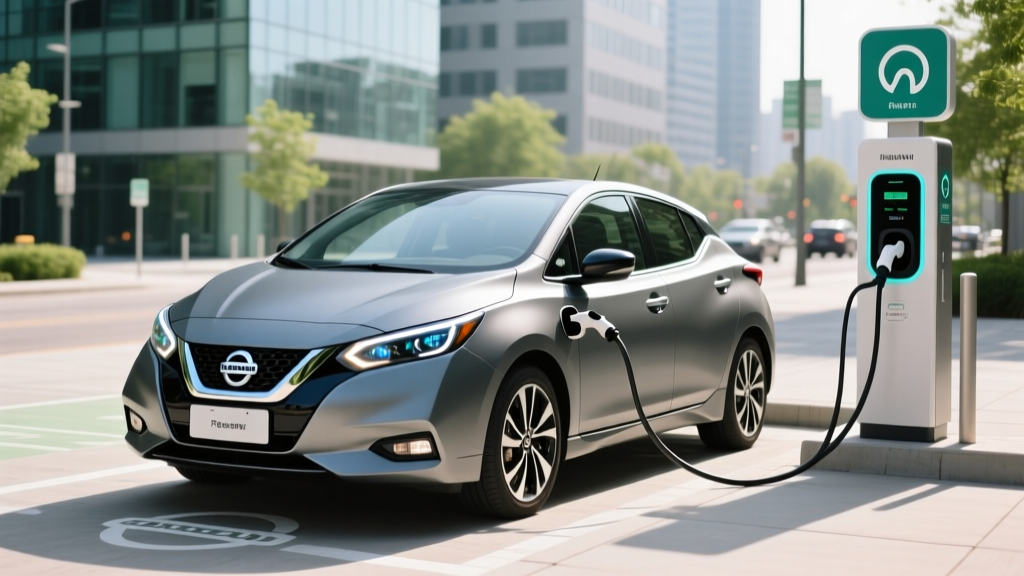
If you've seen headlines about Nissan Leaf lease deals at $99 per month, you're not imagining things — Nissan dealerships have periodically offered aggressively priced leases on the Leaf to move inventory and compete against a flood of new budget EVs. But a $99 monthly payment doesn't tell you what it's like to live with the car. This review breaks down the 2026 Nissan Leaf's real-world range, charging limitations, battery chemistry, and whether that headline lease price actually represents the best value in the compact EV segment.
The Nissan Leaf holds a unique place in EV history as one of the first mass-market electric cars, but in 2026 it faces stiff competition from the Chevrolet Equinox EV, Hyundai Kona Electric, and Volvo EX30. Understanding what the Leaf still does well — and where its aging platform shows — is essential before you sign any lease agreement.
2026 Nissan Leaf Specs at a Glance
| Spec | Leaf S (Base) | Leaf SV Plus |
|---|---|---|
| EPA Range | 149 miles | 212 miles |
| Battery Capacity (usable) | 40 kWh | 60 kWh |
| Battery Chemistry | NMC (lithium-ion) | NMC (lithium-ion) |
| Horsepower | 147 hp | 214 hp |
| 0–60 mph | ~7.9 sec | ~6.5 sec |
| Drivetrain | FWD (single motor) | FWD (single motor) |
| Max DC Fast Charge | 50 kW (CHAdeMO) | 100 kW (CHAdeMO) |
| Level 2 Charge Rate | 6.6 kW | 6.6 kW |
| MPGe (combined) | 111 MPGe | 109 MPGe |
| Cargo Volume (rear seats up) | 23.6 cu ft | 23.6 cu ft |
| Base MSRP (2026) | $29,135 | $37,285 |
| Battery Warranty | 8 yr / 100,000 mi | 8 yr / 100,000 mi |
Source: EPA Fuel Economy, Nissan USA specifications.
Real-World Range: What the EPA Number Doesn't Tell You
EPA Estimated Range: 212 miles
Real-World Highway (70 mph, mild weather): ~175–190 miles
Real-World City/Mixed Commuting: ~195–210 miles
Cold Weather (below 32°F, highway): ~135–160 miles
Combined Year-Round Expectation: ~180–195 miles
The Leaf SV Plus's 212-mile EPA rating is respectable for the price point, but real-world results depend heavily on your driving pattern. The Leaf uses a relatively modest 60 kWh NMC battery pack, and its aerodynamics — designed more for city efficiency than highway slicing — mean range drops noticeably above 65 mph. In our experience and consistent with owner reports, expect roughly 15–18% range loss on sustained highway trips compared to the EPA sticker.
Cold weather is the bigger concern. The Leaf lacks a heat pump (it uses resistive cabin heating), which draws heavily from the battery in winter. Owners in northern climates regularly report 25–35% range loss when temperatures dip below freezing. If your commute is 60 miles round-trip and you live in Minneapolis, the SV Plus will handle it, but the base S trim at 149 miles EPA becomes a genuine source of stress in January.
The base Leaf S, with its 40 kWh pack and 149-mile EPA rating, is strictly a city commuter. Real-world range in mixed driving lands around 125–140 miles, and cold weather can push that below 100 miles. This is the single biggest reason to opt for the SV Plus if you can absorb the higher lease payment.
Charging Speed: The Leaf's Biggest 2026 Limitation
| Charging Level | Power (kW) | Connector | Speed / Time |
|---|---|---|---|
| Level 1 (120V household) | ~1.4 kW | J1772 | ~3–4 miles per hour |
| Level 2 (240V home/public) | 6.6 kW | J1772 | ~22 miles per hour; full charge in ~9.5 hr (SV Plus) |
| DC Fast Charge (SV Plus) | Up to 100 kW peak | CHAdeMO | 10–80% in ~45 minutes |
| DC Fast Charge (S trim) | Up to 50 kW peak | CHAdeMO | 10–80% in ~60 minutes |
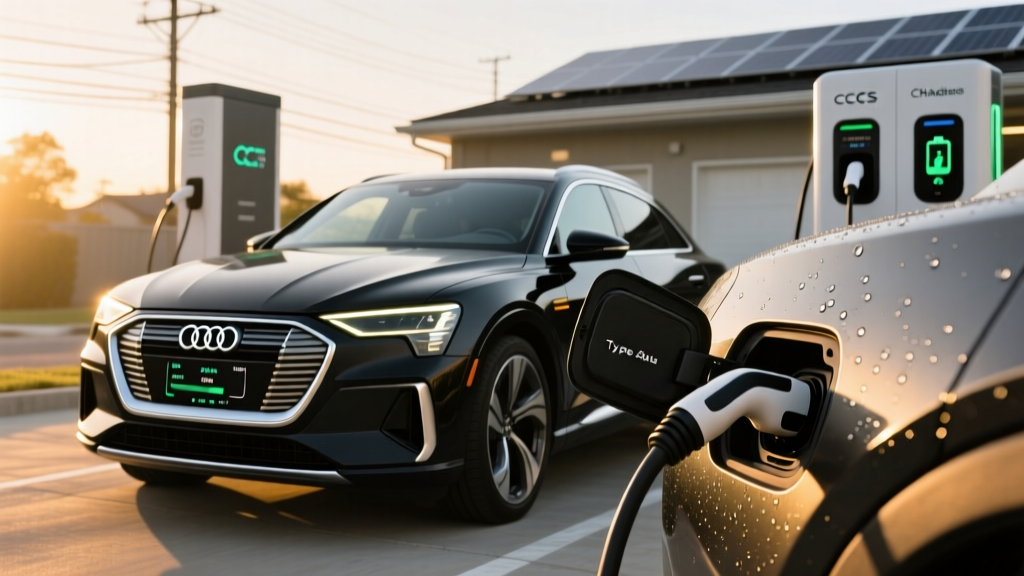
Here's where the Leaf's age shows most clearly. In 2026, the dominant DC fast-charging standard in the US is NACS (Tesla's connector), with CCS1 a close second. The Leaf remains the only mainstream EV still using CHAdeMO, a connector standard that is being actively phased out across public charging networks.
Electrify America stations have largely dropped CHAdeMO connectors from new installations. While adapters exist (CHAdeMO-to-NACS or CHAdeMO-to-CCS), they cost $200–$400 and add bulk. If your road-trip route relies on Electrify America or Tesla Superchargers (now open to non-Tesla EVs via NACS), you'll need an adapter or careful planning around remaining CHAdeMO-equipped stations.
The SV Plus's 100 kW peak DC rate is adequate but uncompetitive. Rivals like the Hyundai Kona Electric (peak ~150 kW via CCS) and the Chevrolet Equinox EV (peak ~150 kW via NACS) charge 10–80% in roughly 25–30 minutes. The Leaf's charge curve also tapers significantly above 80% state of charge, meaning that last 20% can take as long as the first 70%. Plan accordingly on road trips: charge to 80% and move on rather than waiting for a full battery.
For home Level 2 charging, the 6.6 kW onboard charger is standard across trims. A full overnight charge from empty takes about 9.5 hours on the SV Plus — fine for daily commuting if you charge at home, but slower than the 11.5 kW chargers found in some competitors. Installation of a 240V Level 2 home circuit (typically a 40-amp or 50-amp dedicated circuit) runs $500–$2,000 depending on your panel capacity and run length, per licensed electrician estimates.
Performance and Driving Dynamics
The Leaf SV Plus's 214 horsepower and single front-mounted motor deliver adequate acceleration — 0–60 mph in roughly 6.5 seconds — which feels peppy around town thanks to instant electric torque. The base S trim's 147 hp is more leisurely at 7.9 seconds but perfectly fine for urban driving.
Ride quality is compliant and comfortable, tuned for commuting rather than sporty handling. The Leaf's low center of gravity (battery pack under the floor) gives it reasonable cornering composure, but the front-heavy weight distribution (single FWD motor) means you'll feel understeer if you push it on back roads. Regenerative braking is adjustable via the e-Pedal mode, which enables near one-pedal driving in city traffic — one of the Leaf's best usability features.
Notably absent: all-wheel drive. The Leaf is FWD only, which may matter if you live in heavy snow country. Competitors like the Subaru Solterra and Toyota bZ4X offer AWD, though at higher price points.
Pricing, $99 Lease Deals, and Tax Credit Realities
| Trim | MSRP | Est. Monthly Lease (36 mo, $3,500 down) | Federal §30D Credit Eligible? |
|---|---|---|---|
| Leaf S | $29,135 | $99–$169 | Yes — up to $7,500 (see rules below) |
| Leaf SV Plus | $37,285 | $199–$289 | Yes — up to $7,500 (see rules below) |
The $99/month Nissan Leaf lease deal typically applies to the base S trim with 36-month terms and $2,500–$3,500 due at signing. These promotional leases are dealer-dependent and often regional — they show up most frequently in markets with heavy EV competition (California, New York, Texas) where Nissan is incentivized to compete. Always verify the exact terms with your local dealer, including mileage allowance (typically 10,000 miles/year on promotional leases) and whether the advertised price includes the federal tax credit being applied as a lease capital cost reduction.
Federal EV Tax Credit (§30D) Rules for Leasing
The Leaf qualifies for up to $7,500 in federal EV tax credits under IRS §30D, but eligibility depends on several factors that change annually. Per the IRS clean vehicle credit guidelines, you must meet:
- Income caps: Modified AGI ≤ $150,000 (single), $225,000 (head of household), $300,000 (joint)
- MSRP cap: Vehicle MSRP ≤ $55,000 (the Leaf qualifies easily)
- Battery sourcing requirements: Critical minerals and battery components must meet phased-in thresholds for North American or FTA-partner sourcing — Nissan has generally met these for the Leaf, but confirm per current IRS guidance
- Point-of-sale transfer: As of 2024+, you can transfer the credit to the dealer at purchase, reducing the upfront price. On leases, the credit technically goes to the lessor (Nissan), who may pass savings through as a lower capitalized cost — verify this explicitly with the dealer
Lease vs. buy consideration: When you lease, the $7,500 credit goes to the leasing company. Many manufacturers pass it through as a cap cost reduction, effectively lowering your monthly payment. But this isn't guaranteed by law — it depends on how Nissan structures the lease. A $99/month Leaf S lease likely already factors in the full $7,500 credit. If you buy instead, you claim the credit on your tax return (or transfer it at point of sale).
Interior, Tech, and Daily Usability
The Leaf's interior is functional but dated compared to 2026 competitors. You get an 8-inch (S) or 12.3-inch (SV Plus) touchscreen with wireless Apple CarPlay and Android Auto, a digital instrument cluster, and Nissan's ProPilot Assist driver-assistance suite (adaptive cruise control, lane centering, automatic emergency braking). ProPilot is a competent SAE Level 2 system — it assists with steering and speed on highways but requires continuous driver attention and hands-on-wheel engagement. It is not self-driving.
Cargo space is a genuine strength: 23.6 cubic feet behind the rear seats and roughly 30 cubic feet with the 60/40 rear seatbacks folded. That's competitive with compact crossovers and more practical than several EV hatchback rivals. Rear legroom is adequate at 33.5 inches, though taller passengers will find it snug on longer trips.
Notable drawbacks include the absence of a heat pump (hurting winter efficiency), no front trunk (frunk), and the CHAdeMO connector issue discussed above. The infotainment system, while functional, lacks the responsiveness and polish of Hyundai's or Tesla's interfaces.
Pros, Cons, and Who the Leaf Is For
- Aggressive lease pricing ($99/mo on S trim)
- Comfortable ride, excellent city manners
- Strong cargo space (23.6 cu ft hatchback)
- e-Pedal one-pedal driving is intuitive
- ProPilot Assist included on most trims
- Low MSRP — well under §30D cap
- 8-year/100,000-mile battery warranty
- CHAdeMO connector — shrinking public network
- No heat pump — significant winter range loss
- Slow DC fast charging vs. 2026 competitors
- Dated interior and infotainment
- FWD only — no AWD option
- Base S trim's 149-mile range is limiting
- Platform is aging (originally designed 2010s)
Best For
The Leaf at $99/month is ideal for budget-conscious urban commuters with home charging access and a sub-80-mile round-trip commute. If you can charge overnight at home on Level 2 and rarely road-trip more than 150 miles, the Leaf SV Plus offers outstanding value. It's also a strong second-car EV for households that already have a longer-range vehicle for trips.
Look Elsewhere If
You need reliable DC fast charging on road trips (NACS/CCS vehicles are far better served), you live in extreme cold climates without a garage, or you want a modern tech-forward cabin. The Hyundai Kona Electric, Chevrolet Equinox EV, and Tesla Model 3 all offer superior charging infrastructure access and longer real-world range.
Frequently Asked Questions
Is the $99/month Nissan Leaf lease a good deal in 2026?
For the base S trim with $2,500–$3,500 due at signing and a 10,000-mile annual allowance, yes — it's one of the cheapest ways to get into a new EV. But the S trim's 149-mile EPA range and 50 kW CHAdeMO charging are serious limitations. Most buyers are better served stretching to the SV Plus lease at roughly $199–$289/month for 212 miles of range and 100 kW DC charging.
Does the Nissan Leaf qualify for the $7,500 federal tax credit?
Yes, the Leaf qualifies for up to $7,500 under IRS §30D, subject to buyer income caps, battery sourcing requirements, and MSRP limits (the Leaf is well under the $55,000 cap). On a lease, the credit goes to Nissan as the lessor — confirm they pass it through as a cap cost reduction. Consult a tax professional for your specific situation.
Can I road-trip the Nissan Leaf in 2026?
You can, but it requires planning. The CHAdeMO connector means fewer compatible public fast chargers, and the 100 kW peak rate (SV Plus) means 45-minute stops for a 10–80% charge. For frequent road trippers, a NACS or CCS-equipped vehicle is a significantly better choice.
How long will the Leaf's battery last?
Nissan covers the battery for 8 years or 100,000 miles against capacity loss below 9 bars (of 12) on the capacity gauge. NMC chemistry typically degrades 10–15% over 8–10 years of normal use. Real-world data from earlier Leaf generations shows most batteries retain 80–85% capacity at 100,000 miles, though passive air-cooled battery management (the Leaf uses air cooling, not liquid) can accelerate degradation in hot climates.
Leaf SV Plus vs. Hyundai Kona Electric — which is better?
The Kona Electric offers ~261 miles EPA range, CCS fast charging at up to ~150 kW, a more modern interior, and similar pricing. If you can find a comparable lease deal, the Kona is the more future-proof choice. The Leaf wins on cargo space and potentially on lease price in markets where Nissan is offering aggressive incentives.