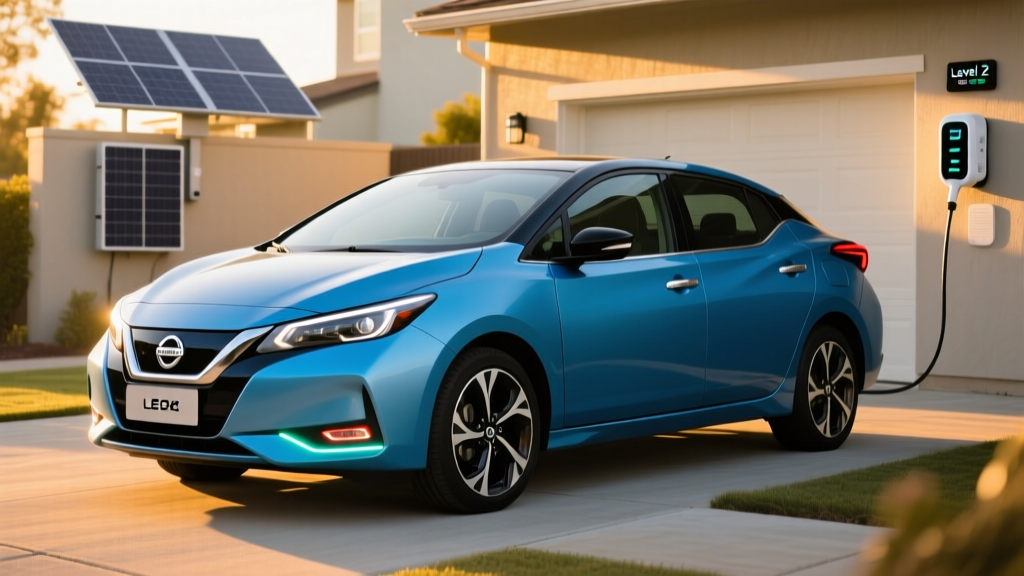
The Nissan LEAF holds a unique place in the EV market: it's the original mass-market electric car, now in its twilight years, still undercutting nearly every competitor on price. But with rivals offering 300+ miles of range, liquid-cooled batteries, and modern fast-charging architecture, the question deserves a serious, data-driven answer: is a Nissan LEAF a good car for today's EV buyer?
After analyzing the 2026 Nissan LEAF's specs, real-world range behavior, charging performance, and ownership economics, the answer is nuanced. The LEAF is an excellent budget commuter EV with genuine daily-driving practicality — but it comes with compromises in charging speed, thermal management, and highway range that buyers must understand before signing a purchase agreement.
2026 Nissan LEAF: Core Specifications at a Glance
| Spec | LEAF S (40 kWh) | LEAF SV PLUS (60 kWh) |
|---|---|---|
| EPA Range | 149 miles | 212 miles |
| Battery (usable) | ~39 kWh (NMC) | ~59 kWh (NMC) |
| Motor Output | 147 hp / 236 lb-ft | 214 hp / 250 lb-ft |
| 0–60 mph | ~7.9 sec | ~6.5 sec |
| Drivetrain | FWD | FWD |
| Max DC Fast Charge | 50 kW (CHAdeMO) | 100 kW (CHAdeMO) |
| 10–80% DC Time | ~40 min | ~45 min |
| Level 2 Charge Rate | 6.6 kW (~22 mi/hr) | 6.6 kW (~25 mi/hr) |
| EPA Efficiency (Combined) | 111 MPGe (30 kWh/100mi) | 109 MPGe (31 kWh/100mi) |
| Cargo Volume | 23.6 cu ft (rear seats up) | 23.6 cu ft (rear seats up) |
| Base MSRP | ~$28,140 | ~$36,190 |
Source: EPA Fuel Economy, Nissan USA specifications.
Real-World Range: What the EPA Sticker Doesn't Tell You
- EPA Estimated: 212 miles
- Real-World Highway (70 mph, mild weather): ~170–185 miles
- Real-World City/Commuting: ~200–215 miles
- Cold Weather (below 32°F, highway): ~130–155 miles
The LEAF SV PLUS carries an EPA-estimated 212 miles of range, which sounds adequate for most daily commutes and errands. In practice, the LEAF's passive air-cooled battery thermal management system — a design choice Nissan has maintained since 2011 — creates real-world variability that buyers need to understand.
Air cooling means the battery is more susceptible to temperature extremes. In summer highway driving at sustained speeds, battery temperatures rise, and the LEAF's battery management system may restrict regenerative braking and acceleration to protect the cells — a phenomenon owners call "Rapidgate." In winter, the lack of a heat pump (the LEAF uses a resistive PTC heater) draws significant energy from the battery for cabin heating, compounding range loss from cold chemistry. Expect a 30–38% range reduction in sustained sub-freezing conditions, based on AAA's EV range testing.
For the base LEAF S with its 40 kWh pack and 149-mile EPA rating, real-world range drops to approximately 110–125 miles on the highway and as low as 80–95 miles in cold weather. This makes the S trim viable only as a strict city commuter with reliable home charging.
Charging Speed: The LEAF's Biggest Compromise
| Charging Level | Power / Rate | LEAF S (40 kWh) | LEAF SV PLUS (60 kWh) |
|---|---|---|---|
| Level 1 (120V household) | ~1.4 kW | ~4 mi/hr | ~4 mi/hr |
| Level 2 (240V home/public) | 6.6 kW | ~22 mi/hr (full in ~7 hr) | ~25 mi/hr (full in ~9.5 hr) |
| DC Fast Charge | 50 kW (S) / 100 kW (SV+) | 10–80% in ~40 min | 10–80% in ~45 min |
Charging is where the LEAF shows its age most clearly. The 2026 LEAF still uses the CHAdeMO DC fast-charging connector, a standard that has been effectively abandoned in North America in favor of the NACS (Tesla Supercharger) and CCS connectors. Nissan has confirmed future models will adopt NACS, but the current LEAF remains on CHAdeMO.
What does this mean practically? CHAdeMO stations are becoming harder to find. Electrify America, EVgo, and ChargePoint have been deprioritizing CHAdeMO maintenance and installation in favor of CCS and NACS stalls. Before buying a LEAF, check your local charging infrastructure using PlugShare or the Alternative Fuels Data Center station locator to confirm you have reliable CHAdeMO access nearby.
The SV PLUS's 100 kW peak charge rate sounds respectable, but the LEAF's charging curve tapers aggressively to protect the passively cooled battery. Peak 100 kW is sustained only briefly at low state of charge; by 50% SoC, speeds typically drop to 60–70 kW, and above 80%, charging slows to a trickle. A 10–80% session takes approximately 45 minutes — roughly 20 minutes longer than competitors with liquid-cooled batteries (the Hyundai Kona Electric, for example, manages 10–80% in about 43 minutes at a similar peak rate, but with better sustained throughput).
For home charging, the onboard 6.6 kW charger is adequate. A full overnight charge on a Level 2 home station (like a ChargePoint Home Flex or Emporia Level 2) is realistic for both trims. Plan on installing a 240V/30A circuit minimum; budget $500–$2,000 for professional installation depending on your electrical panel's proximity to the garage.
Performance and Driving Dynamics
The LEAF SV PLUS's 214 horsepower and 250 lb-ft of torque deliver respectable acceleration — 0–60 mph in approximately 6.5 seconds. That's brisk enough for confident highway merging and passing. The instant electric torque makes the LEAF feel quicker in city driving than the 0–60 time suggests.
The LEAF is front-wheel drive only. There is no AWD option, which may matter for buyers in snowy climates. However, the low center of gravity from the under-floor battery pack gives the LEAF stable handling, and the e-Pedal regenerative braking mode enables one-pedal driving in most conditions — a feature EV owners quickly learn to appreciate.
Ride quality is comfortable and compliant, tuned more for commuting comfort than sporty engagement. Cabin noise is low at city speeds but becomes noticeable at highway speeds, with more wind and road noise than newer competitors like the Chevrolet Equinox EV or Volkswagen ID.4.
Interior, Cargo, and Technology
The LEAF's interior is functional but dated compared to 2026 competitors. The 8-inch touchscreen infotainment system supports Apple CarPlay and Android Auto (wired), and the SV PLUS adds navigation and Nissan's ProPILOT Assist driver-assistance suite.
Cargo space: 23.6 cubic feet behind the rear seats, expanding to 30.0 cubic feet with the rear seats folded. That's competitive for the hatchback segment and practical for groceries, luggage, or a weekly Costco run. Rear-seat legroom is 33.5 inches — adequate for adults on shorter trips, tight for taller passengers on longer rides.
ProPILOT Assist is Nissan's Level 2 driver-assistance system (per SAE J3016), combining adaptive cruise control and lane-centering steering. It works well on divided highways but requires continuous driver attention — hands on the wheel, eyes on the road. This is not self-driving.
- CHAdeMO connector — declining public infrastructure in North America
- Passive air-cooled battery — thermal throttling in heat, slower charging
- No heat pump — resistive heating drains range in cold weather
- Dated interior materials and infotainment vs. 2026 competitors
- FWD only — no AWD option for snow-belt buyers
- No frunk (front trunk) — charging hardware stored in rear cargo area
Pricing, Tax Credits, and Ownership Cost
| Trim | Base MSRP | Federal §30D Credit | Effective Price |
|---|---|---|---|
| LEAF S (40 kWh) | ~$28,140 | $3,750* | ~$24,390 |
| LEAF SV PLUS (60 kWh) | ~$36,190 | $3,750* | ~$32,440 |
*Federal tax credit amounts reflect the LEAF's partial qualification under IRS §30D rules. The LEAF qualifies for $3,750 based on critical-mineral requirements but does not meet the full battery-component sourcing threshold for the additional $3,750. Eligibility requires buyer income below $150,000 (single) / $300,000 (joint), and the LEAF's MSRP falls well under the $55,000 sedan cap. The credit can be transferred to the dealer as a point-of-sale discount. Always verify current eligibility with your tax professional and the IRS, as sourcing rules update annually.
At an effective price of approximately $24,390 for the S trim after the credit, the LEAF is one of the least expensive new EVs available in the United States. Even the SV PLUS at ~$32,440 undercuts competitors like the Hyundai Kona Electric (~$33,000 base) and Chevrolet Equinox EV (~$33,000 base).
5-year ownership economics favor the LEAF for budget-conscious buyers. Electricity costs approximately $0.13–$0.16/kWh nationally for home charging, translating to roughly 3.5–4.5 cents per mile. Insurance premiums for the LEAF tend to be moderate — typically $1,200–$1,600/year depending on your profile — because the vehicle's low replacement cost keeps comprehensive/collision rates down.
Warranty and Battery Longevity
Nissan provides an 8-year/100,000-mile battery capacity warranty on the LEAF, guaranteeing that the battery will retain at least 66.25% of its original capacity (8 bars out of 12 on the dashboard capacity gauge) during the warranty period. The powertrain warranty is 5 years/60,000 miles, and the basic vehicle warranty is 3 years/36,000 miles.
Long-term battery degradation is the LEAF's most documented concern. The passively cooled battery degrades faster than liquid-cooled competitors, particularly in hot climates. Data from LEAF owners tracked on platforms like MyNissanLeaf and the Open Vehicles database shows average capacity loss of approximately 15–25% over 5–7 years in moderate climates, and 25–35% in hot climates (Arizona, Texas, Southern California). A 60 kWh LEAF SV PLUS that starts at 212 miles of range could realistically deliver 160–180 miles after 5 years of moderate use.
Battery replacement, if needed out of warranty, costs approximately $6,500–$9,000 for the 40 kWh pack and $9,000–$12,000 for the 60 kWh pack, based on dealer parts pricing and third-party EV battery shops. This is a significant expense that buyers planning long-term ownership should factor in.
How the LEAF Compares to Key Competitors
| Spec | Nissan LEAF SV PLUS | Hyundai Kona Electric | Chevy Equinox EV 2LT |
|---|---|---|---|
| EPA Range | 212 mi | 261 mi | 319 mi |
| Battery | 59 kWh (NMC) | 65 kWh (NMC) | 85 kWh (NMC) |
| DC Fast Charge | 100 kW (CHAdeMO) | 100+ kW (CCS/NACS) | 150+ kW (NACS) |
| Thermal Mgmt | Passive air | Liquid-cooled | Liquid-cooled |
| Base MSRP | ~$36,190 | ~$33,000 | ~$33,000 |
| Connector | CHAdeMO | NACS | NACS |
The comparison is stark. Both the Kona Electric and Equinox EV offer significantly more range, modern NACS connectors with full Supercharger network access, and liquid-cooled batteries that maintain performance across temperature extremes. The LEAF's advantage is its lower starting price on the S trim and Nissan's extensive dealer network for service.
Who Should Buy the Nissan LEAF?
- Need an affordable new EV primarily for commuting (under 60 miles round-trip)
- Can charge reliably at home every night on Level 2
- Live in a moderate climate (rarely below 20°F or above 100°F)
- Don't rely on public DC fast charging for regular trips
- Want the lowest possible entry price into a new EV
- Plan to keep the car 3–5 years and don't mind some range degradation
- Regularly drive more than 150 miles in a day
- Need reliable DC fast charging for road trips
- Live in extreme heat or cold climates
- Want access to the Tesla Supercharger network
- Plan to keep the EV 8+ years and expect minimal degradation
- Need AWD for snow or mountain driving
Pros and Cons Summary
- Lowest-priced new EV in the U.S. market (S trim)
- Comfortable ride and easy one-pedal driving
- Practical hatchback cargo space (23.6 cu ft)
- ProPILOT Assist is competent for Level 2
- Extensive Nissan dealer service network
- Eligible for $3,750 federal tax credit
- CHAdeMO connector — shrinking public network
- Passive battery cooling — thermal throttling risk
- 212-mile max range trails competitors by 50–100+ miles
- No heat pump — significant winter range loss
- Faster long-term degradation than liquid-cooled EVs
- Dated interior and infotainment
Frequently Asked Questions
Is a Nissan LEAF a good car for daily commuting?
Yes — for commutes under 60 miles round-trip with reliable home charging, the LEAF SV PLUS is comfortable, efficient, and inexpensive to operate. The 212-mile EPA range provides ample buffer for daily driving, and the e-Pedal one-pedal mode reduces brake wear and driving fatigue in stop-and-go traffic.
Does the 2026 Nissan LEAF qualify for the federal EV tax credit?
The LEAF currently qualifies for $3,750 under IRS §30D, reflecting partial credit for critical-mineral sourcing. It does not meet the battery-component manufacturing threshold for the full $7,500. Buyer income must be under $150,000 (single) or $300,000 (joint), and the credit can be applied as a point-of-sale reduction at the dealer. Verify current rules at IRS.gov before purchasing.
How long will a Nissan LEAF battery last?
Based on historical degradation data, expect the LEAF's NMC battery to retain approximately 75–85% capacity after 5 years in moderate climates, and 65–75% in hot climates. Nissan's 8-year/100,000-mile warranty covers capacity below 66.25%. Out-of-warranty replacement costs $6,500–$12,000 depending on pack size.
Can I use Tesla Superchargers with a Nissan LEAF?
No. The LEAF uses the CHAdeMO DC fast-charging connector, which is not compatible with Tesla Superchargers (NACS) or CCS stations without an adapter. As of 2026, no reliable CHAdeMO-to-NACS adapter exists for DC fast charging. You are limited to CHAdeMO-equipped public stations, which are declining in number.
Is the Nissan LEAF worth buying over the Chevrolet Equinox EV or Hyundai Kona Electric?
For the lowest possible purchase price (LEAF S at ~$24,390 after credit), the LEAF is worth considering as a budget commuter. However, the Equinox EV and Kona Electric offer substantially more range, modern NACS charging, liquid-cooled batteries, and better long-term value for only $5,000–$8,000 more. If your budget allows, the competitors are stronger long-term choices.
What is the real cost to charge a Nissan LEAF at home?
At the national average residential electricity rate of ~$0.15/kWh, fully charging the LEAF SV PLUS's 60 kWh battery costs approximately $9.00, yielding roughly 4.2 cents per mile. Compare that to a 30 MPG gas car at $3.50/gallon — approximately 11.7 cents per mile. Over 15,000 miles per year, the LEAF saves approximately $1,100 in fuel costs.