Quick Verdict: The Affordable EV That Knows Its Lane
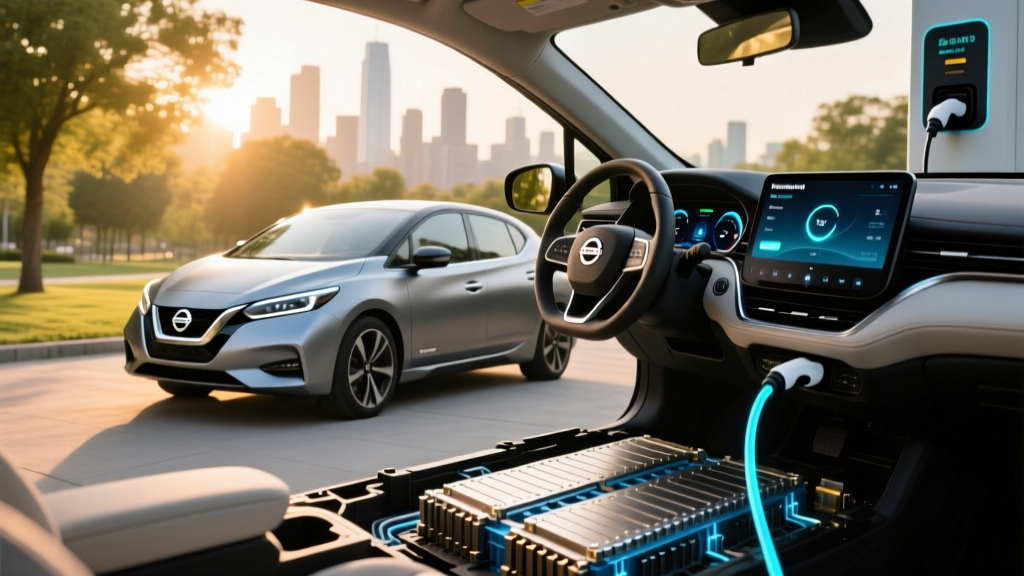
The Nissan Leaf has never tried to be a luxury cruiser or a 400-mile road-trip machine. In 2026, it continues to occupy a rare position: an all-electric hatchback starting under $29,000 before incentives, with enough range for daily commuting and weekend errands. The 2026 Leaf carries over with the same 40 kWh and 60 kWh battery options, CHAdeMO DC fast charging, and a practical hatchback form factor that still appeals to budget-conscious EV shoppers who charge primarily at home.
But let's be direct about the Leaf's limitations in 2026. While rivals have adopted the NACS connector for Tesla Supercharger access and pushed DC fast-charge rates past 200 kW, the Leaf still relies on CHAdeMO and tops out at roughly 100 kW. If your routine is 90% home charging and 10% public fast charging, the Leaf remains a strong value. If you road-trip monthly, you'll want to look at the Hyundai Kona Electric, Chevrolet Bolt EV, or Tesla Model 3 instead.
| Spec | Leaf S (40 kWh) | Leaf SV Plus (60 kWh) |
|---|---|---|
| EPA Range | 149 miles | 212 miles |
| Battery (usable) | 40 kWh | 60 kWh |
| Battery Chemistry | NMC (lithium-ion) | NMC (lithium-ion) |
| Motor Output | 147 hp / 236 lb-ft | 214 hp / 250 lb-ft |
| Drivetrain | FWD | FWD |
| 0-60 mph | ~7.9 sec | ~6.5 sec |
| Max DC Fast Charge | 50 kW | 100 kW |
| 10-80% DC Time | ~40 min | ~45 min |
| Level 2 Charge Rate | 6.6 kW | 6.6 kW |
| EPA Efficiency | 111 MPGe (30 kWh/100mi) | 109 MPGe (31 kWh/100mi) |
| Cargo (rear seats up) | 23.6 cu ft | 23.6 cu ft |
| Cargo (rear seats folded) | 68.8 cu ft | 68.8 cu ft |
| Base MSRP | $28,140 | $36,190 |
Range and Efficiency: What the EPA Number Doesn't Tell You
EPA Estimate: 149 miles (S) / 212 miles (SV Plus)
Real-World Expectation: 120–135 miles highway (S) / 175–195 miles highway (SV Plus). In freezing temperatures (below 32°F), expect a 20–30% reduction, dropping the SV Plus to roughly 150–165 miles on a full charge.
The Leaf SV Plus's 212-mile EPA rating is adequate for daily commuting, grocery runs, and most suburban routines. According to fueleconomy.gov, the combined efficiency of 109 MPGe (31 kWh per 100 miles) is competitive within the segment, though the Hyundai Kona Electric edges ahead at roughly 115 MPGe.
The Leaf uses passive air cooling for its battery pack rather than the active liquid thermal management found in the Bolt, Kona, or Tesla models. This matters in two ways: sustained highway driving in hot climates can reduce range more than the EPA sticker implies, and repeated DC fast charging in high heat can trigger thermal throttling, slowing charge speeds to protect the cells. For temperate-climate commuters who charge overnight at home, this is a minor issue. For Phoenix or Las Vegas drivers doing frequent fast charges, it's worth factoring in.
The 40 kWh Leaf S, at 149 miles EPA, is best understood as a dedicated city and suburban commuter. It handles a 40-mile round-trip commute with room to spare, but it is not a one-car solution for households that need flexibility for longer trips.
Charging Speeds: The CHAdeMO Question in a NACS World
| Charging Level | Power / Rate | Miles Added per Hour | Notes |
|---|---|---|---|
| Level 1 (120V outlet) | ~1.4 kW | ~4–5 miles/hr | Emergency/trickle only |
| Level 2 (240V home) | 6.6 kW | ~22–25 miles/hr | Full charge in ~7–10 hours |
| DC Fast (S trim) | 50 kW peak | ~120 miles/hr (peak) | CHAdeMO connector |
| DC Fast (SV Plus) | 100 kW peak | ~200 miles/hr (peak) | CHAdeMO; tapers above 80% |
Home Level 2 charging is where the Leaf performs well. At 6.6 kW, a full charge from empty takes about 7 hours on the 40 kWh pack and roughly 9.5 hours on the 60 kWh pack. Plug in when you get home, and you'll wake up to a full battery every morning — the way most EV ownership actually works.
The DC fast-charging situation is the Leaf's most significant competitive weakness in 2026. Two issues converge: the CHAdeMO connector standard and the relatively modest peak charge rate.
CHAdeMO, once the dominant fast-charging standard alongside CCS, has been effectively abandoned by nearly every automaker except Mitsubishi in the U.S. market. Tesla Superchargers (now using NACS), Electrify America, and most new public installations use CCS1 or NACS. While CHAdeMO chargers still exist at many Electrify America and EVgo stations, the network is shrinking relative to CCS/NACS. Nissan includes a CHAdeMO port on every Leaf; adapters to CCS or NACS are not officially supported.
On the SV Plus, the 100 kW peak DC rate is respectable but not class-leading. A 10–80% charge takes approximately 45 minutes under ideal thermal conditions. However, because the Leaf lacks active battery thermal management, charging in hot weather or after extended highway driving can push that time to 55–65 minutes as the system throttles power to protect the cells. The 50 kW cap on the base S trim means even longer stops — roughly 40 minutes for a 10–80% session, but with far fewer miles added due to the smaller battery.
Bottom line: The Leaf is optimized for home charging. Public fast charging works, but plan your routes around CHAdeMO-equipped stations and expect longer stops than you'd get in a Hyundai Ioniq 5 or Tesla Model 3.
Performance and Driving Dynamics
The Leaf SV Plus delivers 214 horsepower and 250 lb-ft of torque from a single front-mounted motor driving the front wheels. The 0–60 mph time of roughly 6.5 seconds is quick enough for confident highway merging and passing. The base S trim, at 147 hp, is more sedate but still benefits from the instant torque delivery that makes all EVs feel responsive around town.
Ride quality is comfortable and compliant, tuned for commuting rather than sporty driving. The Leaf's relatively low center of gravity (battery pack under the floor) gives it competent handling for a compact hatchback, though the steering is light and numb — typical for this class. Regenerative braking is adjustable via Nissan's e-Pedal mode, which enables near one-pedal driving in stop-and-go traffic. However, unlike some competitors, the Leaf does not come to a complete stop in e-Pedal mode at very low speeds — you'll still need the brake pedal for the final creep.
No all-wheel-drive option is available. If you need AWD for snow-belt winters, the Tesla Model Y, Hyundai Ioniq 5, or Kia EV6 are the alternatives.
Interior, Cargo, and Technology
The Leaf's cabin is functional rather than premium. Soft-touch materials appear on the dashboard and door tops, but hard plastics are present on the lower panels and center console. Seating is comfortable for four adults, though the rear middle seat is narrow. Rear legroom measures 33.5 inches — adequate for average-height passengers but tighter than the Kona Electric or Bolt.
Cargo space is a genuine strength: 23.6 cubic feet behind the rear seats and 68.8 cubic feet with them folded. That's hatchback-versatile and handles everything from Costco runs to a week's luggage for two. There is no front trunk (frunk); the space under the hood houses the motor and power electronics.
The infotainment system centers on an 8-inch touchscreen (SV Plus) or a smaller 5-inch display (S trim). Apple CarPlay and Android Auto are standard on all trims, with wireless connectivity on SV Plus. The ProPilot Assist system bundles adaptive cruise control, lane-centering steering, and automatic emergency braking — a competent Level 2 driver-assistance suite for highway use. It is not autonomous driving: you must keep your hands on the wheel and eyes on the road at all times.
Notable tech drawbacks: no vehicle-to-load (V2L) capability for powering external devices, no over-the-air software updates for the powertrain, and the charging port door is manually operated rather than power-latched.
2026 Nissan Leaf Price, Trims, and Tax Credit Eligibility
| Trim | Base MSRP | Est. As-Tested | Federal Credit Potential | Effective Price |
|---|---|---|---|---|
| Leaf S (40 kWh) | $28,140 | $29,500 | Up to $3,750* | ~$25,750* |
| Leaf SV (40 kWh) | $31,640 | $33,000 | Up to $3,750* | ~$29,250* |
| Leaf SV Plus (60 kWh) | $36,190 | $38,500 | Up to $3,750* | ~$34,750* |
*Federal tax credit amounts shown are estimates based on IRS §30D rules as of the 2026 tax year. Actual credit depends on battery critical-mineral and component sourcing requirements, buyer income limits ($150K single / $300K joint MAGI), and MSRP caps ($55,000 for cars). The Leaf qualifies under the MSRP cap. Battery sourcing requirements may reduce the credit to $3,750 (meeting one of two sourcing thresholds) or the full $7,500 (meeting both). Consult a tax professional and check IRS.gov clean vehicle credits for current eligibility before purchasing. As of 2024+, the credit can be transferred to the dealer at point of sale as an immediate discount.
The Leaf's pricing is its strongest competitive weapon. At $28,140 to start, it undercuts nearly every new EV on the market. The SV Plus at $36,190 delivers 212 miles of range for thousands less than a Tesla Model 3 or Hyundai Ioniq 5. After the federal credit (if you qualify), the effective price becomes remarkably compelling for a new electric vehicle.
Key competitors in this price range include the Chevrolet Bolt EV (discontinued after 2023 but still available as used inventory), the Hyundai Kona Electric (~$33,000, 261 miles EPA), and the base Tesla Model 3 (~$38,990, 272 miles EPA). The Leaf wins on entry price and cargo versatility; it loses on charging speed, connector standard, and range.
Battery Warranty and Long-Term Ownership
Nissan provides an 8-year/100,000-mile battery capacity warranty on the Leaf, guaranteeing that the pack will retain at least 66% of its original capacity (9 bars out of 12 on the battery health gauge) during the coverage period. The powertrain warranty covers 5 years/60,000 miles, and the basic bumper-to-bumper warranty is 3 years/36,000 miles.
Long-term degradation data from earlier Leaf generations (2011–2017) showed meaningful capacity loss in hot climates due to the passive air-cooling system. The current-generation Leaf's larger battery and improved cell chemistry have shown better durability, but the lack of active thermal management remains a theoretical concern for high-mileage drivers in hot regions. For a typical commuter driving 12,000–15,000 miles per year in a moderate climate, the battery should provide reliable service well past the warranty period.
Battery replacement cost, if needed out of warranty, ranges from approximately $6,500 to $9,000 for the 40 kWh pack and $9,000 to $14,000 for the 60 kWh pack, based on current Nissan dealer pricing and third-party refurbishment options.
Pros
- Lowest starting price among new EVs in 2026
- Excellent cargo space for a compact hatchback (23.6 / 68.8 cu ft)
- Comfortable ride and easy daily-driver ergonomics
- ProPilot Assist is a solid Level 2 highway companion
- Strong federal tax credit eligibility (up to $7,500)
- Simple, proven powertrain with years of real-world data
Cons
- CHAdeMO connector limits public charging options as networks shift to NACS/CCS
- Modest DC fast-charge speed (100 kW max; 50 kW on base)
- Passive battery cooling can throttle charging and reduce range in extreme heat
- No AWD option for snow-belt climates
- Base S trim's 149-mile range restricts it to commuter-only duty
- Interior materials feel dated vs. newer competitors
Who the 2026 Nissan Leaf Is For
Choose the Leaf if: You charge primarily at home (Level 2), your daily driving is under 80 miles round-trip, you want the lowest possible purchase price for a new EV, and you value hatchback cargo flexibility. The SV Plus is the sweet spot — 212 miles of range covers most routines with a comfortable buffer, and the 100 kW DC capability handles occasional road trips if you plan around CHAdeMO stations.
Look elsewhere if: You take frequent road trips and need fast, widely available DC charging (choose Tesla Model 3 or Hyundai Ioniq 5). You live in a very hot climate and plan to keep the car 10+ years (active thermal management in the Bolt or Kona is a better bet). You need AWD for snowy winters (Model Y or EV6). Or you simply want the latest infotainment and over-the-air update capability.
Frequently Asked Questions
What is the real-world range of the 2026 Nissan Leaf?
The EPA rates the SV Plus at 212 miles and the S at 149 miles. In real-world highway driving at 70 mph in moderate temperatures, expect roughly 175–195 miles from the SV Plus and 120–135 miles from the S. In freezing weather, subtract 20–30% — the SV Plus drops to around 150–165 miles, and the S to roughly 100–115 miles. City driving with regenerative braking returns closer to the EPA numbers.
How fast does the 2026 Leaf charge at home and on the road?
At home on a 240V Level 2 charger (6.6 kW), the SV Plus adds about 22–25 miles of range per hour and fully charges in roughly 9.5 hours. The S trim fully charges in about 7 hours. On DC fast chargers, the SV Plus peaks at 100 kW (10–80% in ~45 minutes under ideal conditions), while the S trim peaks at just 50 kW (~40 minutes for 10–80%). Both use the CHAdeMO connector, which is less common than CCS or NACS at public stations in 2026.
Does the 2026 Nissan Leaf qualify for the federal EV tax credit?
Yes, the Leaf qualifies under the MSRP cap ($55,000 for cars) and is assembled in a manner that meets at least partial battery-sourcing requirements under IRS §30D. Depending on current-year critical mineral and battery component thresholds, the credit may be $3,750 or $7,500. Buyer income limits apply ($150,000 single / $300,000 joint modified AGI). As of 2024, the credit can be transferred to the dealer at point of sale for an immediate price reduction. Verify current eligibility at IRS.gov and consult a tax professional.
Is the 2026 Leaf worth buying vs. the Kona Electric or Model 3?
If your priority is the lowest purchase price and you charge at home, the Leaf SV Plus at ~$36,190 (potentially ~$28,690 after a $7,500 credit) is hard to beat on value. However, the Hyundai Kona Electric offers 261 miles of range, CCS fast charging, and a more modern interior for about $33,000. The Tesla Model 3 provides 272 miles, 170+ kW DC charging on the Supercharger network, and over-the-air updates starting at ~$38,990. The Leaf wins on price and cargo space; it loses on charging infrastructure access and tech freshness.
Will CHAdeMO chargers still be available in the coming years?
CHAdeMO infrastructure is not disappearing overnight, but it is no longer growing. Most new DC fast-charger installations in the U.S. use CCS1 or NACS. Electrify America and EVgo maintain existing CHAdeMO connectors at many stations, but future deployments prioritize NACS. If you buy a Leaf, plan to rely on home charging for daily needs and use apps like PlugShare to verify CHAdeMO availability along any road-trip route.
How long will the Leaf's battery last?
Nissan warranties the battery for 8 years/100,000 miles at a minimum of 66% capacity retention. Real-world data from current-generation Leafs suggests most packs retain 85–90% capacity after 5 years and 60,000–75,000 miles in moderate climates. Hot-climate degradation may be more pronounced due to passive air cooling. Many first-generation Leafs (2011+) are still on the road with 100,000+ miles, though with reduced range.