The Nissan Leaf has been the budget-friendly EV benchmark for over a decade, and the 2026 model continues that tradition — but in an increasingly crowded compact EV segment, does it still make sense? If you're researching a Nissan Leaf 2026 lease, you're likely weighing affordability against the limitations of an older platform. This review gives you the exact numbers on range, charging speed, pricing, and tax credit eligibility so you can decide whether the Leaf is the right electrified vehicle for your driveway — or whether a competitor deserves your monthly payment instead.
2026 Nissan Leaf at a Glance: Full Spec Breakdown
| Spec | Leaf S | Leaf SV Plus |
|---|---|---|
| Base MSRP | $28,140 | $36,190 |
| EPA Range | 149 miles | 212 miles |
| Battery (usable) | 40 kWh (NMC) | 60 kWh (NMC) |
| Motor Output | 147 hp / 236 lb-ft | 214 hp / 250 lb-ft |
| Drivetrain | FWD (single motor) | FWD (single motor) |
| 0–60 mph | ~7.9 sec | ~6.5 sec |
| MPGe (combined) | 111 MPGe | 104 MPGe |
| Efficiency | 30 kWh/100 mi | 32 kWh/100 mi |
| Max DC Fast Charge | 50 kW (CHAdeMO) | 100 kW (CHAdeMO) |
| 10–80% DC Time | ~60 min | ~45 min |
| Level 2 Home Charge | 6.6 kW (~22 mi/hr) | 6.6 kW (~25 mi/hr) |
| Cargo Volume | 23.6 cu ft (rear seats up) / 38.5 cu ft (folded) | |
| Rear Legroom | 33.5 inches | |
| Battery Warranty | 8 years / 100,000 miles (capacity) | |
Real-World Range: What the EPA Sticker Doesn't Tell You
Leaf S: EPA 149 miles — expect ~115–130 miles highway, ~100–110 miles in freezing weather.
Leaf SV Plus: EPA 212 miles — expect ~175–190 miles highway, ~150–165 miles in freezing weather.
The SV Plus is the trim most lease shoppers should target. Its 60 kWh NMC (nickel manganese cobalt) battery delivers an EPA-estimated 212 miles — adequate for most daily commutes and errands. But here's what the sticker doesn't show: the Leaf lacks a dedicated heat pump, relying instead on resistive cabin heating. In temperatures below 32°F, range drops 20–30%. On sustained highway driving at 70+ mph, aerodynamic drag and the Leaf's relatively modest efficiency (32 kWh/100 mi) trim another 10–15% off the EPA figure.
For a suburban commuter doing 30–40 miles round-trip with home charging, the SV Plus offers comfortable margin. But if your routine includes frequent 150+ mile highway stretches or you live in a cold climate, you'll be planning charges more carefully than owners of more efficient rivals like the Hyundai Kona Electric (261 miles EPA, heat pump standard).
Charging Speed: The Leaf's Most Visible Limitation
| Charging Level | Power / Connector | Leaf S | Leaf SV Plus |
|---|---|---|---|
| Level 1 (120V household) | ~1.4 kW / J1772 | ~3 mi/hr | ~3 mi/hr |
| Level 2 (240V home/public) | 6.6 kW / J1772 | ~22 mi/hr (full in ~7 hr) | ~25 mi/hr (full in ~10 hr) |
| DC Fast Charge | CHAdeMO connector | 50 kW peak | 100 kW peak |
This is where the 2026 Leaf shows its age most clearly. Nissan still uses the CHAdeMO DC fast-charging connector — a standard that has been effectively abandoned in North America in favor of CCS1 and the Tesla NACS (now adopted by Ford, GM, Hyundai, Rivian, and most other automakers). While CHAdeMO stations still exist at many Electrify America and EVgo locations, new infrastructure investment overwhelmingly favors CCS/NACS.
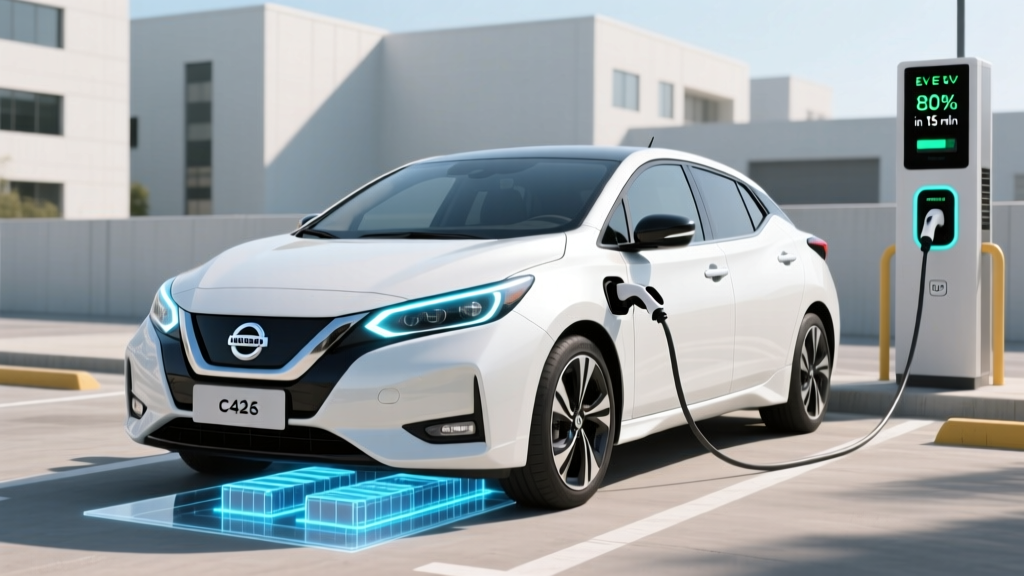
The SV Plus peaks at 100 kW on DC fast charge, reaching 10–80% in roughly 45 minutes. That's competitive for city-dwelling errands but noticeably slow for road trips compared to the Hyundai Kona Electric (peak ~150 kW, 10–80% in ~40 min on CCS) or the Chevrolet Equinox EV (peak ~150 kW, NACS access to Superchargers).
At home on a Level 2 charger, the Leaf's 6.6 kW onboard charger is adequate — a full overnight charge is easily achievable. Note: kW (kilowatts) measures charging power — the rate of energy delivery — while kWh (kilowatt-hours) measures battery capacity, the total energy stored. The Leaf SV Plus has a 60 kWh battery and accepts up to 6.6 kW on Level 2, meaning a full 0–100% charge takes roughly 10 hours.
Pricing, Lease Value, and Federal Tax Credit Eligibility
| Trim | Base MSRP | As-Tested (with packages) | Est. Lease (36 mo/12k) |
|---|---|---|---|
| Leaf S | $28,140 | ~$29,500 | ~$249–$299/mo* |
| Leaf SV Plus | $36,190 | ~$39,500 | ~$349–$419/mo* |
*Lease estimates vary by region, dealer, and credit tier. Destination charge (~$1,095) not included.
- MSRP Cap: The Leaf qualifies (under the $55,000 sedan/hatchback cap).
- Buyer Income Cap: AGI must not exceed $150,000 (single) / $300,000 (joint).
- Battery Sourcing: Critical minerals and battery component rules phase in annually — the Leaf's battery sourcing may limit the credit to $3,750 (half credit) or disqualify it entirely depending on current-year rules.
- Point-of-Sale Transfer: If eligible, the credit can be applied at purchase or factored into a lease by the dealer.
- Lease Loophole (§45W): Commercial lessors may claim the credit regardless of sourcing rules and pass savings to lessees — ask your dealer if this applies.
Always verify current eligibility at IRS.gov or with a tax professional before signing.
The Leaf's base price of $28,140 for the S trim makes it one of the most affordable new EVs in America. But the S trim's 149-mile range and 50 kW charging limit make it a hard recommendation unless your driving is strictly local. The SV Plus at $36,190 is the value sweet spot — and with a potential $3,750–$7,500 federal credit (or a lease-structured commercial credit), the effective price can drop substantially.
One lease-specific advantage: under the IRS commercial clean vehicle credit (§45W), the leasing company (as the vehicle's legal owner) may claim the full $7,500 credit even if battery sourcing rules would disqualify a direct purchase. Many dealers pass this savings through as a capitalized-cost reduction, effectively lowering your monthly payment. Always ask explicitly whether the lessor is passing through the commercial credit.
Performance, Interior, and Daily Livability
The SV Plus's 214 hp front-wheel-drive motor delivers a 0–60 mph time of roughly 6.5 seconds — genuinely quick for a compact hatchback and plenty for highway merging. Instant electric torque makes the Leaf feel punchier than its numbers suggest around town. However, there's no AWD option, and the single-motor FWD layout means this isn't a vehicle for snowy mountain passes or performance driving.
Inside, the Leaf shows its platform age. The 8-inch touchscreen (SV Plus) runs Nissan's infotainment with wireless Apple CarPlay and Android Auto, but the interface feels a generation behind competitors. The ProPILOT Assist system provides competent SAE Level 2 driver assistance — adaptive cruise control with lane centering — but it requires hands-on-wheel supervision at all times. This is not autonomous driving; it's a highway convenience feature.
Cargo space is a genuine strength: 23.6 cubic feet behind the rear seats and 38.5 cubic feet with them folded. That's competitive with compact crossovers and makes the Leaf practical for grocery hauls, luggage, or IKEA runs. Rear legroom at 33.5 inches is adequate for adults on shorter trips but tight for tall passengers on longer rides.
How the 2026 Leaf Stacks Up Against Key Rivals
| Spec | Nissan Leaf SV Plus | Hyundai Kona Electric | Chevrolet Equinox EV LT |
|---|---|---|---|
| EPA Range | 212 mi | 261 mi | 319 mi |
| Base MSRP | $36,190 | $34,975 | $33,000 |
| DC Fast Charge (peak) | 100 kW (CHAdeMO) | ~150 kW (CCS/NACS) | ~150 kW (NACS) |
| 10–80% DC Time | ~45 min | ~40 min | ~35 min |
| Heat Pump | No | Yes | Yes |
| Connector Standard | CHAdeMO | NACS (2026+) | NACS |
| Battery Warranty | 8 yr / 100k mi | 10 yr / 100k mi | 8 yr / 100k mi |
The comparison reveals the Leaf's challenge. The Kona Electric costs less, goes farther, charges faster, and has a heat pump for better cold-weather range retention. The Equinox EV offers crossover practicality with over 300 miles of range and NACS access to Tesla's Supercharger network. The Leaf's main remaining advantage is Nissan dealer ubiquity and the strong lease deals that often surface on the S trim.
Pros, Cons, and Who Should Lease the 2026 Leaf
- Low base price — one of the cheapest new EVs available
- Spacious cargo area for a compact hatch (38.5 cu ft max)
- Comfortable ride quality for daily commuting
- ProPILOT Assist is competent for highway cruising
- Strong lease incentives frequently available
- Widespread Nissan dealer service network
- CHAdeMO connector is a dying standard in North America
- No heat pump — significant cold-weather range loss
- DC fast charging slower than all key competitors
- Base S trim's 149-mile range is limiting
- Interior tech and infotainment feel dated
- FWD only — no AWD option for snow-belt buyers
- Platform is over a decade old with no major refresh announced
- Ideal: Budget-conscious commuters with home Level 2 charging, round-trip drives under 80 miles, and mild-winter climates. Lease shoppers who can capitalize on aggressive Nissan incentives.
- Not ideal: Road-trippers, cold-climate drivers, apartment dwellers without home charging, or anyone who values access to the expanding NACS/Supercharger network.
Frequently Asked Questions
What is the real-world range of the 2026 Nissan Leaf SV Plus?
The EPA rates it at 212 miles. In real-world mixed driving, expect 175–195 miles in moderate weather. Highway-only driving at 70+ mph reduces this to roughly 175–185 miles. In freezing temperatures (below 32°F), the lack of a heat pump means range can drop to 150–165 miles. The base S trim's 149-mile EPA rating shrinks to roughly 100–115 miles in cold highway conditions.
How fast does the 2026 Leaf charge at home and on the road?
On a Level 2 home charger (240V, 6.6 kW), the SV Plus adds roughly 25 miles of range per hour, reaching a full charge in about 10 hours. On DC fast charge via CHAdeMO, the SV Plus peaks at 100 kW, taking approximately 45 minutes from 10–80%. The base S trim is limited to 50 kW DC, taking roughly 60 minutes for the same session.
Does the 2026 Nissan Leaf qualify for the federal EV tax credit?
It may, but eligibility is not guaranteed. The Leaf's MSRP is well under the $55,000 cap, and most buyers will meet income thresholds. However, the battery sourcing and critical minerals requirements under IRS §30D may reduce the credit to $3,750 or eliminate it for direct purchases. Leasing may unlock the full $7,500 via the commercial clean vehicle credit (§45W) — confirm with your dealer and tax professional.
Is the 2026 Leaf worth leasing over the Hyundai Kona Electric or Chevy Equinox EV?
If your priority is the lowest possible monthly payment and you have reliable home charging in a mild climate, a well-incentivized Leaf lease can be compelling. But on pure specs — range, charging speed, connector future-proofing, and cold-weather capability — both the Kona Electric and Equinox EV are stronger vehicles. The Leaf's CHAdeMO connector is the single biggest long-term concern as charging networks consolidate around NACS.
What happens if I need to charge at a Tesla Supercharger?
The Leaf cannot use Tesla Superchargers. Its CHAdeMO connector is incompatible with both the NACS (Tesla) and CCS1 standards. You'll rely on Electrify America, EVgo, and independent CHAdeMO-equipped stations for DC fast charging — a network that is shrinking relative to NACS/CCS alternatives.
How long will the Leaf's battery last?
Nissan covers the battery with an 8-year/100,000-mile warranty against capacity loss below 9 bars (out of 12) on the capacity gauge. NMC batteries in the Leaf have historically shown moderate degradation — roughly 10–15% capacity loss over 5–7 years based on owner reports. Passive air cooling (rather than active liquid cooling) means the battery is more susceptible to heat-related degradation in hot climates. If you live in Arizona or Texas, this is worth considering.