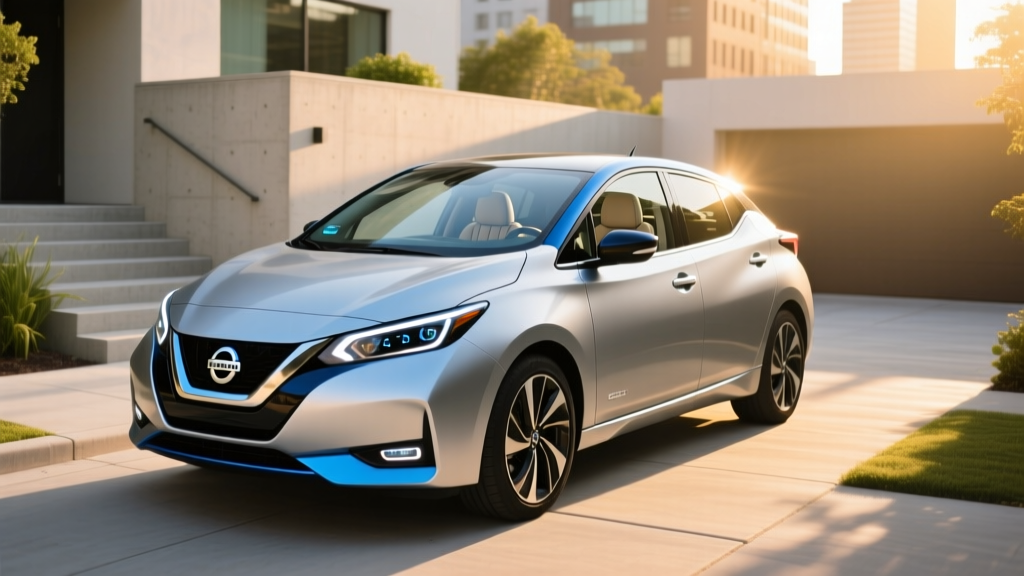
The Nissan Leaf holds a unique place in the EV landscape: it's the longest-running mass-market electric car still sold in the United States, and in 2026, it remains one of the cheapest new EVs you can drive off a lot. But with competitors offering 300+ miles of range and 200 kW DC fast charging, the Leaf's value proposition has shifted from "best in class" to "cheapest gateway to electric." If you're researching Nissan Leaf 2026 lease deals, you need to understand exactly what you're getting — and what you're giving up — before signing.
This review covers the 2026 Leaf's real-world range, charging limitations, pricing with and without federal tax credits, and whether a lease or purchase makes more financial sense in today's market.
2026 Nissan Leaf at a Glance: Key Specs
| Spec | Leaf S (40 kWh) | Leaf SV Plus / SL Plus (60 kWh) |
|---|---|---|
| EPA Range | 149 miles | 212 miles |
| Battery (Usable) | ~39 kWh, NMC | ~59 kWh, NMC |
| Motor Output | 110 kW (147 hp) | 160 kW (214 hp) |
| Drivetrain | FWD | FWD |
| 0–60 mph | ~7.9 sec | ~6.5 sec |
| DC Fast Charge Peak | 50 kW (CHAdeMO) | 100 kW (CHAdeMO) |
| 10–80% DCFC Time | ~40 min | ~45 min |
| Level 2 (240V) Rate | 6.6 kW (~22 mi/hr) | 6.6 kW (~22 mi/hr) |
| EPA Efficiency | 111 MPGe (30 kWh/100mi) | 104 MPGe (32 kWh/100mi) |
| Cargo Volume | 23.6 cu ft (rear seats up) / 38.5 cu ft (folded) | |
| Base MSRP | $28,140 | $36,190 (SV Plus) |
| Battery Warranty | 8 yr / 100,000 mi (capacity loss) | |
Real-World Range: What the EPA Sticker Doesn't Tell You
Nissan has not moved to a larger battery pack for 2026, meaning the Leaf's range ceiling remains 212 miles on the Plus variant. For context, the Hyundai Kona Electric delivers 261 EPA miles and the Chevrolet Equinox EV pushes past 315 miles — both at competitive price points. The Leaf's range is adequate for daily commutes under 60 miles round-trip with home charging, but it requires planning for anything beyond regional travel.
Efficiency is respectable: the SV Plus returns roughly 32 kWh per 100 miles (104 MPGe combined per fueleconomy.gov). That translates to about $0.04–$0.05 per mile on residential electricity at the national average of $0.16/kWh — dramatically cheaper than a 30 MPG gas car at $3.20/gallon ($0.11/mile).
Charging: The Leaf's Biggest Compromise
Here's where the 2026 Leaf shows its age most clearly. Nissan continues to use the CHAdeMO DC fast-charging connector while the rest of the industry has consolidated around CCS1 and, increasingly, the Tesla NACS standard. This matters for long-term charging access.
| Charging Level | Power / Rate | Miles Added per Hour | Notes |
|---|---|---|---|
| Level 1 (120V) | ~1.4 kW | ~4–5 mi/hr | Emergency/trickle only |
| Level 2 (240V, 30A) | 6.6 kW | ~22 mi/hr | Full charge in ~9.5 hr (60 kWh) |
| DC Fast (Leaf S) | 50 kW peak (CHAdeMO) | ~150 mi/hr (peak) | 10–80% in ~40 min |
| DC Fast (SV/SL Plus) | 100 kW peak (CHAdeMO) | ~200 mi/hr (peak) | 10–80% in ~45 min |
kW vs kWh reminder: kW measures charging power (speed of energy delivery); kWh measures battery energy capacity. The Leaf Plus has a ~59 kWh battery and can accept up to 100 kW of charging power at peak — but like all EVs, the charge curve tapers significantly above 80% state of charge to protect battery longevity.
The 100 kW peak on the Plus sounds reasonable, but competitors like the Hyundai Ioniq 5 and Kia EV6 accept 230–250 kW on 800V architectures, cutting 10–80% times to 18 minutes. The Leaf's 45-minute fast-charge session is the difference between a quick stop and a lunch break on road trips.
The CHAdeMO connector is the larger concern. Electrify America stations still carry CHAdeMO cables, but many newer networks are CCS- or NACS-only. If you rely on public DC fast charging regularly, verify that your local stations support CHAdeMO before committing. For home Level 2 charging, the Leaf uses a standard J1772 connector, which is universal.
Performance and Driving Experience
The 2026 Leaf is front-wheel drive only — no AWD option exists. The base S model's 147 hp and 236 lb-ft of torque provide adequate city acceleration (0–60 in roughly 7.9 seconds). The SV Plus bumps output to 214 hp and 250 lb-ft, dropping the 0–60 time to approximately 6.5 seconds — genuinely quick for a compact hatchback.
Ride quality is comfortable and compliant, though the Leaf's platform dates back over a decade. You'll notice more road noise and less refinement than newer dedicated EV platforms (Hyundai E-GMP, GM Ultium). Regenerative braking offers a B-mode for stronger regen, but the Leaf does not provide true one-pedal driving that comes to a complete stop — you'll still need the friction brake at low speeds.
Interior Space, Tech, and Driver Assistance
The Leaf is a compact five-door hatchback with 23.6 cubic feet of cargo space behind the rear seats and 38.5 cu ft with the 60/40 split rear seats folded. Rear legroom measures 33.5 inches — tight for tall adults on longer trips but fine for children or shorter commutes.
For 2026, the Leaf features an 8-inch touchscreen infotainment system with wireless Apple CarPlay and Android Auto, a significant upgrade from prior years. Nissan's ProPILOT Assist (available on SV Plus and SL Plus) provides SAE Level 2 lane centering and adaptive cruise control. This is a driver-assistance system — not self-driving — and requires hands on the wheel and eyes on the road at all times. It works well on divided highways but is not a hands-free system like GM's Super Cruise or Ford's BlueCruise.
Safety ratings are strong: the Leaf earns top marks from NHTSA and has historically performed well in IIHS crash testing. Standard equipment includes automatic emergency braking, lane departure warning, blind-spot monitoring, and rear cross-traffic alert.
2026 Nissan Leaf Pricing, Lease Deals, and Tax Credits
| Trim | MSRP | Est. Lease (36 mo) | §30D Credit Eligible? |
|---|---|---|---|
| S (40 kWh) | $28,140 | ~$199–$249/mo* | Possibly — see rules below |
| SV Plus (60 kWh) | $36,190 | ~$289–$349/mo* | Possibly — see rules below |
| SL Plus (60 kWh) | $39,690 | ~$329–$389/mo* | Possibly — see rules below |
*Lease estimates vary by dealer, region, credit tier, and down payment. Nissan frequently offers subvented lease rates through Nissan Motor Acceptance Corporation (NMAC), particularly on the Leaf. Always confirm current incentives with your local dealer.
The Leaf's sub-$29,000 starting price makes it one of the most affordable new EVs in America. Lease deals are where the Leaf truly shines: Nissan has historically offered aggressive lease cash (often $3,000–$5,000 in dealer incentives) to move Leaf inventory. A well-negotiated 36-month lease on the base S trim can land under $200/month with modest money down — making it an exceptionally low-risk way to try EV ownership.
Federal Tax Credit Eligibility (§30D)
- MSRP cap: Vehicles must be under $55,000 (cars) — all Leaf trims qualify ✓
- Buyer income cap: AGI must not exceed $150K (single) / $300K (joint) ✓
- Battery sourcing: Critical minerals and battery components must meet escalating domestic-content thresholds that tighten each year. Nissan sources Leaf batteries from Envision AESC (with facilities in TN and UK). Verify current-year sourcing compliance with your dealer and tax professional.
- Point-of-sale transfer: Eligible buyers can apply the credit as an immediate price reduction at the dealership rather than waiting for a tax refund.
If the Leaf qualifies for the full $7,500 credit, the effective purchase price of the base S drops to approximately $20,640 — extraordinary value for a new EV. However, the credit is non-refundable (you must owe at least $7,500 in federal taxes to capture the full amount), and battery-sourcing rules may reduce or eliminate eligibility. This is why leasing can be advantageous: the leasing company (NMAC) claims the credit and typically passes it through as a capitalized-cost reduction, lowering your monthly payment regardless of your personal tax situation.
Leaf vs. The Competition: Where It Stands in 2026
The Leaf's competitive set has grown dramatically. Here's how it stacks up against the key alternatives at similar price points:
| Model | EPA Range | DCFC Peak | 10–80% | Base MSRP |
|---|---|---|---|---|
| Nissan Leaf SV Plus | 212 mi | 100 kW (CHAdeMO) | ~45 min | $36,190 |
| Hyundai Kona Electric | 261 mi | 100+ kW (CCS/NACS) | ~43 min | ~$33,000 |
| Chevrolet Equinox EV | 315+ mi | 150+ kW (CCS/NACS) | ~30 min | ~$33,000 |
| Volkswagen ID.4 | 275 mi | 170 kW (CCS/NACS) | ~28 min | ~$39,000 |
On paper, the Leaf trails in range and charging speed. In practice, if your daily driving is under 50 miles and you charge at home overnight, the range difference is academic. The charging speed and connector differences only matter if you regularly road-trip or lack home charging.
Pros and Cons: The Honest Assessment
✓ Pros
- Lowest starting MSRP of any new EV in the US ($28,140)
- Aggressive lease deals frequently available
- Strong standard safety tech (AEB, BSM, RCTA)
- Comfortable ride quality for daily commuting
- Proven battery durability — Leaf packs have demonstrated strong longevity data over 10+ years
- Wireless CarPlay/Android Auto
- Hatchback practicality with 38.5 cu ft cargo
✗ Cons
- CHAdeMO connector — shrinking public DCFC access
- 212-mile max range is well below class leaders (300+)
- DC fast charging limited to 50–100 kW
- No AWD or heat pump option
- Aging platform — more road noise than newer EVs
- Base 40 kWh model's 149-mile range is limiting
- ProPILOT Assist is basic Level 2, not hands-free
- No front trunk (frunk)
Who Should Lease (or Buy) the 2026 Nissan Leaf?
Choose the Leaf if:
- You commute under 50 miles daily and can charge at home
- You want the lowest possible monthly payment on a new EV
- You live in a mild climate (limited cold-weather range loss)
- You view this as a 2–3 year gateway to EV ownership before upgrading
- Price is your primary decision factor
Look elsewhere if:
- You regularly drive more than 150 miles between charges
- You rely on public DC fast charging (CHAdeMO access is declining)
- You live in a cold climate and need winter range reliability
- You want the latest EV platform tech and fastest charging
- You need AWD for snow/ice conditions
The Leaf's sweet spot is the budget-conscious commuter who values low monthly cost over cutting-edge range or charging speed. A 36-month lease at sub-$250/month with Nissan's subvention incentives is genuinely hard to beat for getting into an EV without long-term commitment. If you love it, buy it out at lease end; if you want more range by 2029, walk away and upgrade to whatever the market offers next.
Frequently Asked Questions
What is the real-world range of the 2026 Nissan Leaf?
The Leaf SV Plus is EPA-rated at 212 miles. In real-world mixed driving, expect 185–200 miles in moderate temperatures, 175–195 on sustained highway driving at 70 mph, and 150–170 miles in sub-freezing weather. The base 40 kWh Leaf S at 149 miles EPA delivers roughly 125–140 miles in practice.
How fast does the Leaf charge at home and on DC fast chargers?
On a Level 2 home charger (240V, 6.6 kW), the Leaf Plus adds approximately 22 miles of range per hour, reaching a full charge from empty in about 9.5 hours — ideal for overnight charging. On DC fast chargers, the Plus peaks at 100 kW via CHAdeMO, taking approximately 45 minutes from 10–80%. The base S model is limited to 50 kW and takes about 40 minutes for the same session.
Does the 2026 Nissan Leaf qualify for the $7,500 federal tax credit?
It may, but eligibility is not guaranteed. The Leaf's MSRP is well under the $55,000 cap, and buyer income limits apply ($150K single / $300K joint AGI). The critical variable is battery component and critical mineral sourcing — rules that tighten annually under IRS §30D. Confirm current-year eligibility through the IRS clean vehicle portal and your Nissan dealer before budgeting around the credit. Leasing may bypass sourcing restrictions since the lessor claims the credit.
Is the Nissan Leaf worth buying versus the Kona Electric or Equinox EV?
If budget is paramount and you charge at home, the Leaf's low price and lease deals make it compelling. However, the Hyundai Kona Electric offers 49 more EPA miles and a modern CCS/NACS connector for a similar price, and the Chevrolet Equinox EV delivers 315+ miles. For buyers who road-trip or lack home charging, the competitors' superior range and charging infrastructure access justify the modest price premium.
Why does the Leaf still use CHAdeMO instead of CCS or NACS?
The Leaf adopted CHAdeMO (a Japanese DC charging standard) at its 2010 launch, before CCS existed. Nissan has not re-engineered the Leaf's charging architecture to CCS or NACS, likely because the current-generation platform is nearing end-of-life. Nissan's next-generation EVs (like the Ariya) use CCS, and future Leaf replacements are expected to adopt NACS. For now, CHAdeMO limits your public fast-charging options to networks that still support it, primarily Electrify America and some regional providers.
How long will the Leaf's battery last?
Nissan covers the Leaf battery with an 8-year/100,000-mile warranty against capacity loss below approximately 75% of original capacity (indicated by losing more than 1 bar on the 12-bar capacity gauge). Real-world data from high-mileage Leaf owners shows NMC packs typically retain 80–90% capacity after 100,000 miles in moderate climates. Hot climates accelerate degradation — if you live in Phoenix or Las Vegas, expect slightly faster capacity loss. The passive air-cooling system (no liquid thermal management) is a known limitation compared to liquid-cooled competitors.