Quick Verdict: The Leaf's 2026 Refresh
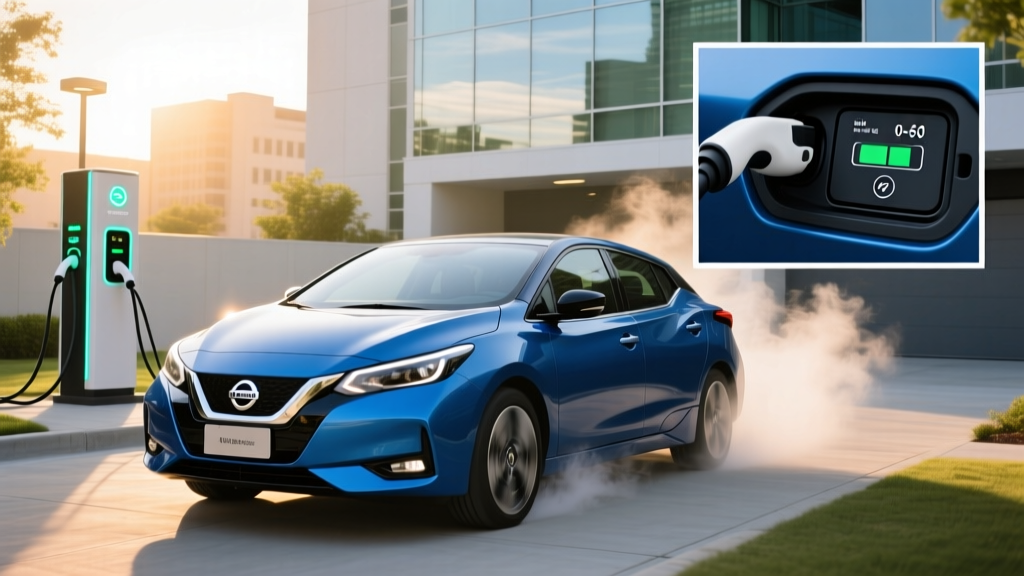
The Nissan Leaf remains one of the most affordable new electric vehicles on the US market, and for 2026 it continues to offer a practical, no-nonsense commuter proposition. But with the EV landscape shifting rapidly toward NACS connectors, liquid-cooled batteries, and 300+ mile ranges, where does this veteran hatchback stand? We put the 2026 Nissan Leaf through its paces — including its 0-60 mph performance, real-world efficiency, and charging behavior — to give you the numbers that matter before you sign any paperwork.
The Leaf comes in two battery configurations: the standard-range S trim with a 40 kWh pack and the SV PLUS with a 60 kWh pack. The larger battery unlocks meaningfully better range, stronger acceleration, and faster DC charging. If you're cross-shopping the Leaf against the Chevrolet Bolt EV, Hyundai Kona Electric, or Tesla Model 3, this review gives you the exact data points to decide.
2026 Nissan Leaf: Full Spec Sheet
| Specification | Leaf S (40 kWh) | Leaf SV PLUS (60 kWh) |
|---|---|---|
| EPA Range | 149 miles | 212 miles |
| Battery Capacity (usable) | 40 kWh | 60 kWh |
| Battery Chemistry | NMC (lithium-ion) | NMC (lithium-ion) |
| Horsepower | 147 hp | 214 hp |
| Torque | 236 lb-ft | 250 lb-ft |
| 0-60 mph | ~7.9 seconds | ~6.5 seconds |
| Drivetrain | FWD (single motor) | FWD (single motor) |
| Max DC Fast Charge | 50 kW (CHAdeMO) | 100 kW (CHAdeMO) |
| 10-80% DCFC Time | ~40 minutes | ~45 minutes |
| Level 2 Home Charging | 6.6 kW (~22 mi/hr) | 6.6 kW (~25 mi/hr) |
| EPA Efficiency (Combined) | 111 MPGe (30 kWh/100mi) | 104 MPGe (32 kWh/100mi) |
| Cargo Volume (rear seats up) | 23.6 cu ft | 23.6 cu ft |
| Cargo Volume (rear seats folded) | 30.0 cu ft | 30.0 cu ft |
| Base MSRP | $29,235 | $37,285 |
| Battery Warranty | 8 yr / 100,000 mi | 8 yr / 100,000 mi |
Source: EPA fueleconomy.gov and Nissan USA. Specs reflect the 2025-2026 model year. Verify with your local dealer for the latest pricing.
Nissan Leaf 0-60 and Driving Performance
The question many shoppers search for — Nissan Leaf 0-60 — depends entirely on which trim you choose. The base Leaf S with its 147-horsepower motor delivers a 0-60 mph time of approximately 7.9 seconds. That's adequate for merging and city driving, and the instant electric torque (236 lb-ft from 0 RPM) makes it feel punchier around town than the number suggests.
The SV PLUS is the performance upgrade most buyers want. Its 214 hp and 250 lb-ft of torque cut the 0-60 sprint to roughly 6.5 seconds. That puts it in the same ballpark as a Volkswagen ID.4 and noticeably quicker than the base Bolt EV. Highway passing confidence is substantially better in the PLUS, especially when loaded with passengers or cargo.
Both trims are front-wheel drive with a single motor. There is no AWD option, which matters if you live in a region with heavy snow. Regenerative braking is adjustable via the e-Pedal mode, which enables one-pedal driving in stop-and-go traffic. The regen isn't as aggressive as Tesla or Hyundai's systems, so expect to use the friction brake more often than in some competitors.
Real-World Range: Beyond the EPA Sticker
Leaf S (40 kWh): EPA 149 miles — Expect ~120-135 miles on the highway at 70+ mph; as low as 100-110 miles in freezing temperatures with cabin heat.
Leaf SV PLUS (60 kWh): EPA 212 miles — Expect ~175-195 miles highway; approximately 150-165 miles in sub-30°F conditions.
The Leaf uses passive (air-cooled) battery thermal management, which means less active energy spent on cooling/heating — but also less consistent performance in temperature extremes. High-speed driving and repeated DC fast charging in hot weather will reduce range more than in liquid-cooled competitors.
The Leaf's air-cooled battery pack is a defining engineering choice. It keeps weight and cost down, but it means the battery is more susceptible to temperature-driven range swings. In mild weather (50-80°F) with mixed city/highway driving, most owners report achieving 90-95% of the EPA figure. Push above 70 mph sustained on the interstate and expect a 15-20% reduction.
Cold weather is where the Leaf loses the most ground. Without a heat pump (the Leaf uses a resistive PTC heater), cabin heating draws directly from the traction battery. In temperatures below freezing, plan for a 25-35% range reduction. If your daily round-trip commute is 80 miles and you live in Minnesota, the 40 kWh Leaf S will be tight in January. The SV PLUS provides a much safer buffer.
Charging Speed and Connector Reality
This is where the 2026 Leaf faces its biggest competitive challenge. Nissan continues to use the CHAdeMO DC fast-charging connector, while the broader US market has consolidated around NACS (Tesla's standard, now adopted by Ford, GM, Hyundai, and most others) and CCS1. CHAdeMO infrastructure is shrinking relative to CCS/NACS networks, which has real implications for road-trip flexibility.
| Charging Level | Power / Rate | Leaf S (40 kWh) | Leaf SV PLUS (60 kWh) |
|---|---|---|---|
| Level 1 (120V household) | ~1.4 kW | ~5 mi/hr (30+ hrs full) | ~5 mi/hr (45+ hrs full) |
| Level 2 (240V home/public) | 6.6 kW | ~22 mi/hr (~7 hrs full) | ~25 mi/hr (~9 hrs full) |
| DC Fast (CHAdeMO) | 50 kW (S) / 100 kW (PLUS) | 10-80% in ~40 min | 10-80% in ~45 min |
A critical detail: kW (power) measures how fast energy flows into the car; kWh (energy) measures total battery capacity. The SV PLUS's 100 kW peak charge rate sounds competitive, but the charge curve tapers significantly above 60% state of charge (SoC). In real-world testing, sustained charging averages closer to 55-65 kW across a 10-80% session, which is why the 45-minute time is longer than you might expect from the peak number.
For home charging, a Level 2 wallbox at 6.6 kW is the practical setup. Expect to pay $500-$1,200 for a quality Level 2 charger (like a ChargePoint Home Flex or Emporia Vue) plus $800-$2,500 for electrician installation depending on your panel capacity and run distance. The Leaf's J1772 AC connector is universal across all non-Tesla Level 2 stations, so home and workplace charging compatibility is excellent.
Pricing, Trims, and Federal Tax Credit Eligibility
| Trim | Base MSRP | Est. As-Tested | §30D Federal Credit | Effective Price |
|---|---|---|---|---|
| Leaf S (40 kWh) | $29,235 | $30,500 | Up to $7,500* | ~$21,735 - $23,000 |
| Leaf SV PLUS (60 kWh) | $37,285 | $39,800 | Up to $7,500* | ~$29,785 - $32,300 |
*Federal tax credit eligibility under IRS §30D depends on multiple requirements that change periodically:
- MSRP cap: The Leaf qualifies as a passenger car (cap: $55,000) — both trims are well under.
- Buyer income limits: MAGI must not exceed $150,000 (single), $225,000 (head of household), or $300,000 (joint filing).
- Battery sourcing: Critical minerals and battery component requirements phase in annually. The percentage of the credit available depends on whether the Leaf's battery meets the current-year thresholds for North American sourcing. Verify the exact credit amount with your dealer and a tax professional at time of purchase.
- Point-of-sale transfer: As of 2024+, eligible buyers can transfer the credit to the dealer for an immediate price reduction at purchase rather than waiting for a tax refund.
The Leaf S at roughly $22,000 after the full credit is one of the cheapest new EVs available in the US. That value proposition is its strongest argument. However, buyers should also check state and utility incentives — many states offer additional rebates of $1,000-$5,000 that stack with the federal credit.
Interior, Cargo, and Daily Livability
The Leaf's interior is functional but shows its age relative to newer EV platforms. The 8-inch touchscreen infotainment system supports Apple CarPlay and Android Auto (wired on S, wireless on SV PLUS). There's no frunk (front trunk) — the space is occupied by power electronics — so all cargo goes in the rear hatch area.
Cargo volume is 23.6 cubic feet behind the rear seats and 30.0 cubic feet with the 60/40-split rear seats folded. That's competitive with the Bolt EV (23.2 cu ft) and adequate for weekly groceries, a stroller, or a couple of carry-on suitcases. Rear-seat legroom is 33.5 inches — comfortable for adults on shorter trips but tighter than a Model 3 or Ioniq 5 for tall passengers on long rides.
Nissan's ProPILOT Assist comes standard on SV PLUS and is available on the S trim. This is a Level 2 driver-assistance system (per SAE automation levels) that combines adaptive cruise control with lane-centering. It works well on marked highways but requires continuous driver supervision — hands on the wheel, eyes on the road. It is not a self-driving system.
Battery Warranty, Degradation, and Longevity
Nissan covers the Leaf's battery with an 8-year / 100,000-mile warranty against capacity loss below 9 bars out of 12 on the battery health gauge (approximately 70% state of health). This is a capacity-based warranty rather than a simple defect warranty, which is important: it means Nissan will address measurable degradation, not just manufacturing failures.
The Leaf's air-cooled battery design has historically been associated with faster degradation in hot climates compared to liquid-cooled packs. Owners in Arizona, Texas, and Southern California have reported more noticeable capacity loss over 5-7 years than those in moderate climates. That said, the 2026 model's NMC chemistry and improved cell design show better thermal stability than early 2011-2017 Leafs. Most owners in temperate regions report 5-8% degradation over the first 5 years — acceptable for the price point.
If you live in a hot climate and plan to keep the Leaf beyond 5 years, the SV PLUS's larger battery provides a degradation buffer: even with 10% loss, you'd still have ~190 miles of range versus ~135 in the base model.
Pros, Cons, and Who Should Buy the Leaf
- Among the lowest-cost new EVs, especially after §30D credit
- SV PLUS delivers 212 mi range and a brisk 6.5-sec 0-60
- Comfortable ride quality for city and suburban commuting
- Simple, proven platform with wide dealer service network
- Standard CHAdeMO DC fast charging on all trims
- CHAdeMO connector — declining public infrastructure
- Air-cooled battery — worse hot/cold range retention
- No heat pump — resistive heating drains range in winter
- No AWD option; limited to FWD only
- Interior tech and materials feel dated vs. 2026 competitors
- No frunk; cargo space average for the class
- Budget-conscious commuters with home Level 2 charging and a sub-80-mile daily round trip
- Second-car households that need an efficient runabout for errands and school runs
- Urban and suburban drivers who rarely take road trips over 150 miles
- Frequent road-trippers (CHAdeMO infrastructure is limiting)
- Hot-climate buyers planning 8+ years of ownership (air-cooled degradation risk)
- Buyers needing AWD, towing capability, or 300+ mile range
Frequently Asked Questions
What is the real-world range of the 2026 Nissan Leaf?
The EPA rates the Leaf S at 149 miles and the SV PLUS at 212 miles. In real-world driving, expect 120-135 highway miles from the S and 175-195 from the SV PLUS at sustained highway speeds. Cold weather (below 30°F) can reduce range by 25-35% due to the resistive cabin heater and lack of a heat pump.
How fast does the Nissan Leaf charge?
At home on a Level 2 charger (6.6 kW), the Leaf gains about 22-25 miles of range per hour — a full charge takes 7-9 hours depending on the battery. On DC fast charging, the S peaks at 50 kW (10-80% in ~40 minutes) while the SV PLUS peaks at 100 kW (10-80% in ~45 minutes). Note that the Leaf uses CHAdeMO, not CCS or NACS, so verify station availability on your routes.
Does the 2026 Nissan Leaf qualify for the federal EV tax credit?
Both Leaf trims fall under the $55,000 MSRP cap for passenger cars under IRS §30D. However, the full $7,500 credit depends on your income (MAGI limits apply), and the battery must meet current-year critical mineral and component sourcing thresholds. The credit can be transferred to the dealer at point of sale for an instant price reduction. Consult IRS.gov and a tax professional to confirm your eligibility.
Is the Nissan Leaf worth buying vs. the Bolt EV or Kona Electric?
The Leaf wins on base price and dealer availability, especially the S trim after tax credits. The Chevrolet Bolt EV offers 259 miles of EPA range (significantly more than either Leaf) and uses CCS for better DC fast-charging access. The Hyundai Kona Electric provides 261 miles and a more modern interior. If range and charging-network flexibility are priorities, the Bolt or Kona are stronger picks. If lowest entry price and a comfortable city commute matter most, the Leaf S is hard to beat.
What is the Nissan Leaf's 0-60 mph time?
The base Leaf S (147 hp) reaches 0-60 mph in approximately 7.9 seconds. The SV PLUS (214 hp) does it in about 6.5 seconds, making it the quicker and more highway-capable choice.
How long will the Leaf's battery last?
Nissan warranties the battery for 8 years or 100,000 miles against degradation below ~70% capacity. Real-world data suggests 5-8% degradation over 5 years in temperate climates, with faster loss in consistently hot environments. The air-cooled design is the primary longevity variable — hot-climate buyers should consider the larger SV PLUS battery as a degradation hedge.