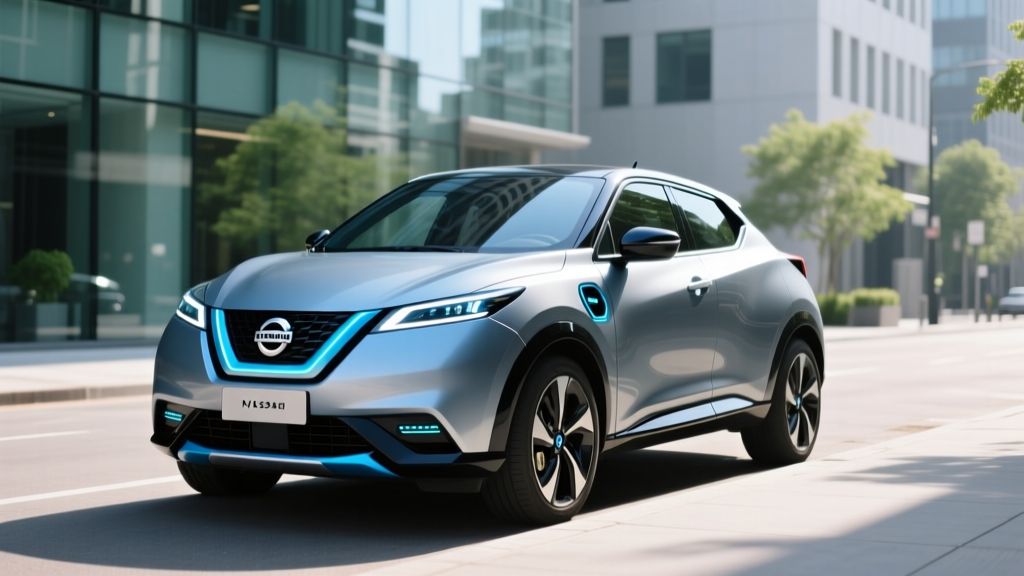
Quick Answer: As of early 2026, the Nissan Juke EV remains an announced concept based on the Renault-Nissan-Mitsubishi CMF-B EV platform. Nissan has not confirmed U.S. availability, final specs, or pricing. If a production Juke EV reaches the American market, expect a subcompact crossover targeting 200–250 miles of EPA range, a ~50–60 kWh battery, DC fast charging around 100–130 kW peak, and a starting MSRP likely between $30,000–$38,000 before incentives. Buyers considering this segment should also evaluate currently available alternatives like the Nissan Leaf, Chevrolet Bolt EV/EUV, Hyundai Kona Electric, and Kia Niro EV, which offer confirmed specs and immediate availability.
Is the Nissan Juke EV Actually Available to Buy?
The Nissan Juke EV has generated significant search interest, but it's critical to separate concept hype from showroom reality. Nissan unveiled the Juke EV concept as part of its broader European electrification strategy, built on the CMF-B EV platform shared with the Renault Megane E-Tech. However, Nissan's U.S. product lineup has not officially included the Juke nameplate since the original gas-powered Juke was discontinued after the 2017 model year.
As of 2026, Nissan has not confirmed a production Juke EV for the U.S. market. The vehicle exists in announced and concept form primarily for European markets, where the subcompact crossover segment is far more popular. U.S. buyers searching for a "Nissan Juke EV" are likely looking for a small, stylish, affordable electric crossover — a segment Nissan currently does not serve stateside with a dedicated new model.
This doesn't mean a U.S. launch is impossible. Nissan has committed to launching multiple new EVs globally by 2030, and consumer demand for compact electric crossovers continues to grow. But until Nissan officially announces U.S. specs, pricing, and dealer availability, any numbers circulating are estimates based on platform siblings and industry analysis.
Estimated Specs: What a Production Juke EV Could Look Like
Based on the CMF-B EV platform architecture, European-market filings, and comparable Renault-Nissan alliance vehicles, here is a reasonable projection of what a U.S.-spec Nissan Juke EV might deliver if it reaches production:
| Specification | Estimated Figure | Notes |
|---|---|---|
| Battery Capacity | 52–60 kWh (usable) | Likely NMC chemistry; LFP possible for base trim |
| EPA Range | 200–250 miles | WLTP figures from Europe typically run 15–20% higher than EPA |
| Peak DC Fast Charge | 100–130 kW | 10–80% in approximately 28–35 minutes (estimated) |
| Level 2 AC Charging | 7.4–11 kW (single/three-phase) | U.S. models likely limited to 7.4 kW single-phase |
| Motor Output | 130–150 hp / 210–230 lb-ft torque | Front-wheel drive, single motor |
| 0–60 mph | 7.5–9.0 seconds | Estimate based on platform weight and power |
| Starting MSRP | $30,000–$38,000 | Depends on trim and battery option |
| Battery Warranty | 8 years / 100,000 miles | Standard Nissan EV warranty expectation |
Real-world range caveat: If the EPA sticker reads 240 miles, expect roughly 190–210 miles in sustained highway driving at 70+ mph, and potentially 160–180 miles in sub-freezing winter conditions. Cold-weather range loss of 20–30% is typical for EVs without a heat pump system — whether the Juke EV would include one for the U.S. is unconfirmed.
How Would a Juke EV Compare to Gas and Hybrid Alternatives?
To understand the value proposition, let's compare the projected Juke EV against what buyers currently choose in the subcompact crossover segment — including the gas Nissan Kicks and available hybrid options:
| Metric | Nissan Juke EV (Est.) | Nissan Kicks (Gas) | Kia Niro EV (Available) | Kia Niro Hybrid |
|---|---|---|---|---|
| Powertrain | BEV (FWD) | 1.6L I4 (Gas) | BEV (FWD) | 1.6L Hybrid |
| EPA Range / MPG | ~220 mi | 31/36/33 MPG | 239 mi | 53/48/50 MPG |
| Starting Price | ~$32,000 (est.) | $21,830 | $39,600 | $26,940 |
| Annual Fuel/Energy Cost | ~$550 | ~$1,750 | ~$600 | ~$1,050 |
| Federal Tax Credit | Up to $7,500 (if eligible) | None | Up to $7,500 (if eligible) | Up to $7,500 (PHEV only) |
| Maintenance (5-yr est.) | ~$1,200 | ~$2,800 | ~$1,300 | ~$2,200 |
The gas Kicks wins on upfront price by a wide margin — roughly $10,000 cheaper. But over five years and 75,000 miles, the fuel and maintenance savings of a BEV can recover $6,000–$9,000 of that gap, especially if a federal tax credit applies. The Kia Niro EV is the closest confirmed competitor to what a Juke EV would offer, but it currently starts nearly $8,000 higher than our Juke EV estimate.
Real Ownership Costs: The Full Picture
Buying an EV involves more than the sticker price. Here's a realistic five-year cost breakdown comparing a projected Juke EV purchase against the gas Kicks, assuming 15,000 miles per year, $0.14/kWh home electricity, and $3.50/gallon gas:
| Cost Category | Juke EV (Est.) | Nissan Kicks (Gas) |
|---|---|---|
| Purchase Price | $32,000 | $21,830 |
| Federal Tax Credit (§30D) | –$7,500 (if eligible) | $0 |
| Effective Purchase | $24,500 | $21,830 |
| Fuel/Energy (5 yr) | $2,750 | $8,750 |
| Maintenance (5 yr) | $1,200 | $2,800 |
| Insurance (5 yr est.) | $7,500 | $6,200 |
| Home Charger Install | $800–$2,000 | $0 |
| 5-Year Total | $36,750–$37,950 | $39,580 |
Key takeaway: With the full §30D credit, a Juke EV could break even or beat the gas Kicks on five-year cost, despite the higher sticker. However, this assumes you qualify for the credit, have access to affordable home charging, and don't rely heavily on expensive public DC fast charging (which can run $0.30–$0.50/kWh, roughly doubling energy costs).
Insurance is a real factor often overlooked: EV insurance premiums run 15–25% higher than comparable gas vehicles due to battery replacement costs and specialized repair requirements. Get quotes before committing.
Federal Tax Credit: What You Actually Need to Qualify
The IRS §30D Clean Vehicle Credit can provide up to $7,500 for qualifying new EVs, but eligibility is far from automatic. If a production Juke EV reaches the U.S., buyers would need to navigate these requirements:
- MSRP Cap: The vehicle must have an MSRP at or below $80,000 for SUVs/crossovers (likely applies to a Juke EV) or $55,000 for sedans. A subcompact crossover would easily clear this bar.
- Buyer Income Limits: Modified adjusted gross income must not exceed $150,000 (single), $225,000 (head of household), or $300,000 (joint filers). Check IRS §30D guidelines for current-year thresholds.
- Battery Sourcing Requirements: As of 2026, the credit splits into two halves — $3,750 for meeting critical minerals sourcing and $3,750 for battery component manufacturing requirements. Vehicles with China-sourced battery materials may lose part or all of the credit. Nissan's supply chain decisions for a U.S.-spec Juke EV would determine eligibility.
- Point-of-Sale Transfer: Buyers can transfer the credit to the dealer at purchase, reducing the out-of-pocket price immediately rather than waiting for a tax refund. This is available regardless of tax liability under current rules.
Because battery sourcing rules are complex and subject to change, always verify current eligibility on fueleconomy.gov before assuming you'll receive the full credit.
Common Misconceptions About the Juke EV
| Myth | Fact |
|---|---|
| "The Juke EV is available to order in the U.S. right now." | As of 2026, Nissan has not confirmed U.S. production or pricing. It remains an announced concept/European-market vehicle. |
| "It will definitely get the $7,500 tax credit." | Credit eligibility depends on battery sourcing, buyer income, and MSRP caps. No unconfirmed vehicle can guarantee credit qualification. |
| "250 miles of range means I'll always get 250 miles." | Real-world range varies with speed, temperature, terrain, and climate control use. Expect 20–30% loss in cold weather and 10–15% loss at sustained highway speeds. |
| "Charging is always cheaper than gas." | Home Level 2 charging at $0.14/kWh is cheaper. Public DC fast charging at $0.35–$0.50/kWh can equal or exceed the per-mile cost of a 33 MPG gas car. |
| "I don't need a home charger." | While possible to rely on public charging, it adds significant time and cost. Most EV owners consider home Level 2 charging essential for daily convenience. |
Decision Framework: Should You Wait or Buy Now?
Wait for the Nissan Juke EV if:
- You're not in a rush to buy and can wait 12–24 months for potential U.S. confirmation
- You specifically want a subcompact crossover with Nissan branding and styling
- You currently own a Nissan and want to stay within the dealer/service ecosystem
- Your budget target is $30,000–$35,000 after incentives
Buy an available EV now if:
- You need a vehicle within 3–6 months
- You want confirmed EPA range, charging specs, and warranty terms
- You want to lock in current §30D tax credit eligibility before rules change
- You're open to alternatives like the Chevrolet Bolt EV (~$26,500, 259 mi EPA), Hyundai Kona Electric (~$32,975, 261 mi EPA), or Kia Niro EV (~$39,600, 239 mi EPA)
Consider a PHEV instead if:
- You lack reliable home or workplace charging access
- You regularly drive 300+ mile trips and don't want to plan around DC fast chargers
- You want electric commuting (25–40 miles) with gas-engine range flexibility
What First-Time EV Buyers Should Know
If the Juke EV concept has you exploring EVs for the first time, here are the practical realities that spec sheets don't always highlight:
Home charging is the foundation. A Level 2 home charger (240V, typically 32–48 amps / 7.7–11.5 kW) adds roughly 25–37 miles of range per hour of charging. Installation costs range from $500 for a simple outlet near your panel to $2,500+ if you need a panel upgrade or long conduit runs. Budget $1,200–$2,000 as a realistic average for equipment plus licensed electrician labor.
DC fast charging isn't linear. A vehicle rated for "130 kW peak" only sustains that rate for a portion of the session. Charging from 10–80% might take 30 minutes, but 80–100% can take another 25–30 minutes due to the charge curve taper. Plan road trips around 10–80% sessions to minimize time at chargers.
Cold weather is real. Battery chemistry slows in freezing temperatures. Expect 20–30% range reduction below 32°F, and even more if you're running cabin heat without a heat pump. Preconditioning your battery while plugged in mitigates some of this loss.
kW vs. kWh — know the difference. kW (kilowatts) measures power — how fast energy flows, like water pressure in a hose. kWh (kilowatt-hours) measures energy capacity — how much the battery holds, like the size of a fuel tank. A 60 kWh battery charged at 10 kW gains 60 miles in about 2 hours (roughly). Confusing these is the most common EV beginner mistake.
Frequently Asked Questions
When will the Nissan Juke EV be available in the United States?
Nissan has not announced a U.S. launch date for the Juke EV. The vehicle currently exists as a concept and European-market product. If a U.S. version is confirmed, expect at least 12–18 months between announcement and dealer availability.
What Nissan EVs can I actually buy right now?
As of 2026, Nissan's U.S. EV lineup centers on the Nissan Leaf (up to 212 miles EPA range, starting around $28,140) and the Nissan Ariya (up to 304 miles EPA, starting around $39,590). The Leaf uses the older CHAdeMO DC charging connector, which limits fast-charging infrastructure access compared to CCS or NACS.
Will the Juke EV qualify for the $7,500 federal tax credit?
Impossible to confirm until Nissan publishes battery sourcing details and the vehicle appears on the EPA/DOE qualified vehicle list. Even then, your personal income and filing status determine eligibility. Consult a tax professional for your specific situation.
What's the best affordable electric crossover I can buy today?
The Chevrolet Bolt EUV (if still in inventory) and Hyundai Kona Electric offer the best value proposition in the $26,000–$35,000 range with 240+ miles of EPA range. The Kia Niro EV provides more cargo space but at a higher price point. All three use widely supported CCS connectors for DC fast charging.
How much does it cost to install a home EV charger?
A typical Level 2 home charger installation runs $1,200–$2,500 including the charger unit ($300–$700), electrician labor, permits, and any necessary electrical panel upgrades. Homes with 200-amp panels and garages close to the panel tend to fall on the lower end. Older homes with 100-amp service may need a $1,500–$3,000 panel upgrade. Always get a quote from a licensed electrician before purchasing equipment.