The Short Answer on the Nissan GT-R Electric Car
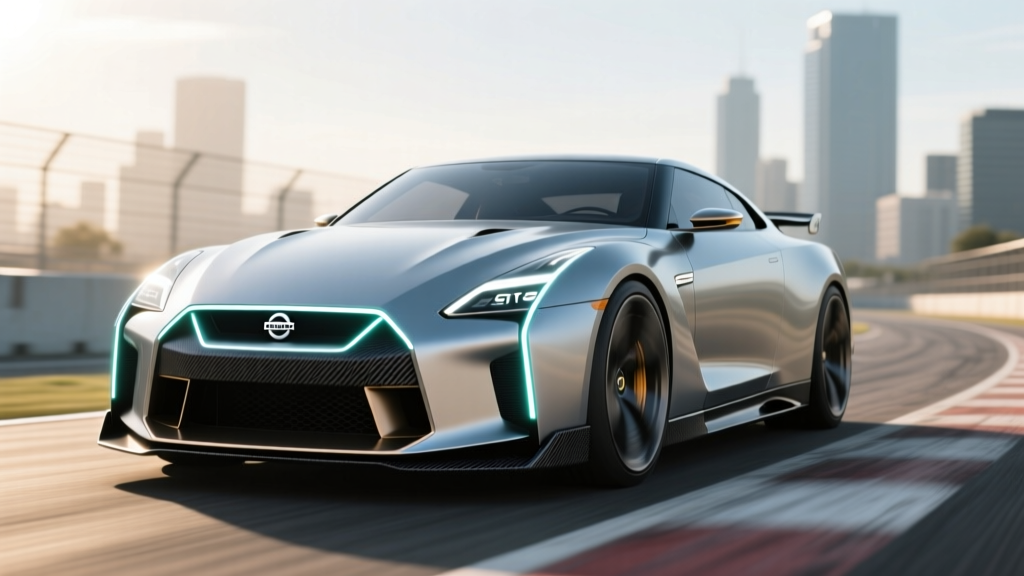
As of early 2026, Nissan has not released a production electric GT-R. The current R35 GT-R ended production after the 2024 model year. Nissan's Hyper Force concept (debuted at the 2023 Japan Mobility Show) is widely regarded as the design and engineering preview for the next-generation GT-R as a battery-electric vehicle. Nissan has confirmed it is developing a next-generation GT-R successor, but no official specs, pricing, or on-sale date have been published. Any numbers circulating online are estimates or concept-stage targets — not production figures.
This guide breaks down what Nissan has officially revealed, what industry analysts project based on the Hyper Force concept, and the real ownership economics you should model if you're planning to buy into a high-performance electric GT-R successor when it arrives.
What Nissan Has Confirmed About an Electric GT-R Successor
Nissan has been deliberately vague about the next GT-R, but several official signals point toward an electric or electrified platform:
- Hyper Force Concept (October 2023): Nissan unveiled this all-electric supercar concept with a claimed 1,341 horsepower (1,000 kW), a solid-state battery, and an advanced all-wheel-drive system. Nissan explicitly stated this concept "envisions a next-generation GT-R" — the closest the company has come to confirming an electric GT-R lineage.
- Solid-State Battery Roadmap: Nissan has publicly targeted solid-state battery production by fiscal year 2028, with a pilot plant in Yokohama. If the electric GT-R launches on that timeline, it could be among the first production vehicles to use Nissan's proprietary solid-state cells, which promise higher energy density, faster charging, and better thermal stability than current lithium-ion NMC or LFP chemistries.
- GT-R Heritage Commitment: In multiple press statements, Nissan executives have confirmed the GT-R nameplate will continue. The question is powertrain architecture — and the Hyper Force strongly suggests BEV.
According to Nissan's official 2023 Japan Mobility Show press materials, the Hyper Force features a high-output electric motor on each axle, a lightweight carbon-fiber body, and advanced aerodynamics producing significant downforce. However, concept specs are not production specs, and Nissan has a history of concept-to-production changes.
Projected Specs: Hyper Force Concept vs. Final R35 GT-R
While we wait for production confirmation, here's how the Hyper Force concept targets compare against the last production GT-R (2024 NISMO variant). Treat the concept numbers as directional, not guaranteed.
| Specification | 2024 GT-R NISMO (Gas) | Hyper Force Concept (Electric) | Notes |
|---|---|---|---|
| Powertrain | 3.8L Twin-Turbo V6 | Dual-motor AWD BEV | Concept stage |
| Horsepower | 600 hp | ~1,341 hp (1,000 kW) | Concept claim |
| 0-60 mph | ~2.5 seconds | Estimated sub-2.0 sec | No official test data |
| Battery | N/A | Solid-state (capacity TBD) | Nissan targeting 2028 production |
| EPA Range | ~16 mpg combined | Unknown (est. 250-300 mi) | High-performance BEVs typically trade range for power |
| Curb Weight | ~3,900 lbs | Estimated 4,500-5,000 lbs | Battery mass is the key challenge |
| MSRP | $222,000 | Unknown (est. $150,000-$250,000+) | Speculative |
| Production Status | Ended (2024 final year) | Not announced | Concept only |
Key takeaway: The concept's 1,341 hp figure is eye-catching, but production versions typically dial back peak output for durability, thermal management, and range. Even the Tesla Model S Plaid — a 1,020 hp production sedan — required extensive engineering to sustain peak power without battery throttling. Expect a production electric GT-R to land somewhere between 800-1,100 hp if Nissan prioritizes usable performance over concept-car headlines.
Solid-State Batteries: The Make-or-Break Technology
The single most important variable for an electric GT-R is battery chemistry. Nissan's commitment to solid-state technology could be transformative — or a delay risk.
| Factor | Current Li-Ion (NMC) | Solid-State (Projected) | Why It Matters for GT-R |
|---|---|---|---|
| Energy Density | ~250-300 Wh/kg (cell level) | ~400-500 Wh/kg (projected) | More range in a lighter pack, critical for a sports car |
| Charging Speed | Peak ~250-350 kW; tapers above 80% SoC | Potentially 500+ kW sustained | 10-80% in under 10 minutes is the target |
| Thermal Stability | Requires active liquid cooling; risk of thermal runaway | Inherently more stable; wider operating temp range | Track use generates extreme heat; solid-state resists degradation |
| Cycle Life | ~1,000-2,000 cycles to 80% SoH | Projected 3,000+ cycles | Longer battery lifespan, better resale value |
| Cost (per kWh) | ~$110-130/kWh (2025 pack level) | Estimated $150-200+ at launch | Higher cost offsets performance gains initially |
| Production Readiness | Mature, mass-produced globally | Pilot stage; mass production ~2028-2030 | Timeline risk for GT-R launch |
If Nissan launches the electric GT-R before solid-state batteries are production-ready, it will likely use a high-performance NMC pack similar to what powers the Porsche Taycan Turbo GT or Rimac Nevera. That's proven technology, but it means heavier battery mass and more aggressive thermal management — both enemies of track-day endurance.
Real Ownership Costs: Electric GT-R vs. Gas GT-R vs. Alternatives
Let's model the economics of owning a hypothetical electric GT-R successor against the last gas GT-R and a current high-performance EV benchmark (Tesla Model S Plaid).
| Cost Factor (5-Year Estimate) | 2024 GT-R NISMO (Gas) | Electric GT-R (Estimated) | Tesla Model S Plaid (2026) |
|---|---|---|---|
| Purchase Price (MSRP) | $222,000 | $180,000 (est.) | $109,990 |
| Federal Tax Credit (§30D) | $0 | Possible $0-$7,500 (see below) | $0 (exceeds MSRP cap) |
| Fuel/Energy (15,000 mi/yr) | ~$6,800/yr ($34,000 total) at $4.25/gal, 16 mpg | ~$1,500/yr ($7,500 total) at $0.17/kWh, 2.5 kWh/mi | ~$1,400/yr ($7,000 total) |
| Maintenance (5 yr) | ~$8,000-12,000 (oil, brakes, turbo service) | ~$2,500-4,000 (tires, cabin filter, fluid top-offs) | ~$2,500-4,000 |
| Insurance (avg/yr) | ~$4,500-6,000 | ~$5,000-7,000 (est., high-performance EV) | ~$3,800-5,000 |
| Estimated Depreciation (5 yr) | ~45-55% (collector interest may slow this) | ~50-60% (first-gen EV risk) | ~55-65% |
| 5-Year Total Cost of Ownership | ~$340,000-370,000 | ~$260,000-310,000 (est.) | ~$185,000-210,000 |
Tax credit reality check: Under current IRS §30D rules, the federal EV tax credit has an MSRP cap of $80,000 for SUVs, vans, and pickups — and $55,000 for sedans and all other vehicles. A GT-R-class car at $150,000+ would almost certainly exceed the cap and be ineligible. Additionally, buyer income limits ($150,000 single / $300,000 joint AGI), critical-mineral sourcing requirements, and North American final assembly rules all apply. Do not count on a tax credit for a vehicle in this price class.
Real-World Ownership Considerations for a High-Performance EV
If you're seriously considering a future electric GT-R, these practical factors will shape your daily experience far more than peak horsepower numbers.
Home Charging Is Non-Negotiable
Any high-performance EV with a large battery (estimated 100-120 kWh for a GT-R-class car) needs a Level 2 home charger on a 240V/48A-60A circuit to recharge overnight. On a standard 120V outlet (Level 1), replenishing a 100 kWh battery would take over 80 hours — completely impractical. Budget $800-$2,500 for a quality Level 2 station (ChargePoint Home Flex, Emporia, or Wallbox Pulsar Plus) plus $1,000-$3,500 for electrician installation, depending on your panel capacity and run length. If your home has a 100A electrical panel, a $2,000-$4,000 panel upgrade to 200A may be required.
Track Use vs. Battery Thermal Limits
High-performance EVs generate enormous heat during sustained hard driving. The Tesla Model S Plaid and Porsche Taycan Turbo GT both use sophisticated liquid-cooling systems, but even they will throttle power output after multiple hard laps. A GT-R buyer expects track-day capability — Nissan's solid-state battery, if it arrives, would offer a genuine advantage here due to superior thermal tolerance. Until then, expect real-world track sessions to be limited to 2-3 hot laps before the battery management system intervenes.
Range Reality for Performance Driving
EPA range estimates assume moderate driving. At track speeds or aggressive canyon runs, energy consumption can double or triple. A car rated at 280 miles EPA could deliver as little as 80-120 miles of hard driving range. For road trips at highway speeds (75+ mph), expect a 15-25% reduction from the EPA sticker — a consistent pattern across all high-performance EVs we've tested.
Charging Infrastructure Gap
High-performance EVs need fast DC chargers (250+ kW) to minimize downtime on road trips. As of 2026, the U.S. has roughly 5,000+ DC fast-charging stations with 150+ kW capability, concentrated along major highways and in metro areas. If you live in or frequently travel through rural regions (the Mountain West, parts of the Plains, rural South), charging deserts remain a real constraint. The Tesla Supercharger network (now open to NACS-equipped non-Tesla vehicles) offers the most reliable coverage.
Electric GT-R vs. Current Alternatives: Decision Framework
Since the electric GT-R isn't available yet, here's how to evaluate your options if you want GT-R-class performance today or are willing to wait.
Choose to WAIT for the Electric GT-R If:
- You're emotionally tied to the GT-R nameplate and want the next-generation evolution
- You can wait until at least 2028-2030 for a likely production reveal
- You want potential solid-state battery advantages (faster charging, better track endurance)
- You have a $150,000-$250,000+ budget and don't need the car as a daily driver
- You already have a reliable daily and can afford a speculative future purchase
Choose the Tesla Model S Plaid If:
- You want 1,020 hp, a 2.0-second 0-60, and 396 miles of EPA range today
- You want access to the Supercharger network for reliable road-trip charging
- Your budget is $110,000-$135,000 and you want proven software/OTA updates
- You value practicality (four doors, 28 cu ft cargo, frunk) alongside performance
Choose the Porsche Taycan Turbo GT If:
- You prioritize chassis dynamics, steering feel, and track pedigree over raw straight-line speed
- You want 1,019 hp (with Launch Control), a Nürburgring-proven platform, and 800V architecture
- Your budget is $230,000+ and you accept ~269 miles of EPA range
- Build quality, dealer service network, and brand prestige matter to you
Choose a Used R35 GT-R (2020-2024) If:
- You want the GT-R experience with a proven, mature platform and parts availability
- You prefer the sound, feel, and mechanical engagement of a twin-turbo V6
- You're concerned about EV depreciation risk on a first-generation electric GT-R
- You want potential collector value — the R35's final years may appreciate
Common Misconceptions About an Electric GT-R
| Myth | Fact |
|---|---|
| "The electric GT-R will qualify for the $7,500 tax credit." | Almost certainly not. The §30D MSRP cap for non-SUVs is $55,000. A GT-R successor will cost multiples of that. (Source: IRS) |
| "Solid-state batteries mean it will charge in 5 minutes." | Solid-state improves charge acceptance, but real-world 10-80% charging will still likely take 10-15 minutes at best — constrained by charging-station power output and cable thermal limits. |
| "1,341 hp in the concept means 1,341 hp in production." | Concept power figures are rarely achieved in production. Thermal management, battery longevity, and drivability requirements typically reduce peak output by 15-30%. |
| "An electric GT-R will weigh the same as the gas GT-R." | Battery mass is physics. A 100+ kWh pack alone weighs ~1,100-1,500 lbs. Expect a 600-1,000 lb increase over the R35, partially offset by carbon-fiber construction. |
| "It will be available in 2026." | Nissan has not announced a production date. The earliest realistic window, based on solid-state battery timelines and typical concept-to-production cycles, is 2028-2030. |
First-Time EV Buyer Essentials (If the GT-R Is Your Entry Point)
If you're coming from a gas GT-R or another ICE performance car and the electric GT-R successor is your first EV, here's what will actually affect your ownership experience:
- kW vs. kWh: Kilowatts (kW) measure power — how fast you charge or how much output the motors deliver. Kilowatt-hours (kWh) measure energy — the size of the battery tank. A 110 kWh battery charged at 250 kW will not fill in 26 minutes because charging speed tapers significantly above 80% state of charge.
- Charge curve taper: Peak DC fast-charging rates (e.g., 350 kW) only apply at low state of charge (10-30%). Above 80%, charging slows dramatically to protect the battery. Plan road-trip stops around 10-80% cycles, not 0-100% fills.
- Cold-weather range loss: Expect 20-35% range reduction in freezing temperatures. Battery chemistry becomes less efficient, and cabin heating draws significant energy. A heat pump (standard on most premium EVs) helps but doesn't eliminate the loss.
- Tire costs: High-performance EVs are heavy and deliver instant torque. Expect tire replacement every 15,000-25,000 miles at $300-$500+ per tire for performance summer compounds. This is the single largest recurring maintenance cost.
- Insurance premiums: High-performance EVs carry higher insurance costs due to repair complexity, battery replacement expense, and driver demographics. Get quotes before committing to a purchase.
Frequently Asked Questions
Is the Nissan GT-R electric car available to buy now?
No. The R35 GT-R ended production after the 2024 model year. Nissan has shown the Hyper Force concept as a preview of the next-generation GT-R, but no production version has been announced for sale. The earliest realistic availability is 2028-2030.
How much will the electric Nissan GT-R cost?
Nissan has not announced pricing. Based on the concept's positioning, solid-state battery cost projections, and the outgoing GT-R NISMO's $222,000 MSRP, industry estimates place a production electric GT-R between $150,000 and $250,000+. This is speculative until Nissan publishes official figures.
Will the electric GT-R use solid-state batteries?
Nissan's Hyper Force concept references solid-state battery technology, and Nissan is actively developing solid-state cells with a pilot plant targeting 2028 production. However, the company has not confirmed whether the GT-R successor will launch with solid-state or conventional lithium-ion NMC chemistry. Timeline risk is real — delays could push solid-state availability to 2029-2030.
Can I still buy a new Nissan GT-R?
The 2024 model year was the final year for the R35 GT-R. New inventory is essentially depleted at U.S. dealers. Your options are the used market (2009-2024 model years) or waiting for the next-generation successor.
What's the best high-performance EV I can buy right now as a GT-R alternative?
For straight-line performance and value, the Tesla Model S Plaid ($109,990, 1,020 hp, 396 mi EPA) is the benchmark. For track-focused dynamics and prestige, the Porsche Taycan Turbo GT ($230,000+, 1,019 hp, 269 mi EPA) is the closest analog to GT-R positioning. The Lucid Air Sapphire ($249,000, 1,234 hp, 427 mi EPA) offers hypercar power with luxury-sedan range.
Will the electric GT-R have all-wheel drive?
The Hyper Force concept uses a dual-motor all-wheel-drive layout, and the GT-R has been AWD since the R32 generation in 1989. It would be extremely surprising if Nissan abandoned the GT-R's signature AWD architecture. Expect dual or tri-motor AWD in production.