The Short Answer on Nissan EVs
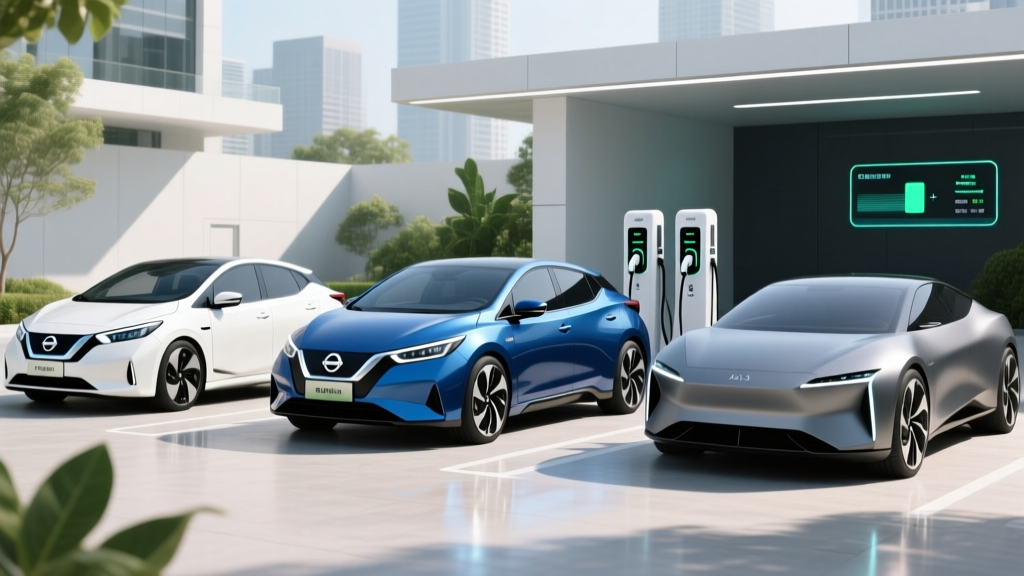
Nissan currently sells two battery-electric vehicles in the U.S.: the Leaf (starting around $28,140, EPA range up to 212 miles) and the Ariya (starting around $39,590, EPA range up to 304 miles). The Leaf remains one of the most affordable new EVs available, while the Ariya competes as a midsize electric crossover with available all-wheel drive. Both qualify for varying levels of the federal §30D tax credit depending on your income, the vehicle's MSRP, and battery-sourcing requirements. For most buyers, the Ariya is the more practical daily driver thanks to its CCS fast-charging capability and longer range, while the Leaf suits budget-conscious commuters with reliable home-charging access.
Nissan's 2026 EV Lineup: Leaf vs. Ariya at a Glance
Nissan was an early EV pioneer with the original Leaf in 2011, and the brand's electric portfolio has since expanded to include the Ariya crossover. Here's how the two current models stack up on paper:
| Spec | 2026 Nissan Leaf S / SV | 2026 Nissan Ariya Engage / Evolve+ |
|---|---|---|
| Base MSRP | $28,140 (S) / $36,190 (SV Plus) | $39,590 (Engage FWD) / $46,590 (Evolve+ e-4ORCE) |
| EPA Range | 149 mi (S) / 212 mi (SV Plus) | 289 mi (Engage FWD) / 304 mi (Evolve+ FWD) / 272 mi (e-4ORCE AWD) |
| Battery (usable) | 40 kWh (S) / 60 kWh (SV Plus) | 63 kWh (Engage) / 87 kWh (Evolve+) |
| Battery Chemistry | NMC (nickel manganese cobalt) | NMC |
| DC Fast Charge Peak | ~50 kW (CHAdeMO) | ~130 kW (CCS) |
| 10–80% DCFC Time | ~40 min (S) / ~45 min (SV Plus) | ~35 min (87 kWh pack) |
| Level 2 (240V) Rate | 6.6 kW onboard charger | 7.2 kW onboard charger |
| Horsepower | 147 hp (S) / 214 hp (SV Plus) | 216 hp (FWD) / 389 hp (e-4ORCE AWD) |
| 0–60 mph | ~7.9s (S) / ~6.5s (SV Plus) | ~7.5s (FWD) / ~5.1s (e-4ORCE) |
| EPA Efficiency | 111 MPGe (S) / 104 MPGe (SV Plus) | 103 MPGe (Evolve+ FWD) |
| Battery Warranty | 8 years / 100,000 miles | 8 years / 100,000 miles |
| Federal Tax Credit | Up to $3,750 (subject to sourcing rules) | Up to $7,500 (subject to sourcing rules) |
Sources: fueleconomy.gov, Nissan USA specifications.
Real-World Range: What the EPA Sticker Doesn't Tell You
EPA range estimates are a useful baseline, but real-world results vary based on speed, temperature, and terrain. Here's what to actually expect from Nissan EVs in daily driving:
Real-World Range Expectations
Leaf SV Plus (EPA 212 mi): Expect roughly 170–190 miles on mixed highway driving at 70 mph. In freezing temperatures (below 32°F), plan for 140–160 miles due to cabin heating load and reduced battery efficiency. The Leaf lacks a heat pump, which compounds cold-weather losses.
Ariya Evolve+ FWD (EPA 304 mi): Highway cruising at 70 mph yields approximately 250–275 miles. In winter conditions, expect 215–240 miles. The Ariya's liquid-cooled battery and available heat pump (on higher trims) help mitigate cold-weather degradation compared to the Leaf's passive air-cooling approach.
The Leaf's air-cooled battery is a notable limitation for road-trippers or those in hot climates. Repeated DC fast charging in high ambient temperatures can trigger "Rapidgate" — Nissan's thermal management system throttling charge speeds to protect the pack. If you regularly drive in Arizona, Texas, or similar climates and plan to fast-charge frequently, the Ariya's liquid-cooled system is the better choice.
Charging Speeds & the CHAdeMO Problem
This is where the Leaf and Ariya diverge sharply, and it's the single most important factor for buyers who can't charge exclusively at home.
| Charging Level | Leaf (CHAdeMO) | Ariya (CCS) | Miles Added per Hour |
|---|---|---|---|
| Level 1 (120V / 12A) | 1.4 kW | 1.4 kW | ~3–5 mi/hr |
| Level 2 (240V / 32A) | 6.6 kW | 7.2 kW | ~20–25 mi/hr (Leaf) / ~25–30 mi/hr (Ariya) |
| DC Fast (peak) | ~50 kW (CHAdeMO) | ~130 kW (CCS) | ~100 mi in 30 min (Leaf) / ~180 mi in 30 min (Ariya) |
The Leaf still uses the CHAdeMO DC fast-charging connector, which is being phased out across North America in favor of CCS and NACS (Tesla's standard). Electrify America, the largest U.S. DC fast-charging network, has committed to CCS and NACS — and CHAdeMO stalls are increasingly rare at new installations. This means Leaf owners will find fewer compatible public fast chargers over time.
The Ariya ships with a CCS1 port, giving it access to Electrify America, EVgo, and most non-Tesla networks. Nissan has also announced that future models will adopt NACS, but as of the 2026 model year, the Ariya relies on CCS (with a NACS adapter available for Tesla Supercharger access on some networks).
Bottom line: If you can charge at home overnight and rarely road-trip, the Leaf's CHAdeMO limitation is manageable. If public charging is part of your routine, the Ariya's CCS compatibility is a significant practical advantage.
Cost of Ownership: Nissan EVs vs. Gas Equivalents
Let's compare the Ariya against a comparably priced gas crossover — the Nissan Rogue — over a 5-year, 75,000-mile ownership period. This is where EV economics either shine or stumble depending on your situation.
| Cost Category (5 yr / 75k mi) | Ariya Evolve+ FWD | Nissan Rogue SV (AWD gas) |
|---|---|---|
| Base MSRP | $43,190 | $31,750 |
| Federal Tax Credit (§30D est.) | –$3,750 to –$7,500* | $0 |
| Effective Purchase Price | $35,690–$39,440 | $31,750 |
| Fuel / Electricity (75k mi) | $2,800–$4,200** | $7,500 (at 28 MPG / $3.50/gal) |
| Maintenance | ~$1,200 (no oil changes, fewer brake replacements) | ~$3,500 (oil, filters, brakes, transmission fluid) |
| Insurance (avg.) | ~$9,500 ($1,900/yr avg.) | ~$7,500 ($1,500/yr avg.) |
| Estimated Depreciation | ~$18,000 | ~$14,000 |
| Total 5-Year Cost | $67,190–$72,340 | $64,250 |
*Tax credit amount depends on battery-sourcing compliance and your AGI. Consult IRS §30D guidelines and a tax professional.
**Electricity cost assumes $0.14/kWh average for home charging; public DCFC at $0.35–$0.50/kWh raises this figure.
The Ariya's higher upfront cost is partially offset by fuel and maintenance savings, but insurance premiums and steeper depreciation narrow the gap. Over five years, the total cost of ownership is roughly comparable — the EV wins on operating costs but loses on purchase price and insurance. Extending ownership to 8–10 years tips the math more decisively in the EV's favor, as the Rogue's maintenance costs accelerate and the Ariya's drivetrain simplicity pays dividends.
Federal Tax Credit: What Actually Applies to Nissan EVs
§30D Credit Requirements (2026)
- MSRP Cap: SUVs/vans/pickups must be ≤$80,000; sedans ≤$55,000. Both the Leaf and Ariya fall well under these caps.
- Buyer Income Cap: Modified AGI ≤$150,000 (single), ≤$225,000 (head of household), ≤$300,000 (joint). Exceed these and you're ineligible.
- Battery Sourcing: The credit splits into two halves — $3,750 for critical-minerals compliance and $3,750 for battery-component manufacturing in North America. Nissan's supply chain has been evolving, and credit eligibility can change mid-year.
- Point-of-Sale Transfer: As of 2024, you can transfer the credit to the dealer at purchase, reducing your out-of-pocket cost immediately rather than waiting for tax filing.
- New vs. Used: The Leaf and Ariya qualify as new vehicles. A separate used-EV credit (up to $4,000) applies to pre-owned Nissan EVs meeting price and income thresholds.
Always verify current eligibility on fueleconomy.gov before purchasing, as battery-sourcing compliance can shift with supply-chain changes. Nissan's credit eligibility has fluctuated — at times the Ariya qualifies for the full $7,500, at other times only $3,750 or none at all.
Common Misconceptions About Nissan EVs
| Myth | Fact |
|---|---|
| "The Leaf's battery will need expensive replacement within a few years." | Nissan's 8-year/100,000-mile battery warranty covers capacity loss below 9 bars (out of 12) on the dash display. Real-world data shows most Leafs retain 80–85% capacity after 100,000 miles, though hot-climate, frequent-DCFC units degrade faster. |
| "Nissan EVs can't road-trip because they charge too slowly." | The Ariya peaks at ~130 kW on CCS, adding ~180 miles in 30 minutes — adequate for highway travel with planned stops. The Leaf's 50 kW CHAdeMO peak is slower, making road trips feasible but less convenient. |
| "EVs cost more to insure, so the savings disappear." | EV insurance is typically 15–25% higher than gas equivalents due to repair costs and battery replacement risk. But fuel and maintenance savings of $3,000–$5,000 over five years usually exceed the insurance premium difference. |
| "You need to replace the EV battery like you'd replace a gas engine." | EV traction batteries are designed to outlast the vehicle. Nissan's warranty guarantees at least 70–75% capacity retention at 100,000 miles. Full replacement (if needed out of warranty) costs $6,500–$9,000 for a Leaf pack, but this is rare before 150,000+ miles. |
| "I can't charge a Nissan EV at Tesla Superchargers." | The Ariya can access select Tesla Superchargers using a NACS adapter (availability varies by network and adapter compatibility). The Leaf's CHAdeMO connector has no practical Supercharger adapter solution. |
Decision Framework: Which Nissan EV Is Right for You?
Choose the Nissan Leaf if:
- Your budget is under $30,000 and you want the cheapest new EV available
- You have reliable Level 2 home charging and drive under 100 miles daily
- Your commute is mostly city/suburban, not sustained highway speeds
- You live in a mild climate (rarely below 25°F or above 95°F)
- You don't plan to rely on public DC fast charging regularly
Choose the Nissan Ariya if:
- You need 250+ real-world miles of range for road trips or long commutes
- You want access to the CCS public charging network (and NACS via adapter)
- You need AWD (e-4ORCE) for snow, rain, or mountain driving
- You want a modern crossover with competitive tech, towing (up to 1,500 lbs), and cargo space (59.4 cu ft max)
- You live in a hot climate and need liquid-cooled battery thermal management
Consider a PHEV or non-Nissan EV if:
- You can't install a home charger and your area has limited public charging
- You regularly drive 300+ miles in a single day in cold weather
- You want the longest possible range — the Hyundai Ioniq 5 (305+ mi) or Tesla Model Y (310+ mi) offer more
First-Time Nissan EV Buyer Checklist
- Confirm home charging feasibility. A Level 2 home charger (240V, 32–48A circuit) costs $500–$1,500 for equipment and $800–$2,500 for electrician installation. If your electrical panel needs an upgrade to 200A, add $1,500–$3,000. This is the single biggest ownership variable.
- Check your electrical panel capacity. Most homes need a 40A or 50A dedicated circuit for a Level 2 charger. A licensed electrician can assess your panel before you buy the car.
- Verify §30D tax credit eligibility for the specific trim and your income level before signing. Use the IRS dealer portal or fueleconomy.gov for real-time status.
- Test-charge before you buy. Visit a local DC fast charger with the model you're considering. Download the Electrify America or EVgo app, plug in, and confirm the connector works and the charge curve meets your expectations.
- Factor in insurance. Get a quote for the exact trim before purchasing. EV premiums vary significantly by insurer — some (like GEICO and Progressive) have narrowed the gap, while others still charge a steep EV surcharge.
- Understand the warranty. Nissan covers the battery for 8 years/100,000 miles against capacity loss. The powertrain is covered for 5 years/60,000 miles. The basic vehicle warranty is 3 years/36,000 miles.
Frequently Asked Questions
Is the Nissan Leaf being discontinued?
Nissan has continued to sell the Leaf through the 2026 model year, but industry reports suggest the current generation may be the last in the U.S. market. Nissan's future EV strategy leans toward crossovers and SUVs. If you're considering a Leaf, buying now ensures availability; waiting risks the model being phased out.
How long does a Nissan Leaf battery last?
Based on long-term fleet data and owner reports, most Leaf batteries retain 80–85% of original capacity at 100,000 miles under moderate use. Hot-climate vehicles that rely heavily on DC fast charging may see 70–75% retention at that mileage. The 8-year/100,000-mile warranty covers capacity loss below a defined threshold (9 of 12 capacity bars). Replacement packs cost approximately $6,500–$9,000 if needed out of warranty.
Can the Ariya tow?
Yes. The Ariya is rated for up to 1,500 pounds when properly equipped — enough for a small utility trailer or a pair of jet skis, but not a large camper. Towing will reduce range by roughly 30–50% depending on trailer weight and aerodynamics.
Does the Ariya have a frunk?
No. Unlike some competitors (Hyundai Ioniq 5, Ford Mustang Mach-E), the Ariya does not have a front trunk. Cargo space is 22.8 cu ft behind the rear seats and 59.4 cu ft with seats folded — competitive for the class, but all rear-cargo.
What's the cheapest way to own a Nissan EV?
The most cost-effective path is a used Leaf (2019–2023 SV Plus) with a home Level 2 charger. Used Leafs depreciate heavily, with 2021 SV Plus models available for $15,000–$20,000. The used-EV tax credit (up to $4,000 under §25E) may apply if the sale price is ≤$25,000 and your income falls under the caps. Pair this with home solar or a time-of-use electricity plan for near-zero fuel costs.
How does Nissan's ProPILOT Assist compare to Tesla Autopilot?
ProPILOT Assist is a Level 2 driver-assistance system (per SAE International definitions) that provides adaptive cruise control and lane-centering on highways. It requires continuous driver supervision and does not autonomously navigate. It's comparable to Toyota Safety Sense or Honda Sensing — competent for highway cruising but not a substitute for an attentive driver. Nissan's ProPILOT Assist 2.0 (available on higher Ariya trims) adds hands-off driving on pre-mapped divided highways, similar to GM's Super Cruise, but the driver must remain alert and ready to take over.