The Nissan EVs Delay: Quick Answer
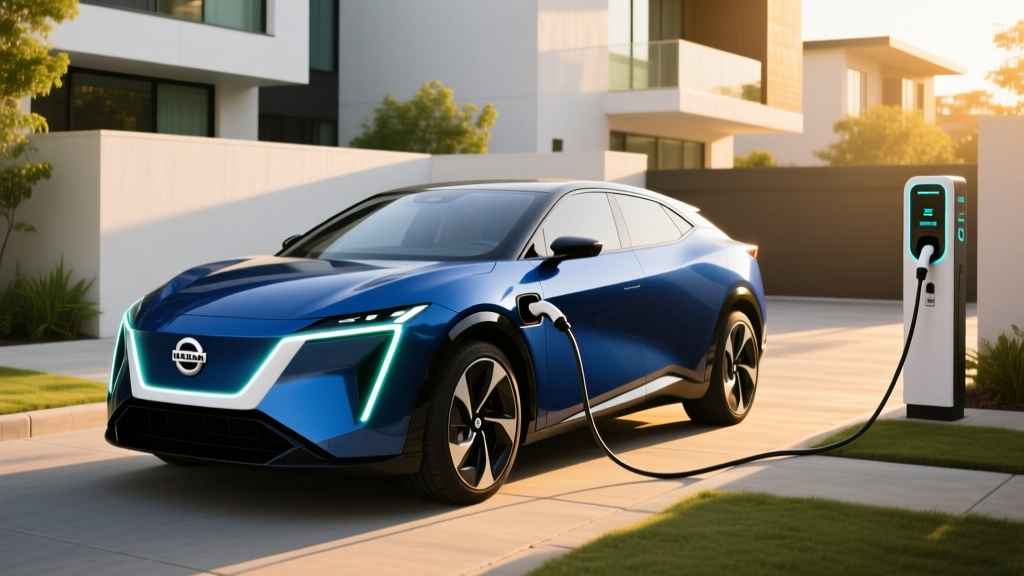
Bottom line: Nissan's EV rollout has been hampered by battery supply constraints, software integration issues, and a slow transition from CHAdeMO to the North American Charging Standard (NACS). The Ariya, Nissan's flagship electric crossover, arrived in the U.S. with limited trim availability and has faced intermittent delivery pauses. If you're shopping now, the 2026 Ariya is available in most trims with up to 304 miles of EPA range, but inventory remains inconsistent. Alternatives like the Hyundai Ioniq 5, Tesla Model Y, and Ford Mustang Mach-E offer comparable or better specs with more reliable availability.
What's Behind the Nissan EVs Delay?
Nissan was an early EV pioneer with the Leaf, but the company fell behind competitors during the critical 2020-2024 period when Hyundai, Tesla, and Ford scaled production rapidly. The Ariya, announced in 2019, didn't reach U.S. dealers until late 2023, and even then, only in limited configurations.
Several factors contributed to the Nissan EVs delay:
- Battery supply chain: Nissan relies on Envision AESC for battery cells, and scaling production to meet global demand proved slower than anticipated.
- Charging standard transition: Nissan was one of the last holdouts on CHAdeMO, the aging DC fast-charging connector. The shift to NACS (Tesla's connector, now the industry standard) required hardware and software updates that delayed 2025-2026 model-year vehicles.
- Software and platform integration: The Ariya rides on the Renault-Nissan-Mitsubishi CMF-EV platform, which required extensive validation for U.S. safety and emissions compliance.
- Production prioritization: Nissan's Tochigi plant in Japan serves global markets, and U.S. allocation has been limited compared to domestic-built competitors.
As of early 2026, Nissan has committed to building the next-generation Leaf and future EVs in North America, but those vehicles remain announced and are not yet available for purchase.
2026 Nissan Ariya: Real-World Specs
If you're considering the Ariya despite the delays, here's what you're actually buying. The 2026 Ariya comes in front-wheel-drive (FWD) and all-wheel-drive (e-4ORCE) configurations, with two battery sizes:
| Trim | Battery (kWh) | EPA Range | Peak DC Charge (kW) | 10-80% Time | 0-60 mph | MSRP |
|---|---|---|---|---|---|---|
| Venture+ FWD | 87 kWh (usable) | 304 mi | 130 kW | ~35 min | 7.5 sec | $43,190 |
| Evolve+ FWD | 87 kWh | 289 mi | 130 kW | ~35 min | 7.5 sec | $47,190 |
| Empower+ FWD | 87 kWh | 289 mi | 130 kW | ~35 min | 7.5 sec | $51,190 |
| Platinum+ e-4ORCE AWD | 87 kWh | 267 mi | 130 kW | ~35 min | 5.1 sec | $58,690 |
Real-world range caveat: The 304-mile EPA figure applies to the Venture+ FWD in ideal conditions. Expect 240-260 miles on the highway at 70 mph, and 200-220 miles in cold weather (below 32°F). The AWD Platinum+ drops to roughly 210-230 miles in real-world mixed driving.
Charging reality: The Ariya's 130 kW peak DC fast-charge rate is its biggest weakness. Competitors like the Hyundai Ioniq 5 (240 kW peak) and Tesla Model Y (250 kW peak) charge significantly faster. On a road trip, you'll spend 35 minutes at a DC fast charger to go from 10% to 80%, compared to 18-20 minutes in the Ioniq 5. The Ariya uses the NACS connector for 2026, so Tesla Supercharger access is included, which partially offsets the slower charge speed.
Cost Comparison: Ariya vs. Gas vs. Competitor EVs
| Vehicle | Purchase Price | Fuel/Charge Cost (5 yr / 75k mi) | Maintenance (5 yr) | Federal Tax Credit | 5-Year Total |
|---|---|---|---|---|---|
| 2026 Nissan Ariya Venture+ | $43,190 | $4,500 (home charging avg) | $1,800 | $3,750* | $45,740 |
| 2026 Toyota RAV4 Gas (LE AWD) | $32,400 | $8,250 (27 MPG, $3.30/gal) | $3,500 | $0 | $44,150 |
| 2026 Hyundai Ioniq 5 SEL (RWD) | $46,500 | $4,200 | $1,800 | $7,500 | $44,700 |
| 2026 Tesla Model Y (Long Range) | $47,990 | $3,900 | $1,700 | $7,500 | $45,790 |
*The Ariya's tax credit eligibility depends on battery sourcing and your income. Verify current §30D rules at IRS.gov.
Key takeaway: The Ariya's 5-year cost is competitive with gas SUVs, but only if you qualify for at least a partial tax credit. The Ioniq 5 and Model Y offer similar or lower total costs with faster charging and better availability.
EV vs. Gas: What First-Time Buyers Should Know
| Factor | EV (Ariya) | Gas (RAV4) |
|---|---|---|
| Home charging access | Required for convenience (Level 2 install: $500-$2,000) | Gas stations everywhere |
| Cold-weather range loss | 20-30% reduction below 32°F | Minimal (5-10% MPG drop) |
| Road trip charging | 30-40 min stops every 200-250 mi | 5-10 min stops every 350-400 mi |
| Maintenance | No oil changes, fewer moving parts | Oil, filters, transmission fluid |
| Depreciation | Higher (EVs lose value faster currently) | Moderate (proven resale market) |
Home charging is non-negotiable for most EV owners. If you can't install a Level 2 charger (240V, 32-48 amps) at home or work, an EV like the Ariya becomes inconvenient. Public DC fast charging costs 2-3x more than home charging and isn't reliable in rural areas.
Decision Framework: Should You Buy the Ariya or Wait?
Buy the 2026 Ariya if:
- You want a comfortable, quiet electric crossover and don't prioritize fast charging.
- You can find one in stock at a local dealer (check inventory before committing).
- You qualify for at least a partial federal tax credit, bringing the effective price below $40,000.
- You mostly drive in urban/suburban areas where the 240-mile real-world range is sufficient.
Consider alternatives (Ioniq 5, Model Y, Mach-E) if:
- You take frequent road trips and need 18-20 minute DC fast charging.
- You want guaranteed inventory and don't want to wait for dealer allocation.
- You need the full $7,500 federal tax credit (Ioniq 5 and Model Y currently qualify).
- You prioritize performance (Model Y 0-60: 4.8 sec) or cargo space (Ioniq 5: 53 cu ft with seats folded).
Wait for Nissan's next-gen EVs if:
- You're loyal to the brand and willing to wait 12-18 months for the next-generation Leaf or a U.S.-built Ariya successor.
- You want Nissan's ProPILOT 2.0 hands-free driving system, which is expected on future models.
Common Misconceptions About the Nissan EVs Delay
| Myth | Fact |
|---|---|
| "Nissan is abandoning EVs." | False. Nissan has committed to 15 new EV models by 2030 and is building battery plants in the U.S. and U.K. |
| "The Ariya uses the outdated CHAdeMO connector." | False for 2026 models. The 2026 Ariya uses NACS, compatible with Tesla Superchargers and most new public networks. |
| "Nissan's battery tech is behind." | Partially true. The Ariya's 130 kW charge rate lags competitors, but its 87 kWh battery delivers competitive range. Nissan is developing solid-state batteries for 2028+. |
| "You can't get a tax credit for the Ariya." | Depends on your income, the vehicle's MSRP, and battery sourcing. Check IRS §30D rules before assuming ineligibility. |
Frequently Asked Questions
Is the Nissan Ariya reliable?
The Ariya is too new for long-term reliability data, but Nissan's EV track record with the Leaf is solid. The Ariya comes with an 8-year/100,000-mile battery warranty, matching industry standards. Check NHTSA.gov for recalls and safety ratings.
Can I charge the Ariya at Tesla Superchargers?
Yes, the 2026 Ariya uses the NACS connector and is compatible with Tesla's Supercharger network. However, the Ariya's 130 kW peak charge rate means you won't take full advantage of Supercharger speeds (which can deliver 250 kW to Tesla vehicles).
How does the Ariya compare to the Leaf?
The Ariya is a completely different vehicle: larger, more powerful, longer range, and more expensive. The Leaf (discontinued after 2025) had a 40-62 kWh battery and 149-226 miles of range. The Ariya's 87 kWh battery and 304-mile EPA range make it suitable for road trips, while the Leaf was a commuter car.
Will Nissan release a cheaper EV in the U.S.?
Nissan has announced plans for a next-generation Leaf and other affordable EVs, but none are available as of early 2026. If you need a budget EV now, consider the Chevrolet Equinox EV ($33,000 base) or a used Nissan Leaf.
What's the real-world range of the Ariya in winter?
Expect 200-220 miles in the FWD Venture+ when temperatures drop below 32°F. The AWD Platinum+ drops to roughly 180-200 miles. Cold weather reduces battery efficiency and increases cabin heating demand. Preconditioning the battery while plugged in can mitigate some of this loss.
Final note: The Nissan EVs delay is real, but the 2026 Ariya is a capable electric crossover if you can find one. Weigh its slower charging and limited availability against competitors before committing. For the latest EPA range and efficiency data, visit fueleconomy.gov.