The Real Economics Behind Nissan EV Lease Deals
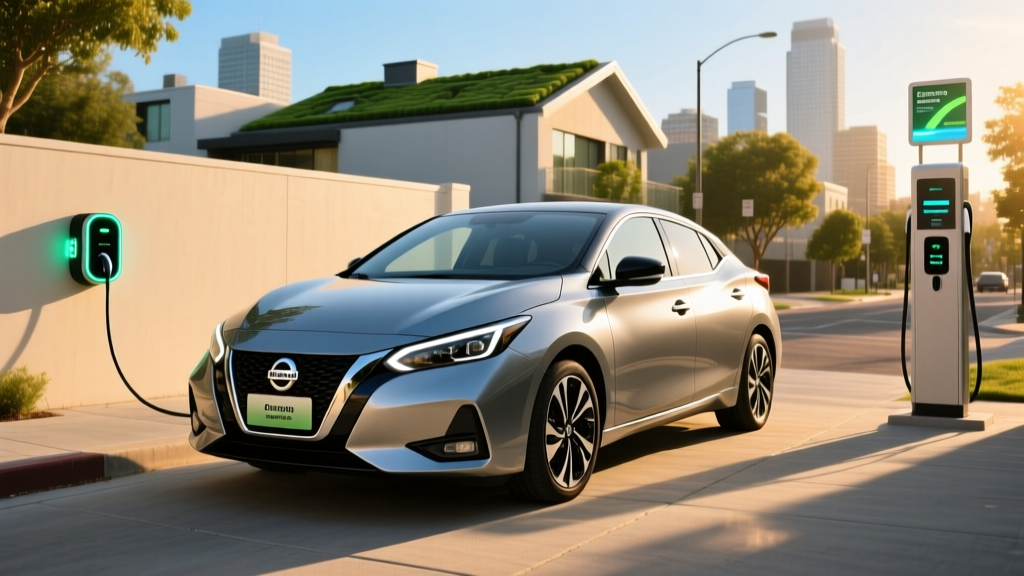
If you've been searching for Nissan EV lease deals, you've likely seen the advertised monthly payments — $199 for a Leaf, $299 for an Ariya. Those numbers are only the surface. The true cost of driving a Nissan electric vehicle over a typical five-year ownership cycle (or a 36-month lease with renewal) includes electricity, insurance, maintenance, depreciation, and the shifting landscape of federal tax incentives. In 2026, the Nissan lineup includes the refreshed Leaf (now with NACS charging and an available 60 kWh battery) and the Ariya crossover (up to 87 kWh usable, up to 304 miles EPA). Both vehicles sit in competitive price bands, but the ownership math diverges sharply from their gas counterparts — and from each other.
This guide breaks down the numbers you need before signing: the 5-year total cost of ownership (TCO), current IRS §30D tax credit eligibility, per-mile fuel and maintenance savings, insurance realities, and resale value trends. We use the 2026 Leaf SV Plus and the Ariya Engage as our baseline models because they represent the volume trims most lease deals target.
2026 Nissan EV Lineup: Quick Spec Reference
Before running the ownership numbers, here's what Nissan currently sells in the U.S. EV market. Note that the Leaf switched to the NACS (Tesla-style) charge port for 2026, ending its long run with CHAdeMO, which dramatically improves public charging access.
| Spec | 2026 Leaf SV Plus | 2026 Ariya Engage (FWD) | 2026 Ariya Evolve+ (AWD) |
|---|---|---|---|
| Base MSRP | $31,395 | $41,190 | $49,590 |
| Battery (usable) | 60 kWh, LFP | 65 kWh, NMC | 87 kWh, NMC |
| EPA Range | 212 mi | 216 mi | 304 mi |
| Real-World Highway (~70 mph) | ~175-185 mi | ~185-195 mi | ~255-270 mi |
| Max DC Fast Charge | 100 kW (peak) | 130 kW (peak) | 130 kW (peak) |
| 10-80% DC Time | ~40 min | ~35 min | ~40 min |
| Level 2 Rate | 7.2 kW | 7.2 kW | 7.2 kW |
| Horsepower | 214 hp | 238 hp | 389 hp |
| 0-60 mph | 6.9 sec | 7.5 sec | 4.8 sec |
| MPGe (combined) | 111 MPGe | 99 MPGe | 95 MPGe |
| Charge Port | NACS | NACS | NACS |
| Battery/Powertrain Warranty | 8 yr / 100,000 mi | 8 yr / 100,000 mi | 8 yr / 100,000 mi |
Five-Year Total Cost of Ownership Breakdown
Leasing a Nissan EV for 36 months and then either renewing or purchasing a second EV over a five-year horizon produces a cost profile very different from a comparable gas car. Below we compare the 2026 Leaf SV Plus and 2026 Ariya Engage FWD against a gas baseline (2026 Nissan Sentra SV, ~$24,000 MSRP, 32 MPG combined). Assumptions: 12,000 miles/year, 60 months, electricity at $0.16/kWh (national average per EIA), gasoline at $3.45/gallon.
| Category | Leaf SV Plus | Ariya Engage FWD | Sentra SV (Gas Baseline) |
|---|---|---|---|
| Net Purchase/Lease Cost* | $21,400 | $29,200 | $18,500 |
| Fuel / Electricity | $2,880 | $3,450 | $6,470 |
| Maintenance | $1,400 | $1,600 | $3,900 |
| Insurance (5-yr total) | $9,600 | $11,400 | $7,800 |
| Estimated Depreciation | $12,500 | $16,800 | $10,200 |
| Total 5-Year Cost | $47,780 | $62,450 | $46,870 |
| Cost Per Mile | $0.80 | $1.04 | $0.78 |
*Net Purchase/Lease Cost reflects two consecutive 36-month leases (with down payment) or a purchase with the federal tax credit applied at point of sale, where eligible. Actual numbers depend on local dealer pricing, money factor, residual, and your tax situation. Consult a tax professional for your specific case.
The headline: the Leaf comes within roughly $900 of the Sentra over five years, primarily because fuel and maintenance savings offset higher insurance and slightly steeper depreciation. The Ariya, as a larger, more premium vehicle, costs meaningfully more — you're paying for space, AWD availability, and a more modern platform, not for operating-cost parity with a compact sedan.
Federal Tax Credit (§30D): What Nissan Lease Deals Actually Qualify For
One of the most confusing parts of any EV transaction in 2026 is the federal tax credit. Under IRS §30D rules, up to $7,500 is available for qualifying new clean vehicles — but eligibility hinges on a stack of requirements that change periodically. Here's the current checklist:
- MSRP Caps: Vans/SUVs/pickups must be under $80,000 MSRP; other vehicles (sedans, hatchbacks) under $55,000. The Leaf ($31,395 base) and all Ariya trims (under $60,000) qualify on price.
- Buyer Income Limits: Modified AGI must not exceed $300,000 (married filing jointly), $225,000 (head of household), or $150,000 (single). The credit phases out entirely above these thresholds.
- Battery Component Sourcing: A percentage of battery components must be manufactured or assembled in North America (threshold increases annually through 2029).
- Critical Minerals: A percentage of critical minerals must be sourced from the U.S. or a free-trade-agreement country (also escalating annually).
- Foreign Entity of Concern (FEOC): Vehicles with battery components from a FEOC (effective 2024) or critical minerals from a FEOC (effective 2025) are disqualified.
- Point-of-Sale Transfer: Since 2024, you can transfer the credit to the dealer at purchase, reducing the purchase price directly — you don't have to wait until tax filing.
For the 2026 Leaf, Nissan's LFP battery sourcing has historically met the critical-mineral threshold, but battery-component manufacturing location varies by model year. For the Ariya (NMC chemistry, assembled in Japan), eligibility has fluctuated as sourcing rules tightened. Always verify the specific VIN's credit status on fueleconomy.gov before signing.
Charging vs. Gasoline: The Per-Mile Math
The single largest operating-cost advantage of any Nissan EV is fuel. Here's the exact math using 2026 energy prices.
| Vehicle | Energy Source | Efficiency | Energy Cost | $/Mile |
|---|---|---|---|---|
| Leaf SV Plus | Home L2 ($0.16/kWh) | 3.0 mi/kWh (111 MPGe) | $0.16/kWh | $0.053 |
| Ariya Engage FWD | Home L2 ($0.16/kWh) | 2.8 mi/kWh (99 MPGe) | $0.16/kWh | $0.057 |
| Leaf SV Plus | DC Fast ($0.42/kWh avg) | 3.0 mi/kWh | $0.42/kWh | $0.140 |
| Sentra SV | Gasoline ($3.45/gal) | 32 MPG combined | $3.45/gal | $0.108 |
At home on Level 2, both Nissan EVs cost roughly half what the Sentra costs per mile. Even on expensive DC fast charging, the Leaf is only marginally more expensive per mile than the gas car — and most owners do 80%+ of their charging at home. Over 12,000 miles annually, home charging the Leaf saves roughly $660/year versus the Sentra; the Ariya saves about $600/year.
If you have access to workplace charging, a utility off-peak rate (often $0.08-$0.10/kWh), or rooftop solar, those savings widen considerably — potentially to $1,000+ annually.
Maintenance Savings: Where EVs Quietly Win
EV powertrains have far fewer consumable components than internal combustion engines. Over five years and 60,000 miles, the maintenance ledger looks like this:
| Service Item | Leaf / Ariya (EV) | Sentra (Gas) |
|---|---|---|
| Oil Changes | $0 (none required) | $450-$700 (6-8 changes) |
| Brake Pads/Rotors | $0-$200 (regen extends life to 80k+ mi) | $600-$1,000 (1-2 replacements) |
| Transmission Fluid | $0 (single-speed reducer) | $150-$250 (CVT service) |
| Cabin Air Filter | $100-$150 | $100-$150 |
| Tire Rotation/Replacement | $800-$1,200 (EVs wear tires faster due to torque + weight) | $600-$900 |
| Coolant / Misc. | $100-$200 | $300-$500 |
| Total Estimated | $1,000-$1,750 | $2,200-$3,500 |
The biggest caveat: tire costs are higher on EVs. The Leaf and Ariya are heavier than equivalent gas cars, and electric motors deliver instant torque that accelerates tread wear. Budget for one extra set of tires over five years compared to a gas vehicle. Even with that, net maintenance savings of $1,200-$2,000 over five years are typical.
Insurance Costs: The Expense Most Buyers Overlook
EV insurance premiums are typically 15-30% higher than comparable gas vehicles, according to industry data. The reasons are structural, not arbitrary:
- Higher repair costs: EV battery packs and power electronics are expensive to replace after collision damage. Even minor structural hits near the battery can trigger full-pack replacement as a safety precaution.
- Specialized labor: Fewer body shops are certified for high-voltage EV repair, concentrating demand and raising labor rates.
- Higher vehicle MSRP: Insurers price premiums partly on replacement cost; a $31,000 Leaf vs. a $24,000 Sentra means higher comprehensive/collision exposure.
- Total-loss thresholds: Battery damage that exceeds a percentage of vehicle value triggers a total loss more readily than with gas cars.
For our TCO model, we estimated $1,920/year for Leaf insurance, $2,280/year for the Ariya, and $1,560/year for the Sentra (national averages for a 35-year-old driver with clean record, full coverage, $500 deductible). Your actual rate depends heavily on ZIP code, driving history, and insurer. Some carriers (Progressive, State Farm, Geico) now offer specific EV discounts — always get three quotes before purchase.
Depreciation and Resale Value: The EV Wildcard
Depreciation is the single largest hidden cost of any vehicle, and EVs have had a turbulent recent history here. Between 2023 and 2025, used EV values dropped sharply — driven by Tesla's aggressive price cuts, rapid battery-tech improvements, and consumer hesitation about older-range models. According to iSeeCars and Kelley Blue Book data, 3-year-old EVs depreciated an average of 45-52% versus ~36% for gas cars.
For Nissan specifically:
- Leaf: Historically one of the worst-depreciating EVs due to its passive-air-cooled battery (which degraded faster in hot climates) and the now-obsolete CHAdeMO connector. The 2026 switch to NACS and the LFP battery chemistry should improve long-term residuals, but the Leaf's hatchback form factor and 212-mile range limit its appeal in a market now saturated with 300+ mile crossovers.
- Ariya: Depreciates more in line with mainstream crossovers, though still below Toyota/Honda gas equivalents. The 304-mile AWD variant holds value better than the base FWD Engage.
Leasing mitigates depreciation risk entirely — the residual is set at signing, and any market decline is the lessor's problem. For Nissan EVs, where long-term resale is harder to predict than for a RAV4 or CR-V, leasing is arguably the more financially rational choice unless you plan to drive the vehicle 8-10 years.
State, Local, and Utility Incentives
Frequently Asked Questions About Nissan EV Lease Deals
How much does it really cost to own a Nissan EV over 5 years?
For the 2026 Leaf SV Plus, approximately $47,800 over five years and 60,000 miles including purchase/lease cost, electricity, insurance, maintenance, and depreciation. The Ariya Engage FWD runs closer to $62,500 over the same period. Both figures assume home Level 2 charging at national-average electricity rates and no state incentives. The Leaf is within ~$1,000 of a comparable gas Sentra over five years; the Ariya costs more but offers substantially more space, range, and features.
Do I qualify for the federal EV tax credit on a Nissan?
It depends on three factors: your modified adjusted gross income (under $150K single / $300K joint), the vehicle's MSRP (under $55K for the Leaf, under $80K for the Ariya — both qualify), and the battery's component/mineral sourcing (which changes annually). The safest approach is to check the specific VIN on fueleconomy.gov before purchasing. If you lease instead of buy, the commercial credit (§45W) pathway typically applies with no income or MSRP caps, and most lessors pass the savings through as reduced lease payments.
How much do I save on fuel and maintenance with a Nissan Leaf or Ariya?
Home-charging either Nissan EV saves roughly $600-$700 per year versus a 32 MPG gas car at $3.45/gallon. Maintenance savings add another $250-$400 annually (no oil changes, far less brake wear). Combined, expect $850-$1,100 in annual operating savings. Over a 5-year cycle, that's $4,250-$5,500 — enough to offset the EV's insurance premium increase and then some.
Are Nissan EVs more expensive to insure?
Yes, typically 15-30% more than a comparable gas Nissan. The Leaf costs roughly $360/year more to insure than a Sentra; the Ariya about $720/year more. This is driven by higher repair costs, specialized labor requirements, and higher vehicle MSRP. Always compare quotes from at least three insurers — some offer specific EV discounts that narrow the gap.
How well do Nissan EVs hold their value?
Below average for the industry, though improving. The Leaf has historically depreciated faster than most EVs due to its older platform, CHAdeMO connector (now resolved for 2026 with NACS), and lower range. The Ariya tracks closer to mainstream crossovers but still trails gas equivalents like the RAV4. If resale value is a top priority, leasing transfers that risk to the lessor — which is one reason Nissan EV lease deals are structurally attractive.
Is the 2026 Leaf's 212-mile range enough for daily driving?
For most commuters, yes. The average American drives 37 miles per day. A 212-mile EPA range provides a comfortable buffer, and the new LFP battery chemistry tolerates daily 100% charging without the degradation concerns of NMC. However, if you regularly drive 150+ miles one-way, live in a cold climate (expect 20-35% range loss below freezing), or want minimal public-charging dependence on road trips, the Ariya Evolve+ AWD at 304 miles is the more versatile choice.