The Short Answer on the Nissan Electric GT-R
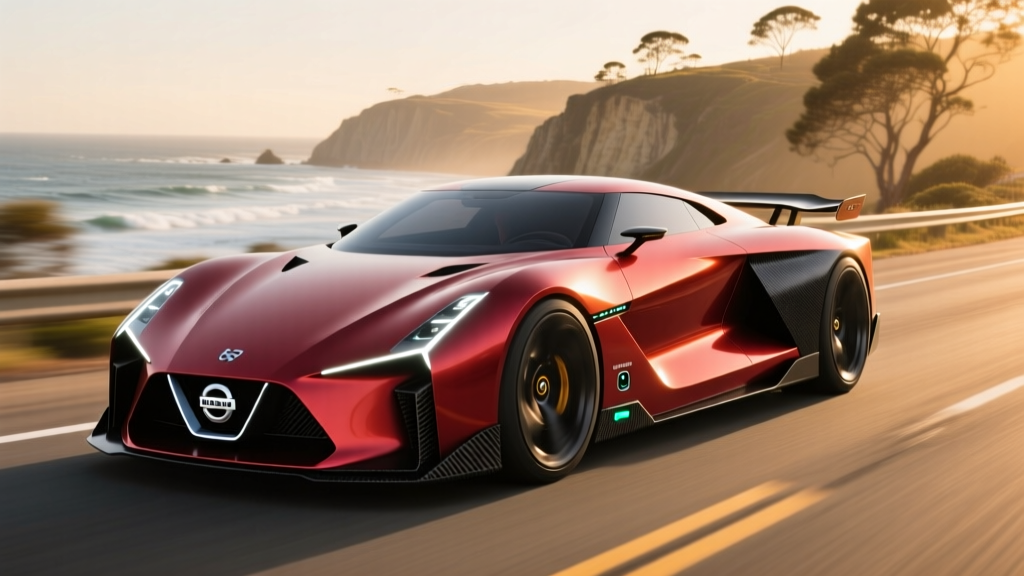
As of early 2026, Nissan has not yet released a production electric GT-R for sale. The company has confirmed that the next-generation GT-R will be electrified, and concept vehicles — including the Nissan Hyper Force concept revealed at the Japan Mobility Show — have previewed a solid-state-battery-powered, all-wheel-drive EV supercar targeting around 1,341 horsepower (1,000 kW). Nissan has indicated a production timeline in the late 2020s, likely as a 2028 or 2029 model. Until Nissan officially opens orders, any range, pricing, or charging figures discussed here are preliminary estimates based on concept data, industry analysis, and Nissan's published roadmap. If you're shopping for a high-performance EV today, alternatives like the Porsche Taycan Turbo GT, Tesla Model S Plaid, and Lucid Air Sapphire are available now.
What Nissan Has Actually Confirmed
Nissan's GT-R lineage — stretching back to the legendary R32 Skyline GT-R — is one of the most storied nameplates in performance automotive. The current R35 GT-R, which debuted for the 2009 model year, has soldiered on with its 3.8-liter twin-turbo V6 far longer than anyone expected. Nissan finally confirmed that the R35 will end production, and its successor will feature electrification.
Here's what Nissan has put on the record:
- Hyper Force Concept (2023): Nissan unveiled this all-electric supercar concept with a stated output of 1,000 kW (approximately 1,341 hp), a solid-state battery, and an advanced all-wheel-drive system with e-4ORCE torque vectoring.
- Solid-State Battery Commitment: Nissan has been developing solid-state battery technology at its Yokohama R&D center and has stated plans for pilot production. The company has targeted solid-state batteries that offer roughly double the energy density of current lithium-ion cells, faster charging, and improved safety.
- Electrified GT-R Successor: Senior Nissan executives, including former COO Ashwani Gupta, have confirmed the next GT-R will be electrified, though the exact powertrain (full BEV vs. plug-in hybrid) for the production model has not been definitively locked in publicly.
- Timeline: Nissan's public statements point to a late-2020s launch window. No specific model year has been confirmed.
Estimated Specs: Concept Data vs. Likely Production Reality
Concept cars routinely overpromise relative to production vehicles. Below, I've compiled the Hyper Force concept figures alongside realistic production estimates based on where battery and motor technology is headed by 2028–2029.
| Specification | Hyper Force Concept | Estimated Production (Preliminary) |
|---|---|---|
| Power Output | 1,000 kW (~1,341 hp) | 800–1,000 kW (~1,070–1,341 hp) |
| Battery Chemistry | Solid-state (announced) | Solid-state or advanced NMC |
| Battery Capacity | Not disclosed | 100–130 kWh (estimated) |
| EPA Range (est.) | Not disclosed | 250–350 miles (supercar efficiency limits range) |
| Drivetrain | AWD, e-4ORCE | AWD, e-4ORCE torque vectoring |
| 0–60 mph | Not disclosed | ~2.0–2.5 seconds (est.) |
| DC Fast Charge (peak) | Not disclosed | 200–350 kW (if solid-state delivers) |
| Production Status | Concept | Announced, late 2020s |
Key caveat: Solid-state batteries promise faster charging and higher energy density, but mass production at automotive scale remains unproven as of 2026. Toyota, Samsung SDI, and Nissan are all pursuing solid-state, and pilot lines exist, but cost-per-kWh and manufacturing yield are still significant hurdles. If solid-state isn't production-ready in time, Nissan could launch with an advanced NMC lithium-ion pack and retrofit solid-state later — a strategy not uncommon in the industry.
The EV Supercar Landscape: What the Electric GT-R Would Compete Against
The electric GT-R won't exist in a vacuum. By the time it reaches showrooms, it will face established and upcoming rivals. Here's how the projected Nissan stacks up against EV supercars available or announced today:
| Vehicle | Power (hp) | EPA Range | 0–60 mph | Starting MSRP | Status |
|---|---|---|---|---|---|
| Porsche Taycan Turbo GT | 1,019 (w/ Launch Control) | 269 mi | 2.1 sec | $230,000 | On sale |
| Tesla Model S Plaid | 1,020 | 359 mi | 1.99 sec | $89,990 | On sale |
| Lucid Air Sapphire | 1,234 | 427 mi | 1.89 sec | $249,000 | On sale |
| Rimac Nevera | 1,914 | ~287 mi (WLTP) | 1.85 sec | ~$2,400,000 | Limited production |
| Nissan Electric GT-R (est.) | ~1,070–1,341 | ~250–350 mi | ~2.0–2.5 sec | ~$120,000–$200,000 (est.) | Announced, late 2020s |
The GT-R has historically been the "value supercar" — a car delivering 80–90% of Porsche or Ferrari performance at a fraction of the price. The R35 GT-R started around $120,000 in its final model years. If Nissan maintains that philosophy, the electric GT-R could undercut the Taycan Turbo GT and Lucid Air Sapphire on price while matching or exceeding their power output. That would be a significant disruption, assuming Nissan can deliver on production cost targets.
Solid-State Batteries: The Make-or-Break Technology
The single most important variable in the Nissan electric GT-R's success is its battery. Solid-state batteries replace the liquid electrolyte in conventional lithium-ion cells with a solid material (ceramic, sulfide, or polymer). The potential advantages are substantial:
| Claim | Reality (as of 2026) |
|---|---|
| "Solid-state batteries offer double the energy density" | Lab results support this; automotive-grade production cells have not yet demonstrated this at scale. Nissan's pilot line targets are promising but unproven at volume. |
| "They charge much faster" | Solid-state cells can theoretically accept higher C-rates (charge speeds) without degradation. But thermal management at 300+ kW remains a challenge in real-world packs. |
| "They're safer — no fire risk" | Solid electrolytes are less flammable than liquid ones, reducing but not eliminating thermal runaway risk. Short circuits and mechanical damage can still cause failures. |
| "They'll be cheaper" | Not initially. Current solid-state manufacturing costs are significantly higher per kWh than mature NMC or LFP lines. Cost parity is projected for the early 2030s, per BloombergNEF. |
| "They last longer with less degradation" | Early data is positive — fewer degradation cycles from dendrite formation — but long-term automotive cycle-life data (10+ years) doesn't yet exist for production cells. |
For a supercar application, energy density matters enormously. A GT-R needs a large battery (likely 100+ kWh) to deliver both the power output and acceptable range, but it also needs to keep weight down. Solid-state could allow Nissan to pack more kWh into a lighter, more compact battery — the holy grail for performance EVs. If Nissan pulls this off, it would be among the first production vehicles with solid-state batteries, a significant engineering milestone.
Real-World Ownership Considerations for an EV Supercar
If you're seriously considering a future electric GT-R — or any high-performance EV — here are the practical ownership factors that marketing materials won't emphasize:
Range at Performance Speeds
EPA range estimates assume mixed driving. At sustained highway speeds above 75 mph, or on a track, energy consumption skyrockets. The Taycan Turbo GT's EPA rating of 269 miles can drop to under 180 miles during aggressive driving. Expect the electric GT-R to face the same physics: supercar aerodynamics and power outputs consume energy rapidly. Plan for real-world range of 60–75% of the EPA sticker during spirited driving.
Home Charging Is Essential
No supercar owner wants to rely on public charging. A Level 2 home charger (240V, 48A / 11.5 kW) is mandatory for daily convenience. For a ~110 kWh battery, a full Level 2 charge from 10% to 100% takes approximately 10–12 hours — fine for overnight. Installation costs for a Level 2 home setup typically run $800–$2,500 depending on your electrical panel's capacity and the run length from panel to garage. If your home has a 100-amp service panel, you may need a $2,000–$5,000 panel upgrade to 200 amps. Always consult a licensed electrician for a site-specific quote.
Cold-Weather Range Loss
Lithium-ion batteries (and likely early solid-state cells) lose efficiency in cold temperatures. Expect 15–30% range reduction in freezing conditions, depending on whether the vehicle uses a heat pump for cabin heating. If you live in the upper Midwest or Northeast, a 300-mile EPA rating could mean 210–255 real-world winter miles. Preconditioning the battery while plugged in helps mitigate this.
Insurance Costs
High-performance EVs carry steep insurance premiums. A $150,000+ EV with 1,000+ hp will likely cost $4,000–$8,000+ per year to insure, depending on your driving record, location, and coverage levels. Get quotes before committing to a purchase.
Tire Wear
EVs are heavy (the GT-R's battery pack alone could weigh 1,000+ lbs), and instant torque accelerates tire wear. Expect to replace tires every 15,000–25,000 miles on a performance EV — and supercar-spec tires run $300–$500+ per corner.
Expected Cost Breakdown and Tax Credit Eligibility
While we can't price a car that isn't on sale yet, we can model likely costs based on Nissan's historical GT-R positioning and the current EV supercar market.
| Cost Category | Nissan Electric GT-R (Estimated) | Porsche Taycan Turbo GT (Actual) | Tesla Model S Plaid (Actual) |
|---|---|---|---|
| Base MSRP | $120,000–$200,000 | $230,000 | $89,990 |
| Federal Tax Credit (§30D) | Unlikely to qualify (MSRP cap $55K for sedans) | Does not qualify | Does not qualify (MSRP over $55K cap) |
| Annual Electricity (12K mi/yr, $0.16/kWh) | ~$600–$900 | ~$700–$900 | ~$550–$700 |
| Annual Insurance (est.) | $4,000–$8,000 | $5,000–$9,000 | $3,500–$6,000 |
| Home Level 2 Install (one-time) | $800–$2,500 | $800–$2,500 | $800–$2,500 |
| Annual Maintenance | ~$500–$1,000 | ~$1,500–$3,000 | ~$600–$1,200 |
Tax credit reality check: Under current IRS §30D rules, the federal EV tax credit is capped at vehicles with an MSRP of $55,000 for sedans and $80,000 for SUVs/pickups/vans. Any electric GT-R will almost certainly exceed these caps, making it ineligible for the $7,500 credit. This is standard for the supercar segment — none of its competitors qualify either. Additionally, buyer income limits apply ($150K single / $300K joint AGI). Consult a tax professional for your specific situation.
Should You Wait or Buy Now? A Decision Framework
Wait for the Nissan Electric GT-R If:
- You're a GT-R loyalist who wants the next-generation car specifically and can wait until 2028–2029.
- You want a potential solid-state battery pioneer and are willing to accept first-generation technology risk.
- Your budget is $120,000–$200,000 and you want supercar performance at the lower end of that range.
- You already have a daily driver and can be patient for the right car.
Buy a Performance EV Now If:
- You want a proven, warrantied EV supercar with established service networks today.
- The Tesla Model S Plaid ($89,990, 1,020 hp, 359 mi range) gives you the best value-to-performance ratio currently available.
- The Porsche Taycan Turbo GT ($230,000) is your pick if you prioritize driving dynamics, build quality, and the Porsche dealer experience.
- The Lucid Air Sapphire ($249,000, 1,234 hp, 427 mi range) offers the most range and a luxury sedan form factor.
- You want a vehicle you can test-drive, take delivery on, and service at a known dealership network within months, not years.
Common Misconceptions About the Electric GT-R
"It's basically a rebadged Hyper Force concept." Concept cars are design and technology showcases. Production versions are invariably detuned, heavier, and less extreme to meet crash regulations, durability standards, and cost targets. Expect the production GT-R to share the Hyper Force's design language and e-4ORCE architecture but with more conservative output and battery specifications.
"Solid-state batteries mean it will charge in 5 minutes." Even with solid-state chemistry, charging a 100+ kWh battery at rates fast enough for a 5-minute fill would require 600+ kW chargers — infrastructure that barely exists and would create enormous thermal challenges. Realistically, expect 10–80% charging in 12–20 minutes at a 350 kW charger, assuming the battery can sustain that rate.
"It will be cheap because it's a Nissan." The GT-R has never been a budget car. The final R35 GT-R Nismo listed above $220,000. An electric successor with solid-state batteries and 1,000+ hp will be expensive to produce. Nissan may target a base price around $120,000–$150,000 to undercut European rivals, but Nismo variants could easily push past $200,000.
"It will be available soon." Nissan has not confirmed a specific model year or order date. "Late 2020s" most likely means 2028 or 2029 production. Delays are common in the auto industry, especially when new battery technology is involved.
Frequently Asked Questions
Is the Nissan electric GT-R officially confirmed?
Nissan has confirmed that the next-generation GT-R will be electrified and has shown the Hyper Force concept as a preview. However, the company has not confirmed a specific production model year, final powertrain (full EV vs. hybrid), or pricing. The car is announced but not yet available for order.
Will the electric GT-R use solid-state batteries?
Nissan has indicated that solid-state battery technology is part of its future plans and the Hyper Force concept references solid-state cells. However, mass production of automotive-grade solid-state batteries has not been achieved by any manufacturer as of 2026. If production timelines slip, Nissan may launch with an advanced NMC lithium-ion pack instead.
How much will the Nissan electric GT-R cost?
No official pricing exists. Based on Nissan's GT-R positioning as a "value supercar" and current competitor pricing, a reasonable estimate is $120,000–$200,000 depending on trim. The car will almost certainly not qualify for the federal §30D EV tax credit due to the MSRP cap of $55,000 for sedans.
What is the expected range of the electric GT-R?
Nissan has not published range figures. For a ~1,000+ hp AWD supercar with an estimated 100–130 kWh battery, expect an EPA rating in the 250–350 mile range. Real-world highway and performance driving will reduce this by 25–40%. Cold-weather range loss of 15–30% should also be expected.
Can I reserve or order the electric GT-R now?
No. Nissan has not opened reservations or announced a specific on-sale date. Watch for official announcements at major auto shows or via Nissan USA as the late-2020s launch window approaches.
How does the electric GT-R compare to the gas R35 GT-R?
The final R35 GT-R produced 565 hp (standard) to 600 hp (Nismo) from its 3.8L twin-turbo V6, with a 0–60 time of approximately 2.9 seconds (Nismo). The electric successor is projected to produce more than double the horsepower with a 0–60 time around 2.0–2.5 seconds. However, the R35's ~3,500-lb curb weight and analog driving feel are characteristics that a heavier battery-electric platform will struggle to replicate. Sound, weight distribution, and driving engagement will be fundamentally different.
Sources: Nissan Motor Corporation concept reveals and press releases, fueleconomy.gov for competitor EPA data, IRS §30D tax credit guidelines.