The Short Answer on Nissan Electric Cars From Japan
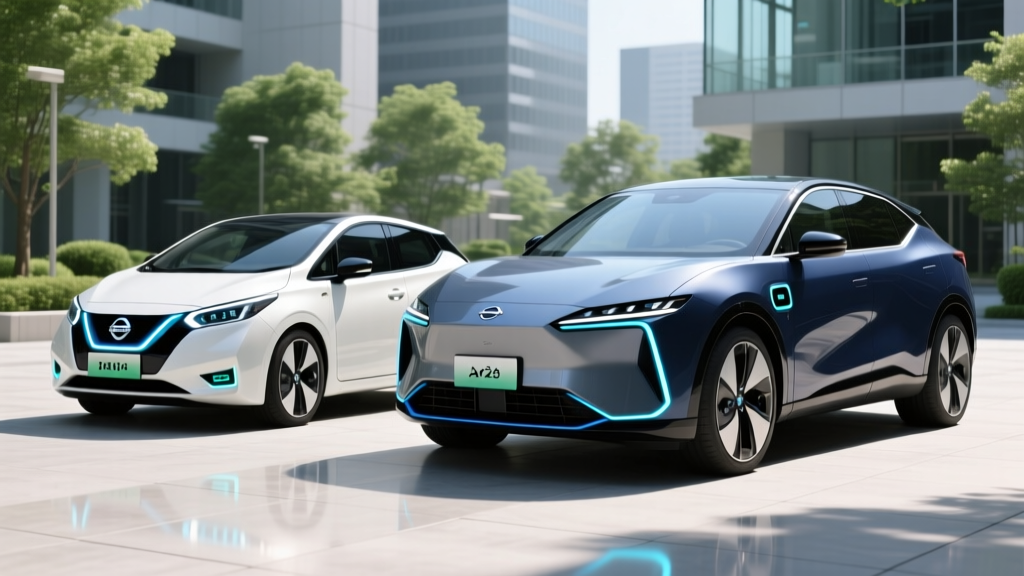
Nissan currently sells two battery-electric vehicles in the US that are manufactured in Japan: the 2026 Nissan Leaf (a compact hatchback starting around $28,140) and the 2026 Nissan Ariya (a midsize crossover SUV starting around $39,590). The Leaf offers up to 212 miles of EPA range with a 60 kWh battery, while the Ariya reaches up to 304 miles with its 91 kWh pack. Neither currently qualifies for the full $7,500 federal §30D tax credit due to battery-sourcing and final-assembly rules — a critical factor that reshapes their value proposition against US-built and South Korean competitors. If you want a proven, affordable Japanese EV and can charge at home, both are strong picks; if you need maximum tax incentives, you'll want to cross-shop carefully.
Why Nissan's Japanese-Built EVs Matter in 2026
Nissan was a pioneer in mass-market electric vehicles, launching the original Leaf in 2010 — well before most automakers committed to electrification. Over 650,000 Leafs have been sold globally, giving Nissan one of the longest-running real-world datasets on battery durability in the EV industry. Both the current Leaf (second generation, refreshed) and the Ariya (introduced for 2023) are assembled in Japan — the Leaf at the Oppama plant and the Ariya at the Tochigi plant — and imported to the US market.
For buyers specifically searching for a nissan electric car japan-built option, this matters for two reasons. First, Japanese manufacturing quality and fit-and-finish tend to be excellent, and Nissan's EV powertrains have proven reliable over hundreds of thousands of fleet miles. Second, the Japan-build origin directly impacts federal tax-credit eligibility under the Inflation Reduction Act's §30D rules, which require North American final assembly for new-vehicle credits — a hurdle neither model clears.
2026 Nissan Leaf: Specs, Range, and Real-World Ownership
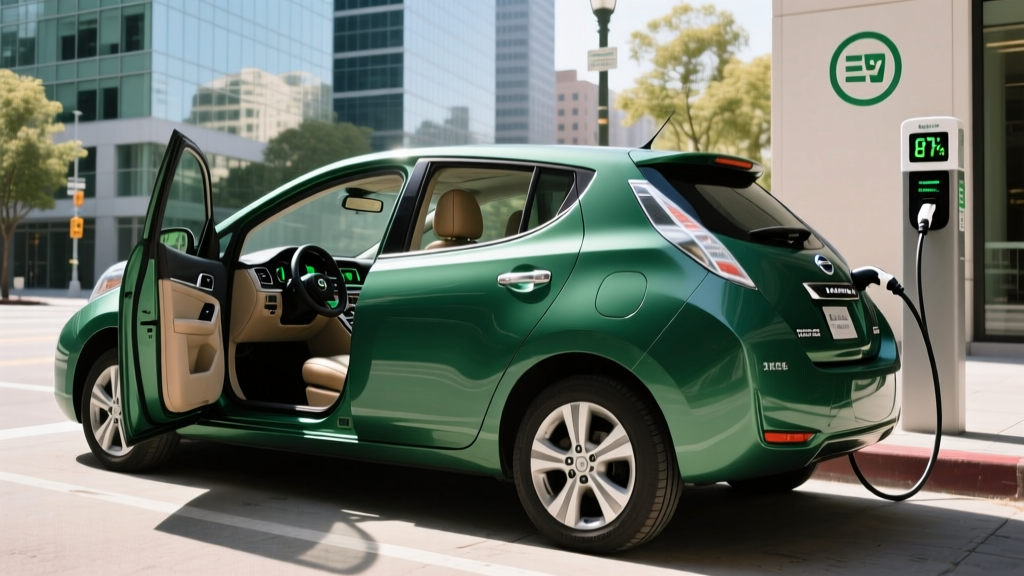
The 2026 Leaf continues as a compact five-door hatchback available in two battery configurations. Here are the exact numbers:
| Specification | Leaf S (40 kWh) | Leaf SV Plus (60 kWh) |
|---|---|---|
| Usable Battery Capacity | 39 kWh (LMO/NMC) | 60 kWh (NMC) |
| EPA Range | 149 miles | 212 miles |
| Real-World Highway Range (est.) | ~120–130 miles | ~175–190 miles |
| Motor Output | 110 kW (147 hp) | 160 kW (214 hp) |
| 0–60 mph | ~7.9 sec | ~6.5 sec |
| Max DC Fast Charge Rate | 50 kW (CHAdeMO) | 100 kW (CHAdeMO) |
| 10–80% DC Charge Time | ~48 min | ~45 min |
| Level 2 Onboard Charger | 6.6 kW (J1772) | 6.6 kW (J1772) |
| MPGe (Combined) | 111 MPGe | 104 MPGe |
| Base MSRP | $28,140 | $36,190 |
| Battery Warranty | 8 yr / 100,000 mi (capacity) | 8 yr / 100,000 mi (capacity) |
The CHAdeMO Problem
The Leaf uses the CHAdeMO DC fast-charging connector, which is being phased out across North America in favor of CCS1 and NACS (Tesla's standard). As of 2026, Electrify America and most major networks have shifted new installations to CCS/NACS. CHAdeMO chargers still exist — particularly older installations — but the network is shrinking. If you plan to rely on public DC fast charging for road trips, the Leaf's connector is a growing liability. For daily commuting with home Level 2 charging, it's a non-issue.
2026 Nissan Ariya: The Crossover Alternative
The Ariya is Nissan's flagship EV — a sleek midsize crossover built on the Renault-Nissan-Mitsubishi Alliance's CMF-EV dedicated EV platform. It's substantially more capable than the Leaf in range, charging speed, and interior space.
| Specification | Ariya Venture+ (FWD) | Ariya Evolve+ (FWD) | Ariya Platinum+ e-4ORCE (AWD) |
|---|---|---|---|
| Usable Battery Capacity | 91 kWh (NMC) | 91 kWh (NMC) | 91 kWh (NMC) |
| EPA Range | 304 miles | 289 miles | 267 miles |
| Real-World Highway Range | ~255–275 miles | ~245–260 miles | ~225–240 miles |
| Motor Output | 178 kW (238 hp) | 178 kW (238 hp) | 290 kW (389 hp) |
| 0–60 mph | ~7.2 sec | ~7.2 sec | ~4.8 sec |
| Max DC Fast Charge Rate | 130 kW (CCS1) | 130 kW (CCS1) | 130 kW (CCS1) |
| 10–80% DC Charge Time | ~35 min | ~35 min | ~35 min |
| Level 2 Onboard Charger | 7.2 kW (J1772) | 7.2 kW (J1772) | 7.2 kW (J1772) |
| MPGe (Combined) | 101 MPGe | 98 MPGe | 93 MPGe |
| Base MSRP | $39,590 | $43,190 | $53,590 |
| Battery Warranty | 8 yr / 100,000 mi | 8 yr / 100,000 mi | 8 yr / 100,000 mi |
Unlike the Leaf, the Ariya uses the CCS1 DC fast-charging connector, which is compatible with the vast majority of public fast-charging networks in the US (Electrify America, EVgo, ChargePoint). With a NACS adapter (available from Nissan and third parties), Ariya owners can also access Tesla Superchargers — a significant road-trip advantage. The Ariya's liquid-cooled battery pack handles thermal management far better than the Leaf, meaning more consistent DC charging speeds in varied conditions.
Nissan EVs vs Gas and Hybrid Alternatives: Cost Comparison
How do Nissan's Japanese-built EVs stack up against their own gas and hybrid competitors — and against each other — on total cost? Here's a 5-year ownership comparison assuming 15,000 miles/year, $3.50/gallon gas, $0.14/kWh home electricity, and no federal tax credit:
| Cost Factor (5 yr / 75k mi) | Leaf SV Plus ($36,190) | Ariya Venture+ ($39,590) | Nissan Rogue AWD Gas (~$31,000) | Toyota RAV4 Hybrid (~$33,000) |
|---|---|---|---|---|
| Purchase Price (MSRP) | $36,190 | $39,590 | $31,000 | $33,000 |
| Federal Tax Credit (§30D) | $0* | $0* | $0 | $0 |
| Fuel / Energy Cost | $3,675 | $4,410 | $9,375 | $6,560 |
| Maintenance (est.) | $1,200 | $1,400 | $3,500 | $3,200 |
| Insurance (avg) | $7,500 | $8,200 | $6,800 | $6,900 |
| Estimated Depreciation | $16,200 | $17,800 | $13,900 | $13,200 |
| 5-Year Total Cost | ~$64,765 | ~$71,400 | ~$64,575 | ~$62,860 |
*Nissan Leaf and Ariya do not qualify for the §30D new EV credit because final assembly occurs in Japan, not North America. Source: IRS §30D guidelines. Some buyers may qualify for a used EV credit (up to $4,000) on pre-owned Leafs/Ariyas — see the FAQ below.
The numbers reveal a nuanced picture. The Leaf SV Plus nearly matches the gas Rogue on 5-year total cost despite the higher purchase price, thanks to dramatically lower fuel and maintenance expenses. The Ariya costs more upfront and doesn't receive the credit, putting it at a disadvantage versus the RAV4 Hybrid — but it delivers a fundamentally different driving experience: silent, smooth, instant torque, and zero tailpipe emissions.
Federal Tax Credit Reality for Nissan's Japan-Built EVs
This is the single biggest financial consideration for buyers cross-shopping Nissan EVs against competitors. Under the Inflation Reduction Act, the $7,500 new clean vehicle credit requires:
- Final assembly in North America — Neither the Leaf nor Ariya qualifies (both assembled in Japan)
- MSRP caps — $55,000 for sedans/hatchbacks (Leaf qualifies on paper), $80,000 for SUVs/vans/pickups (Ariya qualifies on paper)
- Buyer income limits — $150,000 single / $225,000 HOH / $300,000 joint MAGI
- Battery component & critical-mineral sourcing — Phased thresholds increasing annually through 2032
Even if Nissan met the sourcing requirements, the Japan assembly disqualifies both vehicles from the new-vehicle credit. This is a decisive factor when comparing the Ariya against the US-built Tesla Model Y, the Georgia-built Hyundai Ioniq 5, or the South Korean Kia EV6 (which qualifies under a commercial-lease loophole at some dealers).
The Used EV Credit Workaround
The §25E used clean vehicle credit offers up to $4,000 (30% of sale price, capped) for qualifying pre-owned EVs. Requirements include: the vehicle must be at least 2 model years old, sold by a dealer for under $25,000, buyer income under $75,000 single / $150,000 joint, and it must be the buyer's first used-EV credit in 3 years. A 2023 or 2024 Nissan Leaf often falls under the $25,000 threshold on the used market, making this a realistic path to savings. Check current eligibility on IRS §25E.
Charging at Home: What Nissan EV Owners Need to Know
Home charging is where EV ownership makes or breaks — and it's where both Nissan models shine if you have garage or driveway access.
| Charging Level | Power | Connector | Leaf (60 kWh) Miles/Hr | Ariya (91 kWh) Miles/Hr |
|---|---|---|---|---|
| Level 1 (120V outlet) | ~1.4 kW | J1772 | ~4–5 mi/hr | ~3–4 mi/hr |
| Level 2 (240V, 32A) | ~6.6–7.2 kW | J1772 | ~22–25 mi/hr | ~24–28 mi/hr |
| Level 2 (240V, 48A) | ~11.5 kW | J1772 | Limited to 6.6 kW onboard | Limited to 7.2 kW onboard |
| DC Fast Charge | Up to 100/130 kW | CHAdeMO / CCS1 | ~150 mi in 30 min | ~180 mi in 30 min |
Key insight: The Leaf's onboard charger caps at 6.6 kW and the Ariya at 7.2 kW. Installing a 48-amp Level 2 home charger (which can deliver up to 11.5 kW) won't charge either car faster than its onboard limit. A 32-amp Level 2 circuit (7.7 kW delivery) is the sweet spot — it maxes out both vehicles without overspending on electrical work.
Home Charging Installation Cost
| Component | Typical Cost Range |
|---|---|
| Level 2 Charger (hardware) | $300–$700 |
| Electrician labor (240V/40A circuit) | $500–$2,000 |
| Permit & inspection | $50–$300 |
| Panel upgrade (if needed, 200A) | $1,500–$4,000 |
| Total (no panel upgrade) | $850–$3,000 |
| Total (with panel upgrade) | $2,350–$7,000 |
For a Leaf owner driving 40 miles round-trip daily, a Level 2 charger fully replenishes the 60 kWh battery overnight in about 9 hours (0–100%). The Ariya's 91 kWh pack needs roughly 13 hours from empty — but since most drivers rarely drain below 20%, a typical overnight session of 6–8 hours adds 150–180 miles, more than enough for daily use.
Common Misconceptions About Nissan EVs
| Myth | Fact |
|---|---|
| "Nissan Leaf batteries all fail quickly" | Early 2011–2014 Leafs (24 kWh, air-cooled) did show significant degradation in hot climates. The 2026 Leaf's 60 kWh pack uses improved NMC chemistry, and Nissan's 8-year/100,000-mile warranty covers capacity below 9 bars (of 12). Fleet data from fueleconomy.gov shows modern Nissan packs retaining 85–90%+ capacity at 100k miles under normal use. |
| "CHAdeMO is completely dead" | CHAdeMO is declining but not extinct. Thousands of stations remain operational, especially along older corridor installations. However, new deployments overwhelmingly favor CCS/NACS — so long-term, the connector is a risk for road-trip charging. |
| "You can't take a Nissan EV on a road trip" | The Ariya with 304 EPA miles and CCS1 charging handles road trips well with planning. The Leaf's 212 miles and CHAdeMO connector make it more challenging but still feasible on well-mapped corridors. |
| "Japanese EVs don't qualify for any incentives" | While the new-vehicle §30D credit is unavailable, many states offer separate rebates (e.g., California, Colorado, Massachusetts) that don't restrict by assembly location. The used-EV §25E credit also applies. Always check your state's energy office. |
| "EV insurance is always wildly expensive" | Leaf insurance averages only 10–15% more than a comparable gas hatchback. The Ariya's premium is slightly higher. Shop multiple carriers — GEICO, Progressive, and State Farm have narrowed the EV insurance gap significantly. |
Decision Framework: Which Nissan EV Is Right for You?
Choose the 2026 Nissan Leaf SV Plus if:
- Your budget is under $38,000 and you want the most affordable new EV from a legacy automaker
- Your daily commute is under 80 miles round-trip
- You have reliable home Level 2 charging and rarely need public DC fast charging
- You want a proven platform with 15+ years of real-world battery data
- You live in a mild climate (the air-cooled pack struggles in sustained 100°F+ heat)
Choose the 2026 Nissan Ariya Venture+ if:
- You need crossover utility — more cargo room, higher seating position, available AWD
- You want 300+ miles of EPA range for road-trip flexibility
- You need CCS1/NACS charging compatibility for the broader public fast-charging network
- You value a modern, premium interior with dual 12.3-inch displays and ProPILOT Assist 2.0
- Your budget accommodates $40,000–$55,000 and you accept the lack of federal new-EV credit
Look elsewhere if:
- The $7,500 federal tax credit is essential to your budget — consider the Tesla Model Y, Ford Mustang Mach-E, or VW ID.4 (all US-assembled)
- You need a truck, 3-row SUV, or 350+ mile range
- You live in a charging desert with no home-charging option — a PHEV like the Toyota RAV4 Prime may be a better bridge
Frequently Asked Questions
Does the Nissan Ariya qualify for the $7,500 federal EV tax credit in 2026?
No. The Ariya is assembled in Tochigi, Japan. The §30D new clean vehicle credit requires final assembly in North America. Some dealers may offer lease deals where the commercial-vehicle credit (§45W) is passed through as a discount — ask your dealer specifically about this, but it's not guaranteed.
Is the Nissan Leaf still worth buying in 2026 with the CHAdeMO connector?
It depends on your use case. If you charge primarily at home and use the Leaf as a commuter car, the CHAdeMO connector is irrelevant for daily life. The problem arises on road trips, where CHAdeMO charger availability is declining. If you road-trip frequently, the Ariya (CCS1) or a competitor with NACS is a better choice.
How long will a Nissan EV battery last?
Nissan warranties its EV batteries for 8 years or 100,000 miles against capacity loss below a defined threshold (typically 9 of 12 capacity bars, roughly ~70% state of health). Real-world data from high-mileage Leafs suggests modern packs can last 150,000–200,000+ miles before significant degradation, particularly in moderate climates. Full battery replacement, if needed out of warranty, currently costs $6,500–$9,000 depending on pack size.
Can I charge a Nissan Ariya at a Tesla Supercharger?
Yes, with a CCS-to-NACS adapter. Nissan has confirmed compatibility with Tesla's Supercharger network for Ariya models using approved adapters. As of 2026, Tesla's network has over 25,000 Supercharger stalls in North America. The Leaf, with its CHAdeMO connector, cannot use Superchargers without a complex and uncommon CHAdeMO-to-NACS adapter.
What's the cheapest way to buy a Nissan EV from Japan?
A used 2022–2024 Nissan Leaf S (40 kWh) can often be found for $15,000–$20,000 at franchised dealers. If you meet income requirements (under $75,000 single / $150,000 joint), the §25E used-EV credit can knock up to $4,000 off the purchase price at the point of sale — bringing effective cost as low as $11,000–$16,000. That makes it one of the cheapest paths into EV ownership available in 2026.
How does the Ariya compare to the Hyundai Ioniq 5 or Tesla Model Y?
The Ariya Venture+ (304 mi EPA, $39,590) competes directly with the Ioniq 5 (318 mi, ~$42,500) and Model Y Long Range (330 mi, ~$44,990). The Ariya's advantage is its lower starting price and plush interior. The Ioniq 5 and Model Y charge faster (200+ kW peak), have broader fast-charging compatibility, and may qualify for tax incentives the Ariya doesn't. Cross-shop all three and prioritize what matters most: price, charging speed, or tax-credit eligibility. See the EPA's EV comparison tool for side-by-side efficiency data.