Quick Answer: Is the Nissan Ariya Right for You?
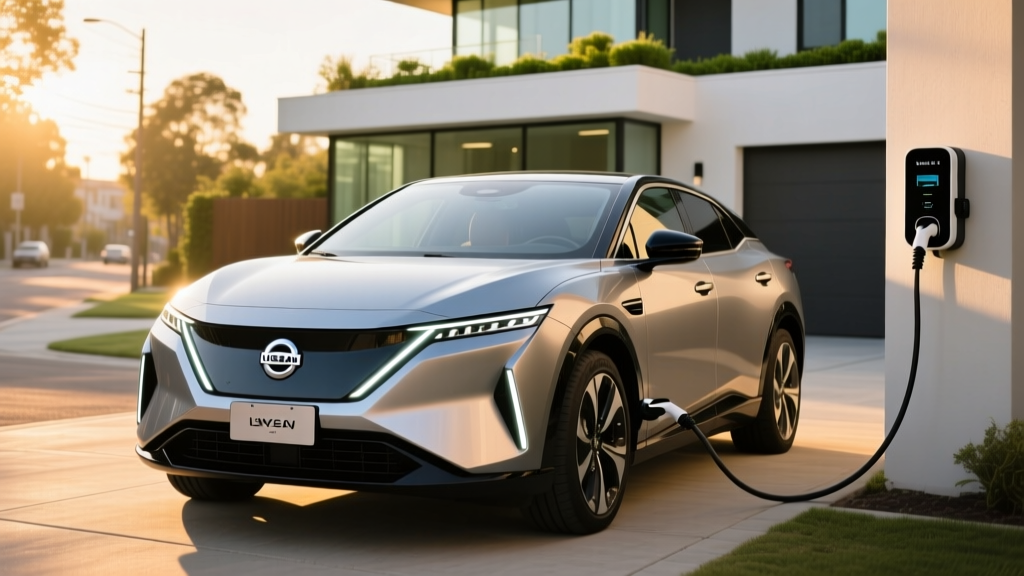
The Nissan Ariya is a compelling compact electric crossover for buyers who prioritize interior refinement and comfortable highway cruising over cutting-edge charge speeds. With an EPA-estimated 272–304 miles of range depending on trim, a starting MSRP around $39,590, and available all-wheel drive, it slots between the Hyundai Ioniq 5 and Tesla Model Y in price and capability. Bottom line: If you have home Level 2 charging access, drive under 250 miles daily, and value a quiet, well-built cabin, the Ariya is a strong choice. If you frequently road-trip through charging deserts or need sub-20-minute fast charges, competitors with 800V architectures or the Tesla Supercharger network may serve you better.
2026 Nissan Ariya: Range, Battery, and Efficiency at a Glance
The Ariya rides on the Renault-Nissan-Mitsubishi Alliance CMF-EV platform and is offered with two battery sizes across multiple trims. Here are the exact figures you need:
| Specification | Standard Range (FWD) | Extended Range (FWD) | e-4ORCE (AWD) |
|---|---|---|---|
| Usable Battery (kWh) | 63 kWh | 87 kWh | 87 kWh |
| Battery Chemistry | NMC (Nickel Manganese Cobalt) | NMC | NMC |
| EPA Range (miles) | 216 | 304 | 272 |
| Combined MPGe | 97 MPGe | 97 MPGe | 95 MPGe |
| Efficiency (kWh/100 mi) | 34 | 35 | 36 |
| Horsepower | 214 hp | 238 hp | 389 hp |
| 0–60 mph | ~7.2 sec | ~4.8 sec | |
| Max DC Fast Charge (kW) | 130 kW | 130 kW | 130 kW |
| 10–80% DC Charge Time | ~35 min | ~40 min | ~40 min |
| Level 2 Onboard Charger | 7.2 kW | 7.2 kW | 7.2 kW |
| Base MSRP (approx.) | $39,590 | $43,190 | $47,190 |
| Battery/Powertrain Warranty | 8 years / 100,000 miles | ||
Sources: fueleconomy.gov, Nissan USA specifications.
Real-World Range vs. EPA Sticker
The 304-mile EPA figure on the Extended Range FWD is achievable in mixed city/suburban driving at moderate temperatures. Expect approximately 250–275 miles on sustained highway trips at 70+ mph, and 210–240 miles in freezing temperatures (below 32°F) where the Ariya's resistive heating system draws significant energy. The AWD e-4ORCE trims lose roughly 30 miles of EPA range compared to FWD due to added weight and drivetrain losses. Plan road trips around a conservative 220-mile usable window on the extended-range models to maintain a safety buffer.
Charging Speed Reality: What 130 kW Actually Means
The Ariya's peak DC fast-charging rate of 130 kW is its most debated specification. In a market where the Hyundai Ioniq 5 peaks at 240 kW and the Tesla Model Y at 250 kW, the Ariya trails noticeably. Here's what that translates to in practice:
| Charging Level | Power (kW) | Approx. Miles Added per Hour | Typical Use Case |
|---|---|---|---|
| Level 1 (120V outlet) | 1.4 kW | ~4–5 mi/hr | Emergency/overnight trickle |
| Level 2 (240V home) | 7.2 kW | ~25 mi/hr | Daily home charging (~10–12 hrs empty to full) |
| DC Fast Charge | Peak 130 kW | ~170 mi in 30 min (10–60%) | Road trips; tapers significantly above 80% |
A few things first-time EV buyers should understand about the Ariya's charging behavior:
- Peak vs. sustained rate: The 130 kW figure is a peak, not a sustained average. The Ariya typically holds 100–130 kW between 10–50% state of charge, then tapers to ~60 kW by 70% and ~30 kW above 85%. A 10–80% session on an 87 kWh model takes approximately 40 minutes at a capable 150+ kW charger.
- CCS connector: The Ariya uses the CCS1 connector standard. As Nissan transitions to NACS in future model years, current Ariya owners can access Tesla Superchargers using a Nissan-approved adapter where available.
- Preconditioning: The Ariya supports battery preconditioning when you navigate to a DC fast charger, warming the pack for optimal charge acceptance — critical in cold weather.
Ariya vs. Gas SUV vs. Hybrid: Cost and Efficiency Comparison
How does the Ariya stack up against the compact gas and hybrid crossovers it competes with in showroom cross-shopping? Here's a data-driven look at the Nissan Rogue (gas) and Toyota RAV4 Hybrid as baselines:
| Metric | Nissan Ariya (ER FWD) | Nissan Rogue (Gas AWD) | Toyota RAV4 Hybrid (AWD) |
|---|---|---|---|
| Base MSRP | ~$43,190 | ~$28,850 | ~$33,425 |
| EPA Combined Economy | 97 MPGe (35 kWh/100mi) | 32 MPG combined | 39 MPG combined |
| Fuel/Energy Cost per 1,000 mi | $123–$158* | $375** | $308** |
| Annual Fuel/Energy (15k mi) | $1,845–$2,370 | $5,625 | $4,620 |
| Annual Maintenance (est.) | ~$300–$500 | ~$800–$1,200 | ~$700–$1,000 |
| 5-Year Fuel Savings vs. Gas | $18,900–$22,800 | $7,950 (vs. gas) | |
*Electricity cost varies: $0.12/kWh (home average) to $0.40/kWh (public DC fast charging). **Based on $3.50/gal regular unleaded and EPA combined MPG. Sources: fueleconomy.gov, AAA fuel cost data.
The Ariya's higher sticker price is offset significantly by fuel and maintenance savings. At national average electricity rates with primarily home charging, the Ariya can break even with a comparably equipped Rogue in roughly 4–5 years before factoring in any federal or state incentives.
Total Ownership Cost Breakdown: What You'll Actually Spend
| Cost Category | Year 1 | Years 1–5 Total | Notes |
|---|---|---|---|
| Vehicle Purchase (ER FWD) | $43,190 | $43,190 | Before incentives or dealer adjustments |
| Federal Tax Credit (§30D) | Up to $7,500 | Up to $7,500 | Income + sourcing rules apply — see IRS.gov |
| Home Level 2 Charger Install | $800–$2,500 | $800–$2,500 | Varies by panel capacity; may need 200A upgrade |
| Electricity (15k mi/yr, home) | $630–$1,050 | $3,150–$5,250 | $0.12–$0.20/kWh depending on utility |
| Insurance | $1,800–$2,600 | $9,000–$13,000 | EV premiums typically 15–25% higher than gas |
| Maintenance | $200–$400 | $1,500–$2,500 | Tire rotation, cabin filter, brake fluid, wipers |
| Tires (replacement at ~40k mi) | — | $800–$1,400 | EVs wear tires faster due to weight and torque |
| Depreciation (est. 5-yr) | — | $15,000–$20,000 | EV depreciation has moderated but remains variable |
Tax Credit Eligibility: Key Rules for 2026
The IRS §30D Clean Vehicle Credit can reduce your effective Ariya purchase price by up to $7,500 — but eligibility depends on multiple factors:
- Buyer income cap: AGI must not exceed $150,000 (single), $225,000 (head of household), or $300,000 (joint).
- MSRP cap: SUVs/crossovers must have an MSRP at or below $80,000 (the Ariya qualifies across all trims).
- Battery sourcing: Critical minerals and battery components must meet phased percentage thresholds from US/free-trade-agreement sources. These thresholds tighten annually — verify current-year compliance on the IRS qualified vehicles list.
- Point-of-sale transfer: You can transfer the credit to the dealer at purchase for an immediate price reduction rather than claiming it on your tax return.
- Consult a tax professional to confirm your specific eligibility — rules change and individual circumstances vary.
Common Misconceptions About the Nissan Ariya
| Myth | Fact |
|---|---|
| "The Ariya can't road-trip because of slow charging." | A 40-minute 10–80% charge is manageable with planned stops at Electrify America, EVgo, or Tesla Superchargers (with adapter). It's slower than an Ioniq 5 (~18 min) but not prohibitive for 2–3 road trips per year. |
| "I need to replace the battery in 5 years." | Nissan warranties the Ariya battery for 8 years/100,000 miles against degradation below ~70% capacity. Modern NMC packs are designed for 15+ year lifespans. Replacement is a last-resort scenario, not routine maintenance. |
| "The Ariya qualifies for the full $7,500 tax credit for everyone." | Credit eligibility depends on your income, the battery's critical-mineral sourcing compliance for the current year, and MSRP caps. Not every buyer qualifies — check the IRS qualified vehicle list before committing. |
| "EVs are more expensive to insure." | Generally true — EV insurance premiums run 15–25% higher than comparable gas vehicles due to higher repair costs and battery replacement risk. Budget $150–$220/month depending on your state and driving record. |
| "I can charge on any standard outlet quickly." | Level 1 (120V) charging adds only ~4–5 miles per hour. Fully replenishing the 87 kWh pack from empty takes over 60 hours. A Level 2 home charger (240V, 7.2 kW) is essential for practical daily ownership. |
Real-World Ownership: What Daily Life Looks Like
Home Charging Access Is Non-Negotiable
The Ariya ownership experience is fundamentally different depending on whether you can charge at home. With a Level 2 home charger, you'll start each morning with a full or near-full battery — the equivalent of a gas car that refuels itself overnight. Installation costs range from $800 (simple 240V outlet near the panel) to $2,500+ (new circuit run, panel upgrade to 200A). Get a quote from a licensed electrician before purchasing.
If you live in an apartment or lack garage/outdoor outlet access, you'll depend on public charging. At $0.30–$0.45/kWh for DC fast charging, your per-mile cost rises to near-parity with a hybrid, and you'll spend 2–3 hours per week at charging stations. This is the single biggest ownership variable to evaluate honestly.
Climate and Driving Pattern Impact
- Cold climates (below 32°F): Expect 20–30% range reduction. The Ariya uses a resistive heater (not a heat pump), which draws more energy in winter. Preconditioning while plugged in helps significantly.
- Hot climates (above 95°F): Battery thermal management keeps degradation in check, but AC use reduces range by ~5–10%.
- Mountainous terrain: Regenerative braking on descents recovers meaningful energy, partially offsetting uphill consumption. The e-4ORCE AWD system excels here.
- City-dominant driving: This is the Ariya's sweet spot. Low-speed stop-and-go maximizes regenerative braking and minimizes aerodynamic drag, often exceeding the EPA combined estimate.
Decision Framework: Should You Buy the Nissan Ariya?
Choose the Nissan Ariya If:
- You have reliable home Level 2 charging access (or can install it).
- Your daily driving is under 200 miles and you road-trip 1–3 times per year.
- You prefer a refined, quiet cabin with premium materials over sporty driving dynamics.
- You want a non-Tesla EV with proven brand support and a strong dealer network.
- The e-4ORCE AWD system's all-weather capability matters in your climate.
Look at Alternatives If:
- Fastest charging matters most: The Hyundai Ioniq 5 or Kia EV6 charge 10–80% in ~18 minutes (800V architecture).
- Supercharger access is a priority: The Tesla Model Y offers the most reliable public charging network natively (though Ariya can now use an adapter).
- You lack home charging: A Toyota RAV4 Hybrid (39 MPG combined, no charging dependency) may be more practical until your charging situation improves.
- Budget is the top constraint: The Chevrolet Equus EV or base Hyundai Kona Electric offer competitive range at lower MSRPs, though with smaller cabins.
Frequently Asked Questions
What is the real-world range of the Nissan Ariya on the highway?
On sustained highway driving at 70–75 mph in moderate temperatures, expect approximately 250–275 miles from the Extended Range FWD model (EPA 304 mi). In cold weather or at speeds above 80 mph, that drops to 210–240 miles. The AWD e-4ORCE trims typically deliver 225–250 highway miles.
Does the Nissan Ariya come with a CCS or NACS charging port?
Current Ariya models use the CCS1 connector. Nissan has announced a transition to NACS (Tesla-style) for future vehicles, and current Ariya owners can access the Tesla Supercharger network using a Nissan-approved CCS-to-NACS adapter at participating stations.
How much does it cost to install a home charger for the Ariya?
A Level 2 home charger installation typically costs $800–$2,500 including equipment (a quality 32–48 amp charger runs $400–$700) and electrician labor. If your home's electrical panel needs upgrading to 200 amps, add $1,500–$3,000. Always get a site assessment from a licensed electrician before purchasing the vehicle.
Is the Nissan Ariya eligible for the $7,500 federal tax credit?
The Ariya's eligibility for the full §30D Clean Vehicle Credit depends on current-year battery sourcing requirements, your adjusted gross income, and MSRP caps. The Ariya's MSRP falls under the $80,000 SUV cap across all trims. Check the IRS qualified clean vehicle list for up-to-date eligibility before purchasing, and consult a tax professional for your specific situation.
How does the Ariya compare to the Tesla Model Y?
The Model Y offers faster DC charging (~250 kW peak), native Supercharger access, and slightly more cargo space. The Ariya counters with a more refined interior, better ride comfort, more traditional controls, and a lower starting price on extended-range trims. If charging speed and network reliability are your top priorities, the Model Y wins. If cabin quality and comfort matter more, the Ariya is the stronger pick.
What maintenance does the Nissan Ariya require?
EV maintenance is minimal compared to gas vehicles: tire rotation every 5,000–7,500 miles, cabin air filter replacement annually, brake fluid checks every 2 years, and windshield washer fluid. There are no oil changes, spark plugs, timing belts, or transmission fluid to worry about. Budget $300–$500 annually — roughly half what a comparable gas SUV costs.