Is the Nissan Ariya Electric Car Worth Buying in 2026?
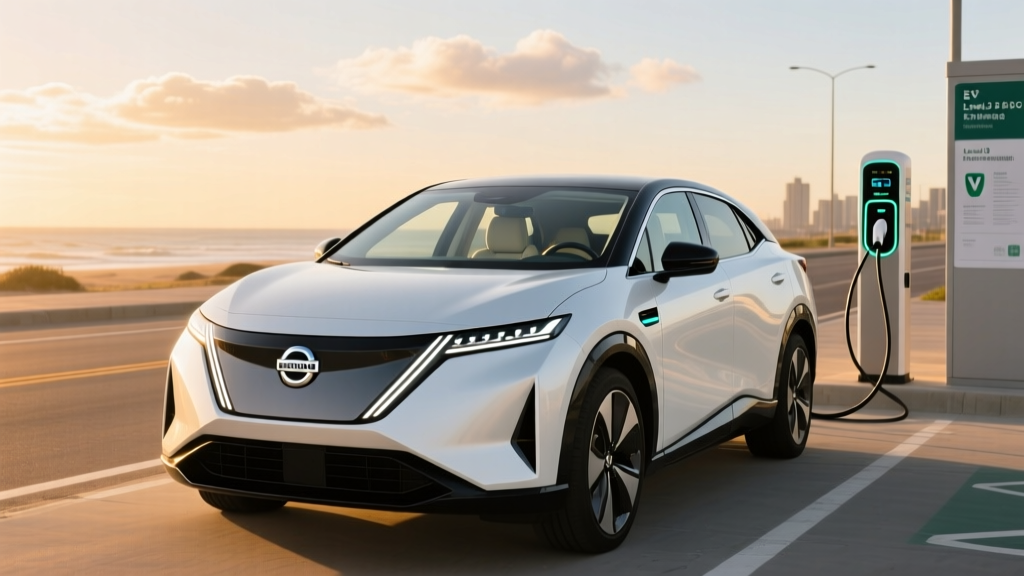
The 2026 Nissan Ariya is a midsize electric crossover offering up to 304 miles of EPA-estimated range (FWD, 87 kWh battery), starting near $39,770 before incentives. It charges at up to 130 kW DC (10–80% in ~35 minutes) and qualifies for partial or full federal tax credit depending on battery sourcing and buyer income. It's a strong pick for commuters and small families who can charge at home, but its DC charging speed lags behind rivals like the Hyundai Ioniq 5 and Tesla Model Y. If you prioritize interior refinement and ride comfort over peak charging performance, the Ariya deserves a close look.
Nissan Ariya Specs: Range, Battery, and Performance
The 2026 Ariya continues with two battery options and both front-wheel-drive (FWD) and all-wheel-drive (e-4ORCE) configurations. The larger 87 kWh (usable) battery paired with FWD delivers the maximum EPA range. Here's the full spec breakdown by trim configuration:
| Configuration | Battery (Usable) | Chemistry | EPA Range | HP / Torque | 0–60 mph | Base MSRP |
|---|---|---|---|---|---|---|
| FWD Standard (63 kWh) | 63 kWh | NMC | 216 mi | 214 hp / 221 lb-ft | 7.5 sec | $39,770 |
| FWD Extended (87 kWh) | 87 kWh | NMC | 304 mi | 242 hp / 250 lb-ft | 7.0 sec | $44,370 |
| e-4ORCE AWD (87 kWh) | 87 kWh | NMC | 272 mi | 389 hp / 443 lb-ft | 4.8 sec | $48,170 |
Real-World Range vs. EPA Sticker
The 304-mile EPA figure for the FWD Extended Range is competitive, but real-world results vary. In mixed highway driving at 70–75 mph, expect 250–275 miles before needing to charge. In cold weather (below 32°F), range can drop to 210–240 miles due to battery resistance and cabin heating demands. The Ariya does not offer a heat pump on all trims—confirm your configuration, as a heat pump significantly reduces cold-weather range loss.
For context, the EPA's fueleconomy.gov lists the Ariya FWD at 97 MPGe combined, translating to roughly 33 kWh per 100 miles. That's average for the class—the Ioniq 5 RWD achieves 114 MPGe, meaning it uses less energy per mile.
Charging Speed: Where the Ariya Falls Behind
This is the Ariya's most debated weakness. Its peak DC fast-charging rate is 130 kW, well below the 240+ kW peaks of Hyundai/Kia's E-GMP platform or Tesla's V3 Superchargers. Here's what that means in practice:
| Charging Level | Power | Time (10–80%) | Miles Added per Hour |
|---|---|---|---|
| Level 1 (120V household) | 1.4 kW | N/A (overnight trickle) | ~3–4 mi/hr |
| Level 2 (240V home/public) | 7.2 kW | ~10.5 hours (full) | ~22 mi/hr |
| DC Fast Charge | 130 kW peak | ~35 min (10–80%) | Up to ~190 mi/hr at peak |
The 10–80% time of roughly 35 minutes is acceptable for road trips with planned meal breaks, but it's 15–17 minutes slower than an Ioniq 5 or EV6 at a 350 kW charger. The Ariya also uses the CCS1 connector natively. With the industry shifting toward NACS (Tesla's standard), Nissan has committed to providing NACS adapters, and future model years may include a native NACS port. For 2026, confirm adapter availability with your dealer.
The charge curve tapers significantly above 80% SoC, as is standard for NMC lithium-ion chemistry. Charging from 80–100% can add another 25–30 minutes. For battery longevity, routinely charging to 80% and avoiding repeated 100% fills is recommended unless you need the full range for a trip.
Ariya vs. Gas SUV: 5-Year Cost Breakdown
How does the Ariya stack up financially against a comparable gas-powered midsize SUV like the Nissan Rogue or Toyota RAV4? Here's a 5-year/75,000-mile total cost of ownership comparison:
| Cost Category | Nissan Ariya FWD (87 kWh) | Nissan Rogue AWD (Gas) |
|---|---|---|
| Purchase Price (MSRP) | $44,370 | $31,500 |
| Estimated Federal Tax Credit (§30D) | Up to $7,500* | $0 |
| Effective Purchase Price | ~$36,870 | $31,500 |
| Fuel/Energy (75,000 mi) | ~$3,700 (home charging at $0.14/kWh) | ~$8,900 (28 MPG avg, $3.30/gal) |
| Maintenance (5 years) | ~$1,200 | ~$3,500 |
| Insurance (avg/year × 5) | ~$10,500 | ~$8,200 |
| 5-Year Total | ~$52,270 | ~$52,100 |
*Federal tax credit eligibility depends on battery component and critical mineral sourcing, buyer AGI caps ($150K single / $300K joint), and MSRP limits ($80K for SUVs). Check the latest rules at IRS.gov §30D. Point-of-sale transfer is available at participating dealers.
The Ariya essentially breaks even with a gas Rogue over 5 years despite a higher sticker price, primarily thanks to fuel and maintenance savings. The EV saves roughly $5,200 in energy and $2,300 in maintenance (no oil changes, fewer brake replacements due to regenerative braking), but those savings are offset by higher insurance premiums (~$460/year more on average for EVs). If you can charge primarily at home on off-peak rates, the math tilts further in the Ariya's favor.
Home Charging: What First-Time EV Buyers Need to Know
The single biggest ownership variable is whether you can charge at home. The Ariya's 7.2 kW onboard charger means a Level 2 home setup adds about 22 miles of range per hour of charging—enough to fully replenish the 87 kWh battery overnight.
| Item | Cost Range |
|---|---|
| Level 2 EVSE (charger hardware) | $350–$700 |
| Electrician (240V/50A circuit, ~40 ft run) | $800–$2,500 |
| Permit & inspection | $50–$250 |
| Panel upgrade (if needed, 100A→200A) | $1,500–$3,500 |
| Total (typical install, no panel upgrade) | $1,200–$3,450 |
If you live in an apartment or lack garage access, public charging becomes your primary source. At Electrify America or similar networks, DC fast charging costs $0.35–$0.55 per kWh, pushing your fuel cost to roughly $0.12–$0.18 per mile—still below gas, but significantly more than home charging. Factor this into your decision honestly.
For home installation, always hire a licensed electrician and confirm your panel has spare capacity. A 50A circuit for a 40A continuous draw (the standard Level 2 setup) requires adequate headroom on your service panel.
Tax Credits, Incentives, and the Fine Print
The Ariya's eligibility for the $7,500 federal EV tax credit under IRS §30D has fluctuated as Nissan adjusts battery sourcing. For the 2026 model year, buyers should verify current eligibility directly with their dealer or the DOE's Alternative Fuels Data Center. Key eligibility requirements:
- MSRP cap: Vehicle MSRP must not exceed $80,000 (SUVs/vans — the Ariya qualifies)
- Buyer income cap: Modified AGI ≤ $150,000 (single) or ≤ $300,000 (married filing jointly)
- Battery sourcing: Minimum percentages of battery components manufactured in North America and critical minerals sourced from FTA partners — these thresholds increase annually
- Point-of-sale transfer: You can transfer the credit to the dealer at purchase for an immediate price reduction, even if your tax liability is lower than the credit amount
Many states and utilities also offer rebates ($500–$4,000 depending on jurisdiction) for EV purchases and home charger installation. Check your state energy office and local utility for current programs.
Common Misconceptions About the Ariya
| Myth | Fact |
|---|---|
| "The Ariya has 400+ miles of range." | Maximum EPA range is 304 miles (FWD, 87 kWh). WLTP figures from other markets are higher but not applicable to US driving conditions. |
| "It charges as fast as a Tesla." | The Ariya peaks at 130 kW DC. A Model Y on a V3 Supercharger peaks at 250 kW, achieving 10–80% roughly 15 minutes faster. |
| "ProPILOT Assist is self-driving." | ProPILOT Assist 1.1 is an SAE Level 2 driver-assistance system. It provides adaptive cruise and lane centering, but you must keep your hands on the wheel and eyes on the road at all times. |
| "EV batteries need replacing every 5 years." | Nissan covers the Ariya's battery for 8 years / 100,000 miles against capacity loss below 70%. NMC batteries typically retain 85–90% capacity after 100,000 miles based on industry degradation data. |
| "You can't drive an EV in winter." | You can, but expect 20–30% range reduction in sub-freezing temperatures. Preconditioning the battery while plugged in mitigates this and improves charging speed. |
SAE Automation Level: ProPILOT Assist
Nissan's ProPILOT Assist 1.1 is classified as SAE Level 2 — partial automation. The system controls steering and speed under driver supervision. It is not autonomous driving (Level 4). You remain legally and operationally responsible for the vehicle at all times.
Decision Framework: Should You Buy the Ariya?
Choose the Nissan Ariya if:
- You have access to home Level 2 charging (garage or driveway with 240V capability)
- Your daily commute is under 80 miles round-trip (the Ariya handles this easily, even in cold weather)
- You take road trips 2–4 times per year and can plan around 35-minute DC charging stops
- You value a quiet, refined interior and smooth ride over sporty handling
- You qualify for the federal tax credit, bringing the effective price into the mid-$30Ks
Look at alternatives if:
- You frequently road-trip 400+ miles and need the fastest possible DC charging — consider the Hyundai Ioniq 5 (240 kW peak, ~18 min 10–80%) or Tesla Model Y (Supercharger network)
- You need third-row seating — the Ariya is strictly a 5-passenger crossover; look at the Kia EV9 or Rivian R1S
- You rely exclusively on public charging — the Ariya's 130 kW peak makes public sessions longer than necessary; prioritize vehicles with 200+ kW capability
- Budget is tight and you can't access home charging — a PHEV like the Toyota RAV4 Prime (42 miles electric-only, then gas) may be more practical
Frequently Asked Questions
What is the real-world range of the Nissan Ariya electric car?
The FWD Extended Range model achieves 304 miles EPA-estimated. In real-world highway driving at 70–75 mph, expect 250–275 miles. In cold weather (below freezing), that can drop to 210–240 miles without preconditioning.
Does the Nissan Ariya qualify for the $7,500 federal tax credit?
Eligibility depends on current battery sourcing requirements under IRS §30D, buyer income, and MSRP limits. The Ariya's MSRP is within the $80K SUV cap. Verify current eligibility with your dealer and consult IRS.gov for the latest rules.
How long does it take to charge the Ariya at home?
On a Level 2 (240V, 7.2 kW) home charger, a full charge of the 87 kWh battery takes approximately 10.5 hours. Most owners charge overnight and wake up to a full battery. On a standard 120V outlet (Level 1), expect roughly 3–4 miles of range per hour — useful for topping off but impractical for full recharges.
Is the Ariya good for road trips?
It's adequate but not class-leading. The 304-mile range means you'll stop every 220–250 real-world miles. At 130 kW peak, each 10–80% session takes ~35 minutes. That's manageable with meal or rest stops, but rivals like the Ioniq 5 cut charging time to ~18 minutes.
What is the battery warranty on the Ariya?
Nissan covers the lithium-ion battery for 8 years or 100,000 miles against defects and capacity loss below approximately 70% of original capacity (9 bars out of 12 on the battery health gauge).
Does the Ariya use NACS or CCS?
The 2026 Ariya uses the CCS1 connector natively. Nissan has committed to NACS adapter support for Tesla Supercharger access, but confirm adapter availability and compatibility with your dealer before purchase.
How does the Ariya compare to the Nissan Rogue?
The Ariya offers far lower fuel and maintenance costs but a higher purchase price (partially offset by tax credits). Over 5 years/75,000 miles, total ownership costs are nearly identical. The Ariya delivers a quieter, smoother driving experience with instant torque, while the Rogue offers more cargo flexibility and no charging considerations.