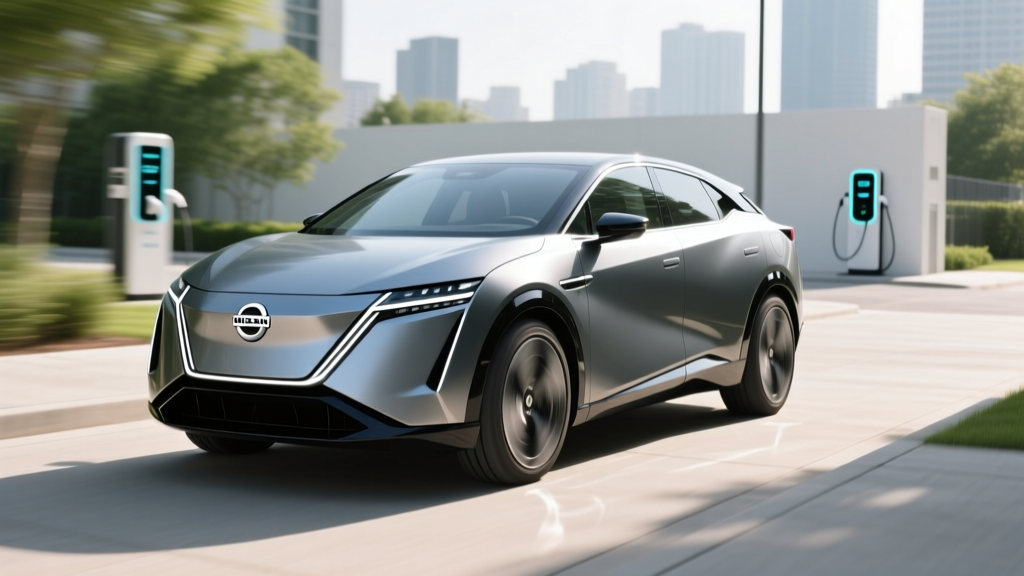
Quick Answer: The 2026 Nissan Ariya electric car is a compact crossover EV offering between 289 and 304 miles of EPA-estimated range depending on trim, with a 91 kWh battery (87 kWh usable) and peak DC fast charging at 130 kW. Pricing starts around $39,590 before incentives. It qualifies for a portion of the federal §30D tax credit depending on battery-sourcing compliance — verify current-year eligibility at IRS.gov. For buyers with home Level 2 charging and moderate daily commutes, the Ariya delivers meaningful fuel savings versus a gas compact SUV like the Toyota RAV4, though its 130 kW peak charge rate trails rivals like the Hyundai Ioniq 5 (240 kW) on road trips.
Is the Nissan Ariya Electric Car Right for You?
The Ariya occupies a specific niche: a comfortable, well-equipped electric crossover that prioritizes ride quality and interior refinement over maximum performance or class-leading charging speed. It is not the fastest-charging EV in its segment, nor the longest-range, but it offers a compelling balance of space, technology, and real-world usability for families and commuters.
The core decision hinges on three factors: your daily driving distance, your access to home charging, and how often you take road trips exceeding 250 miles. If your typical day involves 40-80 miles of mixed driving and you can install a Level 2 home charger, the Ariya's 289-304 mile range means you will charge at home two or three times per week and rarely think about range. If you frequently drive 300+ miles in a single day or live in an area with sparse DC fast-charging infrastructure, the Ariya's 130 kW peak charge rate — which translates to roughly 35-40 minutes for a 10-80% session — will feel slow compared to 800V competitors.
Nissan Ariya Specs: Range, Battery, Charging & Performance
| Spec | Venture+ (FWD) | Evolve+ / Empower+ (FWD) | Platinum+ (AWD e-4ORCE) |
|---|---|---|---|
| EPA Range | 304 mi | 289 mi | 267 mi |
| Battery (Usable) | 66 kWh (63 kWh usable) | 91 kWh (87 kWh usable) | 91 kWh (87 kWh usable) |
| Chemistry | NMC (Lithium-ion) | NMC (Lithium-ion) | NMC (Lithium-ion) |
| Peak DC Fast Charge | 130 kW | 130 kW | 130 kW |
| 10-80% DC Charge Time | ~35 min | ~40 min | ~40 min |
| Level 2 Charge Rate | 7.2 kW | 7.2 kW | 7.2 kW |
| Level 2 Full Charge Time | ~9.5 hr | ~13 hr | ~13 hr |
| Horsepower | 214 hp | 238 hp | 389 hp |
| 0-60 mph | ~7.5 sec | ~7.2 sec | ~4.8 sec |
| MPGe (Combined) | 101 MPGe | 98 MPGe | 93 MPGe |
| Connector | CCS1 (NACS adapter avail.) | CCS1 (NACS adapter avail.) | CCS1 (NACS adapter avail.) |
| Base MSRP | $39,590 | $43,190 | $54,590 |
| Battery Warranty | 8 yr / 100,000 mi | 8 yr / 100,000 mi | 8 yr / 100,000 mi |
Real-World Range Reality: The EPA sticker says 304 miles on the Venture+, but expect approximately 250-270 miles in sustained 75 mph highway driving in mild weather. In cold conditions (below 30°F), plan for 20-30% range reduction, bringing effective range to roughly 190-220 miles. The larger 91 kWh battery trims handle cold-weather loss proportionally but still see meaningful reduction. Always precondition the battery before DC fast charging to achieve peak 130 kW rates — a cold battery will charge significantly slower.
Ariya vs. Gas SUV: The Real Cost Comparison
Let's compare the Ariya against the best-selling gas compact SUV, the Toyota RAV4 (AWD, ~30 MPG combined), over five years and 75,000 miles of driving. This comparison assumes $3.50/gallon for gas and $0.14/kWh for home electricity (national average).
| Cost Category | Nissan Ariya Evolve+ (FWD) | Toyota RAV4 AWD (Gas) |
|---|---|---|
| Purchase Price (MSRP) | $43,190 | $33,425 |
| Estimated Federal Tax Credit (§30D) | Up to $3,750* | $0 |
| Effective Purchase Price | ~$39,440 | $33,425 |
| Fuel/Energy (75,000 mi) | ~$3,360 (at $0.14/kWh) | ~$8,750 (at $3.50/gal) |
| Maintenance (5 yr) | ~$1,200 | ~$3,800 |
| Insurance (5 yr avg.) | ~$9,500 | ~$7,500 |
| 5-Year Total Cost | ~$53,500 | ~$53,475 |
*Federal tax credit eligibility for the Ariya depends on current-year battery sourcing and critical mineral requirements under §30D. The credit amount may be partial ($3,750) or full ($7,500) depending on IRS guidance. Verify at IRS.gov and consult a tax professional. Point-of-sale transfer is available through registered dealers.
The numbers reveal a near-parity scenario: the Ariya's higher purchase price and insurance premiums are largely offset by dramatically lower energy and maintenance costs. Over seven or eight years, the EV pulls ahead decisively as fuel savings compound. The break-even point typically falls between year four and year five, depending on local electricity rates, driving volume, and whether you qualify for the full tax credit.
| Factor | Ariya EV Advantage | Gas SUV Advantage |
|---|---|---|
| Energy Cost per Mile | $0.045/mi (home charging) | $0.117/mi |
| Refueling Time | — | 5 min at any gas station |
| Maintenance Intervals | No oil, fewer fluid changes | Established service network |
| Cold Weather Impact | 20-30% range loss | Minimal range impact |
| Road Trip Flexibility | 35-40 min DC fast stops | Quick stops, dense station network |
| Home "Refueling" | Wake up fully charged daily | — |
| Upfront Cost | — | Lower MSRP, no charger install |
Charging the Ariya: Home Setup and Public Network Reality
The Ariya ships with a CCS1 connector. Nissan offers a NACS adapter for access to Tesla Supercharger stations, which expands the public charging network substantially. Here is what charging looks like across the three levels:
| Level | Power (kW) | Miles of Range Added per Hour | Typical Use Case |
|---|---|---|---|
| Level 1 (120V outlet) | 1.2-1.4 kW | ~4-5 mi/hr | Emergency / overnight trickle |
| Level 2 (240V home) | 7.2 kW | ~25 mi/hr | Daily home charging |
| DC Fast Charge | Up to 130 kW | ~180 mi/hr (peak) | Road trips, quick top-ups |
Home Charging Installation: Most Ariya owners will want a Level 2 home charger (240V, 32-40A circuit). Expect to pay $400-$700 for a quality Level 2 EVSE (ChargePoint Home Flex, Emporia V2, or Wallbox Pulsar Plus) plus $500-$2,000 for electrician labor depending on panel proximity and whether your electrical panel needs an upgrade to 200A. Total home install: $900-$2,700. If your panel requires an upgrade from 100A to 200A, add $1,500-$3,000.
Understanding kW vs. kWh: The Ariya's battery holds 87 kWh of usable energy (that is the "tank size"). It charges at up to 130 kW (that is the "pump speed"). A 130 kW charge rate does not sustain for the full session — the charge curve tapers significantly above 80% State of Charge to protect the battery. Expect roughly 40 minutes for 10-80%, but 60+ minutes for 10-100%.
Public Charging Considerations: On Electrify America, EVgo, and other CCS networks, real-world DC fast charging on the Ariya peaks at 130 kW but typically averages 80-100 kW across the 10-80% session. This is adequate but not competitive with 800V platforms. Plan road trips with fueleconomy.gov range data and apps like PlugShare or A Better Routeplanner.
Federal Tax Credit and Incentive Eligibility
- MSRP Cap: The Ariya qualifies as an SUV under IRS rules, so the MSRP cap is $80,000. All Ariya trims fall well under this limit.
- Buyer Income Limits: Adjusted gross income must not exceed $150,000 (single), $225,000 (head of household), or $300,000 (married filing jointly).
- Battery Sourcing: The credit splits into two halves — $3,750 for critical minerals and $3,750 for battery component sourcing. The Ariya's eligibility for each half depends on current-year supply chain compliance. Check the latest IRS qualified vehicle list.
- Point-of-Sale Transfer: You can transfer the credit to the dealer at purchase, reducing your out-of-pocket cost immediately rather than waiting for a tax refund.
- State Incentives: Vary widely. Check your state's energy office or DSIRE database for local rebates, HOV lane access, and utility charging incentives.
Common Misconceptions About the Ariya
| Myth | Fact |
|---|---|
| "The Ariya charges too slowly to road trip." | At 130 kW peak, a 10-80% charge takes ~40 minutes — enough time for a meal stop. It is slower than 800V rivals (18 min) but entirely workable with planning. The NACS adapter opens 20,000+ Supercharger stalls. |
| "The battery will need expensive replacement soon." | Nissan warranties the battery for 8 years/100,000 miles against degradation below 66% capacity. Industry data shows NMC batteries typically retain 85-90% capacity after 100,000 miles under normal use. |
| "EVs cost more to insure, so savings disappear." | Ariya insurance averages 15-25% more than a comparable gas SUV, adding roughly $300-$500/year. This is more than offset by $1,000-$1,500/year in fuel savings for most drivers. |
| "I need a special electrical panel for home charging." | Most homes with a 200A panel and a 240V dryer outlet nearby can support a Level 2 charger without a panel upgrade. Only older homes with 100A service typically need an upgrade. |
| "The Ariya's ProPILOT Assist is self-driving." | ProPILOT Assist 1.1 is an SAE Level 2 driver-assistance system. It provides adaptive cruise and lane centering but requires the driver to remain fully engaged with hands on the wheel and eyes on the road at all times. |
SAE Automation Level: The Nissan Ariya's ProPILOT Assist 1.1 is classified as SAE Level 2 — partial driving automation. The vehicle can manage steering, acceleration, and braking under specific conditions, but the human driver is responsible for monitoring the environment and must be prepared to intervene immediately. This is not autonomous or self-driving capability.
Decision Framework: Should You Buy the Nissan Ariya?
Choose the Nissan Ariya if:
- You have access to home Level 2 charging (or can install it)
- Your daily commute is under 80 miles round-trip
- You take road trips of 200-350 miles a few times per year and can plan charging stops
- You value ride comfort and a quiet cabin over maximum acceleration
- You want a mainstream brand with a widespread dealer service network
- You qualify for at least a partial federal tax credit
Look elsewhere if:
- You regularly drive 400+ miles in a single day and cannot tolerate 35-40 minute charge stops
- You need the fastest possible DC charging — consider the Hyundai Ioniq 5 (240 kW) or Kia EV6 (240 kW) with 800V architecture
- You need maximum range — the Tesla Model Y Long Range offers 320+ EPA miles
- You cannot install a home charger and have no reliable public Level 2 charging near your home or workplace
- You live in extreme cold climates (regular sub-10°F winters) and cannot garage the vehicle — consider a PHEV like the Toyota RAV4 Prime instead
Ownership Practicalities: What First-Time EV Buyers Should Know
Tire wear: EVs are heavier and deliver instant torque, which accelerates tire wear by 20-30% compared to gas vehicles. Budget for a tire rotation every 5,000-7,500 miles and expect to replace tires at 30,000-40,000 miles. EV-specific tires (like Michelin e.Primacy) can help.
Brake longevity: Regenerative braking handles most deceleration, so friction brakes last significantly longer — often 80,000-120,000 miles before pad replacement. This is a genuine cost saving.
Software updates: The Ariya receives over-the-air (OTA) updates for infotainment, battery management, and ADAS features. Nissan's update cadence has improved but still lags Tesla's frequency. Expect 2-4 meaningful updates per year.
Cold-weather strategy: Use the Ariya's scheduled preconditioning feature to warm the battery while still plugged in at home. This preserves range and ensures faster DC charging on cold mornings. The heat pump (standard on most trims) reduces cabin-heating energy draw compared to resistive heaters.
Depreciation: EV depreciation has been volatile. The Ariya has held value reasonably well since its US launch, but the broader EV market saw accelerated depreciation in 2023-2024 due to price wars and rapid model turnover. Lease the Ariya if you are concerned about long-term residual value; buy if you plan to keep it 5+ years and drive the savings advantage fully.
Frequently Asked Questions
Does the Nissan Ariya qualify for the $7,500 federal tax credit?
Eligibility depends on current-year battery sourcing rules under IRS §30D. The Ariya may qualify for the full $7,500, a partial $3,750, or no credit depending on where its battery components and critical minerals are sourced. The MSRP cap for SUVs is $80,000 (all Ariya trims qualify), and buyer income caps apply. Always verify on the IRS qualified vehicles page before purchasing.
How long does it take to charge the Ariya at home?
On a Level 2 home charger (7.2 kW), the 91 kWh battery trims require approximately 13 hours from empty to full. In practice, most owners plug in nightly and only need to replenish 30-50% of the battery, which takes 4-6 hours. The smaller 66 kWh Venture+ charges fully in about 9.5 hours on Level 2.
Can the Ariya use Tesla Superchargers?
Yes, with Nissan's NACS adapter. The Ariya ships with a CCS1 port, but the adapter enables access to Tesla's Supercharger network. Note that Supercharger stalls are designed for Tesla's native NACS connector placement, so adapter cable length and stall layout may occasionally require creative parking.
How does the Ariya compare to a Toyota RAV4 Hybrid?
The RAV4 Hybrid achieves ~40 MPG combined at a starting MSRP of roughly $32,000 — significantly cheaper upfront. However, the Ariya's energy cost per mile ($0.045 vs. $0.088 for the hybrid at $3.50/gal) and lower maintenance costs narrow the gap over 5-7 years. The Ariya also delivers a smoother, quieter driving experience and zero tailpipe emissions. If you lack home charging or drive in extreme cold frequently, the RAV4 Hybrid or RAV4 Prime PHEV may be a more practical choice.
What happens if the Ariya's battery degrades significantly?
Nissan warranties the lithium-ion battery for 8 years or 100,000 miles against capacity loss below 66% of original. If the battery falls below this threshold within the warranty period, Nissan will repair or replace it at no cost. Out-of-warranty battery replacement costs are estimated at $8,000-$14,000 depending on the pack size, though real-world data suggests most NMC packs retain 85%+ capacity at 100,000 miles with normal use and proper charging habits (avoiding frequent 100% charges and deep discharges).
Is the Ariya a good first EV?
For buyers with home charging access and primarily local or regional driving patterns, the Ariya is an excellent first EV. Its range is sufficient for most daily needs, the interior is premium and intuitive, and Nissan's dealer network provides accessible service. The main compromise is DC charging speed on longer road trips — plan accordingly and use route-planning tools to identify reliable chargers along your common travel corridors.