NIO ET9 at a Glance: China's Flagship EV Sedan Eyes Global Ambitions
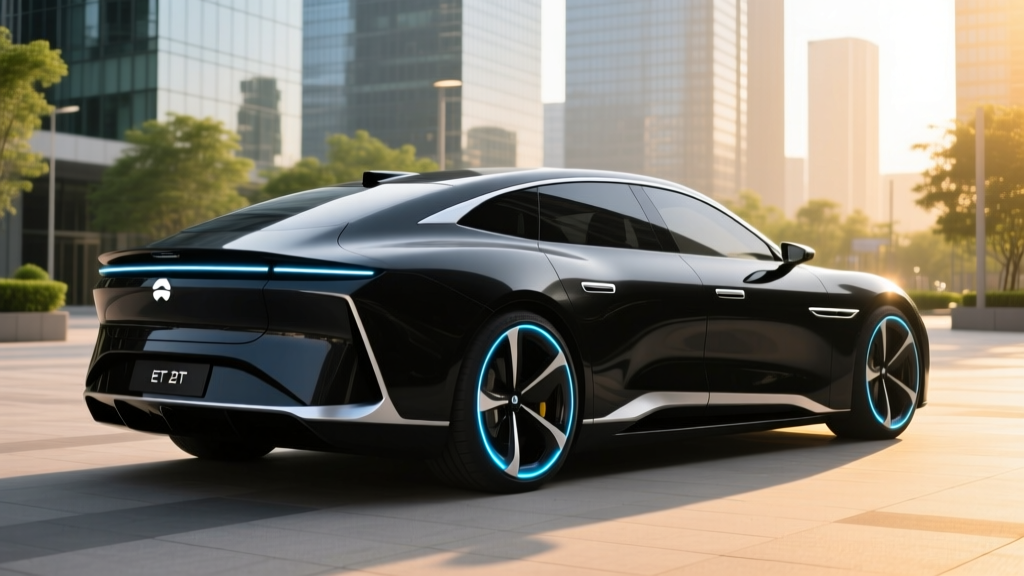
The NIO ET9 is the Chinese automaker's halo vehicle — a full-size luxury electric sedan positioned to challenge the Mercedes-Benz EQS, BMW i7, and Porsche Taycan in the premium executive segment. First unveiled in late 2023 and launched in China for the 2025 model year, the ET9 showcases NIO's most advanced platform: a 900-volt electrical architecture, steer-by-wire controls, active suspension, and the company's massive 120 kWh semi-solid-state battery pack. For US-based EV shoppers tracking the keyword NIO ET9, the central question is whether this sedan will ever reach American roads — and if so, what the real-world numbers look like.
As of early 2026, NIO has not announced a firm US launch date. The company has repeatedly signaled interest in entering the American market, but tariff structures, homologation requirements, and NIO's financial restructuring have delayed that timeline. What follows is a comprehensive spec-by-spec profile based on confirmed Chinese-market data, with US-relevant conversions, estimated EPA equivalents, and a frank assessment of what American buyers should expect if and when the ET9 arrives.
| Attribute | Specification |
|---|---|
| Battery Capacity | 120 kWh (semi-solid-state, NMC-based chemistry) |
| CLTC Range (China) | ~517 miles (832 km) |
| Estimated EPA Range | ~340–370 miles (projected) |
| Drivetrain | Dual-motor AWD |
| Power Output | ~680 hp (520 kW combined) |
| 0–60 mph | ~4.0 seconds (estimated) |
| DC Fast Charge (peak) | Up to 600 kW (900V architecture) |
| 10–80% DC Charge Time | ~12 minutes (claimed, peak conditions) |
| Level 2 Home Charging | ~11 kW AC (est. ~28–32 mi/hr) |
| Platform Voltage | 900V nominal |
| Length / Wheelbase | 210.6 in / 127.2 in (5,350 mm / 3,230 mm) |
| Base Price (China) | ¥788,000 (~$108,000 USD) |
| Battery Subscription (BaaS) | Available in China; reduces vehicle price by ~¥100,000+ |
| US Availability | Not confirmed as of early 2026 |
Range and Efficiency: Translating CLTC to Real-World American Miles
The NIO ET9's headline range figure — 517 miles under China's CLTC testing cycle — sounds extraordinary. But CLTC is notoriously generous compared to the US EPA testing protocol. Historically, CLTC-to-EPA conversions for Chinese-market EVs show a 25–35% reduction. Applying that to the ET9's 120 kWh pack and heavy luxury-sedan weight (estimated ~5,500 lbs / 2,500 kg), a realistic EPA estimate lands between 340 and 370 miles.
Real-World Range Expectation: EPA-estimated ~340–370 miles (projected). In practice, expect ~280–310 miles on sustained highway driving at 70+ mph, and roughly 240–270 miles in cold-weather conditions (below 32°F) due to cabin heating demands and increased battery internal resistance. The ET9's 900V system and active thermal management should mitigate some cold-weather losses, but physics is physics — a 5,500-lb sedan with a large frontal area will consume more energy at highway speeds than the EPA city-heavy test suggests.
The semi-solid-state battery is a key differentiator. NIO partnered with卫蓝新能源 (WeLion New Energy) to develop this pack, which uses a hybrid solid-liquid electrolyte. The result is higher energy density than conventional NMC cells — reportedly around 260 Wh/kg at the cell level — allowing 120 kWh in a package that would typically hold 100 kWh of traditional lithium-ion. This density advantage is what makes the ET9's range possible despite its substantial mass.
Efficiency-wise, expect the ET9 to land around 85–95 MPGe combined (EPA projected), or roughly 35–39 kWh per 100 miles. That trails the Mercedes EQS 450+ (97 MPGe, RWD) but is competitive with the dual-motor BMW i7 xDrive60 (82 MPGe). For a 680-hp luxury flagship, those numbers are respectable.
Charging Speed: 900V Architecture and 600 kW Peak
The ET9's 900-volt electrical architecture is its most significant charging advantage. Higher voltage means lower current for the same power output, which reduces heat generation in cables and battery cells during fast charging. NIO claims the ET9 can accept up to 600 kW peak DC fast-charge power — a figure that, if sustained even briefly, puts it among the fastest-charging production EVs in the world.
| Charging Level | Power | Speed / Time |
|---|---|---|
| Level 1 (120V household) | ~1.4 kW | ~3–4 miles per hour |
| Level 2 (240V home, 48A) | ~11.5 kW | ~28–32 miles per hour |
| DC Fast Charge (peak) | Up to 600 kW | 10–80% in ~12 minutes (claimed) |
| DC Fast Charge (sustained avg) | ~300–400 kW (est.) | 10–80% in ~16–20 minutes (real-world est.) |
| NIO Power Swap | Full battery swap | ~3–5 minutes (China network only) |
Here's where real-world honesty matters. No public DC fast-charging network in the United States currently delivers 600 kW to a vehicle. Electrify America's newest ultra-fast stations peak at 350–400 kW, and Tesla's V4 Superchargers deliver up to 350 kW (for CCS-equipped non-Tesla vehicles). Even if the ET9 could accept 600 kW, the infrastructure bottleneck means American owners would likely see peak rates closer to 300–350 kW at the best-equipped stations.
The charge curve also matters. Peak kW is never sustained across the full 10–80% window. Based on the ET9's battery chemistry and thermal management, expect the peak rate to taper significantly above 50–60% State of Charge (SoC). The claimed 12-minute 10–80% time likely assumes ideal pre-conditioning and access to a 600 kW charger — conditions rarely met in practice. A more realistic expectation at US 350 kW stations: 16–20 minutes for a 10–80% charge, which is still exceptionally fast.
NIO's battery-swap technology is another unique feature. In China, NIO operates over 2,500 Power Swap stations where the ET9's entire battery pack can be exchanged for a fully charged unit in 3–5 minutes. However, NIO has not announced plans to deploy swap stations in the US, making this a China-exclusive advantage for now.
Performance and Driving Dynamics: 680 HP and Steer-by-Wire
The ET9's dual-motor all-wheel-drive powertrain produces an estimated 680 horsepower (520 kW), with the rear motor contributing the majority of output. NIO quotes a 0–100 km/h (0–62 mph) time in the low 4-second range, which translates to approximately 4.0 seconds to 60 mph. That's quick for a full-size luxury sedan — comparable to the BMW i7 xDrive60 (4.5 sec) and slightly behind the Porsche Taycan Turbo S (2.4 sec), though the ET9 prioritizes comfort over outright track performance.
The more interesting performance story is the chassis technology:
- Steer-by-wire: The ET9 is one of the first production vehicles to use a fully electronic steering system with no mechanical linkage between the wheel and rack. This enables variable steering ratios (as little as one turn lock-to-lock at low speeds) and eliminates road vibration transmission, but it also removes tactile feedback that driving enthusiasts value.
- Active suspension (SkyRide): NIO's fully active suspension uses individual corner actuators to control body movement in real time. The system can counteract body roll in corners, absorb impacts without cabin disturbance, and even perform a "tank turn" (360-degree rotation on the spot) at low speeds — a feature more commonly associated with the Mercedes G-Class EV.
- Rear-wheel steering: Up to 8 degrees of rear-axle steering reduces the turning radius despite the ET9's 210.6-inch length, improving low-speed maneuverability in urban environments.
Interior, Cargo, and Technology
The ET9's cabin is configured as a four-seat executive lounge. The wheelbase of 127.2 inches (longer than a Mercedes S-Class) creates substantial rear-seat legroom — NIO claims over 42 inches of rear legroom, rivaling chauffeur-driven limousines. The rear seats feature power recline, massage, heating, ventilation, and individual entertainment screens.
Key interior and technology features include:
- Displays: A full-width "skyline" display spanning the dashboard, plus a dedicated rear-seat entertainment system with two 14.5-inch OLED screens
- Infotainment: NIO's NOMI AI assistant (a physical robotic head on the dash that responds to voice commands and gestures) with the Banyan 2.0 software platform
- Audio: 23-speaker Dolby Atmos surround system
- ADAS: NIO's NAD (NIO Autonomous Driving) system with 33 hardware sensors including LiDAR (4 units), 7 8MP cameras, and NVIDIA Orin-X processors. This is an SAE Level 2 driver-assistance system — the driver must remain attentive and keep hands on the wheel (or eyes on the road, depending on jurisdiction).
- Cargo: Estimated ~15–18 cubic feet of trunk space (sedan configuration, no hatchback opening). A front trunk (frunk) is not expected due to the steer-by-wire hardware and front motor packaging.
ADAS Limitation Notice: NIO's NAD system, despite its "Autonomous Driving" branding, is an SAE Level 2 driver-assist feature. It can manage steering, acceleration, and braking on highways and in certain urban scenarios, but the driver must remain fully engaged and ready to take over at any moment. It is not a self-driving system. Level 4 driverless operation (no human oversight required) is currently only available through robotaxi services like Waymo in limited geographic zones.
Pricing, Tax Credits, and the US Availability Question
In China, the NIO ET9 launched at ¥788,000 (approximately $108,000 USD at current exchange rates). NIO's Battery-as-a-Service (BaaS) model allows buyers to purchase the vehicle without the battery and subscribe to it monthly, reducing the upfront price by roughly ¥100,000–128,000 (~$14,000–$17,500). Whether BaaS would be offered in the US remains unknown.
| Item | Estimated Amount |
|---|---|
| China MSRP | ~$108,000 USD |
| Estimated US MSRP (if launched) | $110,000–$125,000 (tariffs, homologation costs) |
| Federal EV Tax Credit (§30D) | Unlikely to qualify — see details below |
| Price After Credit (best case) | ~$102,500–$117,500 |
| Annual Insurance (est.) | $3,500–$5,000 (luxury EV segment average) |
Federal tax credit reality: Under current IRS §30D rules, the ET9 faces multiple barriers to qualifying for the up-to-$7,500 New Clean Vehicle Credit:
- MSRP cap: Sedans are capped at $55,000 MSRP under §30D. The ET9 at $108K+ far exceeds this limit, making it categorically ineligible regardless of other factors. (The $80,000 cap applies to SUVs, vans, and trucks — the ET9 is classified as a sedan.)
- Manufacturer origin: Vehicles from Chinese-headquartered automakers face additional scrutiny under battery sourcing and critical mineral requirements. Even if the price cap weren't an issue, the ET9's battery supply chain would likely fail the foreign-entity-of-concern (FEOC) restrictions effective 2024 onward.
- Income caps: Even for qualifying vehicles, buyer adjusted gross income must not exceed $150,000 (single) / $300,000 (joint). This is moot for the ET9 given the MSRP barrier.
Bottom line: the NIO ET9 will not qualify for the federal §30D tax credit if it launches in the US at its current pricing tier. Buyers should budget the full MSRP plus state-level incentives where applicable.
How the NIO ET9 Compares to Key Competitors
| Spec | NIO ET9 (est.) | Mercedes EQS 580 | BMW i7 xDrive60 | Porsche Taycan Turbo S |
|---|---|---|---|---|
| EPA Range | ~340–370 mi | 330 mi | 296 mi | 283 mi |
| Battery | 120 kWh semi-solid | 107.8 kWh NMC | 101.7 kWh NMC | 93.4 kWh NMC |
| Peak DC Charge | 600 kW | 200 kW | 195 kW | 320 kW |
| 0–60 mph | ~4.0 sec | 4.1 sec | 4.5 sec | 2.4 sec |
| Horsepower | ~680 hp | 536 hp | 536 hp | 750 hp |
| Base MSRP | ~$108,000* | $127,350 | $120,695 | $190,900 |
| Tax Credit | Not eligible | Not eligible | Not eligible | Not eligible |
*China-market price; US pricing TBD if launched.
The ET9's projected range advantage and charging speed are clear strengths against the German competition. Its pricing undercuts the EQS and i7 significantly at Chinese MSRP, though US import costs, tariffs, and dealer infrastructure would narrow that gap. The Porsche Taycan occupies a different lane — a performance-first sedan with less emphasis on rear-seat luxury.
Consider the NIO ET9 if:
- You prioritize cutting-edge battery technology (semi-solid-state, 900V) and fastest-possible DC charging
- You want flagship luxury at a price point below Mercedes/BMW equivalents
- You are based in a market where NIO operates (currently China, expanding to Europe) or can wait for a potential US launch
Look elsewhere if:
- You need a confirmed US purchase with local dealer support and service infrastructure
- Federal tax credit eligibility is a priority in your purchase decision
- You prefer established brand prestige and proven long-term reliability data in the US market
Warranty and Long-Term Ownership Outlook
In China, NIO offers a comprehensive warranty package for the ET9:
- Vehicle warranty: 6 years / 150,000 km (~93,000 miles)
- Battery warranty: 10 years / unlimited kilometers (with a capacity retention guarantee of ≥70% State of Health over the warranty period)
- BaaS subscribers: Battery warranty is effectively perpetual — NIO maintains and replaces batteries as needed within the subscription model
The semi-solid-state battery may offer a longevity advantage. Solid-state and semi-solid chemistries generally exhibit slower degradation curves than conventional liquid-electrolyte NMC cells, though long-term field data for the WeLion pack is not yet available at scale. NIO's battery-swap model also sidesteps the traditional battery-replacement-cost anxiety — if your pack degrades beyond acceptable levels, you simply swap it for a fresher unit at a Power Swap station (in China).
For US buyers, the absence of swap infrastructure means traditional battery ownership. A full 120 kWh semi-solid-state pack replacement, if ever needed out of warranty, would likely cost $20,000–$30,000+ based on current luxury EV battery pricing. This is a long-term ownership cost that should factor into any purchase decision.
Pros, Cons, and Final Verdict
Pros
- Class-leading projected range (~340–370 mi EPA est.) among luxury sedans
- 900V architecture with up to 600 kW DC fast-charge capability
- Semi-solid-state battery — higher energy density, potentially slower degradation
- Advanced chassis tech: steer-by-wire, fully active suspension, rear-wheel steering
- Four-seat executive rear cabin with limousine-level legroom
- Competitive pricing vs. German rivals (at Chinese MSRP)
- Battery swap capability (where infrastructure exists)
Cons
- No confirmed US launch date as of early 2026
- Will not qualify for federal §30D tax credit (MSRP cap exceeded)
- No US dealer or service network established
- Steer-by-wire removes tactile steering feedback
- Heavy vehicle (~5,500 lbs) impacts tire wear and real-world efficiency
- Sedan MSRP cap ($55K) eliminates tax credit eligibility entirely
- Long-term reliability data for semi-solid-state battery still limited
- Battery swap infrastructure unlikely in US market
The NIO ET9 is a genuinely impressive piece of engineering that demonstrates how far Chinese EV manufacturers have come in the luxury segment. Its semi-solid-state battery, 900V charging, and active chassis technology are legitimately ahead of what the German establishment currently offers. But for US buyers, the ET9 remains a fascinating "what if" — a car you can admire from afar but cannot yet order, service, or charge on a NIO-specific network.
If NIO does eventually bring the ET9 to America, it will need to solve the service-infrastructure puzzle, navigate tariff headwinds, and accept that its price point eliminates any federal tax-credit assistance. For now, US luxury EV sedan shoppers have compelling alternatives that are available today: the Mercedes EQS, BMW i7, and Lucid Air all offer strong range, established dealer networks, and the certainty of immediate purchase.
Frequently Asked Questions
What is the real-world range of the NIO ET9?
The ET9's CLTC-rated range is 517 miles, but the more relevant US EPA estimate is projected at 340–370 miles. Real-world highway driving at 70+ mph will likely yield 280–310 miles per charge, and cold-weather conditions (below freezing) may reduce that to 240–270 miles. The 120 kWh semi-solid-state battery provides a large energy buffer, but the vehicle's weight and aerodynamic profile limit efficiency at sustained high speeds.
How fast does the NIO ET9 charge?
On a compatible DC fast charger, the ET9 can accept up to 600 kW peak power thanks to its 900V architecture, with a claimed 10–80% time of approximately 12 minutes under ideal conditions. In real-world US conditions (350 kW Electrify America or Tesla Supercharger stations), expect 10–80% in roughly 16–20 minutes. Home Level 2 charging at 11.5 kW adds approximately 28–32 miles per hour, meaning a full overnight charge from 20% to 100% takes about 8–9 hours.
How much does the NIO ET9 cost after tax credits?
The ET9 is priced at approximately $108,000 USD in China. It will not qualify for the US federal §30D EV tax credit because its MSRP far exceeds the $55,000 sedan cap, and its Chinese battery supply chain would likely fail the FEOC sourcing requirements. Buyers should expect to pay full MSRP (likely $110,000–$125,000 if US pricing includes tariffs and homologation costs) plus applicable state incentives where available.
Is the NIO ET9 available to buy in the United States?
No. As of early 2026, NIO has not launched in the US market and has not confirmed a timeline for doing so. The ET9 is currently available in China, with European expansion planned. US buyers interested in the luxury electric sedan segment should consider the Mercedes EQS, BMW i7, Lucid Air, or Porsche Taycan as available alternatives.
Is the NIO ET9 worth buying vs. key competitors?
On paper, the ET9 offers superior range and charging speed compared to the EQS and i7, at a lower base price (in China). Its active suspension and steer-by-wire technology are genuinely advanced. However, the lack of US availability, absent service infrastructure, no tax credit eligibility, and unproven long-term reliability in Western markets are significant drawbacks. If NIO establishes a US presence with competitive pricing and service, the ET9 could be compelling. Until then, established alternatives offer lower ownership risk.
Does the NIO ET9 qualify for the federal EV tax credit?
No. Under IRS §30D rules, the ET9 fails multiple eligibility criteria: (1) its MSRP exceeds the $55,000 sedan cap; (2) its battery components and critical minerals are sourced from supply chains that likely trigger the foreign-entity-of-concern (FEOC) restriction. Even if NIO restructured its supply chain, the price cap alone disqualifies the vehicle. Buyers should not factor the $7,500 credit into their purchase budget.
What is the NIO ET9's battery warranty?
In China, NIO provides a 10-year battery warranty with unlimited mileage, guaranteeing at least 70% State of Health (SoH) retention over that period. For BaaS (Battery-as-a-Service) subscribers, battery maintenance and replacement are handled by NIO as part of the subscription. US warranty terms would be determined at launch and may differ.