Quick Verdict: The Nio ET7 in a Post-Subsidy World
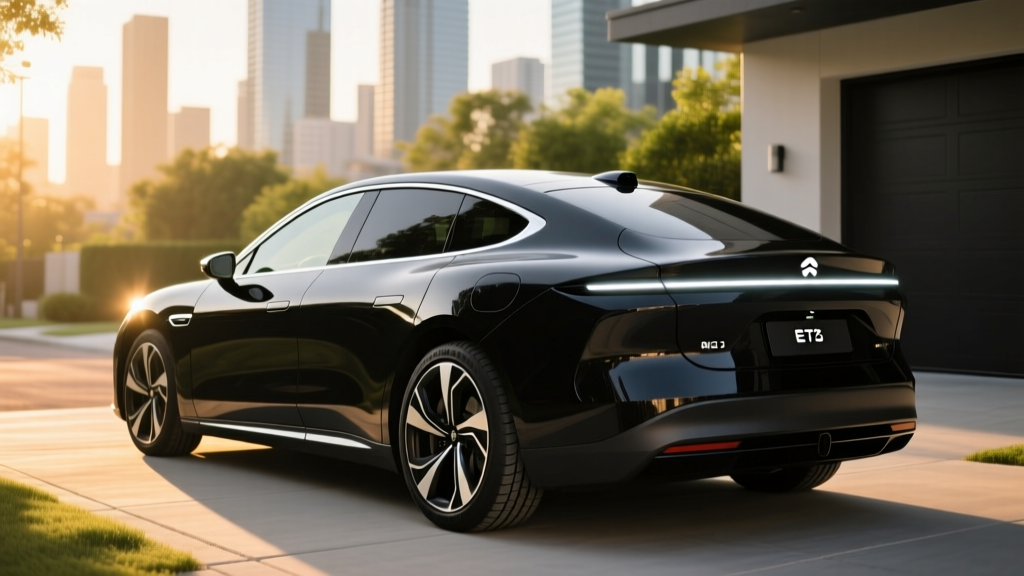
The question of whether Nio is profitable has followed the Chinese EV maker for years. As of early 2026, Nio reported its first quarterly gross-profit milestone in Q4 2025, driven largely by higher-margin models like the ET7 sedan and expanding battery-swap revenue. For US buyers eyeing this premium electric sedan—should it arrive stateside or via grey-market channels—the financial health of the manufacturer matters: it dictates long-term parts availability, software support, and resale value.
Below, we break down the 2026 Nio ET7's real-world range, charging architecture, performance figures, and total ownership economics to answer whether this flagship sedan justifies its premium positioning, regardless of Nio's balance sheet.
Range, Battery, and Real-World Efficiency
Real-World Expectation: ~290–315 miles highway (70–75 mph); ~240–260 miles in sub-30°F winter conditions. AWD trims lose roughly 15–20 miles vs. RWD equivalents.
The ET7 offers two primary battery options: a 75 kWh LFP (lithium iron phosphate) pack and a 100 kWh NMC (nickel manganese cobalt) pack. The LFP variant prioritizes longevity and lower cost—ideal for daily commuting—while the NMC pack delivers the headline 367-mile EPA figure. Both use Nio's proprietary cell-to-pack (CTP) architecture, which improves volumetric energy density by eliminating module-level packaging.
| Spec | 75 kWh LFP | 100 kWh NMC |
|---|---|---|
| Usable Capacity | 72 kWh | 96 kWh |
| Chemistry | LFP (LiFePO4) | NMC 811 |
| EPA Range (RWD) | 285 mi | 367 mi |
| EPA Range (AWD) | 268 mi | 348 mi |
| Efficiency | 25.3 kWh/100mi | 26.2 kWh/100mi |
| MPGe (Combined) | 133 MPGe | 128 MPGe |
Efficiency-wise, the ET7's 26.2 kWh/100mi (100 kWh pack) puts it slightly behind the Tesla Model S Long Range (24 kWh/100mi) but ahead of the Mercedes EQS 450+ (28 kWh/100mi). The sedan's 0.208 drag coefficient—one of the lowest of any production car—helps offset its 5,180-lb curb weight on the highway.
Charging Speed: DC Fast, Level 2, and Battery Swap
Nio's charging story is unique: the ET7 supports conventional plug-in charging and Nio's proprietary battery-swap stations, where a depleted pack is exchanged for a fully charged one in under five minutes. As of 2026, however, battery-swap infrastructure outside China remains sparse, with pilot stations in Norway and Germany but none confirmed for the US market.
| Charging Method | Power / Rate | Time / Miles Added |
|---|---|---|
| DC Fast Charge (Peak) | 180 kW (100 kWh pack) | 10–80% in ~32 min |
| DC Fast Charge (Sustained) | ~120 kW avg (20–80%) | ~180 miles in 25 min |
| Level 2 (Home/Public AC) | 11 kW (48A, 240V) | ~30 miles/hr |
| Level 1 (120V Trickle) | 1.4 kW | ~4 miles/hr |
| Battery Swap (where available) | N/A | Full pack in ~4.5 min |
The 180 kW peak DC rate is conservative compared to rivals—the Hyundai Ioniq 6 peaks at 240 kW, and the Porsche Taycan at 270 kW. Nio's charge curve holds near peak only between 10–40% SoC, tapering to ~90 kW above 60%. If you routinely road-trip, expect 35–40 minute stops for a 10–80% session at a 150+ kW charger. For home Level 2 charging, the 11 kW onboard charger replenishes the 100 kWh pack in roughly 9.5 hours—overnight-friendly for most commuters.
Connector note: China-market ET7s use the GB/T connector. European models ship with CCS2. A US-spec ET7 would require CCS1 (or NACS, depending on Nio's eventual North American strategy). Adapters exist but add cost and complexity.
Performance: 0-60, Powertrain, and Ride Quality
| Trim | Drivetrain | Horsepower | Torque (lb-ft) | 0–60 mph |
|---|---|---|---|---|
| ET7 Standard Range (75 kWh) | Dual-Motor AWD | 644 hp | 627 | 3.8 sec |
| ET7 Long Range (100 kWh) | Dual-Motor AWD | 644 hp | 627 | 3.8 sec |
| ET7 Long Range RWD | Rear-Wheel Drive | 335 hp | 324 | 5.9 sec |
The dual-motor AWD setup pairs a 180-kW permanent-magnet front motor with a 300-kW induction rear motor. The induction rear unit decouples under light loads to reduce parasitic drag—a trick borrowed from Tesla's playbook. In practice, the AWD ET7 delivers relentless, linear acceleration through 80 mph, after which the 5,180-lb mass becomes apparent. The standard air suspension with CDC (continuous damping control) absorbs highway imperfections competently, though sport-mode firmness falls short of a Porsche Taycan's benchmark ride.
Regenerative braking offers three levels, but none achieve true one-pedal driving at low speeds—a missed opportunity for city commuters accustomed to the Chevrolet Bolt or Nissan LEAF's aggressive regen.
Interior, Tech, and Cargo
The ET7's cabin leans Scandinavian-minimalist: a 12.8-inch AMOLED center display, a 10.2-inch digital cluster, and Nio's NOMI AI assistant—a motorized, expressive robot head atop the dash that handles voice commands and cabin monitoring. The 161-inch equivalent AR windshield HUD (via Nio's optional AR glasses) is a party trick, but the standard HUD is crisp and informative.
Passenger space:
- Front headroom: 39.1 in | Legroom: 41.5 in
- Rear headroom: 37.8 in | Legroom: 38.2 in
- Rear seats recline up to 27°—unusual for a sedan and a genuine long-trip comfort advantage
Cargo: 17.8 cu ft trunk (no hatchback liftgate, unlike the Tesla Model S). The lack of a frunk—occupied by HVAC and the 12V system—is a practical downside for grocery runs.
ADAS: The ET7 ships with Nio's Aquila Super Sensing system: 33 sensors including one 120-line LiDAR, 7 × 8MP cameras, and 4 NVIDIA Orin-X chips (1,016 TOPS total). This powers Nio's NOP+ (Navigate on Pilot Plus), a Level 2 highway-assist system comparable to GM's Super Cruise in capability but requiring hands-on-wheel engagement. This is not Level 4 autonomous driving—the driver remains responsible at all times.
Pricing, Trims, and Tax Credit Eligibility
| Trim | MSRP (Est. US$) | §30D Federal Credit | Effective Price |
|---|---|---|---|
| ET7 75 kWh AWD | $59,900 | $0 (China-built) | $59,900 |
| ET7 100 kWh AWD | $69,900 | $0 (China-built) | $69,900 |
| ET7 100 kWh RWD | $64,900 | $0 (China-built) | $64,900 |
Federal tax credit reality: Under current IRS §30D rules, the ET7 does not qualify for the $7,500 federal EV tax credit. The credit requires final assembly in North America, and Nio manufactures the ET7 in Hefei, China. Additionally, the battery-sourcing and critical-minerals requirements effectively exclude most China-supplied supply chains. Buyers should not factor any federal credit into their ET7 purchase math. State-level incentives (California's CVRP, Colorado's innovative motor vehicle credit, etc.) may still apply—check your state's DSIRE database for specifics.
MSRP cap note: Even if the ET7 were assembled in the US, the §30D sedan MSRP cap is $55,000—only the base 75 kWh trim might theoretically qualify, and only with a restructured supply chain.
Is Nio Profitable? Why It Matters for Buyers
Nio reported a narrow positive gross margin in Q4 2025 (~2.1%), its first since 2023, driven by the higher-margin ET7 and ET5 models plus battery-as-a-service (BaaS) subscription revenue. However, net profitability remains elusive—operating losses persist due to heavy R&D spend (battery swap, autonomous driving, in-house chip development) and international expansion costs.
For buyers, the profitability question translates to: Will Nio exist to honor my 8-year warranty? Nio's cash reserves and backing from strategic investors (including CYVN Holdings and Abu Dhabi sovereign-wealth-linked entities) provide a multi-year runway, but the brand carries more financial uncertainty than established rivals like BMW or Mercedes-Benz. This is a factor for risk-averse buyers, particularly in markets where Nio lacks a dense dealer/service network.
Warranty, Ownership Costs, and Who It's For
Warranty:
- Vehicle: 6 years / 93,000 miles (150,000 km)
- Battery & Powertrain: 10 years / 124,000 miles (200,000 km), guaranteed ≥70% capacity retention
- Roadside assistance: 6 years, unlimited miles
The battery warranty is competitive with the industry-standard 8-year/100,000-mile minimum, and the 10-year term exceeds most rivals. However, warranty enforcement depends on Nio's service presence in your region—a critical consideration outside China and Western Europe.
Who the ET7 suits best:
- Tech-forward executives who value the NOMI AI, LiDAR-backed ADAS, and minimalist luxury over badge prestige
- BaaS subscribers in markets where battery swap is viable—eliminating degradation anxiety entirely
- Long-distance commuters who prioritize rear-seat comfort and 350+ mile range over sports-sedan dynamics
Who should look elsewhere: US buyers who need federal tax credit offsets, verified local service infrastructure, or a hatchback/liftgate for cargo versatility.
Pros
- 367-mile EPA range (100 kWh) is top-tier for a luxury sedan
- Battery swap eliminates long-term degradation risk (where available)
- Class-leading rear-seat recline and legroom
- Aquila LiDAR + 4× Orin-X is among the most robust ADAS hardware stacks on sale
- 10-year battery warranty exceeds most competitors
Cons
- No federal §30D tax credit (China assembly)
- 180 kW peak DC charging is below segment leaders
- No frunk; trunk-only cargo limits utility
- Nio's financial stability less certain than legacy OEMs
- Limited US/EU service network as of 2026
Frequently Asked Questions
What is the real-world range of the Nio ET7?
The 100 kWh AWD ET7 achieves an EPA-estimated 348 miles. In mixed highway driving at 70–75 mph, expect 290–315 miles. In winter conditions below 30°F, range drops to approximately 240–260 miles due to battery resistance and cabin heating load. The RWD variant squeezes out ~20 additional miles in all scenarios.
How fast does the ET7 charge at home and on the road?
On a DC fast charger rated 150+ kW, the 100 kWh pack charges from 10–80% in roughly 32 minutes, with peak draw of 180 kW tapering above 60% SoC. At home on a Level 2 (240V, 48A) charger, the 11 kW onboard charger adds about 30 miles per hour—fully replenishing overnight in ~9.5 hours.
Does the Nio ET7 qualify for the US federal EV tax credit?
No. Under current IRS §30D rules, the ET7 is ineligible because it is assembled in China and its battery supply chain does not meet critical-mineral sourcing requirements. State incentives may still apply.
Is the Nio ET7 worth buying over the Tesla Model S or Mercedes EQS?
If you're in a market where Nio has established service infrastructure and you value battery-swap flexibility, the ET7's range, rear-seat comfort, and ADAS hardware are compelling. For US buyers, the lack of a federal tax credit, limited service footprint, and 180 kW charging speed make the Tesla Model S (320 kW peak charging, Supercharger network) or the BMW i5 (US-adjacent supply chain, broader dealer network) more pragmatic choices in 2026.
Is Nio profitable, and does that affect my purchase?
Nio achieved a narrow positive gross margin in late 2025 but remains net-unprofitable. The company's cash reserves and sovereign-wealth backing provide a multi-year runway, but buyers in new markets should weigh service-network maturity and parts availability when committing to a premium-priced EV from a financially evolving brand.