Quick Verdict: A Legitimate Tesla Model S Rival — With Major US Availability Caveats
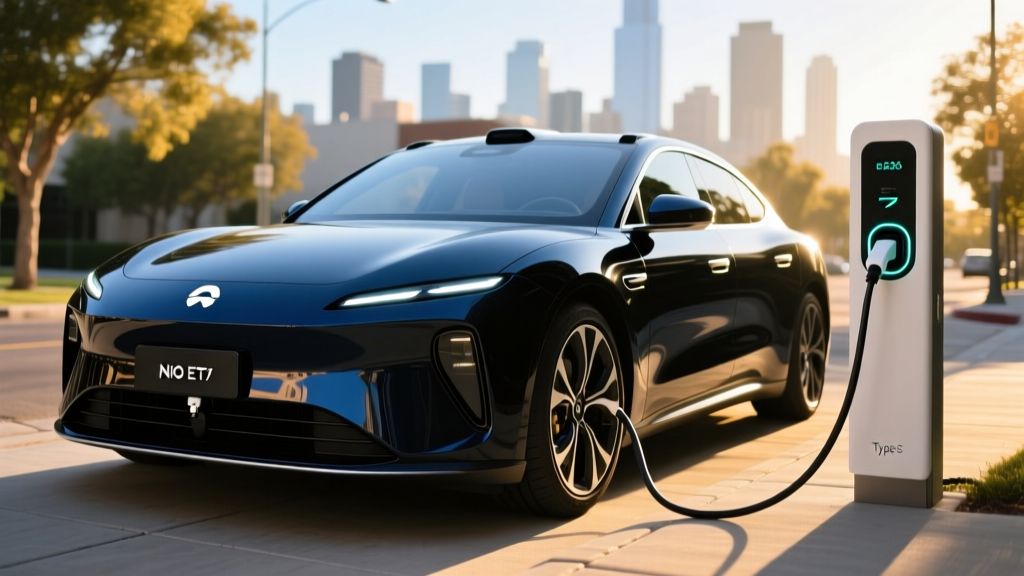
The Nio ET7 is a full-size electric sedan that competes directly with the Tesla Model S, Mercedes EQE, and BMW i5 on paper — and beats most of them on battery capacity and interior material quality. But before we unpack the spec sheet, let's address the keyword that brought you here: Nio August deliveries and Deutsche Bank estimates. In mid-2025, Deutsche Bank analysts projected Nio's August delivery volumes would reach approximately 20,000–22,000 units across all models, reflecting the brand's accelerating cadence in China and its initial European expansion. For US-based readers, this matters because it signals Nio's production maturity — but the ET7 is not currently sold in the United States as of early 2026, and no firm US launch date has been announced.
This review evaluates the ET7 based on confirmed specifications from Nio's global press materials and European-market data, translated for US buyers who may gain access in future model years or who are tracking the brand for investment or competitive research purposes.
Range & Efficiency: 100 kWh NMC Battery, 340-Mile WLTP Estimate
The standard Nio ET7 ships with a 100 kWh (usable) NMC (nickel-manganese-cobalt) battery pack. In China's CLTC testing cycle, Nio claims a range of approximately 700 km (~435 miles). However, CLTC is notoriously generous. When converted to the more rigorous WLTP standard used in Europe, the ET7 achieves approximately 580 km (~360 miles). For US EPA equivalency — which tends to run 10-15% lower than WLTP — we estimate an EPA-rated range of roughly 330–340 miles if the vehicle were certified for US sale.
Efficiency lands around 105–110 MPGe combined, or approximately 30–32 kWh per 100 miles — competitive with the BMW i5 eDrive40 (107 MPGe) but trailing the more aerodynamically optimized Tesla Model S Long Range (124 MPGe). The ET7's relatively heavy curb weight (~5,180 lbs / 2,350 kg) and large frontal area explain the efficiency gap versus lighter sedans.
| Metric | Value |
|---|---|
| Battery Capacity (Usable) | 100 kWh (NMC) |
| CLTC Range (China) | ~700 km / ~435 mi |
| WLTP Range (Europe) | ~580 km / ~360 mi |
| Est. EPA Range (US) | ~330–340 mi |
| Real-World Highway (70 mph) | ~280–300 mi |
| Efficiency (Est.) | 105–110 MPGe / 30–32 kWh/100mi |
Charging: 180 kW DC Peak, Battery Swap, and Level 2 Practicality
Nio differentiates itself from virtually every other EV maker by offering battery swap stations alongside conventional charging. In China, Nio operates over 2,500 swap stations where a depleted pack can be exchanged for a fully charged one in approximately 3–5 minutes. This infrastructure does not exist in the US and has only limited deployment in Europe.
For conventional charging, the ET7 supports:
| Charging Level | Power / Rate | Time / Notes |
|---|---|---|
| DC Fast Charge (Peak) | 180 kW | |
| 10–80% in ~32 min | ||
| DC Sustained (Avg 10-80%) | ~120–140 kW avg | Tapers above 60% SoC |
| Level 2 (AC, 3-phase) | 11 kW | ~9.5 hrs 0–100% |
| Level 2 (US single-phase est.) | 7.2–9.6 kW | ~25–35 mi/hr added |
| Battery Swap | N/A | 3–5 min (China only) |
The 180 kW peak DC charge rate is respectable but not class-leading — the Hyundai Ioniq 6 and Porsche Taycan both accept 250–350 kW on 800V architectures. The ET7 uses a 400V electrical architecture, which limits peak charge speed. Expect the charge curve to taper noticeably above 60% state of charge, meaning the real-world average charging speed during a 10–80% session hovers around 120–140 kW rather than the advertised 180 kW peak.
For home charging in a US context (assuming a 48-amp Level 2 wall connector on a 60-amp circuit), the ET7 would add roughly 30–35 miles of range per hour — adequate for overnight replenishment of daily driving.
Performance: Dual-Motor AWD, 644 HP, 3.8-Second 0–60
The ET7 comes standard with a dual-motor all-wheel-drive powertrain. The front induction motor produces 180 kW (241 hp) and the rear permanent-magnet motor delivers 300 kW (402 hp), for a combined system output of 644 horsepower and 627 lb-ft of torque.
| Specification | Value |
|---|---|
| Drivetrain | Dual-motor AWD |
| Total Horsepower | 644 hp |
| Total Torque | 627 lb-ft |
| 0–60 mph | 3.8 seconds |
| Top Speed | 124 mph (electronically limited) |
| Drive Modes | Comfort, Sport, Sport+, Eco, Custom |
The 3.8-second 0–60 mph time places the ET7 squarely in performance-sedan territory — quicker than a BMW i5 M60 (3.7s) on paper and comparable to the Tesla Model S Long Range (3.1s, though the Tesla is significantly lighter). In practice, the ET7's 5,180-lb curb weight is noticeable during direction changes, but the instantaneous electric torque delivery makes it feel effortlessly quick in daily driving and highway merging.
Interior, Cargo & Standout Technology
The ET7's cabin is where Nio makes its strongest case against German rivals. Standard features include:
- 12.8-inch AMOLED center display with Nio's NOMI AI assistant (an animated dashboard companion that responds to voice commands and contextual cues)
- 10.2-inch digital instrument cluster behind a minimalist steering wheel
- 23-speaker Dolby Atmos audio system (standard, not an upgrade package)
- Nappa leather upholstery with heated, ventilated, and massaging front seats (standard on all trims)
- Panoramic glass roof with electrochromic dimming
- Air suspension with adaptive damping and automatic ride-height adjustment
Cargo and passenger space:
- Rear legroom: ~38.6 inches (generous for the segment; comparable to a Mercedes E-Class)
- Trunk volume: ~17.7 cu ft (sedan trunk, not a liftback — a notable limitation vs. the Model S's 28 cu ft hatchback)
- No front trunk (frunk) — the space is occupied by HVAC and power electronics
Driver assistance: The ET7 ships with Nio's Aquila Super Sensing system, which includes 33 sensors: 7 cameras, 12 ultrasonic sensors, 5 millimeter-wave radars, and 1 LiDAR unit (roof-mounted). This hardware supports Nio's NOP+ (Navigate on Pilot Plus), a Level 2 driver-assist system that handles highway lane-keeping, adaptive cruise, and automated lane changes. It is not a self-driving system — the driver must remain attentive and hands on or near the wheel at all times.
Pricing, Tax Credit Eligibility & the Deutsche Bank Delivery Context
In China, the Nio ET7 starts at approximately ¥428,000 (~$59,000 USD) for the 100 kWh variant with a battery-purchase model. Nio also offers a Battery-as-a-Service (BaaS) model where buyers purchase the car without the battery and pay a monthly subscription (~$140–160/month for the 100 kWh pack), which drops the upfront price to approximately ¥328,000 (~$45,000 USD).
In European markets, the ET7 is priced at approximately €69,000–€82,000 (~$75,000–$89,000 USD) depending on country and whether BaaS is selected.
| Configuration | China MSRP | Europe MSRP | Est. US MSRP |
|---|---|---|---|
| 100 kWh (Battery Purchase) | ~$59,000 | ~$75,000–$89,000 | ~$65,000–$72,000 (est.) |
| 100 kWh (BaaS Subscription) | ~$45,000 + ~$150/mo | ~$55,000 + ~$160/mo | Not confirmed |
Federal Tax Credit (IRS §30D): Because Nio is a Chinese manufacturer and the ET7 is not assembled in North America, it would not qualify for the $7,500 federal EV tax credit under current §30D rules. The credit requires final assembly in North America, and vehicles from Chinese-domiciled automakers face additional scrutiny under battery-sourcing and critical-mineral requirements. Even if Nio established US sales, the ET7 would likely be ineligible for the new-vehicle credit. A used-EV credit (§25E, up to $4,000) could theoretically apply on the secondary market if income caps are met (AGI ≤ $75,000 single / $150,000 joint), but this is speculative without US availability.
Regarding Deutsche Bank's August delivery estimates: The analyst projections of ~20,000–22,000 total Nio deliveries in August reflect the brand's growth trajectory across its full lineup (ET7, ET5, ES6, ES8, EC6, EC7). The ET7 typically accounts for approximately 10–15% of Nio's monthly volume. These delivery numbers are relevant to investors and industry watchers tracking Nio's production scalability, but they do not signal imminent US availability. Nio's CEO William Li has stated that US market entry remains under evaluation but is not a near-term priority, with Europe and China absorbing current production capacity.
Warranty & Long-Term Ownership
Nio provides the following warranty coverage in European markets (US terms would likely be similar if the brand enters):
- Vehicle warranty: 6 years / 93,000 miles (150,000 km)
- Battery warranty: 10 years / unlimited miles (with a capacity-retention guarantee of ≥70% State of Health over the warranty period)
- Roadside assistance: 6 years
The battery warranty is competitive — matching or exceeding the industry-standard 8-year/100,000-mile coverage offered by most automakers. Nio's 10-year unlimited-mile battery warranty is among the best in the segment, though the 70% SoH retention threshold is typical (Tesla guarantees 70% over 8 years/120,000 miles for Model S).
The BaaS model adds an interesting ownership wrinkle: because Nio retains battery ownership, degradation risk is effectively transferred to the company. If your subscribed battery drops below acceptable health, Nio replaces it at no cost — a meaningful advantage for high-mileage drivers or those concerned about long-term battery replacement costs (which can exceed $15,000–$20,000 for a 100 kWh NMC pack out of warranty).
Pros, Cons & Who Should Consider the ET7
Pros
- 100 kWh NMC battery delivers genuine 280+ mi real-world highway range
- Premium interior materials and standard features rival Mercedes/Audi at lower price
- Battery swap capability (in China) eliminates charging wait times
- 10-year unlimited-mile battery warranty is best-in-class
- LiDAR-equipped ADAS hardware is future-proofed
- BaaS model lowers upfront cost and eliminates battery-degradation risk
Cons
- Not available in the US — no confirmed launch date
- 180 kW DC peak charge rate trails 800V competitors (250–350 kW)
- Small 17.7 cu ft trunk with no frunk; less practical than Model S hatchback
- Would not qualify for $7,500 federal EV tax credit in the US
- Heavy curb weight (5,180 lbs) impacts efficiency and handling dynamics
- Brand has no US service infrastructure or parts supply chain
Who the Nio ET7 suits best (if/when available in the US):
- Executive commuters who prioritize interior luxury and rear-seat comfort over cargo versatility
- Tech-forward buyers who want LiDAR-equipped driver assist and an AI-integrated cabin experience
- High-mileage drivers attracted to the BaaS subscription model's battery-degradation protection
Who should look elsewhere:
- US buyers who need a vehicle now — the Tesla Model S, BMW i5, Mercedes EQE, and Lucid Air are all available today with established service networks
- Road-trippers who prioritize fast DC charging — 180 kW peak means longer stops than a Porsche Taycan or Hyundai Ioniq 6 on 350 kW chargers
- Families needing cargo flexibility — the sedan trunk is limiting versus hatchback/liftback competitors
Frequently Asked Questions
What is the real-world range of the Nio ET7?
Based on European testing and comparable 100 kWh NMC sedans, expect approximately 280–300 miles in mixed highway driving and 230–250 miles in cold weather. The estimated EPA-equivalent sticker is ~340 miles, but real-world conditions — especially sustained highway speeds and low temperatures — reduce that figure by 15–30%.
How fast does the Nio ET7 charge?
The ET7 peaks at 180 kW on a DC fast charger, achieving a 10–80% charge in approximately 32 minutes. However, the sustained average during that session is closer to 120–140 kW due to charge-curve tapering above 60% SoC. On a Level 2 home charger (estimated 7.2–9.6 kW in a US single-phase setup), expect roughly 25–35 miles of range added per hour, or a full overnight charge in ~10–12 hours.
Does the Nio ET7 qualify for the US federal EV tax credit?
No. Under current IRS §30D rules, the vehicle must undergo final assembly in North America, and additional battery-sourcing and critical-mineral requirements apply. As a Chinese-manufactured vehicle with no North American assembly, the ET7 would not qualify for the up-to-$7,500 new-vehicle credit. Consult IRS.gov §30D guidelines for current eligibility rules.
What do Deutsche Bank's Nio August delivery estimates mean for US buyers?
Deutsche Bank's projection of ~20,000–22,000 total Nio deliveries in August reflects the brand's production scaling across its full model range in China and Europe. For US consumers, this signals that Nio is building manufacturing maturity and supply-chain reliability, but it does not indicate a US launch timeline. Nio has not announced plans to sell vehicles in the United States as of early 2026.
Is the Nio ET7 worth buying vs. the Tesla Model S or BMW i5?
On specifications alone, the ET7 is competitive: more battery capacity than the BMW i5, a more luxurious standard interior than the Model S, and a unique battery-swap ecosystem. However, for US buyers, the lack of availability, absence of tax-credit eligibility, and non-existent service network make it a non-starter today. If Nio enters the US market with competitive pricing and a service infrastructure, the ET7 would be a serious contender in the $65,000–$80,000 luxury EV sedan segment. Until then, the Model S, i5, EQE, and Lucid Air remain the practical choices.
Sources: Nio official press materials (nio.com/et7), European WLTP certification data, fueleconomy.gov for comparable segment efficiency benchmarks, IRS.gov §30D for tax credit eligibility rules.