NIO's 2026 Push: Can the EL8 Deliver on the Harvest Period Profitability Target?
NIO has long positioned itself as a premium electric-vehicle maker with a twist: battery subscription, battery-swap stations, and a lifestyle brand ethos that sets it apart from Tesla, BYD, and legacy luxury automakers. But investors and buyers alike have been asking the same question for years — when does NIO actually turn a profit? The company's leadership has repeatedly referenced a harvest period profitability target, the phase where cumulative scale, battery-as-a-service (BaaS) recurring revenue, and technology licensing finally push the company into sustained net-positive territory.
For the 2026 model year, NIO's flagship three-row SUV — the EL8 (sold as the ES8 in some markets) — sits at the center of that strategy. It's the highest-margin vehicle in NIO's lineup, and its sales trajectory directly influences whether the harvest period profitability target is achievable on the timeline NIO's management has outlined. Let's break down the EL8 as a vehicle first, then examine what its market position means for NIO's financial future.
2026 NIO EL8: Full Specifications at a Glance
| Specification | Value |
|---|---|
| EPA Est. Range | 285 mi (100 kWh pack) / 370 mi (150 kWh semi-solid-state pack) |
| Battery Capacity | 100 kWh (NMC) standard / 150 kWh (semi-solid-state NMC) optional |
| Drivetrain | Dual-motor AWD |
| Horsepower | 644 hp (combined) |
| 0–60 mph | 3.9 seconds |
| Max DC Fast Charge | ~180 kW (100 kWh pack) / ~130 kW (150 kWh pack) |
| 10–80% DC Charge Time | ~28 min (100 kWh) / ~42 min (150 kWh) |
| Level 2 Home Charge Rate | 11 kW AC (~30 mi/hr added) |
| Efficiency | 85 MPGe combined / 39 kWh/100 mi (100 kWh pack) |
| Cargo Volume | 17.7 cu ft (all rows up) / 65.4 cu ft (2nd & 3rd rows folded) |
| Legroom (front / 2nd / 3rd) | 40.9 in / 38.6 in / 31.5 in |
| Base MSRP | ~$68,000 (100 kWh, BaaS offset available) |
| As-Tested Price (150 kWh, Signature) | ~$82,500 |
| Battery/Powertrain Warranty | 10 yr / 125,000 mi (battery) · 6 yr / 100,000 mi (powertrain) |
Range and Efficiency: Real-World vs. the EPA Sticker
EPA estimate: 285 mi (100 kWh NMC pack) / 370 mi (150 kWh semi-solid-state pack).
Real-world expectation: On sustained highway driving at 70–75 mph, expect roughly 240–260 mi from the 100 kWh pack and 310–335 mi from the 150 kWh pack. In cold weather (below 32°F / 0°C), range can drop an additional 15–25%, bringing the 100 kWh pack down to approximately 200–220 mi on the highway. NIO's standard heat pump helps mitigate winter losses compared to resistive heating systems, but physics still applies to a 5,500-lb three-row SUV.
The EL8's efficiency of 39 kWh per 100 miles is respectable for its size and power output, but it trails lighter, more aerodynamic competitors like the BMW iX xDrive50 (which achieves roughly 86–89 MPGe). The EL8's boxy SUV proportions and substantial curb weight work against it at highway speeds. City driving with heavy regenerative-braking recuperation narrows the gap — NIO's one-pedal driving mode is aggressive enough to recover meaningful energy in stop-and-go traffic.
The 150 kWh semi-solid-state battery pack is the headline engineering achievement. Developed in partnership with WeLion New Energy Technology, it uses a hybrid solid-liquid electrolyte to achieve higher energy density than conventional NMC cells. The trade-off: charge rates are slower (peak ~130 kW vs. ~180 kW for the 100 kWh pack), and the pack commands a premium. For most buyers, the 100 kWh pack is the pragmatic choice unless frequent 300+ mile road trips are routine.
Charging Speed: DC Fast Charging and Home Setup
| Charging Level | Power | Speed / Time |
|---|---|---|
| Level 1 (120V outlet) | ~1.4 kW | ~3–4 mi/hr added |
| Level 2 (240V, home wallbox) | 11 kW (max onboard AC) | ~30 mi/hr added · Full charge in ~9.5 hr (100 kWh) |
| DC Fast Charge (100 kWh pack) | Peak ~180 kW | 10–80% in ~28 min · Tapers significantly above 85% |
| DC Fast Charge (150 kWh pack) | Peak ~130 kW | 10–80% in ~42 min · More pronounced taper curve |
| Battery Swap Station | N/A | ~3–5 min for a full pack exchange (where available) |
The EL8's DC fast-charging performance is adequate but not class-leading. Competitors on 800-volt architectures — the Hyundai Ioniq 9, Kia EV9 GT-Line, and Porsche Macan Electric — sustain higher charge rates and achieve 10–80% in 18–22 minutes. NIO's 400-volt platform limits peak throughput, and the charge curve tapers noticeably past 80% state of charge (SoC), which is standard for NMC chemistry but worth planning for on road trips.
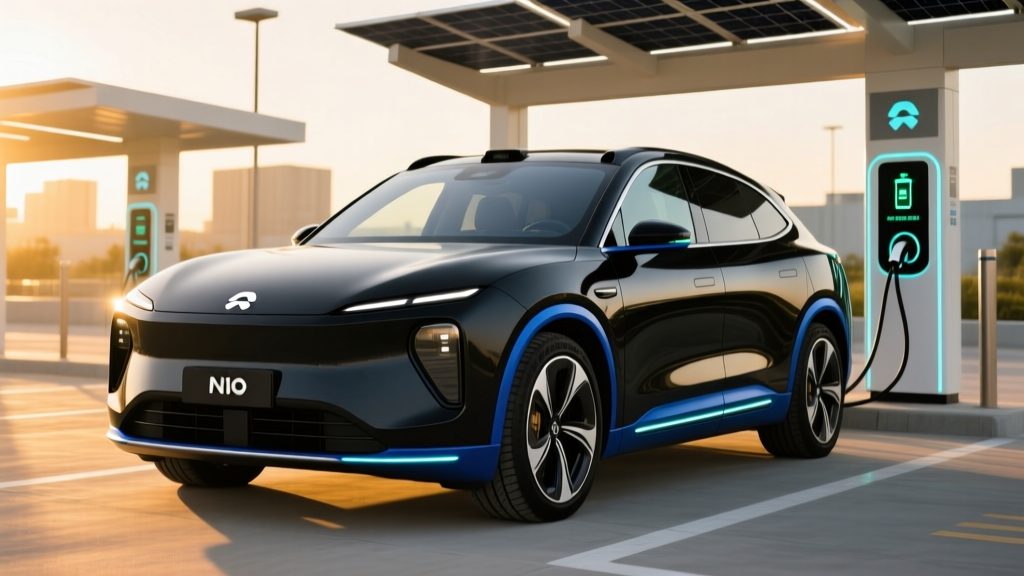
The differentiator for NIO remains its battery swap network. In China, NIO operates over 2,700 swap stations, and the company has begun expanding into Europe. A swap takes roughly 3–5 minutes and delivers a fully charged pack. However, swap station availability in the US remains extremely limited as of 2026, and regulatory and infrastructure hurdles mean widespread US deployment is unlikely in the near term. If you're buying an EL8 in a market without swap stations, plan your charging strategy around conventional DC fast charging and home Level 2.
For home charging, the EL8's 11 kW onboard AC charger is competitive. A full overnight charge on a 48-amp Level 2 wallbox (like a ChargePoint Home Flex or Tesla Universal Wall Connector) takes roughly 9–10 hours for the 100 kWh pack. Budget $800–$2,200 for professional Level 2 installation depending on your electrical panel capacity — a 200-amp panel upgrade can add $1,500–$3,000 if your home requires it.
Performance and Driving Dynamics
The dual-motor AWD powertrain produces 644 hp and launches the EL8 to 60 mph in 3.9 seconds — genuinely quick for a three-row SUV that weighs over 5,500 pounds. The instant torque delivery is characteristic of EVs, but the EL8's air suspension (standard on all trims) does a commendable job managing body roll and keeping the ride composed over rough pavement.
NIO offers several drive modes — Eco, Comfort, Sport, Sport+, and a customizable Individual mode. In Sport+, the throttle mapping sharpens and the air suspension drops the ride height, but this is ultimately a luxury cruiser, not a track car. Steering feel is light and somewhat detached, which suits the vehicle's grand-touring character but won't satisfy enthusiasts looking for feedback.
The EL8's standard NIO Aquila Super Sensing suite includes 33 sensors (LiDAR, cameras, millimeter-wave radar, and ultrasonic sensors) feeding into the NIO Adam Super Computing platform with four NVIDIA Orin-X chips delivering 1,016 TOPS of processing power. The driver-assistance system — branded NIO NOP+ (Navigate on Pilot Plus) — is an SAE Level 2 system. It handles highway lane-keeping, adaptive cruise, and on/off-ramp navigation, but the driver must remain fully attentive and keep hands on or near the wheel at all times. It is not a self-driving system. In practice, NOP+ performs comparably to Tesla Autopilot and Ford BlueCruise on divided highways, though its urban performance is less polished than Waymo's Level 4 robotaxi service (which operates in limited, geofenced areas only).
Interior, Technology, and Cargo Space
The EL8's interior is where NIO's premium aspirations are most visible. Nappa leather upholstery, open-pore wood trim, and a minimalist dashboard dominated by a 12.8-inch AMOLED center touchscreen create a cabin that rivals the Mercedes-Benz EQS SUV and BMW iX in perceived quality. The second row offers captain's chairs on upper trims, with decent 38.6 inches of legroom — adults can sit comfortably for long trips. The third row, however, is best reserved for children or short trips, with just 31.5 inches of legroom.
NIO's NOMI AI companion — a small animated sphere on the dashboard — handles voice commands, navigation, climate control, and even takes selfies when prompted. It's a distinctive brand touchpoint, though some buyers may find it gimmicky after the novelty wears off. The infotainment system runs on a Qualcomm Snapdragon 8295 chip and supports over-the-air (OTA) updates, wireless Apple CarPlay, and Android Auto.
Cargo capacity is practical if not class-leading: 17.7 cubic feet behind the third row expands to 65.4 cubic feet with the second and third rows folded. There is no front trunk (frunk) — the space is occupied by HVAC and power electronics. For comparison, the Kia EV9 offers slightly more cargo room, while the Rivian R1S (with its three-row configuration) provides competitive utility with the advantage of a frunk.
Pricing, Tax Credits, and Ownership Costs
| Trim | MSRP (100 kWh) | MSRP (150 kWh) | Est. Federal Credit (§30D) |
|---|---|---|---|
| Base EL8 | ~$68,000 | N/A | Check eligibility* |
| EL8 Premium | ~$74,500 | ~$81,000 | Check eligibility* |
| EL8 Signature | ~$78,000 | ~$82,500 | Check eligibility* |
*Federal EV tax credit eligibility under IRS §30D is subject to multiple requirements for 2026:
- MSRP caps: SUVs must not exceed $80,000 MSRP. The EL8 Signature with the 150 kWh pack at ~$82,500 would exceed the cap and be ineligible.
- Buyer income limits: Modified AGI must not exceed $300,000 (joint filers), $225,000 (head of household), or $150,000 (single).
- Battery sourcing requirements: A percentage of critical minerals and battery components must be sourced from the US or free-trade-agreement partners. NIO's Chinese battery supply chain (CATL, WeLion) may not meet 2026 thresholds, potentially reducing or eliminating the credit. Verify current-year sourcing compliance at IRS.gov's qualified vehicle list.
- Point-of-sale transfer: If eligible, the credit can be transferred to the dealer at purchase, reducing the upfront price rather than waiting for a tax refund.
The Battery-as-a-Service (BaaS) subscription model is NIO's pricing wildcard. Buyers can purchase the EL8 without the battery pack, reducing the upfront cost by roughly $15,000–$23,000 depending on pack size, and pay a monthly subscription fee (~$140–$230/month) for battery use and swap access. This lowers the purchase price significantly but adds a recurring cost. Whether BaaS saves money long-term depends on ownership duration, mileage, and local electricity vs. subscription costs. Note: a BaaS purchase where the battery is leased may affect §30D credit eligibility, as the IRS generally requires the buyer to own the battery. Consult a tax professional before structuring your purchase.
NIO's management has stated that the company aims to reach sustained profitability as it enters a "harvest period" — the phase where R&D spending stabilizes, vehicle volumes scale, and recurring BaaS revenue compounds. As of late 2025, NIO was narrowing its net losses but had not yet achieved consistent quarterly profitability. The EL8, as the highest-ASP (average selling price) model, is critical to margin improvement.
For buyers, this matters in two ways: (1) NIO's long-term viability affects parts availability, software support, and resale value; and (2) aggressive pricing and incentives may be available as NIO prioritizes volume to reach profitability targets. Monitor NIO's quarterly earnings for updates on gross margin trajectory and cash reserves.
Pros and Cons
- 150 kWh semi-solid-state pack offers class-leading 370 mi EPA range
- Battery swap capability (where infrastructure exists) eliminates charge wait times
- Premium interior materials rival German luxury competitors
- 644 hp dual-motor AWD delivers genuine performance (3.9s 0–60)
- Standard air suspension and comprehensive ADAS sensor suite
- BaaS option significantly reduces upfront purchase price
- 10-year / 125,000-mile battery warranty
- DC fast charging peaks at ~180 kW — slower than 800V competitors
- Battery swap stations extremely limited outside China
- Third-row legroom (31.5 in) is tight for adults
- Federal tax credit eligibility uncertain due to Chinese battery sourcing
- Company profitability not yet sustained — long-term support risk
- No frunk reduces total cargo utility
- NOP+ Level 2 system less refined in urban environments
EL8 vs. the Competition: Is It Worth Buying?
The EL8 competes in the premium three-row electric SUV segment against formidable rivals. Here's how it stacks up on the metrics that matter:
| Metric | NIO EL8 (100 kWh) | BMW iX xDrive50 | Kia EV9 GT-Line AWD | Rivian R1S Dual-Motor |
|---|---|---|---|---|
| EPA Range | 285 mi | 324 mi | 270 mi | 321 mi |
| Battery | 100 kWh NMC | 111.5 kWh NMC | 100 kWh NMC | 128.9 kWh NMC |
| 0–60 mph | 3.9s | 4.4s | 5.0s | 4.5s |
| Peak DC Charge | ~180 kW | ~200 kW | ~236 kW | ~200 kW |
| Base MSRP | ~$68,000 | ~$87,250 | ~$73,900 | ~$79,900 |
| Third Row | Yes (tight) | No (2-row) | Yes (adequate) | Yes (adequate) |
| §30D Credit | Uncertain | Likely ineligible (MSRP cap for SUVs) | Eligible (partial/full) | Eligible (full $7,500) |
The EL8's strongest case is value: it undercuts the BMW iX and Rivian R1S on price while offering comparable performance and more range than the Kia EV9. Its weakest case is charging speed and the uncertainty around US-based service infrastructure and tax credit eligibility. If you live in a market with NIO service centers and don't rely on the federal credit, the EL8 is a compelling luxury SUV. If tax credit eligibility and proven charging-network access are priorities, the Rivian R1S and Kia EV9 are safer bets.
Who Should Buy the 2026 NIO EL8?
- You want a premium three-row SUV at a lower price point than BMW or Mercedes
- You have reliable home Level 2 charging and don't depend on public DC fast charging
- You value distinctive design and tech (NOMI, battery swap option, semi-solid-state pack)
- You don't need the full $7,500 federal tax credit to make the numbers work
- You regularly take road trips exceeding 250 miles and need the fastest possible DC charging
- You need a usable third row for adults on a regular basis
- Long-term brand/service certainty is a top priority (NIO's US footprint is still growing)
- Tax credit eligibility is essential to your purchase decision
Frequently Asked Questions
What is the real-world range of the 2026 NIO EL8?
The EPA rates the EL8 with the 100 kWh pack at 285 miles. In real-world highway driving at 70–75 mph, expect 240–260 miles. With the 150 kWh semi-solid-state pack, EPA is 370 miles, with real-world highway range of approximately 310–335 miles. Cold weather (below freezing) reduces these figures by an additional 15–25%.
How fast does the EL8 charge at home and on the road?
On a Level 2 home charger (240V, 48A), the EL8 charges at up to 11 kW, adding roughly 30 miles of range per hour — a full charge takes about 9.5 hours for the 100 kWh pack. On DC fast chargers, the 100 kWh pack peaks at ~180 kW and reaches 10–80% in approximately 28 minutes. The 150 kWh pack charges more slowly, peaking at ~130 kW with a 10–80% time of roughly 42 minutes.
Does the NIO EL8 qualify for the federal EV tax credit?
Eligibility under IRS §30D for 2026 is uncertain. The EL8's base MSRP falls within the $80,000 SUV cap, but its Chinese-sourced battery (CATL/WeLion) may not meet the critical-minerals and battery-component sourcing thresholds that have tightened through 2026. Always check the current IRS qualified vehicle list before purchasing. Buyer income limits ($150K single / $300K joint) also apply.
Is the NIO EL8 worth buying vs. the Rivian R1S or Kia EV9?
The EL8 offers a lower entry price and more horsepower than both competitors, plus the unique option of battery swapping and the 150 kWh semi-solid-state pack. However, the Rivian R1S has a clearer tax credit path, a growing US service network, and a frunk. The Kia EV9 charges faster (~236 kW peak) and offers strong value with confirmed §30D eligibility. The EL8 is the more distinctive choice; the R1S and EV9 are the safer ones.
What is NIO's harvest period profitability target and why should buyers care?
NIO's "harvest period" refers to the phase where heavy upfront investments in R&D, battery swap infrastructure, and market expansion begin yielding returns through scaled vehicle sales and recurring BaaS revenue. As of late 2025, NIO was narrowing losses but had not achieved consistent net profitability. For buyers, the company's financial health affects long-term parts availability, software updates, resale values, and service-center expansion. Monitoring NIO's quarterly gross margin and cash position is advisable before committing to the brand.
How does the battery swap system work, and is it available in the US?
NIO's battery swap stations allow an EL8 owner to drive in and have the depleted battery pack robotically exchanged for a fully charged one in approximately 3–5 minutes. This eliminates charging wait times entirely. However, as of 2026, swap stations are predominantly located in China (2,700+) with limited European expansion. US availability remains extremely restricted. If you're buying in the US, plan for conventional charging as your primary method.
Sources: EPA Fuel Economy (fueleconomy.gov), IRS §30D Qualified Vehicles, NIO official specifications.