Quick Verdict: A Premium Coupe-SUV With a Twist
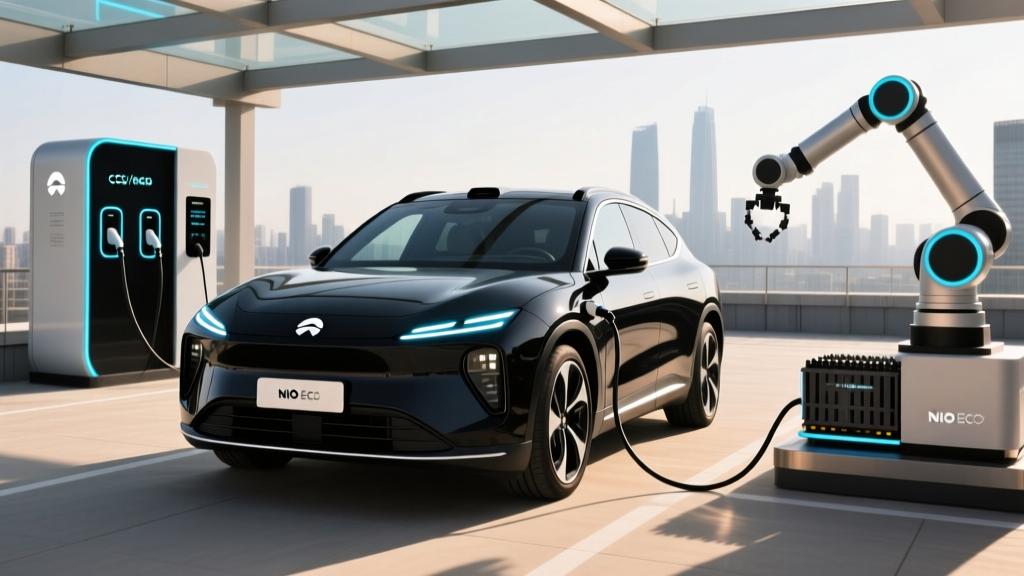
The NIO EC6 is a mid-size electric coupe-SUV that competes on paper with the Tesla Model Y, BMW iX, and Mercedes EQE SUV — but its defining feature isn't horsepower or screen size. It's battery swapping. In under five minutes at a NIO Power Swap Station, an EC6 owner can exchange a depleted pack for a fully charged one, bypassing the 20-30 minute DC fast-charge wait entirely. For the 2026 model year, the second-generation EC6 (built on NIO's NT2.0 platform) offers a 75 kWh standard battery, a 100 kWh long-range option, and access to NIO's expanding 150 kWh semi-solid-state pack for extended trips.
The catch for US readers: as of early 2026, NIO has not launched sales in the United States. The EC6 is available in China and select European markets (Norway, Germany, Netherlands, Sweden, Denmark). This review covers the global-spec 2026 EC6 with a clear-eyed assessment of what US buyers should know — and whether NIO's swap ecosystem could ever cross the Atlantic.
Range, Battery, and Efficiency
The EC6 uses NIO's latest NT2.0 architecture with a skateboard chassis and swappable battery packs mounted low in the floor. Two primary chemistries are offered depending on pack size:
- 75 kWh pack: LFP (lithium iron phosphate) chemistry — heavier but more durable, with a longer cycle life and no cobalt. Suited for daily commuting and frequent 100% charging.
- 100 kWh pack: NMC (nickel manganese cobalt) chemistry — higher energy density for longer range, but best kept between 20-80% for daily use to minimize degradation.
- 150 kWh semi-solid-state pack: Available on a rental/swap basis in China for extended road trips. Uses a semi-solid electrolyte for dramatically higher energy density.
NIO publishes CLTC range figures for the Chinese market, which run 15-20% higher than EPA estimates. Based on comparable NIO models tested under EPA and WLTP protocols, here's what to expect from the EC6:
75 kWh (LFP): CLTC ~308 mi → Estimated EPA-equivalent ~245-255 mi. Real-world highway at 70 mph: ~200-215 mi. Cold weather (below 32°F): expect a further 20-30% reduction, dropping to ~155-175 mi.
100 kWh (NMC): CLTC ~385 mi → Estimated EPA-equivalent ~305-320 mi. Real-world highway: ~250-270 mi. Cold weather: ~195-220 mi.
150 kWh (semi-solid): CLTC ~575 mi → Estimated EPA-equivalent ~455-475 mi. Real-world highway: ~370-400 mi.
Note: These are analyst estimates based on comparable NIO ET5/ES6 testing. Official EPA figures will only be published if the EC6 enters the US market.
| Spec | 75 kWh (Standard) | 100 kWh (Long Range) | 150 kWh (Ultra Long Range) |
|---|---|---|---|
| Usable Capacity | ~72 kWh | ~96 kWh | ~145 kWh |
| Chemistry | LFP | NMC | Semi-solid-state |
| CLTC Range | 308 mi | 385 mi | 575 mi |
| Est. EPA-Equivalent | ~245-255 mi | ~305-320 mi | ~455-475 mi |
| Efficiency (est.) | ~34 kWh/100mi | ~32 kWh/100mi | ~31 kWh/100mi |
| Heat Pump | Standard | Standard | Standard |
Charging Speed and Battery Swap
The EC6's charging profile is a tale of two systems: conventional plug-in charging and NIO's proprietary battery swap network.
Plug-In Charging
On a DC fast charger, the EC6's 800V-capable architecture (on 100 kWh and 150 kWh packs) enables competitive charge speeds, though NIO's 75 kWh LFP pack uses a 400V architecture:
| Level | Power | Speed / Time |
|---|---|---|
| Level 1 (120V) | ~1.4 kW | ~3-4 mi/hr |
| Level 2 (240V, home) | 7-11 kW | ~20-30 mi/hr; full charge in 8-12 hrs |
| DC Fast (75 kWh, 400V) | Peak ~120 kW | 10-80% in ~30 min |
| DC Fast (100 kWh, 800V) | Peak ~180 kW | 10-80% in ~22 min |
| Battery Swap | N/A | Full pack exchange in ~3-5 min |
Charging-curve reality: As with all EVs, the EC6's peak DC charge rate is sustained only in the 10-50% state-of-charge window. Above 80%, charge speed tapers sharply to protect the battery — expect the 80-100% top-off to take nearly as long as the 10-80% sprint. NIO's battery swap eliminates this problem entirely: you drive onto the platform, the car is lifted, robots unscrew and remove the depleted pack, a fresh one is installed, and you drive off. The entire process takes under five minutes at a third-generation Power Swap Station.
Battery Swap Ecosystem
As of early 2026, NIO operates over 2,700 Power Swap Stations globally, with the vast majority in China. European deployment is underway but still limited to major corridors in Norway, Germany, and the Netherlands. In China, swap stations are spaced roughly every 100-150 km along highways, making road trips virtually wait-free for NIO owners.
The swap model also enables NIO's Battery-as-a-Service (BaaS) program: buyers can purchase the EC6 without the battery (reducing the upfront price by roughly $10,000-$14,000 USD equivalent) and subscribe to a battery plan monthly. This also means your battery never "ages out" — you're always swapping into the pool of maintained packs.
Performance and Drivetrain
The 2026 EC6 is offered exclusively with dual-motor all-wheel drive across all trims, consistent with NIO's positioning of the EC6 as a sporty, performance-oriented coupe-SUV.
| Metric | Dual-Motor AWD |
|---|---|
| Drivetrain | Dual-motor AWD |
| Front Motor | 150 kW induction |
| Rear Motor | 210 kW permanent magnet |
| Total Output | ~490 hp (360 kW) |
| Torque | ~516 lb-ft |
| 0-60 mph | ~4.2 seconds |
| Top Speed | 124 mph (electronically limited) |
| Drive Modes | Eco, Comfort, Sport, Sport+, Custom |
The dual-motor setup uses an induction front motor (which can freewheel with zero drag when not needed, improving efficiency) paired with a permanent-magnet rear motor for responsiveness. The result is a 0-60 time competitive with the Tesla Model Y Performance and BMW iX xDrive50, with smooth, linear power delivery. The EC6 also features NIO's CDC (Continuous Damping Control) adaptive suspension and a low center of gravity thanks to the floor-mounted battery.
Interior, Cargo, and Technology
The EC6's cabin reflects NIO's "second living room" design philosophy. The coupe-SUV roofline sacrifices a small amount of rear headroom compared to the boxier ES6, but passenger space remains generous for the segment.
Dimensions and Space
- Length: 190.6 in (4,849 mm)
- Wheelbase: 115.0 in (2,915 mm)
- Front headroom: ~39.4 in
- Rear headroom: ~37.2 in (coupe roofline impact)
- Rear legroom: ~37.8 in
- Cargo volume (rear seats up): ~18.3 cu ft (518 L)
- Cargo volume (rear seats folded): ~50.4 cu ft (1,430 L)
- Frunk: None (space used for swap mechanism and electronics)
Tech and Infotainment
The EC6's NT2.0 platform is packed with technology:
- 12.8-inch AMOLED center display (vertical orientation, running NIO's Banyan OS)
- 10.2-inch digital instrument cluster behind the steering wheel
- NOMI: NIO's AI assistant — a physical robotic "head" on the dashboard that turns to face occupants, recognizes voices, and controls vehicle functions via natural language
- 7.1.4 Dolby Atmos surround sound with 23 speakers
- Augmented-reality HUD (AR-HUD) projecting navigation and speed onto the windshield
- Over-the-air (OTA) updates covering powertrain, ADAS, and infotainment
- Wireless Apple CarPlay and Android Auto (added in late-2025 Banyan 3.0 update)
Driver Assistance (ADAS)
The EC6 comes equipped with NIO's Aquila Super Sensing suite: 33 sensors including a roof-mounted LiDAR unit, 7 × 8MP cameras, 4 × surround cameras, 5 mmWave radars, and 12 ultrasonic sensors. This feeds NIO's NOP+ (Navigate on Pilot Plus) system.
NOP+ is a Level 2 driver-assistance system under SAE classification. It handles steering, acceleration, and braking on highways and can execute lane changes and on/off-ramp navigation — but the driver must remain fully engaged, hands on or near the wheel, and eyes on the road at all times. This is not self-driving. NIO is developing higher-level autonomy, but no consumer vehicle sold today operates at Level 3 or above without regulatory restriction.
Pricing, Trims, and Tax Credits
Pricing varies significantly by market. Below are approximate figures converted to USD for the Chinese domestic market as of early 2026:
| Configuration | With Battery | BaaS (Battery Subscription) |
|---|---|---|
| 75 kWh Standard | ~$50,500 | ~$39,500 + ~$140/mo battery |
| 100 kWh Long Range | ~$57,000 | ~$39,500 + ~$210/mo battery |
| Signature Edition | ~$62,500 | ~$44,500 + ~$210/mo battery |
US availability and tax credits: The NIO EC6 is not currently sold in the United States, and NIO has not announced a firm US launch date. Should the EC6 eventually reach the US market, federal §30D tax credit eligibility would depend on several factors per IRS rules:
- MSRP cap: SUVs must be priced at or below $80,000. The EC6 would likely qualify on price.
- Buyer income cap: AGI must not exceed $150,000 (single) / $300,000 (joint).
- Battery sourcing: Critical minerals and battery components must meet escalating domestic-content thresholds. As a Chinese-manufactured vehicle with CATL/BYD battery cells, the EC6 would face significant sourcing hurdles under current rules.
- FEOC restriction: Vehicles with battery components from a "foreign entity of concern" (which includes many Chinese battery manufacturers) are disqualified from the credit entirely as of 2024-2025 phase-in rules.
Bottom line: even if the EC6 launches in the US, it is unlikely to qualify for the $7,500 federal tax credit under current §30D rules due to battery sourcing and FEOC restrictions. Always consult a tax professional and check the latest IRS guidance before making purchase decisions based on credits.
Warranty and Ownership
| Coverage | Term |
|---|---|
| Vehicle (bumper-to-bumper) | 6 years / 93,000 mi (150,000 km) |
| Battery Pack | 8 years / 124,000 mi (200,000 km), ≥70% capacity retention |
| Drive Unit / Powertrain | 8 years / 124,000 mi (200,000 km) |
| Roadside Assistance | 6 years (China); varies by market |
One unique ownership advantage: BaaS subscribers never face battery degradation anxiety. Since you're swapping packs regularly, your "battery" is effectively the entire NIO swap fleet. NIO maintains and retires degraded packs from the pool, meaning your effective battery health stays high over the vehicle's lifetime. If you purchase the battery outright, the 8-year/124,000-mile warranty with a 70% capacity retention floor is competitive with industry norms (Tesla offers 8 yr / 120,000 mi at 70%).
Pros, Cons, and Competition
- Battery swap eliminates charging wait and degradation anxiety
- BaaS lowers upfront cost by $10K-$14K
- Premium interior with NOMI AI, AR-HUD, Dolby Atmos
- Strong dual-motor performance (~4.2s 0-60)
- LiDAR-equipped NOP+ driver assist
- Heat pump standard on all trims
- 150 kWh semi-solid pack available for road trips
- Not available in the United States
- Unlikely to qualify for US §30D tax credit if launched
- Swap station network sparse outside China
- No frunk (swap mechanism occupies front underhood space)
- Coupe roofline reduces rear headroom and cargo vs. ES6
- LFP 75 kWh pack limited to ~120 kW DC fast charge
- Brand recognition and service network thin in Europe
Key Competitors (Where Available)
In markets where both are sold, the EC6 competes with:
- Tesla Model Y: Better Supercharger network, lower price, but no battery swap and a sparser interior.
- BMW iX: More luxurious, stronger European service network, but significantly more expensive and no swap option.
- Mercedes EQE SUV: Premium ride quality, but slower charging and higher price.
- NIO ES6: The EC6's boxier sibling — same platform, more cargo room, less style.
Who Is the NIO EC6 For?
- You live in China or a European market where NIO operates and swap stations are accessible
- You want the flexibility to upgrade or swap batteries without buying a new car
- You value premium tech (NOMI, LiDAR, AR-HUD) and distinctive design
- You commute daily and want BaaS to lower your purchase price
- You're a US-based buyer (the EC6 is simply not available)
- You need a proven, dense fast-charging network (Tesla Supercharger, Electrify America)
- You prioritize maximum cargo space (the ES6 or Model Y offer more)
- You want federal tax credit eligibility in the US
Frequently Asked Questions
What is the real-world range of the NIO EC6?
With the 100 kWh NMC battery, expect roughly 250-270 miles of real-world highway driving in moderate temperatures. The 75 kWh LFP pack delivers approximately 200-215 highway miles. In cold weather (below 32°F), reduce these figures by 20-30%. The optional 150 kWh semi-solid-state pack pushes real-world range to an estimated 370-400 miles on the highway.
How fast does the NIO EC6 charge at home and on DC fast chargers?
At home on a Level 2 (240V) charger, the EC6 adds roughly 20-30 miles of range per hour, with a full charge taking 8-12 hours depending on pack size. On DC fast chargers, the 100 kWh (800V) pack peaks at ~180 kW and charges from 10-80% in about 22 minutes. The 75 kWh (400V) pack peaks at ~120 kW, taking roughly 30 minutes for the same 10-80% session. Battery swap completes a full "charge" in 3-5 minutes.
How much does the NIO EC6 cost?
In China, the EC6 starts at approximately ¥358,000 (~$50,500 USD) with the 75 kWh battery included, or ~¥288,000 (~$39,500) with the BaaS battery subscription model (plus ~$140/month for the battery). The 100 kWh Long Range version starts at ~$57,000 with battery. European pricing is higher due to VAT, shipping, and import duties.
Does the NIO EC6 qualify for the US federal EV tax credit?
The EC6 is not currently sold in the US. If it were, it would almost certainly fail the §30D battery sourcing and FEOC (Foreign Entity of Concern) requirements, since its battery cells are manufactured by Chinese suppliers. The MSRP and income caps would likely be met, but the sourcing rules would disqualify it. Always check the latest IRS §30D guidance.
Is the NIO EC6 worth buying vs. a Tesla Model Y or BMW iX?
In China and parts of Europe, the EC6 is a compelling alternative if you have access to swap stations — the combination of BaaS pricing, battery-swap convenience, and premium tech is unmatched. Against the Model Y, it trades Tesla's Supercharger network and software ecosystem for a more luxurious interior and swap flexibility. Against the BMW iX, it's less expensive but has a thinner service network outside China.
What are the biggest pros and cons of the NIO EC6?
Top pros: battery swap, BaaS pricing flexibility, premium tech suite, strong dual-motor performance, and access to the 150 kWh semi-solid pack. Top cons: US unavailability, limited swap stations outside China, no frunk, coupe roofline cargo trade-off, and unlikely US tax credit eligibility.
Can I buy a NIO EC6 in the United States?
No. As of early 2026, NIO has not launched in the US market and has not announced a specific timeline for doing so. Geopolitical tensions, tariff structures, and the FEOC battery-sourcing rules make a near-term US launch challenging. NIO's current international expansion focuses on Europe.