Quick Verdict: NIO's Global Push and the U.S. Delivery Reality
NIO deliveries have surged past 200,000 units annually as the Chinese automaker expands into Europe, Southeast Asia, and the Middle East. But for U.S.-based EV shoppers tracking NIO deliveries from afar, the picture remains complicated: NIO has not launched retail sales in the United States as of early 2026. That means no EPA certification, no U.S. dealer network, no federal §30D tax credit eligibility, and no domestic service infrastructure — yet.
This profile breaks down what NIO's flagship models offer on paper, what real-world owners in NIO's active markets report, and what U.S. buyers should understand about range, charging, battery-swap technology, pricing, and the competitive landscape before NIO deliveries potentially reach American shores.
NIO Lineup Snapshot: ET7, EL7, and ET5 Specs
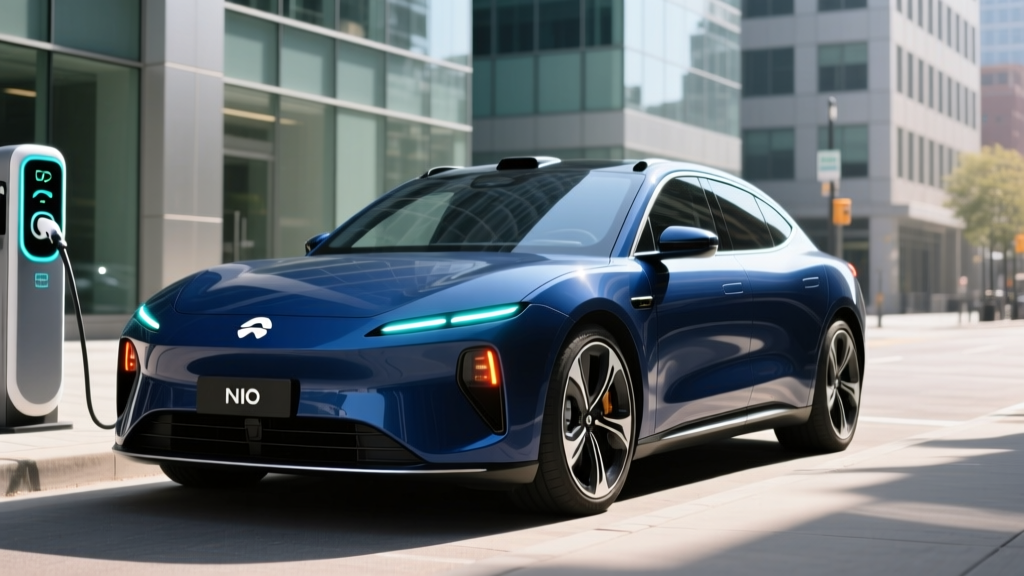
NIO's current global lineup centers on three sedans and SUVs built on its NT2.0 platform. Below are the key specifications drawn from NIO's official European and Chinese market data. Because NIO does not sell in the U.S., these figures have not been validated by the EPA or NHTSA.
| Spec | NIO ET7 (100 kWh) | NIO ET7 (150 kWh) | NIO EL7 (100 kWh) | NIO ET5 (75 kWh) |
|---|---|---|---|---|
| Battery Capacity | 100 kWh (NMC) | 150 kWh (semi-solid-state) | 100 kWh (NMC) | 75 kWh (NMC/LFP hybrid) |
| WLTP Range | 367 mi | 577 mi | 323 mi | 273 mi |
| Est. EPA Range | ~310–325 mi | ~480–500 mi | ~275–290 mi | ~230–245 mi |
| Drivetrain | Dual-motor AWD | Dual-motor AWD | Dual-motor AWD | Dual-motor AWD |
| Horsepower | 644 hp | 644 hp | 644 hp | 483 hp |
| 0–60 mph | 3.8 sec | 3.8 sec | 3.9 sec | 4.3 sec |
| Max DC Fast Charge | ~180 kW | ~180 kW | ~180 kW | ~180 kW |
| 10–80% DCFC Time | ~30 min (100 kWh) | ~50 min (150 kWh) | ~30 min (100 kWh) | ~25 min (75 kWh) |
| Level 2 Home Charge | 11 kW (~32 mi/hr) | 11 kW (~32 mi/hr) | 11 kW (~32 mi/hr) | 11 kW (~32 mi/hr) |
| Length / Wheelbase | 199.6" / 118.5" | 199.6" / 118.5" | 193.7" / 114.2" | 185.6" / 110.6" |
| Cargo Volume | ~18.4 cu ft (trunk) | ~18.4 cu ft (trunk) | ~22.5 cu ft (rear) | ~14.5 cu ft (trunk) |
| Base Price (Europe) | ~€69,900 | ~€82,000 | ~€72,900 | ~€47,900 |
| Est. U.S. MSRP (if launched) | $72,000–$78,000 | $85,000–$92,000 | $75,000–$82,000 | $48,000–$55,000 |
What Is the Real-World Range of a NIO EV?
NIO's WLTP-certified range figures are among the highest in the industry, particularly with the 150 kWh semi-solid-state battery introduced in late 2023 and ramping through 2024–2025. However, WLTP testing is conducted under more favorable conditions than the U.S. EPA cycle — lower average speeds, milder climate-control assumptions, and shorter test durations.
Independent testing by European outlets such as ABRi and Norwegian EV association winter tests have shown NIO's real-world highway range at roughly 75–85% of WLTP in mild weather and 60–70% in sub-freezing conditions. For the ET7 100 kWh, that translates to approximately 250–275 miles on a highway road trip in summer and 200–230 miles in winter — broadly comparable to a Tesla Model S Long Range or Mercedes EQS 450+.
The 150 kWh semi-solid-state pack from supplier WeLion is the headline act. Its ultra-high energy density (~360 Wh/kg at the cell level) enables the 577-mile WLTP figure. Real-world highway range is estimated at 400–450 miles in mild weather — genuinely class-leading if it materializes in a U.S. EPA test.
Charging Speed, Battery Swap, and the NIO Power Network
NIO's charging strategy is two-pronged: conventional DC fast charging and proprietary battery swap stations. Understanding both is critical for evaluating NIO deliveries as a global phenomenon.
DC Fast Charging
NIO's NT2.0 platform uses a 400V architecture (not 800V like the Hyundai Ioniq 5 or Porsche Taycan), which caps peak DC charge rates around 180 kW. On a 100 kWh pack, a 10–80% session takes roughly 30 minutes. The charge curve holds near peak through ~40% SoC before tapering — typical for NMC chemistry at this voltage.
| Charging Level | Power | Approx. Miles Added per Hour | Notes |
|---|---|---|---|
| Level 1 (120V) | ~1.4 kW | ~4–5 mi/hr | Emergency/trickle only |
| Level 2 (240V, 48A) | 11 kW | ~32 mi/hr | Full charge overnight (~9–10 hrs for 100 kWh) |
| DC Fast Charge | Up to 180 kW | ~400–500 mi/hr (peak) | 10–80% in ~30 min (100 kWh); tapers above 80% |
| Battery Swap | N/A | Full pack in ~5 min | Requires NIO Power Swap station; available in China and select European cities |
Battery Swap: NIO's Differentiator
NIO operates over 2,700 battery swap stations globally (as of late 2025), primarily in China with a growing European footprint. A swap takes approximately 5 minutes — drive in, the car is lifted, the depleted pack is removed, a fresh one is installed, and you drive away. This eliminates charging wait times entirely and allows NIO to offer a Battery-as-a-Service (BaaS) model that reduces the vehicle purchase price by roughly $14,000–$16,000 in exchange for a monthly battery subscription fee (~$140–$170/month depending on pack size).
For U.S. buyers, battery swap infrastructure is nonexistent. NIO has not announced U.S. swap station plans. If NIO deliveries begin in the U.S., buyers would likely rely on conventional plug-in charging and third-party networks (Tesla Supercharger via adapter, Electrify America, EVgo) until NIO builds its own footprint.
Pricing, Trims, and Federal Tax Credit Eligibility
Because NIO does not currently sell vehicles in the United States, there is no U.S. MSRP, no EPA certification, and no eligibility for the IRS §30D federal EV tax credit. Should NIO launch stateside, here is what the pricing and credit landscape would likely look like based on current European pricing and §30D rules:
| Factor | NIO ET7 (100 kWh) | NIO ET5 (75 kWh) | §30D Rule |
|---|---|---|---|
| Estimated U.S. MSRP | $72,000–$78,000 | $48,000–$55,000 | Sedan cap: $55,000; SUV/van cap: $80,000 |
| MSRP Cap Compliant? | Unlikely (sedan over $55K) | Possible (if under $55K) | Per IRS §30D |
| Buyer Income Cap | $150K single / $300K joint | $150K single / $300K joint | MAGI limits apply |
| Battery Sourcing | Unknown — likely non-compliant | Unknown — likely non-compliant | Critical minerals + battery components must meet FEOC thresholds |
| Estimated Credit | $0 (MSRP + sourcing) | $0–$3,750 (sourcing unlikely) | Up to $7,500 max |
The critical issue for NIO deliveries in a U.S. context is battery sourcing. NIO's battery packs use cells from CATL and WeLion (Chinese suppliers), and the critical-minerals and battery-component requirements under §30D increasingly exclude vehicles with Chinese-sourced materials. Even if NIO prices the ET5 under $55,000, the FEOC (Foreign Entity of Concern) restrictions make full credit eligibility highly unlikely.
Interior, Tech, and Driver Assistance
NIO's NT2.0 platform packs technology that competes directly with Tesla, Mercedes, and BMW:
- NOMI AI Assistant: A dashboard-mounted robotic "head" with facial expressions that responds to voice commands, controls climate/navigation, and learns driver preferences. Gimmicky to some, genuinely useful to others.
- 12.8" AMOLED Center Display + 10.2" Digital Cluster: High-resolution screens with NIO's Banyan OS, over-the-air updates, and integrated NIO House/NIO Life services.
- Aquila Super Sensing System: 33 sensors including a roof-mounted LiDAR unit (Innovusion Falcon), 7 8MP cameras, 5 mmWave radars, and 12 ultrasonic sensors. This feeds NIO's NOP+ (Navigate on Pilot) driver-assist system.
- NOP+ (Navigate on Pilot): An SAE Level 2 system that handles highway lane-keeping, adaptive cruise, on-ramp/off-ramp navigation, and lane changes with driver supervision. It is not autonomous driving — the driver must remain engaged at all times, similar to Tesla Autopilot or GM Super Cruise.
- 7.1.4 Dolby Atmos Audio: 23-speaker system with spatial audio.
- Air Suspension (ET7/EL7): Adaptive damping with ride-height adjustment.
Warranty, Ownership, and Service Considerations
In markets where NIO operates, the standard warranty package includes:
- Vehicle limited warranty: 6 years / 93,000 miles (150,000 km)
- Battery warranty: 10 years / 124,000 miles (200,000 km) with a capacity retention threshold of 70% State of Health (SoH)
- BaaS subscribers: Battery is covered for the duration of the subscription regardless of mileage, since NIO retains ownership of the pack
For U.S. buyers, the service question is the elephant in the room. NIO has no U.S. service centers, no mobile service fleet, and no parts distribution network. Even if NIO deliveries begin in limited U.S. markets, early adopters should expect significant service-infrastructure growing pains — similar to what Rivian and Lucid experienced in their first years.
NIO vs. the Competition: Is It Worth Waiting For?
| Attribute | NIO ET7 (100 kWh) | Tesla Model S LR | BMW i5 eDrive40 | Mercedes EQS 450+ |
|---|---|---|---|---|
| Est. EPA Range | ~310–325 mi | 402 mi | 295 mi | 352 mi |
| Battery | 100 kWh NMC | ~100 kWh | 81.2 kWh NMC | 108.4 kWh NMC |
| 0–60 mph | 3.8 sec | 3.1 sec | 5.7 sec | 5.9 sec |
| Max DCFC | ~180 kW | 250 kW | 205 kW | 200 kW |
| U.S. MSRP | N/A (est. $72K–$78K) | $74,990 | $66,800 | $104,400 |
| U.S. Service Network | None | Nationwide | Nationwide | Nationwide |
| Federal Tax Credit | $0 (not available) | $0 (over MSRP cap) | $0 (over MSRP cap) | $0 (over MSRP cap) |
Choose the Tesla Model S if you need proven U.S. Supercharger access, the longest EPA-verified range, and an established service network.
Choose the BMW i5 if you want a traditional luxury sedan experience with U.S. dealer support and competitive range at a lower price point.
Wait for NIO if you are intrigued by battery-swap flexibility, the 150 kWh semi-solid-state pack's potential 480+ mile range, and NIO's premium tech — and you are willing to accept first-mover risk on U.S. infrastructure.
Biggest Pros and Cons
Pros
- 150 kWh semi-solid-state battery offers potential class-leading range (~480–500 mi EPA est.)
- Battery swap eliminates charging wait times (where infrastructure exists)
- BaaS model lowers upfront purchase price by $14K–$16K
- LiDAR-equipped NOP+ is among the most sensor-rich L2 systems
- Premium interior materials and NOMI AI assistant
- Strong 10-year/124,000-mi battery warranty
Cons
- Not available for U.S. purchase — no confirmed launch timeline
- No U.S. service centers, parts network, or Supercharger-equivalent
- 400V architecture limits DCFC to ~180 kW (slower than 800V competitors)
- Chinese battery sourcing makes §30D tax credit eligibility virtually impossible
- WLTP range figures overstate likely EPA results by 10–15%
- Brand recognition and resale value in U.S. are untested
Frequently Asked Questions
When will NIO deliveries start in the United States?
NIO has not announced an official U.S. launch date. The company has prioritized China, Europe (Norway, Germany, Netherlands, Sweden, Denmark), and expansion into Southeast Asia and the Middle East. Industry analysts have speculated a U.S. entry could come in 2027–2028, but this remains unconfirmed. Geopolitical factors — including U.S. tariffs on Chinese-manufactured vehicles (currently 100% under 2024 tariff increases) — present a significant barrier.
Does NIO qualify for the $7,500 federal EV tax credit?
No. NIO vehicles are not currently sold in the U.S. and therefore cannot qualify for the IRS §30D clean vehicle credit. Even if NIO launches in the U.S., the sedan MSRP cap ($55,000), battery-sourcing requirements (FEOC restrictions on Chinese-sourced critical minerals and components), and the 100% tariff on Chinese-built EVs make credit eligibility and competitive pricing extremely challenging.
How fast does a NIO EV charge at home?
NIO vehicles support up to 11 kW on Level 2 (240V), adding approximately 32 miles of range per hour. A full charge from empty on the 100 kWh pack takes roughly 9–10 hours on a home Level 2 charger. This is competitive with most luxury EVs but slower than vehicles with larger onboard chargers (e.g., the Ford F-150 Lightning's available 19.2 kW charger).
What is NIO's battery swap technology, and does it work outside China?
NIO's Power Swap stations robotically exchange a depleted battery pack for a fully charged one in about 5 minutes. As of 2025, NIO operates 2,700+ stations — predominantly in China, with roughly 30–40 in Europe (Norway, Germany, Netherlands, Denmark, Sweden). Battery swap is not available in the United States, and no U.S. expansion has been announced.
Is NIO's NOP+ driver assist safe?
NIO's NOP+ (Navigate on Pilot) is an SAE Level 2 system requiring continuous driver supervision. It has not been evaluated by NHTSA or IIHS since NIO does not sell in the U.S. In China, NIO has reported NOP+ usage across billions of kilometers, but independent U.S. safety validation does not yet exist. Treat it like any L2 system: useful on highways, but you are the driver.
What are the biggest risks of buying a NIO if it launches in the U.S.?
The primary risks are (1) limited or nonexistent service infrastructure in early years, (2) uncertain resale value for an unproven brand, (3) no federal tax credit eligibility due to Chinese battery sourcing, (4) potential 100% import tariffs making pricing uncompetitive, and (5) reliance on third-party charging networks without a proprietary fast-charging equivalent to Tesla's Supercharger network.