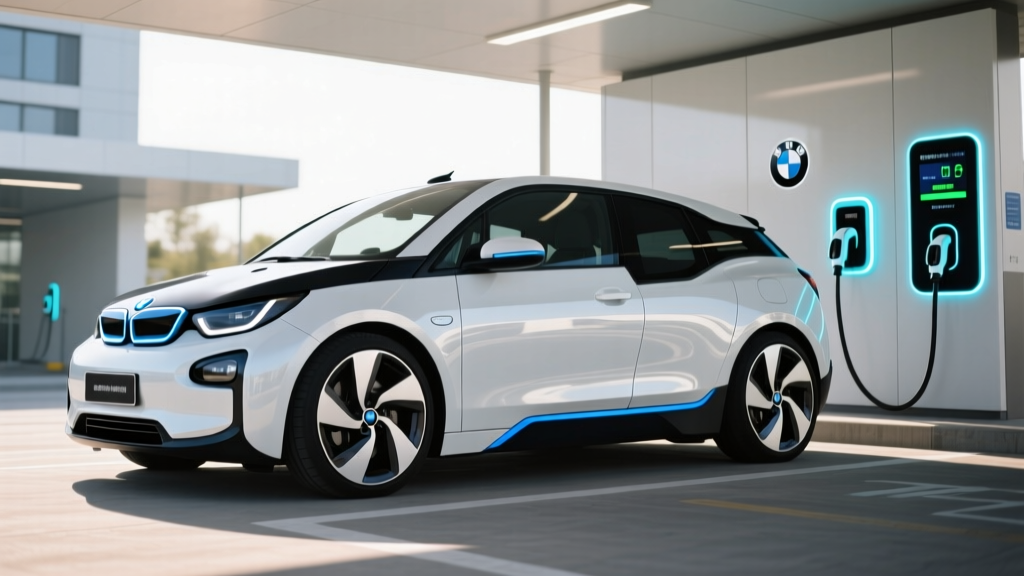
The phrase nieuwe BMW i3 has been circulating through EV forums and European auto press for months, and for good reason. BMW's Neue Klasse platform — the automaker's ground-up electric architecture — is finally materializing in production form. The first sedan to wear the badge, internally designated the NA0 and marketed as the new i3, represents a clean-sheet rethink of BMW's compact electric executive car. This is not the quirky carbon-fiber hatchback that ended production in 2022. This is a mainstream luxury EV sedan aimed squarely at the Tesla Model 3 and Mercedes-Benz CLA EV.
Below, we break down everything confirmed and estimated about the 2026 nieuwe BMW i3: battery chemistry, real-world range expectations, 800-volt charging performance, pricing, and whether it qualifies for the U.S. federal EV tax credit under current IRS §30D rules.
Platform and Powertrain Overview
The nieuwe BMW i3 rides on the Neue Klasse (NK) architecture, which debuts BMW's sixth-generation eDrive technology. Key powertrain details confirmed by BMW include:
- Architecture: 800-volt electrical system (enabling faster DC charging and lighter wiring harnesses)
- Battery chemistry: Prismatic lithium-ion cells with a high-nickel NMC (nickel-manganese-cobalt) cathode — BMW has confirmed a shift to round and prismatic cells supplied by CATL and EVE Energy, with energy density roughly 20% higher than the outgoing Gen5 pack
- Drivetrain: Rear-wheel-drive single motor (base); dual-motor xDrive AWD available on higher trims
- Motor type: Externally excited synchronous motor (no rare-earth permanent magnets), consistent with BMW's Gen6 eDrive strategy
| Specification | i3 Base (RWD) | i3 xDrive (AWD) |
|---|---|---|
| Battery (usable, est.) | ~75 kWh | ~75 kWh |
| Chemistry | NMC (prismatic) | NMC (prismatic) |
| EPA Range (est.) | ~300 mi | ~280 mi |
| Horsepower | ~268 hp | ~402 hp |
| 0–60 mph (est.) | ~6.2 sec | ~4.5 sec |
| Drivetrain | RWD | AWD (dual-motor) |
| DC Fast Charge (peak) | ~210 kW | ~210 kW |
| 10–80% DC Time (est.) | ~22 min | ~22 min |
| Level 2 AC Charge | 11 kW (~37 mi/hr) | 11 kW (~37 mi/hr) |
| MPGe (est. combined) | ~130 MPGe | ~118 MPGe |
| Base MSRP (est.) | ~$52,000 | ~$58,000 |
Note: These figures are based on BMW's published Neue Klasse technical data, European WLTP disclosures, and industry analysis. Final U.S. EPA certification numbers may differ. BMW has not released a formal U.S. spec sheet as of this writing.
Range: EPA Estimates vs. Real-World Driving
Real-World Expectation: 260–280 miles in mixed driving; 230–250 miles at sustained 75+ mph highway speeds; ~200–220 miles in sub-30°F winter conditions without preconditioning.
BMW has targeted a WLTP range exceeding 600 km (~373 miles) for the base RWD i3 on the Neue Klasse platform. However, WLTP figures historically overstate range by 15–25% compared to the U.S. EPA test cycle. Applying that correction yields an estimated EPA range of roughly 300 miles.
What does that mean in practice? On a 70°F day with mixed city/highway driving at moderate speeds, expect to see 270–280 miles from a full charge. Sustained highway travel above 75 mph — the kind of driving that dominates American road trips — will pull that down to around 240 miles. Cold weather is the bigger variable: lithium-ion cells lose efficiency below freezing, and cabin heating draws significant energy. Without using the heat pump (standard on Neue Klasse, per BMW), winter range could dip to 200 miles or less on short trips where the cabin cycles cold-to-warm repeatedly.
The 800V system helps here indirectly: it enables more efficient power delivery and better thermal management of the pack during high-load driving, which preserves range under hard acceleration or sustained high-speed cruising.
Charging: 800-Volt Architecture in Practice
The 800-volt platform is the nieuwe BMW i3's most consequential charging upgrade. Here's what the numbers look like across charging levels:
| Charging Level | Power | Speed (approx.) | Use Case |
|---|---|---|---|
| Level 1 (120V household) | ~1.4 kW | ~5 mi/hr | Emergency / overnight trickle |
| Level 2 (240V, 48A) | 11 kW | ~37 mi/hr | Home daily charging |
| DC Fast Charge (peak) | ~210 kW | ~180 mi in 10 min (at peak) | Road trips |
| DC Fast Charge (10–80%) | Avg ~155 kW sustained | ~22 minutes | Typical fast-charge stop |
A few things to understand about this charge curve:
- Peak kW is not sustained kW. The i3 will hit approximately 210 kW only at a low state of charge (roughly 10–25% SoC) on a capable 350 kW charger. As the battery fills, the charge rate tapers — by 60% SoC you may see 120–140 kW, and above 80% it drops sharply to protect cell longevity.
- Preconditioning matters. BMW's navigation system will precondition the battery when a DC fast charger is set as your destination. Arriving with a warm pack is the difference between hitting 210 kW peak and being stuck at 80–100 kW on a cold day.
- Connector: The U.S.-spec i3 is expected to ship with the NACS (Tesla-style) charge port, consistent with BMW's commitment to the North American Charging Standard. This grants native access to Tesla Superchargers without an adapter — a significant practical advantage over CCS-equipped competitors still relying on adapters.
For home charging, an 11 kW onboard charger means a full 0–100% charge takes roughly 7.5 hours on a hardwired 48-amp Level 2 station. That's adequate for overnight replenishment but slower than the 19.2 kW capability found in some competitors (e.g., the Ford F-150 Lightning's optional onboard charger). Most EV owners charge between 20% and 80% at home, which takes approximately 4.5 hours at 11 kW.
Performance and Driving Dynamics
The base RWD i3 is expected to produce around 268 horsepower from its single rear motor — adequate for daily driving and highway merging but not thrilling by 2026 EV standards. The 0–60 mph time of approximately 6.2 seconds places it in the same territory as a well-equipped BMW 330i from the combustion era.
The dual-motor xDrive variant is the performance play: roughly 402 horsepower and a 0–60 time near 4.5 seconds. BMW's Neue Klasse platform uses a low center of gravity (battery pack mounted under the floor) and a near-50/50 weight distribution philosophy that the brand has championed for decades. Expect composed handling, though the i3 will be tuned more for comfort and efficiency than track performance — that role belongs to the forthcoming i3 M variant.
Regenerative braking on the Neue Klasse platform includes an adaptive mode that uses navigation and sensor data to modulate regen intensity based on traffic, upcoming intersections, and speed limits. BMW also offers a one-pedal driving mode with maximum regen for city driving.
Interior, Cargo, and Technology
The Neue Klasse interior represents BMW's biggest design departure in a decade. The traditional instrument cluster is gone, replaced by a full-width head-up display strip BMW calls the "Panoramic Vision" — projecting speed, navigation, and driver-assist information across the entire lower windshield. A central 15.6-inch touchscreen running BMW iDrive X handles infotainment, climate, and vehicle settings.
Key interior dimensions (estimated based on BMW disclosures and segment benchmarks):
- Rear legroom: ~35.5 inches (competitive with the Tesla Model 3's ~35.2 in)
- Cargo volume (trunk): ~15.5 cu ft
- Frunk (front trunk): Not confirmed — Neue Klasse packaging may limit front storage to a small compartment for charging cables
- Seating: 5-passenger capacity; vegan leather standard, Merino leather optional
Driver assistance: The i3 will ship with BMW's latest Driving Assistant Professional, a Level 2 (SAE) system offering adaptive cruise, lane-centering, and automated lane changes on highways. BMW has also demonstrated a "highway assistant" capable of hands-free driving at speeds up to 80 mph under specific conditions (eyes-on, monitored by cabin camera). This remains a Level 2 system — the driver must remain attentive and is legally responsible for vehicle operation at all times. See NHTSA's guidance on automated vehicle safety for context on SAE automation levels.
Pricing, Trims, and Federal Tax Credit
BMW has not published final U.S. pricing, but based on European positioning and competitive analysis against the Tesla Model 3 Long Range ($47,740 in 2025) and the Mercedes CLA EV, estimated U.S. MSRP looks like this:
| Trim | Est. Base MSRP | Est. As-Tested (w/ options) | Federal Tax Credit (§30D) |
|---|---|---|---|
| i3 Base (RWD) | $52,000 | $55,000–$58,000 | See eligibility below |
| i3 xDrive (AWD) | $58,000 | $62,000–$68,000 | See eligibility below |
| i3 M Sport (est.) | $62,000 | $66,000–$72,000 | See eligibility below |
Federal EV tax credit eligibility (§30D) is uncertain for the nieuwe BMW i3 at launch. Here's what determines qualification, per current IRS rules:
- MSRP cap: Sedans must have an MSRP at or below $55,000. The base RWD i3 at ~$52,000 could clear this threshold; the xDrive and M Sport trims likely exceed it.
- Buyer income cap: Modified adjusted gross income must not exceed $150,000 (single), $225,000 (head of household), or $300,000 (joint).
- Battery sourcing: Critical minerals and battery components must meet escalating domestic-content and FEOC (Foreign Entity of Concern) thresholds. BMW sources cells from CATL (China) and EVE Energy (China), which creates significant risk of failing the FEOC battery-component restrictions that tightened in 2024–2025. This is the biggest question mark for §30D eligibility.
- Point-of-sale transfer: If eligible, the credit can be applied at the dealership as an instant price reduction rather than a tax-year refund.
Given BMW's Chinese cell suppliers, buyers should not count on the full $7,500 credit at launch. BMW may shift sourcing over time to qualify. Always verify current eligibility on the IRS clean vehicle credit page before purchasing.
Efficiency and Ownership Costs
BMW's Gen6 eDrive system targets approximately 25% better energy efficiency than the outgoing Gen5 hardware. Based on WLTP consumption figures and the typical EPA correction factor, expect the RWD i3 to achieve roughly 130 MPGe combined (approximately 26 kWh/100 miles). That's competitive with the Tesla Model 3 Long Range (132 MPGe) and meaningfully better than heavier luxury EVs.
At the U.S. average electricity rate of $0.17/kWh, charging the i3 costs roughly $4.42 per 100 miles of driving — compared to about $12–$14 per 100 miles in a gasoline BMW 330i getting 30 MPG at $3.70/gallon. Over 15,000 annual miles, that's approximately $1,100–$1,400 in annual fuel savings.
Battery and powertrain warranty: BMW is expected to carry over its current EV warranty structure: 8 years / 100,000 miles for the high-voltage battery (covering capacity loss below 70% of original), and 4 years / 50,000 miles for the basic vehicle warranty. BMW has historically been conservative with battery degradation, and the NMC prismatic cells in the Neue Klasse pack are designed for a 200,000+ mile service life under normal use.
How the Nieuwe BMW i3 Compares
The compact luxury EV sedan segment in 2026 is competitive. Here's how the i3 stacks up against key rivals:
| Spec | BMW i3 (NK) | Tesla Model 3 LR | Mercedes CLA EV | Polestar 4 |
|---|---|---|---|---|
| EPA Range (est.) | ~300 mi | 363 mi | ~340 mi | ~300 mi |
| Battery | ~75 kWh NMC | 75 kWh NMC | ~85 kWh NMC | 100 kWh NMC |
| DC Peak Charge | ~210 kW | 250 kW | ~250 kW | 200 kW |
| 10–80% Time | ~22 min | ~20 min | ~20 min | ~25 min |
| 0–60 mph | ~6.2 sec | 4.2 sec | ~5.5 sec | ~5.0 sec |
| Base MSRP (est.) | ~$52,000 | $47,740 | ~$50,000 | $55,000 |
| NACS Native | Yes (expected) | Yes | Adapter req. | Adapter req. |
The Tesla Model 3 Long Range remains the efficiency and range benchmark, and it undercuts the i3 on price. The Mercedes CLA EV offers slightly more range on a larger battery. The BMW i3's advantages lie in build quality, ride refinement, the Panoramic Vision display, and — if BMW achieves NACS native compatibility — seamless Supercharger access.
Pros
- 800V architecture enables competitive DC fast-charging speeds
- Neue Klasse design and Panoramic Vision HUD are segment-leading tech
- NACS charge port (expected) grants native Tesla Supercharger access
- BMW ride quality and cabin refinement traditionally exceed Tesla
- Heat pump standard for cold-weather efficiency
- 8-year/100,000-mile battery warranty
Cons
- Estimated range (~300 mi) trails Model 3 LR and possibly CLA EV
- Base MSRP likely near $52K — above Tesla and possibly above §30D MSRP cap
- Federal tax credit uncertain due to Chinese battery cell sourcing (CATL/EVE)
- 11 kW AC onboard charger is slower than some competitors
- Frunk space unconfirmed and likely minimal
- Final U.S. specs not yet EPA-certified at time of writing
Who Should Buy the Nieuwe BMW i3?
- You value cabin quality, ride comfort, and brand prestige over maximum range-per-dollar
- You want native NACS/Supercharger access without carrying an adapter
- You're upgrading from a BMW 3 Series or similar compact luxury sedan and want to go electric
- You prioritize driver-assist sophistication and next-gen HUD technology
- Maximum range is your top priority (Tesla Model 3 LR at 363 mi EPA)
- You need the $7,500 federal tax credit and can't risk a sourcing disqualification
- You want a sub-$48,000 entry price
- You need a confirmed frunk for charging cable storage
Frequently Asked Questions
What is the real-world range of the nieuwe BMW i3?
The estimated EPA range is approximately 300 miles for the RWD base model. In real-world mixed driving, expect 260–280 miles. Sustained highway driving at 75+ mph drops that to roughly 240 miles, and cold weather (below 30°F) can reduce range to 200–220 miles without battery preconditioning.
How fast does the nieuwe BMW i3 charge?
On a DC fast charger, the i3 peaks at approximately 210 kW and charges from 10–80% in about 22 minutes under optimal conditions (warm battery, capable 350 kW station). At home on a Level 2 (240V, 48A) charger, the 11 kW onboard charger adds about 37 miles of range per hour, filling the ~75 kWh battery in roughly 7.5 hours from empty.
How much does the nieuwe BMW i3 cost after tax credits?
The estimated base MSRP is approximately $52,000. If the i3 qualifies for the full $7,500 federal tax credit under IRS §30D (which is uncertain due to battery sourcing rules), the effective price would be around $44,500. However, buyers should not assume credit eligibility — verify on IRS.gov before purchasing. State and local incentives may also apply.
Does the nieuwe BMW i3 qualify for the federal EV tax credit?
Possibly, but it's not guaranteed. The base RWD model at ~$52,000 clears the $55,000 MSRP cap for sedans. However, BMW's use of battery cells from CATL and EVE Energy (both Chinese companies) creates a significant risk of failing the FEOC battery-component restrictions under §30D. BMW may restructure its supply chain to qualify over time. Always check the current IRS eligible vehicle list before committing to a purchase.
Is the nieuwe BMW i3 worth buying vs. the Tesla Model 3?
It depends on priorities. The Model 3 Long Range offers more EPA range (363 mi vs. ~300 mi), faster DC charging (250 kW vs. ~210 kW), and a lower price ($47,740 vs. ~$52,000). The i3 counters with superior cabin materials, a more refined ride, the Panoramic Vision HUD, and BMW brand cachet. If range-per-dollar and tax credit certainty matter most, the Model 3 wins. If luxury refinement and next-generation interior tech matter more, the i3 makes a compelling case.
When will the nieuwe BMW i3 be available in the U.S.?
BMW has indicated that the Neue Klasse sedan will begin European production in late 2025, with U.S. deliveries expected in the first half of 2026. Exact timing depends on EPA certification and port logistics. U.S. pricing and final specifications should be confirmed closer to the on-sale date.