The Gen 3 Platform: What Changed and Why It Matters
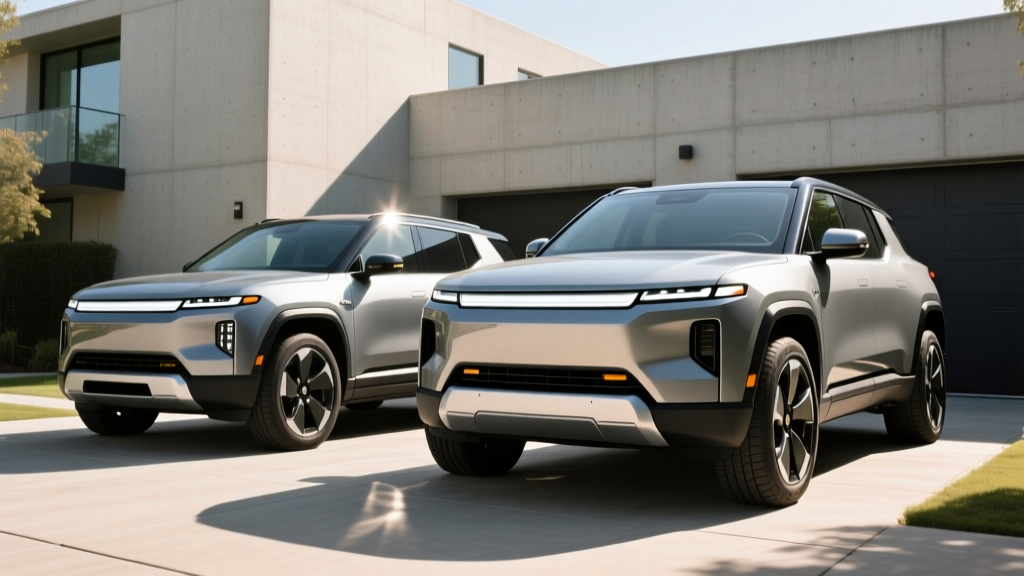
Rivian's transition to its third-generation vehicle architecture — rolling out across the R1S SUV and R1T truck for the 2026 model year — represents the most significant mechanical and electrical overhaul since the company launched. The next Rivian update isn't a facelift; it's a ground-up redesign of the battery pack, drive units, thermal management system, and electrical architecture that affects everything from range to charging speed to serviceability.
For buyers shopping in 2026, understanding what's actually new versus what's marketing language is essential. The Gen 3 platform reduces part count in the drive units, shifts to a zonal electrical architecture (fewer wiring harnesses, lighter weight, easier diagnostics), and introduces a standard NACS charge port — eliminating the need for a CCS-to-NACS adapter at Tesla Superchargers. Rivian has also restructured its battery pack options, moving to a simplified lineup that affects both pricing and capability.
Range, Battery Chemistry, and Real-World Expectations
The 2026 R1 Dual-Motor and Tri-Motor configurations use updated nickel-manganese-cobalt (NMC) lithium-ion packs manufactured in partnership with Samsung SDI at Rivian's Normal, Illinois facility. The Standard battery pack provides approximately 95 kWh of usable capacity, while the larger Max pack pushes to roughly 128 kWh usable. Rivian has moved away from the "Large" and "Max" naming convention toward Standard and Max to reduce buyer confusion.
| Specification | R1 Dual-Motor Standard | R1 Dual-Motor Max | R1 Tri-Motor Max |
|---|---|---|---|
| Battery Chemistry | NMC (Samsung SDI) | NMC (Samsung SDI) | NMC (Samsung SDI) |
| Usable Capacity (kWh) | ~95 kWh | ~128 kWh | ~128 kWh |
| EPA Est. Range (mi) | 270 mi (R1S) / 280 mi (R1T) | 380 mi (R1S) / 390 mi (R1T) | 350 mi (R1S) / 355 mi (R1T) |
| Efficiency (MPGe) | 73 MPGe combined | 70 MPGe combined | 65 MPGe combined |
| kWh/100 mi | ~46 kWh/100 mi | ~48 kWh/100 mi | ~52 kWh/100 mi |
Rivian does not currently offer an LFP (lithium iron phosphate) battery option in the R1 lineup. LFP chemistry, used by Tesla in Standard Range Model 3/Y vehicles, offers longer cycle life and lower cost but sacrifices energy density — a tradeoff that doesn't suit a full-size SUV or truck platform where range per kilogram matters more. If Rivian introduces an LFP pack in a future model (likely the R2 platform expected in 2027), it would target the entry-level trim to reduce MSRP.
Charging Speed: DC Fast Charge and Home Level 2
One of the headline improvements in the Gen 3 architecture is the charging system. Rivian has upgraded the onboard charger and thermal preconditioning logic to support faster DC fast charging and more efficient Level 2 home charging.
| Charging Level | Specification | Details |
|---|---|---|
| DC Fast Charge (Peak) | ~225 kW (Standard) / ~250 kW (Max) | NACS port standard; CCS via adapter |
| 10–80% DC Fast Charge | ~24 minutes (Max pack) | Peak rate sustained to ~55% SoC, then tapered |
| DC Charge Curve Note | Tapers significantly above 80% | 80–100% adds ~20 additional minutes |
| Level 2 Home Charging | 11.5 kW onboard charger | ~25 miles of range per hour at 48A |
| Level 1 (120V) | ~1.4 kW | ~3 miles of range per hour — emergency/trickle only |
The move to a native NACS port means Rivian owners can access Tesla's Supercharger network — now the largest and most reliable DC fast-charging network in North America — without an adapter. This is a meaningful ownership-experience improvement over the Gen 2 platform, which required Rivian's CCS-to-NACS adapter for Supercharger access. The adapter still ships with the vehicle for use at Electrify America, EVgo, and other CCS-equipped stations.
At home, the 11.5 kW onboard charger (up from 11.5 kW on Gen 2 but with improved thermal management) means a full charge from 10% to 100% on a 48-amp Level 2 circuit takes roughly 10–12 hours for the Max pack. Most owners charging overnight will wake up to a full battery every morning. Rivian recommends a 60-amp dedicated circuit with a hardwired Wall Connector or equivalent Level 2 EVSE.
Performance: Acceleration, Drivetrain, and Towing
The Gen 3 drive units are lighter and more compact than their predecessors, but power output has increased across the board. Rivian continues to offer Dual-Motor (all-wheel drive with one motor per axle) and Tri-Motor (one front, two rear) configurations. A Quad-Motor variant, previously available on the R1T, has been consolidated into the Tri-Motor lineup for 2026, with the Tri-Motor now producing enough rear-axle torque to match or exceed the old Quad-Motor's performance while reducing weight and complexity.
| Metric | Dual-Motor | Tri-Motor |
|---|---|---|
| Horsepower | 533 hp | 850 hp |
| Torque (lb-ft) | 610 lb-ft | 1,100 lb-ft |
| 0–60 mph | 4.5 seconds | 2.9 seconds |
| Drivetrain | AWD (dual-motor) | AWD (tri-motor) |
| Max Towing Capacity | 7,700 lbs (R1T) / 7,700 lbs (R1S) | 11,000 lbs (R1T) / 9,000 lbs (R1S) |
The Tri-Motor's 2.9-second 0–60 time places it in supercar territory — a remarkable figure for a vehicle with a truck bed or three rows of seats. But the more practical performance story is the Dual-Motor's 4.5-second sprint, which is quicker than nearly every gas-powered SUV in its class and more than adequate for highway merging, passing, and daily driving.
Towing is where the R1T particularly shines. The Tri-Motor R1T's 11,000-pound rating is competitive with full-size gas trucks, though real-world towing range drops significantly — expect 150–180 miles per charge when towing a 7,000-pound trailer at highway speeds. Rivian's integrated trailer brake controller and tow-assist camera system remain among the best in the EV truck segment.
Pricing, Trims, and Federal Tax Credit Eligibility
Rivian has simplified its trim structure for 2026. The R1S and R1T are offered in Adventure (base), Ascend (mid-level, replacing the previous "Adventure" with upgraded interior), and Ascend Tri-Motor (top performance) configurations.
| Trim / Config | Base MSRP | As-Tested (Typical) | §30D Credit Eligible? |
|---|---|---|---|
| R1S Dual-Motor Standard (Adventure) | $71,700 | $74,000–$78,000 | Yes — if income/MSRP caps met |
| R1S Dual-Motor Max (Ascend) | $83,200 | $87,000–$93,000 | Yes — SUV MSRP cap is $80,000* |
| R1T Dual-Motor Standard (Adventure) | $69,700 | $72,000–$76,000 | Yes — if income/MSRP caps met |
| R1T Tri-Motor Max (Ascend) | $94,500 | $98,000–$105,000 | Exceeds $80,000 truck MSRP cap |
*The IRS §30D clean vehicle credit has an MSRP cap of $80,000 for SUVs and vans, and $55,000 for sedans. Pickup trucks also fall under the $80,000 cap. The R1S Ascend with the Max pack exceeds this cap, making it ineligible for the federal credit. The base R1S Adventure and most R1T configurations fall under the cap. Always verify current eligibility on IRS.gov before purchasing, as battery-sourcing and critical-mineral requirements also apply.
- Income caps: AGI ≤ $150,000 (single), $225,000 (head of household), $300,000 (married filing jointly)
- MSRP caps: ≤ $80,000 for SUVs, vans, and trucks; ≤ $55,000 for sedans
- Battery sourcing: Minimum percentages of critical minerals and battery components must be sourced from the U.S. or free-trade-agreement partners (percentages increase annually)
- Point-of-sale transfer: Eligible buyers can transfer the credit to the dealer at purchase, reducing the purchase price upfront rather than waiting for tax filing
- Final assembly: Must occur in North America (Rivian qualifies — assembled in Normal, Illinois)
Consult a tax professional for your specific situation. Rules are subject to change.
Interior Space, Cargo, and Daily Practicality
The R1S remains one of the few three-row electric SUVs on the market, and the Gen 3 update has slightly improved third-row legroom through seat-track revisions. The R1T's gear tunnel — a lockable, pass-through storage compartment between the cab and bed — remains one of the most clever utility features in any pickup.
| Dimension | R1S (SUV) | R1T (Truck) |
|---|---|---|
| Front Headroom | 41.1 in | 41.1 in |
| Front Legroom | 41.4 in | 41.4 in |
| Second-Row Legroom | 38.5 in | 38.5 in |
| Third-Row Legroom (R1S) | 32.5 in | N/A |
| Cargo Behind 3rd Row | 10.5 cu ft | N/A |
| Cargo Behind 2nd Row | 46.7 cu ft | N/A |
| Cargo (All Seats Folded) | 88.2 cu ft | N/A |
| Bed Length (R1T) | N/A | 54.0 in (4.5 ft) |
| Gear Tunnel (R1T) | N/A | 11.0 cu ft |
| Front Trunk (Frunk) | 11.0 cu ft | 11.0 cu ft |
The R1S third row is best suited for children or occasional adult use on short trips — 32.5 inches of legroom is tight compared to a minivan or full-size SUV like the Chevy Tahoe. But for families who need a third row a few times a month rather than daily, it's a viable option that doesn't sacrifice the driving dynamics of a midsize SUV.
The R1T's 4.5-foot bed is shorter than a traditional full-size truck bed (typically 5.5–6.5 feet), which limits its appeal for contractors or anyone regularly hauling plywood sheets or long materials. The gear tunnel partially compensates with secure, weatherproof storage for items like skis, fishing rods, or camping gear.
Technology, Driver Assistance, and Software
Rivian's Gen 3 electrical architecture enables a faster, more responsive infotainment system built on a custom Linux-based OS. The 15.6-inch center touchscreen and 12.3-inch driver display have been updated with higher-resolution panels and improved anti-glare coatings. Wireless Apple CarPlay and Android Auto remain absent — Rivian continues to integrate phone-mirroring functionality natively rather than ceding the interface to Apple or Google, a decision that frustrates some buyers but allows deeper vehicle-integration features like trip planning with battery preconditioning.
The driver-assistance suite, branded Rivian Driver+, includes adaptive cruise control, lane-centering assist, automatic emergency braking, blind-spot monitoring, and highway assist (hands-on-wheel lane centering on divided highways). This is an SAE Level 2 system — the driver must remain attentive and keep hands on the steering wheel at all times.
One area where Rivian has drawn criticism is the pace of over-the-air (OTA) software updates compared to Tesla. The Gen 3 architecture, with its zonal computing design, is intended to enable faster and more frequent OTA updates, but as of early 2026, Rivian's update cadence still trails Tesla's. Features like hands-free highway driving (similar to GM's Super Cruise) have been announced but are not yet available on production vehicles.
Warranty Coverage and Long-Term Ownership
Rivian's warranty structure is competitive with the broader EV market, though it doesn't match Hyundai/Kia's industry-leading terms.
| Coverage Area | Term |
|---|---|
| Basic Vehicle (Bumper-to-Bumper) | 5 years / 60,000 miles |
| Battery Pack | 8 years / 175,000 miles (70% capacity retention) |
| Drive Units (Powertrain) | 8 years / 175,000 miles |
| Corrosion Perforation | 12 years / unlimited miles |
| Roadside Assistance | 5 years / 60,000 miles |
The 8-year/175,000-mile battery warranty with a 70% capacity-retention threshold is strong and aligns with the federal minimum for emissions-related components, which several manufacturers use as a benchmark for battery coverage. NMC chemistry in the Gen 3 packs has shown improved degradation curves in Rivian's internal testing compared to Gen 2, with projected 10-year capacity retention above 85% under normal use patterns (daily charging to 80%, occasional DC fast charging, avoiding prolonged storage at 100% SoC).
Service remains a consideration. Rivian operates a growing network of service centers and mobile service vans, but coverage in rural areas and smaller metro markets is still limited compared to legacy automakers. Buyers outside major metro areas should verify service availability at rivian.com/service before committing to a purchase.
How It Compares: R1S vs. the Competition
The R1S competes most directly with the Tesla Model X, BMW iX, Cadillac Escalade IQ, and the upcoming Volvo EX90. The R1T occupies a smaller competitive set: the Ford F-150 Lightning, Chevrolet Silverado EV, and GMC Sierra EV.
Against the Tesla Model X, the R1S offers a more conventional SUV interior layout, superior off-road capability, and a more robust build-quality reputation, but sacrifices the Supercharger network advantage (now partially closed with native NACS), Tesla's faster OTA cadence, and slightly better efficiency (the Model X Long Range achieves ~79 MPGe combined vs. the R1S's ~73 MPGe).
Against the Ford F-150 Lightning, the R1T is more expensive but offers better acceleration, more sophisticated air suspension, and a more premium interior. The F-150 Lightning wins on price (starting around $55,000) and bed size (5.5 feet), making it the more practical work truck. The R1T is the better adventure and lifestyle vehicle.
Pros, Cons, and Who Should Buy
Pros
- Class-leading acceleration (Tri-Motor: 2.9s 0–60)
- Native NACS port — direct Supercharger access
- Excellent off-road capability with air suspension
- Unique gear tunnel (R1T) and frunk storage
- Strong battery warranty (8yr/175,000mi)
- Assembled in USA — qualifies for §30D (eligible trims)
Cons
- High starting price — most trims exceed $70,000
- R1S third row is cramped for adults
- R1T bed is only 4.5 feet — short for a truck
- No Apple CarPlay / Android Auto
- OTA update pace still trails Tesla
- Service-center coverage limited in rural areas
- Top trims exceed §30D MSRP cap
Best for: Active-lifestyle families and outdoor enthusiasts who want a capable, premium electric SUV or truck with genuine off-road ability and don't need a full-size truck bed or a usable daily third row. The R1T is ideal for buyers who want truck utility for weekend projects and towing but prioritize on-road performance and technology. The R1S suits families of four (or five) who occasionally need a third row and value ride quality, ground clearance, and cargo versatility.
Look elsewhere if: You need a daily-driver third row for adults (consider the Kia EV9 or Volvo EX90), you need a full-size truck bed for work (Ford F-150 Lightning or Chevy Silverado EV), or your budget tops out below $65,000 (the used EV market or the upcoming Rivian R2 may be better fits).
Frequently Asked Questions
What is the real-world range of the 2026 Rivian R1S and R1T?
The EPA estimates 270–390 miles depending on configuration. Real-world highway driving at 70–75 mph typically yields 310–330 miles for the Max pack and 220–240 miles for the Standard pack. Cold weather (below 32°F) can reduce range by 20–30%, bringing the Max pack down to roughly 250–270 miles in winter highway conditions.
How fast does the 2026 Rivian charge at home and on the road?
On a DC fast charger, the Max pack peaks at approximately 250 kW and charges from 10–80% in about 24 minutes. At home on a 48-amp Level 2 charger (11.5 kW), you'll add roughly 25 miles of range per hour, meaning a full overnight charge is easily achievable. The native NACS port gives direct access to Tesla Superchargers without an adapter.
Does the 2026 Rivian R1 qualify for the $7,500 federal EV tax credit?
Eligibility depends on the specific trim, your income, and battery-sourcing requirements. The base R1S Adventure ($71,700) and most R1T configurations fall under the $80,000 MSRP cap for SUVs and trucks. However, the R1S Ascend with Max pack ($83,200+) and the Tri-Motor R1T ($94,500+) exceed the cap and are ineligible. Income caps are $150,000 (single), $225,000 (head of household), and $300,000 (married filing jointly). Verify current rules at IRS.gov and consult a tax professional.
Is the Rivian R1 worth buying over a Tesla Model X or Ford F-150 Lightning?
The R1S is worth considering over the Model X if you prioritize build quality, off-road capability, and a more traditional SUV layout. It's worth considering over the F-150 Lightning if you want a more premium interior and faster acceleration, and don't need a larger bed. The R1T is the better choice for lifestyle-oriented truck buyers; the F-150 Lightning is the better work truck at a lower price.
What's the biggest change in the next Rivian update for 2026?
The Gen 3 platform brings a native NACS charge port (no adapter needed at Superchargers), a zonal electrical architecture for faster software updates, lighter and more powerful drive units, improved thermal management for faster DC charging, and a simplified battery pack lineup. It's the most significant mechanical revision since the R1's launch.
How long will the Rivian R1 battery last?
Rivian warranties the battery for 8 years or 175,000 miles against degradation below 70% capacity. Based on NMC chemistry improvements in Gen 3 and typical owner charging habits (daily charging to 80%, avoiding frequent 100% charges), projected 10-year capacity retention is approximately 85%. Full battery replacement, if ever needed outside warranty, is estimated at $15,000–$22,000 depending on pack size — though most owners will never need this.