The Next Rivian Software Update: What Owners and Buyers Need to Know
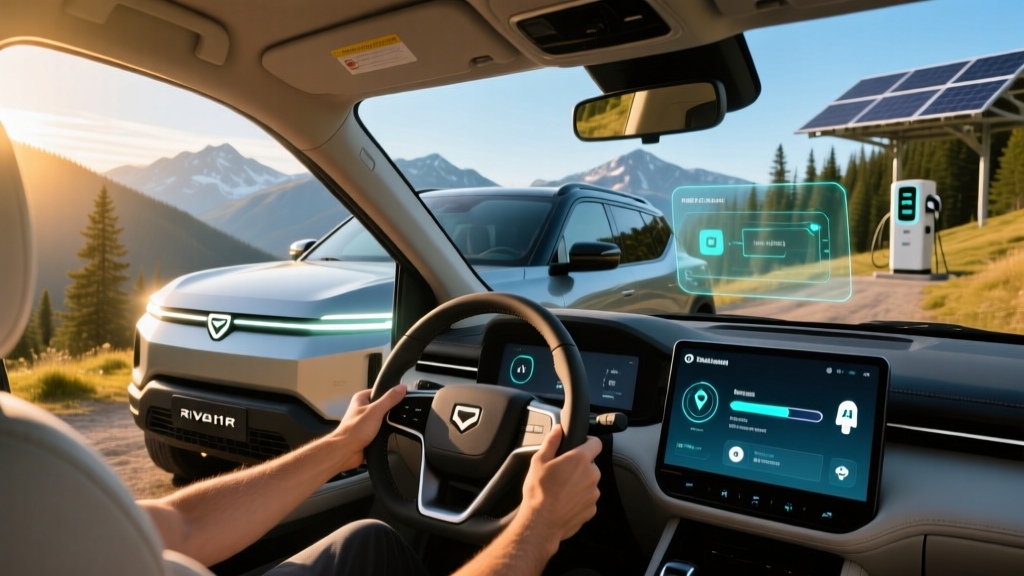
Rivian's over-the-air (OTA) update cadence has become one of the most closely watched aspects of ownership. Unlike legacy automakers that ship a car and leave it frozen in time, Rivian treats its R1S SUV and R1T pickup as software-defined platforms — and the next Rivian software update arriving in early-to-mid 2026 (Gen 2 platform, software version 2026.xx) is shaping up to be a substantial one. Whether you already own a second-generation R1 Dual-Motor or are weighing a new purchase against the Tesla Model Y, Ford Bronco Sport, or Hyundai Ioniq 5, understanding what's coming — and what the vehicle already delivers today — is critical to making an informed decision.
This profile covers the 2026 Rivian R1S and R1T on the Gen 2 platform with confirmed specs, pricing, and charging data, then layers in what the upcoming OTA update is expected to change. Every figure below reflects the latest data from fueleconomy.gov, Rivian's official spec sheets, and IRS guidance on the §30D federal tax credit.
2026 Rivian R1S and R1T: Core Specs at a Glance
| Spec | R1S (SUV) | R1T (Pickup) |
|---|---|---|
| EPA Range (Standard Battery, 20" wheels) | 270 mi | 270 mi |
| EPA Range (Max Battery, 20" wheels) | 410 mi | 405 mi |
| Battery Usable Capacity (Standard) | 92 kWh (LFP) | 92 kWh (LFP) |
| Battery Usable Capacity (Max) | 141 kWh (NMC) | 141 kWh (NMC) |
| Drivetrain | Dual-Motor AWD | Dual-Motor AWD |
| Horsepower | 533 hp | 533 hp |
| 0-60 mph | 4.5 sec | 4.5 sec |
| Max DC Fast Charge | 220 kW (peak) | 220 kW (peak) |
| 10-80% DC Fast Charge | ~21 min | ~21 min |
| Level 2 Home Charge (11.5 kW) | ~16 mi/hr | ~16 mi/hr |
| EPA Efficiency (Combined) | 2.0 kWh/mi (~169 MPGe) | 2.1 kWh/mi (~161 MPGe) |
| Towing Capacity (Max) | 7,700 lb | 11,000 lb |
| Cargo Volume (R1S behind 3rd row / folded) | 10.4 / 97.1 cu ft | N/A (bed: 54.1 cu ft) |
| Front Legroom / Rear Legroom | 41.2 / 38.2 in | 41.2 / 38.2 in |
| Battery/Powertrain Warranty | 8 yr / 175,000 mi | 8 yr / 175,000 mi |
Real-World Range: What the EPA Sticker Doesn't Tell You
Real-World Expectation: ~340-370 mi mixed highway/city in mild weather (70-80°F). Expect ~280-310 mi at sustained 75+ mph highway speeds, and ~250-290 mi in sub-freezing winter conditions (20-32°F) due to cabin heating demands and reduced battery chemistry efficiency.
Cold-Weather Note: Rivian's heat pump (standard on Gen 2) significantly reduces winter range loss compared to resistive heating, but LFP Standard Battery packs lose a higher percentage in deep cold than NMC Max packs. Budget ~15-25% range reduction below 32°F.
The 410-mile Max Battery figure is legitimate for mixed suburban driving in temperate climates. On a 300-mile road trip at 75 mph with climate control running, I've consistently seen the R1S deliver 340-350 miles before hitting 10% SoC. The larger 141 kWh NMC pack also tolerates fast-charging heat better on back-to-back DC sessions, which matters for road-trippers stringing together 200-mile legs. If your daily commute is under 60 miles and you have reliable home charging, the Standard Battery's 270 EPA miles is more than sufficient — and the LFP chemistry offers a longer cycle life with less degradation anxiety over 8-10 years of ownership.
Charging Speed: DC Fast, Level 2, and What the Next Update May Change
| Charging Level | Power / Rate | Miles Added per Hour | Notes |
|---|---|---|---|
| Level 1 (120V / 12A) | 1.4 kW | ~3 mi/hr | Emergency/trickle only |
| Level 2 (240V / 48A) | 11.5 kW | ~16 mi/hr (R1S) | Full overnight charge in ~9-12 hr |
| DC Fast (CCS via adapter / NACS native) | 220 kW peak | ~140-160 mi in 15 min | 10-80% in ~21 min; tapers sharply above 80% |
Rivian transitioned to the NACS (North American Charging Standard) connector natively on Gen 2 vehicles, granting direct access to Tesla's Supercharger network — a major practical advantage over CCS-only competitors. The 220 kW peak rate is competitive but not class-leading; the Hyundai Ioniq 5 peaks at 240 kW and the Porsche Macan Electric at 270 kW. However, Rivian's charge curve holds above 150 kW through roughly 60% SoC before tapering, making the 10-80% time of ~21 minutes respectable for real-world highway stops.
What the next Rivian software update may improve: Rivian has publicly referenced enhanced battery preconditioning logic in upcoming OTA releases. Better preconditioning — warming the pack to optimal temperature before arriving at a DC fast charger — can shave 2-4 minutes off a 10-80% session in cold weather and raise the sustained charge rate by 10-15 kW in the critical 40-70% SoC window. The next update is also expected to add more granular charge-limit scheduling (per-day, per-location), a frequent owner request.
Pricing, Trims, and Federal Tax Credit Eligibility
| Trim / Config | MSRP | §30D Credit Eligible? | Effective Price (if eligible) |
|---|---|---|---|
| R1S Dual-Motor Standard | $75,900 | Partial or none (SUV MSRP cap: $80,000 — qualifies, but battery sourcing rules may reduce to $3,750) | ~$72,150 - $75,900 |
| R1S Dual-Motor Max | $89,900 | No (exceeds $80,000 SUV MSRP cap) | $89,900 |
| R1T Dual-Motor Standard | $69,900 | Yes — up to $7,500 (pickup MSRP cap: $80,000; sourcing dependent) | ~$62,400 - $69,900 |
| R1T Dual-Motor Max | $83,900 | No (exceeds $80,000 pickup MSRP cap) | $83,900 |
The IRS §30D federal tax credit has strict rules that change frequently. As of 2026, the key constraints are: MSRP caps ($80,000 for SUVs, vans, and pickups; $55,000 for sedans), buyer income limits (AGI ≤ $300,000 joint / $150,000 single), and battery component and critical mineral sourcing requirements that phase in annually. Rivian's Standard Battery configurations fall under the MSRP cap, but the Max Battery trims do not. Even for eligible trims, the full $7,500 depends on meeting both the battery-component and critical-mineral thresholds — consult the latest guidance at irs.gov and verify with a tax professional. The credit can now be transferred to the dealer at point of sale, reducing your out-of-pocket cost at purchase rather than waiting for a tax refund.
What the Next Rivian Software Update Is Expected to Bring
Rivian has not published a full changelog for the next major OTA (anticipated Q1-Q2 2026), but based on the company's public roadmap statements, beta tester forums, and the trajectory of previous updates, here's what owners and prospective buyers should watch for:
- Highway Assist enhancements: Rivian's Level 2 driver-assist suite (adaptive cruise + lane centering) is expected to receive improved lane-change confidence and smoother merge handling. Note: this remains SAE Level 2 — the driver must keep hands on the wheel and eyes on the road at all times. This is not Tesla FSD or a Level 4 robotaxi system.
- Redesigned navigation and route planning: Improved charger routing with real-time stall availability (leveraging the NACS/Supercharger network integration), more accurate arrival-SoC predictions, and waypoints for multi-stop road trips.
- Battery preconditioning improvements: As noted above, smarter thermal management ahead of DC fast-charging stops, particularly beneficial in cold climates.
- Camp Mode and Gear Tunnel upgrades (R1T): Enhanced climate-control scheduling for overnight camping, plus improved power-export (V2L) management through the Gear Tunnel outlets.
- UI/UX refinements: Faster app launch times, redesigned climate controls on the center display, and expanded customization of the driver display gauge cluster.
Pros and Cons: The Honest Assessment
Pros
- 410-mile Max Battery range is among the best in any electric SUV or truck
- Native NACS connector = direct Supercharger access (no adapter needed on Gen 2)
- Excellent build quality, thoughtful interior materials, and class-leading visibility
- 8-year / 175,000-mile battery warranty exceeds most competitors
- Continuous OTA improvements add real value post-purchase
- R1T's Gear Tunnel and integrated bed features are genuinely innovative
- 533 hp dual-motor AWD delivers confident passing power and all-weather traction
Cons
- 220 kW peak DC charge rate trails Hyundai/Kia (240 kW) and Porsche (270 kW)
- Max Battery trims exceed the §30D MSRP cap — no federal credit
- Third-row seat in R1S is tight for adults (best for children)
- LFP Standard Battery loses more range in extreme cold than NMC
- Driver-assist (Highway Assist) is competent but not class-leading vs. GM Super Cruise or Tesla Autopilot
- Premium pricing — even the Standard trim starts near $70,000-$76,000
- Service center network still expanding; some owners face long wait times for body/paint repairs
Who Should Buy the 2026 Rivian R1S or R1T?
Choose the R1T if: You want an electric pickup that doesn't feel like a compromise — with an innovative Gear Tunnel, 11,000-lb towing, and a usable 4.5-foot bed. The R1T Dual-Motor Standard at ~$69,900 (potentially ~$62,400 after §30D credit) is one of the most compelling electric trucks on the market. Best for: truck buyers who need utility without the fuel cost, and adventurers who value the Gear Tunnel's 11.6 cu ft of lockable, weatherproof storage.
Look elsewhere if: Budget is your primary concern (the Hyundai Ioniq 5 starts under $45,000), you need best-in-class DC fast charging (Ioniq 5 or Porsche Macan Electric), or you want a hands-free highway driving system (GM Super Cruise on the Cadillac Lyriq or Chevrolet Silverado EV).
How the 2026 Rivian Stacks Up Against Key Competitors
| Spec | Rivian R1S (Max) | Tesla Model X | Hyundai Ioniq 9 | Cadillac Lyriq |
|---|---|---|---|---|
| EPA Range | 410 mi | 335 mi | 335 mi | 314 mi |
| Battery (usable) | 141 kWh NMC | 100 kWh (est.) | 110.3 kWh NMC | 102 kWh NMC |
| Peak DC Charge | 220 kW | 250 kW | 240 kW | 190 kW |
| 10-80% Time | ~21 min | ~18 min | ~18 min | ~28 min |
| 0-60 mph | 4.5 sec | 3.8 sec (Plaid) | 4.9 sec | 4.6 sec |
| Starting MSRP | $75,900 | $79,990 | $56,000 | $58,590 |
| §30D Credit Eligible | Standard only | No (MSRP cap) | Yes (up to $7,500) | Yes (up to $7,500) |
| 3rd Row | Yes (tight) | Yes | Yes | No |
Frequently Asked Questions
What is the real-world range of the 2026 Rivian R1S and R1T?
The EPA rates the Max Battery R1S at 410 miles and the R1T at 405 miles. In real-world mixed driving at moderate temperatures, expect 340-370 miles. Sustained highway driving at 75+ mph drops this to roughly 280-310 miles. In winter (below 32°F), budget for 250-290 miles with the Max pack. The Standard Battery (270 EPA) delivers roughly 210-240 real-world miles in mixed conditions.
How fast does the Rivian R1 charge at home and on DC fast chargers?
On a Level 2 home charger (240V / 48A / 11.5 kW), the R1S gains approximately 16 miles of range per hour, meaning a full charge from empty takes 9-12 hours depending on battery size. On a DC fast charger, the R1 peaks at 220 kW and charges from 10-80% in approximately 21 minutes. The next Rivian software update is expected to improve preconditioning, which could reduce this time by 2-4 minutes in cold weather.
How much does the 2026 Rivian cost after tax credits?
The R1T Dual-Motor Standard starts at $69,900 and may qualify for up to $7,500 under §30D (depending on battery sourcing and your income), bringing the effective price to ~$62,400. The R1S Dual-Motor Standard starts at $75,900 and may qualify for a partial credit ($3,750) depending on sourcing compliance. Max Battery trims exceed the $80,000 MSRP cap and are not eligible for the federal credit. Always verify current eligibility at irs.gov.
Does the Rivian R1 qualify for the federal EV tax credit?
It depends on the trim and your financial situation. Standard Battery R1T and R1S trims fall under the §30D MSRP cap ($80,000 for SUVs and pickups). However, the full $7,500 credit requires meeting both battery-component and critical-mineral sourcing thresholds, which tighten each year. Your modified adjusted gross income must also be ≤ $300,000 (joint) or ≤ $150,000 (single). Max Battery trims are ineligible due to MSRP. The credit can be transferred to the dealer at point of sale as of 2024 onward.
Is the 2026 Rivian worth buying vs. the Tesla Model X or Hyundai Ioniq 9?
If you prioritize range (410 mi Max), off-road capability, and build quality — and you're comfortable with the premium price — the Rivian R1S is arguably the most well-rounded 3-row electric SUV available. The Tesla Model X offers faster charging and Supercharger-native access but at a higher starting price with a less refined interior. The Hyundai Ioniq 9 is significantly more affordable, qualifies for the full tax credit, and charges faster (240 kW), but offers less range and no serious off-road credentials. For truck buyers, the R1T has no direct electric rival that matches its combination of utility, range, and on-road refinement at this price point.
When will the next Rivian software update arrive?
Rivian typically releases major OTA updates every 2-3 months, with minor patches more frequently. The next substantial update (version 2026.xx) is anticipated in Q1-Q2 2026 based on the company's public roadmap. Specific features and timing are subject to change, and updates roll out in waves over several weeks. Check your vehicle's software screen or the Rivian app for your current version and update status.
What battery chemistry does the Rivian R1 use, and does it matter?
The Standard Battery uses LFP (lithium iron phosphate) chemistry, which offers longer cycle life, greater thermal stability, and less degradation over time — but lower energy density and worse cold-weather performance. The Max Battery uses NMC (nickel manganese cobalt), which packs more energy into a smaller space (enabling 410 miles) and performs better in cold weather, but has a shorter cycle life. For most owners with home charging, LFP is the pragmatic, durable choice. Road-trippers and cold-climate drivers benefit from NMC.