The Real Math Behind Owning an EV in New York
Buying an electric vehicle in New York means navigating a layered incentive landscape: the federal §30D tax credit, the New York State Charge Clean Drive Green rebate (now administered as a point-of-sale discount), utility rebates from Con Edison, National Grid, and NYSEG, plus local programs like the Drive Clean in the Adirondacks bonus. Stacked correctly, these incentives can shave $10,000 to $15,000 off an EV's sticker price. But incentives alone don't tell the ownership story. Insurance premiums run 15-25% higher than comparable gas cars, and depreciation on many EV models has been steep since 2023's Tesla-triggered price war.
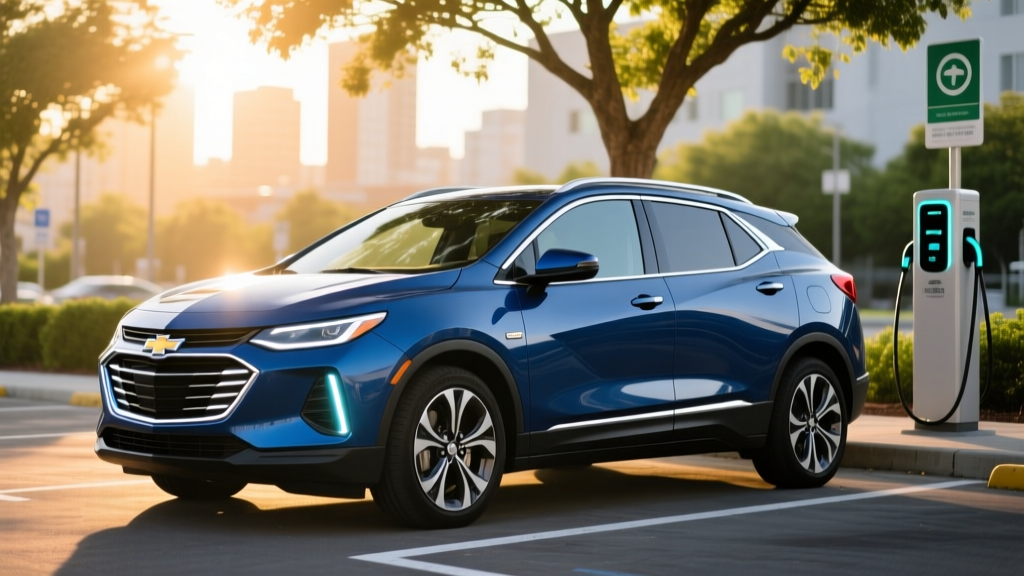
This guide breaks down the actual 5-year total cost of ownership (TCO) for a mainstream EV purchased in New York in 2026, using a Chevrolet Equinox EV LT (one of the most popular affordable options available with full credit eligibility) as our baseline. We'll show exactly what you'll spend on purchase, electricity, insurance, maintenance, and what the car will be worth when you sell it — then compare it against a gas-powered equivalent.
Federal Tax Credit: Do You Qualify for Up to $7,500?
The federal Clean Vehicle Credit under IRS §30D remains the single largest incentive for EV buyers in 2026, but qualifying requires clearing multiple hurdles simultaneously. The credit is worth up to $7,500 — split into two $3,750 halves based on battery component manufacturing and critical mineral sourcing requirements that tighten annually. You can claim it on your tax return or, since 2024, transfer it to the dealer as a point-of-sale discount that reduces your purchase price directly.
§30D Federal Tax Credit Eligibility Checklist (2026)
- Vehicle MSRP cap: Vans, SUVs, and pickup trucks must have an MSRP at or below $80,000. Sedans and other passenger cars: $55,000 or below.
- Buyer income cap (modified AGI): $300,000 joint filers / $225,000 head of household / $150,000 single filers. Applies to the year of delivery or the prior year — whichever is lower.
- Battery component manufacturing: A percentage of battery components must be manufactured or assembled in North America (the threshold increases each year through 2029).
- Critical minerals sourcing: A percentage of critical minerals must be sourced from the U.S. or a free-trade-agreement country (threshold also increases annually).
- Final assembly: Vehicle must undergo final assembly in North America.
- Foreign Entity of Concern (FEOC) restriction: Vehicles with battery components from a FEOC (primarily targeting Chinese supply chains) are disqualified entirely.
In practice for 2026, vehicles like the Chevrolet Equinox EV, Tesla Model 3 Rear-Wheel Drive, Tesla Model Y (certain trims), Hyundai Ioniq 5 (U.S.-assembled), and Ford F-150 Lightning have maintained eligibility for the full $7,500 at time of writing. Always verify current eligibility on the fueleconomy.gov tax credit database and cross-reference with IRS §30D guidance before signing a purchase agreement — sourcing rules change, and a model's eligibility can shift mid-year.
New York State and Local EV Incentives
New York's Charge Clean Drive Green program provides a point-of-sale rebate of up to $2,000 on new battery-electric vehicles (BEVs) with an MSRP below $42,000 (before dealer options). The rebate is applied at the dealership, reducing your out-of-pocket cost at signing. Plug-in hybrids (PHEVs) with at least 20 miles of electric-only range qualify for up to $1,000 under the same program. These funds are allocated annually and can run out — check the NYSERDA program page for current availability.
Beyond the state rebate, New York buyers can access several additional incentive layers:
- Utility rebates: Con Edison offers up to $500 toward a Level 2 home charger for residential customers in its SmartCharge NY program. National Grid and NYSEG run similar programs, typically $250-$750 for charger equipment or installation.
- Drive Clean in the Adirondacks: An additional $1,000 rebate for buyers who live, work, or attend school within the Adirondack Park region.
- HOV lane access: BEVs and qualifying PHEVs receive Clean Pass stickers for New York's HOV lanes on the Long Island Expressway and other designated corridors, regardless of occupancy.
- Reduced registration fees: New York does not currently impose a punitive EV registration surcharge beyond standard fees, unlike some states that charge $100-$200+ extra for EVs.
- NYC congestion pricing exemption: As of 2026, EVs are not exempt from Manhattan's congestion pricing toll (the initial proposed exemption was not enacted), but this remains a policy discussion point.
Important: State, local, and utility incentives vary significantly by jurisdiction, utility territory, and funding availability. The figures above reflect New York programs as of early 2026. Always verify current incentive status with NYSERDA, your local utility, and the dealership before committing to a purchase. Some programs have income qualifications, geographic restrictions, or first-come-first-served funding pools.
5-Year Total Cost of Ownership Breakdown
To understand what an EV actually costs over the typical ownership period, we modeled a 5-year/75,000-mile ownership scenario for a 2026 Chevrolet Equinox EV LT (MSRP ~$34,900) purchased in the New York metro area, compared against a 2026 Toyota RAV4 LE AWD gas equivalent (MSRP ~$30,500). Both are compact crossovers in the segment most New York buyers shop.
| Cost Category | Equinox EV LT | RAV4 LE AWD | EV Savings (+/-) |
|---|---|---|---|
| Purchase Price (MSRP) | $34,900 | $30,500 | -$4,400 |
| Federal Tax Credit (§30D) | -$7,500 | $0 | +$7,500 |
| NY State Rebate | -$2,000 | $0 | +$2,000 |
| Net Purchase Cost | $25,400 | $30,500 | +$5,100 |
| Fuel / Electricity (75k mi) | $3,940 | $8,440 | +$4,500 |
| Maintenance (5 years) | $1,800 | $4,200 | +$2,400 |
| Insurance (5 years) | $12,500 | $9,750 | -$2,750 |
| Depreciation (5 years) | $13,200 | $10,675 | -$2,525 |
| Total 5-Year Cost | $56,840 | $63,565 | +$6,725 |
Assumptions: New York electricity at $0.22/kWh average (home + public mix), EV efficiency 3.0 mi/kWh (EPA-rated), gas at $3.60/gal, RAV4 at 30 MPG combined. Insurance based on NY metro average quotes for both vehicles with a clean-record driver. Depreciation estimated at 52% for the EV and 35% for the RAV4 over 5 years based on recent resale data. Actual results will vary by driving habits, electricity rate, and market conditions.
The EV wins on net purchase cost (after incentives) and operating costs (fuel + maintenance), but loses on insurance and depreciation. The net result: roughly $6,700 in savings over 5 years, or about $112/month. That margin widens if you have access to cheap home charging (e.g., off-peak rates at $0.10/kWh) and narrows if you rely heavily on expensive DC fast charging at $0.40-$0.55/kWh.
Charging vs. Gas: The Per-Mile Cost Reality
| Scenario | Rate | Vehicle Efficiency | $/Mile |
|---|---|---|---|
| Home Level 2 (off-peak, Con Edison) | $0.10/kWh | 3.0 mi/kWh | $0.033 |
| Home Level 2 (standard residential) | $0.22/kWh | 3.0 mi/kWh | $0.073 |
| Public DC fast charging (Electrify America, EVgo) | $0.48/kWh | 3.0 mi/kWh | $0.160 |
| Tesla Supercharger (member pricing) | $0.30/kWh | 3.0 mi/kWh | $0.100 |
| Gas vehicle (RAV4 AWD, 30 MPG) | $3.60/gal | 30 MPG | $0.120 |
| Gas vehicle (city-heavy NYC, 22 MPG) | $3.60/gal | 22 MPG | $0.164 |
The per-mile math is stark: home-charged EVs cost roughly one-third to two-thirds what a gas car costs per mile. But the advantage collapses if you rely entirely on public DC fast charging at $0.48/kWh — at that rate, the Equinox EV costs more per mile than the RAV4 on the highway.
This is why home Level 2 charging is practically a prerequisite for EV ownership economics in New York. A Level 2 charger (240V, 32-48 amps, 7.7-11.5 kW) costs $500-$1,500 for equipment and installation if your electrical panel has capacity. If you need a panel upgrade from 100A to 200A service, add $1,500-$3,000. Con Edison's SmartCharge NY program can offset some of this cost, and the federal Alternative Fuel Vehicle Refueling Property Credit (§30C) offers up to $1,000 (30% of cost) for home charger installation in eligible census tracts.
Cold weather also affects your cost-per-mile indirectly: an EV in a New York winter (20-35°F) loses 15-30% of its range due to battery chemistry limitations and cabin heating demands. The Equinox EV's EPA range of 319 miles may deliver 220-260 real-world miles in January. That doesn't change your $/kWh cost, but it does mean more frequent charging sessions and less flexibility on long trips.
Maintenance Savings: Where EVs Genuinely Cost Less
| Maintenance Item | EV Cost | Gas Car Cost |
|---|---|---|
| Oil changes (5-7 over 5 years) | $0 | $350-$600 |
| Transmission fluid | $0 | $150-$300 |
| Engine air filter | $0 | $100-$200 |
| Spark plugs | $0 | $200-$400 |
| Brake pads (front + rear) | $0-$300 (regen extends life 2-3x) | $600-$1,200 |
| Cabin air filter | $80-$150 | $80-$150 |
| Tire rotation + replacement | $1,200-$1,600 (heavier EV, more wear) | $1,000-$1,400 |
| Coolant flush | $150-$250 | $150-$250 |
| Wipers, bulbs, misc. | $100-$200 | $100-$200 |
| Total Estimated | $1,530-$2,500 | $2,730-$4,700 |
EVs eliminate oil changes, transmission service, spark plugs, and most engine-related maintenance. Regenerative braking dramatically extends brake pad life — many EV owners report original brake pads at 80,000+ miles. The one area where EVs cost more is tires: the additional weight of the battery pack (the Equinox EV weighs ~4,500 lbs vs. the RAV4's ~3,600 lbs) and instant electric torque accelerate tread wear by roughly 15-25%. Budget for one extra set of tires over a 5-year ownership period compared to a gas equivalent.
The battery itself requires essentially zero maintenance. Modern EV battery thermal management systems (liquid-cooled in the Equinox EV) maintain cell health without owner intervention. The federal mandate requires battery warranties of at least 8 years/100,000 miles, and Chevrolet covers the Equinox EV battery for 8 years/100,000 miles with a 70% capacity retention guarantee. Most EV batteries are lasting well beyond their warranty periods with 85-92% capacity retention at 100,000 miles based on fleet data.
Insurance: The Line Item That Cuts Against You
EV insurance in New York runs 15-25% higher than equivalent gas vehicles, and in some cases even more. Based on quotes from major carriers for a 35-year-old driver with a clean record in the New York metro area, the Equinox EV averaged $2,500/year vs. $1,950/year for the RAV4 — a $550/year or $2,750/5-year premium.
Why the gap? Three factors drive it:
- Higher repair costs after collisions: EV battery packs are expensive to assess and replace after even minor undercarriage damage. Many insurers total an EV for impacts that would be repairable on a gas car because battery inspection protocols are conservative and replacement packs cost $10,000-$20,000.
- Specialized labor: High-voltage system repairs require certified EV technicians, who command higher shop rates. Fewer shops are qualified, which extends repair timelines and rental car costs.
- Higher vehicle values: Even after incentives, EVs often carry higher insured values than gas equivalents, and insurers price comprehensive/collision coverage accordingly.
Some insurers (notably GEICO, State Farm, and Tesla Insurance where available) offer EV-specific discounts that narrow the gap. Shopping at least three quotes before purchase is essential — the spread between carriers for the same EV in New York can exceed $800/year.
Depreciation and Resale Value
This is where the EV ownership equation has been most volatile. In 2023-2024, Tesla's aggressive price cuts triggered a used-EV value collapse that pulled down the entire segment. According to iSeeCars and Kelley Blue Book data, average 3-year-old EVs depreciated 45-55% compared to 30-35% for gas vehicles during that period.
By 2026, EV depreciation has stabilized somewhat but remains steeper than gas equivalents for most models. Expect a mainstream EV like the Equinox EV to retain roughly 45-52% of its net purchase price (after incentives) at 5 years, while a RAV4 retains 60-68%. On our $25,400 net-cost Equinox EV, that means a resale value around $12,200-$13,700 at year 5 — roughly $2,500-$3,000 less than the RAV4's retained value.
Key factors affecting your EV's resale value:
- Battery health report: A documented State of Health (SoH) above 90% at trade-in significantly improves resale. Most manufacturers and third-party services can generate a battery health certificate.
- Charging port standard: NACS-equipped vehicles (now the industry standard for 2025+ models) will likely command better resale than legacy CCS-only vehicles as the Supercharger network becomes the dominant infrastructure.
- Tax credit eligibility shifts: If a model loses §30D eligibility due to sourcing rule changes, new-car demand drops and used values follow.
- Brand trajectory: Tesla, Hyundai/Kia, and BMW have held EV resale value better than some legacy brands still establishing EV credibility.
Frequently Asked Questions
How much does it really cost to own an EV over 5 years in New York?
For a mainstream EV like the Chevrolet Equinox EV LT with full incentive eligibility, expect approximately $55,000-$60,000 in total 5-year costs (purchase minus incentives, plus electricity, insurance, maintenance, and depreciation). That's typically $5,000-$10,000 less than a gas equivalent over the same period, driven primarily by fuel and maintenance savings that offset higher insurance and steeper depreciation.
Do I qualify for the federal tax credit?
You qualify for up to $7,500 under IRS §30D if: (1) the vehicle's MSRP is under $80,000 for SUVs/trucks/vans or $55,000 for sedans; (2) your modified AGI is below $300,000 (joint), $225,000 (head of household), or $150,000 (single); (3) the vehicle's battery meets North American component manufacturing and critical mineral sourcing thresholds; (4) final assembly occurred in North America; and (5) no battery components come from a Foreign Entity of Concern. Verify eligibility at fueleconomy.gov before purchase — rules tighten annually.
How much do I save on fuel and maintenance?
Typical New York EV owners save $3,500-$5,000 on electricity vs. gasoline over 5 years/75,000 miles (assuming mostly home charging at $0.15-$0.22/kWh) and $1,500-$2,500 on maintenance (no oil changes, extended brake life, no spark plugs or transmission service). Combined operating savings of $5,000-$7,500 over 5 years are achievable with consistent home charging access.
Are EVs more expensive to insure in New York?
Yes — typically 15-25% more than comparable gas vehicles, adding $400-$700/year. The higher cost stems from expensive battery-pack repairs after collisions, specialized labor requirements, and higher insured values. Shop at least three carriers; EV-specific discounts from GEICO, State Farm, and others can narrow the gap by $200-$400/year.
How well do EVs hold their value?
EVs currently depreciate faster than gas vehicles — expect 48-55% value loss over 5 years vs. 32-40% for popular gas crossovers. The gap has narrowed since the 2023-2024 used-EV crash but persists. Battery health documentation, NACS compatibility, and brand strength all influence resale. A well-maintained EV with a clean battery report will command a premium over one without.
Can I stack New York state incentives with the federal tax credit?
Yes. The NY Charge Clean Drive Green rebate (up to $2,000), utility rebates (up to $500-$750), and the federal §30D credit (up to $7,500) are independent programs that stack. A buyer of a qualifying $35,000 EV could see $9,500-$10,000 in combined incentives, reducing the effective purchase price to ~$25,000-$25,500 before dealer fees and taxes.
Is a home Level 2 charger worth the installation cost?
Absolutely — it's the single biggest factor in whether EV ownership economics work. A Level 2 home charger (7.7-11.5 kW, 240V) costs $500-$1,500 installed if your panel has capacity, or $2,000-$4,500 if you need a panel upgrade. At New York's off-peak residential rate (~$0.10/kWh), home charging costs $0.03/mile vs. $0.12/mile for gas — a savings that pays for the charger installation within 15,000-30,000 miles of driving. Without home charging, you'll rely on public DC fast charging at $0.40-$0.55/kWh, which erases most of the fuel-cost advantage.