The Short Answer on New USPS Electric Trucks
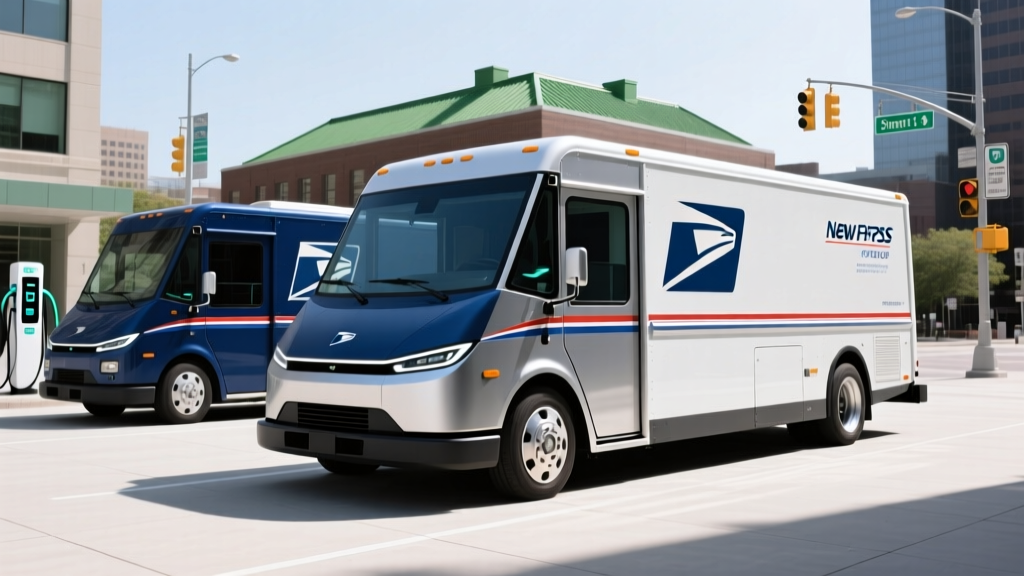
The United States Postal Service has begun deploying new USPS electric trucks — officially called the Next Generation Delivery Vehicle (NGDV) — built by Oshkosh Defense. As of early 2026, the USPS has committed to acquiring at least 45,000 battery-electric NGDVs out of a total fleet modernization plan of up to 60,000 vehicles. The electric NGDV carries an estimated 130–150 kWh battery pack, targets roughly 70–90 miles of real-world range on a single charge (depending on climate, payload, and stop frequency), and charges via Level 2 (AC) and DC fast charging at depot-based infrastructure. While these vehicles are not available for private purchase, their specifications, route economics, and depot-charging strategy offer a direct case study for commercial fleet operators evaluating electric delivery vehicles in 2026.
Why the USPS Went Electric — and What It Cost
The USPS mail fleet has relied on the Grumman Long Life Vehicle (LLV) since 1987. Those aging trucks average 8–10 MPG, lack modern safety equipment, and cost an estimated $5,000–$7,000 per year per vehicle in maintenance alone. Replacing them was never optional — the question was whether the replacement would be electric, gas, or a mix.
After initial controversy in 2022 when the USPS proposed only 10% electrification, political and environmental pressure — including a lawsuit from multiple state attorneys general — pushed the commitment to at least 75% electric (45,000 of 60,000 NGDVs). The remaining 15,000 will be low-emission internal combustion vehicles for routes where electric range or charging infrastructure remains insufficient.
The total contract value with Oshkosh Defense, including vehicle production and supporting infrastructure, is estimated at $6 billion+ over the life of the program, with per-unit vehicle costs reportedly in the $100,000–$130,000 range — significantly higher than the original LLV's inflation-adjusted cost but offset by dramatically lower operating expenses.
NGDV Electric Specs: Battery, Range, and Charging
Here's what we know about the battery-electric NGDV based on USPS disclosures, Oshkosh technical filings, and depot installation data:
| Specification | Value |
|---|---|
| Battery Capacity (estimated) | 130–150 kWh (NMC chemistry) |
| EPA-Equivalent Range Target | ~70–90 miles (real-world, route-dependent) |
| Payload Capacity | ~2,000 lbs cargo |
| Level 2 Charging (Depot AC) | ~19.2 kW; full charge in ~8–10 hours |
| DC Fast Charging Capability | ~50–80 kW peak; 20–80% in ~60–90 min |
| HVAC / Thermal Management | Active liquid cooling + cabin heat pump |
| Regenerative Braking | Multi-level regen with one-pedal mode |
| Safety (ADAS) | 360° cameras, automatic emergency braking, lane departure warning |
| Warranty (Powertrain/Battery) | Expected 8 yr / 100,000 mi (fleet contract terms) |
Real-World Range Reality Check
The NGDV's ~70–90 mile real-world range is purpose-built for USPS delivery routes, which average 20–40 miles per day with hundreds of stops. However, fleet operators in cold climates (below 30°F) should expect 15–30% range reduction due to battery chemistry limitations and cabin heating demands — even with a heat pump. Routes exceeding 60 miles with high HVAC loads will require mid-day opportunity charging or route restructuring.
Electric vs. Gas NGDV: Operating Cost Comparison
The USPS is also acquiring ~15,000 internal combustion NGDVs (ICE variant) for longer or infrastructure-limited routes. Here's how the two stack up on operating costs, using 2026 energy prices and typical fleet utilization:
| Cost Category | Battery-Electric NGDV | ICE NGDV (Gas) |
|---|---|---|
| Fuel / Energy (12,000 mi/yr) | ~$2,400–$3,600 (electric @ $0.12–$0.18/kWh) | ~$4,200–$5,400 (gas @ $3.50–$4.50/gal, ~15 MPG) |
| Maintenance (annual) | ~$1,200–$1,800 (no oil, fewer brakes via regen) | ~$3,500–$5,000 (oil, filters, transmission, exhaust) |
| Estimated Annual Savings (EV) | $3,100–$5,000 per vehicle per year | |
| 5-Year Operating Savings | $15,500–$25,000 per vehicle | |
| Upfront Vehicle Cost | ~$110,000–$130,000 | ~$65,000–$80,000 |
| Depot Charging Infrastructure | $15,000–$40,000 per stall (Level 2 + electrical) | N/A |
The electric NGDV carries a $35,000–$55,000 higher upfront cost per vehicle plus depot charging infrastructure investment. However, the payback period on operating savings alone is roughly 5–8 years — well within the NGDV's designed 20+ year service life. For the USPS, which plans to run these vehicles for decades, the total cost of ownership heavily favors electric.
For private fleet buyers evaluating similar electric commercial vehicles (Ford E-Transit, Rivian EDV, BrightDrop Zevo), the math follows the same pattern: higher upfront, lower per-mile, with payback timelines dictated by daily mileage and local electricity rates.
Depot Charging: The Hidden Infrastructure Story
The most instructive element of the USPS electric truck rollout isn't the vehicle — it's the charging strategy. The USPS is installing Level 2 (19.2 kW AC) chargers at postal depots nationwide, with vehicles charging overnight during off-peak hours. Select high-utilization depots are also adding DC fast chargers (50–80 kW) for mid-day opportunity charging.
This depot-charging model eliminates the biggest pain point in public EV charging: reliability. By controlling the charging environment, the USPS avoids broken public chargers, payment-system failures, and peak-hour congestion. Fleet operators should note the infrastructure cost reality:
| Component | Cost Range (Per Stall) |
|---|---|
| Level 2 Charger Hardware (19.2 kW commercial) | $3,500–$7,000 |
| Electrical Panel Upgrade / Transformer | $5,000–$20,000 (varies with existing capacity) |
| Trenching, Conduit, Wiring (50–100 ft run) | $3,000–$10,000 |
| Permits & Utility Interconnection | $1,500–$5,000 |
| Networked Software / Load Management | $500–$2,000/yr per stall |
| Total Per-Stall Estimate | $13,500–$44,000 |
The USPS secured significant federal infrastructure funding to offset these costs. Private fleet buyers should investigate IRS §30C Alternative Fuel Vehicle Refueling Property Credit, which covers up to 30% of charging installation costs (capped at $100,000 per item of property) for commercial installations, subject to prevailing wage and census-tract requirements.
What Private Fleet Buyers Can Learn from the USPS NGDV
You can't buy a USPS NGDV — but the program's data points directly inform any fleet electrification decision in 2026:
Fleet Electrification Decision Framework
- Choose battery-electric delivery vehicles IF:
- Daily routes are under 80 miles (real-world, accounting for cold weather)
- Vehicles return to a central depot nightly for charging
- Local electricity rates are below $0.18/kWh (commercial)
- You plan to keep vehicles 8+ years (amortize higher upfront cost)
- Maintenance cost reduction is a priority (EV drivetrains eliminate oil, transmission, and exhaust service)
- Stick with ICE or hybrid delivery vehicles IF:
- Daily routes regularly exceed 120+ miles with no mid-day charging
- Depot electrical capacity cannot support multiple Level 2/DC chargers without a costly utility upgrade
- Vehicles operate in extreme cold (<10°F) with high cabin-heating demands
- Vehicle turnover is under 5 years (insufficient payback period)
- Route geography is highly variable and unpredictable
For reference, comparable private-sector electric delivery vehicles available in 2026 include:
- Ford E-Transit: 126-mile EPA range, 68 kWh battery, ~$48,000–$55,000 MSRP, 115 kW DC fast charging
- Rivian EDV (Amazon-exclusive, limited secondary market): ~150-mile range, ~110 kWh battery
- BrightDrop Zevo 600: ~250-mile EPA range, 165 kWh battery, ~$90,000+ (Class 2–3)
Common Misconceptions About USPS Electric Trucks
| Myth | Fact |
|---|---|
| "Electric mail trucks don't have enough range for delivery routes." | The average USPS route is 20–40 miles. The NGDV's ~70–90 mile real-world range provides substantial buffer for most routes, even with HVAC load. |
| "The USPS is going 100% electric immediately." | The commitment is 45,000 of 60,000 vehicles (75%). The remaining 15,000 are ICE for routes where electric isn't yet viable. |
| "Electric trucks are cheaper upfront." | The NGDV electric variant costs ~$35,000–$55,000 more per unit than the ICE version. Savings come from lower fuel and maintenance over 10–20 years. |
| "Charging infrastructure is too expensive to justify." | At $13,500–$44,000 per stall plus §30C tax credits, depot charging pays for itself within 3–6 years through fuel savings alone on high-utilization routes. |
| "Cold weather makes electric delivery trucks unusable." | Cold reduces range 15–30%, but the NGDV's heat pump and active thermal management mitigate this. Routes under 50 miles remain viable in most US winters. |
First-Time EV Fleet Buyer Essentials
If the USPS NGDV program has taught the commercial EV market anything, it's that successful fleet electrification requires planning beyond the vehicle itself. Here's what first-time fleet EV buyers need to internalize:
- Audit your routes before buying vehicles. GPS-log every vehicle for 30 days. If 90%+ of daily routes fall under the EV's real-world range (minus 20% cold-weather buffer), electrify those routes first.
- Engage your utility early. Depot charging for 10+ vehicles may require a transformer upgrade or new service drop — lead times of 6–18 months are common in 2026.
- Right-size your chargers. Overnight Level 2 (19.2 kW) is sufficient for most depot-return fleets. Don't overpay for DC fast chargers unless mid-day opportunity charging is required.
- Factor in the §30C tax credit. Commercial charging installations in qualifying census tracts can receive up to 30% of hardware and installation costs back (subject to prevailing wage requirements). Consult a tax professional for eligibility.
- Budget for software. Networked chargers with load management software prevent demand-charge spikes from your utility. A 50-vehicle depot charging simultaneously at 19.2 kW draws nearly 1 MW — staggered charging via software can cut peak demand charges by 40–60%.
- Train your drivers. Regenerative braking, preconditioning, and efficient route driving can recover 5–10% of range. Driver behavior matters more in EVs than in ICE vehicles.
Frequently Asked Questions
Can I buy a USPS NGDV electric truck for private use?
No. The NGDV is manufactured by Oshkosh Defense exclusively for the United States Postal Service under a federal contract. Retired USPS vehicles historically become available through GSA auctions after many years of service, but the NGDV fleet is new and will not reach the secondary market for well over a decade.
What battery chemistry does the NGDV use?
Based on Oshkosh technical disclosures and industry sourcing patterns, the NGDV is believed to use NMC (nickel manganese cobalt) lithium-ion cells, which offer higher energy density than LFP at the cost of a more complex supply chain. NMC is standard in most commercial EV applications where weight and volume are at a premium.
How does the NGDV compare to the Ford E-Transit?
The Ford E-Transit is the closest private-sector analog. It offers 126 miles of EPA-estimated range with a 68 kWh battery, compared to the NGDV's larger ~130–150 kWh pack and ~70–90 mile real-world range. The NGDV's heavier payload, frequent-stop route optimization, and larger physical size explain the higher battery capacity but lower per-kWh range. The E-Transit starts around $48,000 — roughly half the NGDV's per-unit cost — but lacks the NGDV's purpose-built mail-sorting interior and right-hand-drive configuration.
Will the USPS electric trucks use Tesla Superchargers?
No. The NGDV charges at depot-based Level 2 and DC fast chargers owned and operated by the USPS or its contractors. These use standard commercial charging equipment (CCS1/J1772 connectors), not the Tesla NACS connector. The USPS charging ecosystem is entirely private and depot-based.
What happens to USPS electric truck batteries at end of life?
Federal fleet contracts typically require battery recycling or second-life repurposing. NMC batteries from commercial EVs are increasingly processed by recyclers like Redwood Materials and Li-Cycle, recovering 90%+ of critical minerals. The NGDV's battery warranty is expected to cover degradation below 70–80% capacity retention over 8 years / 100,000 miles, consistent with NHTSA-monitored commercial EV standards.
Are there tax credits for buying electric delivery trucks?
Yes — but not the §30D consumer credit. Commercial electric vehicles may qualify for the §45W Commercial Clean Vehicle Credit, which provides up to $40,000 for qualified commercial clean vehicles (or the incremental cost of the EV over a comparable ICE vehicle, whichever is less). Eligibility depends on battery sourcing, vehicle weight class, and tax-exempt entity rules. Consult a tax professional and review IRS §45W guidance before purchasing.