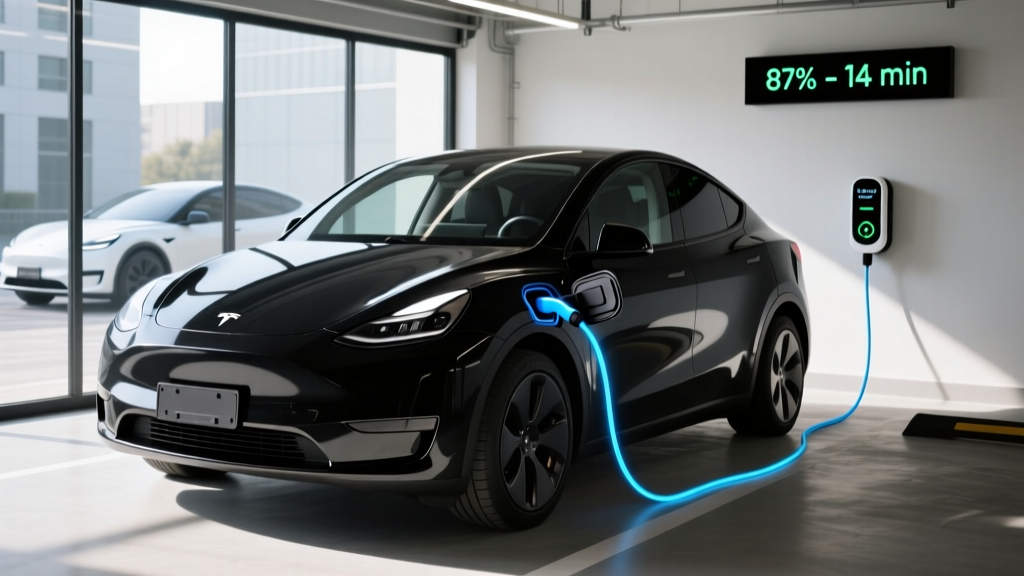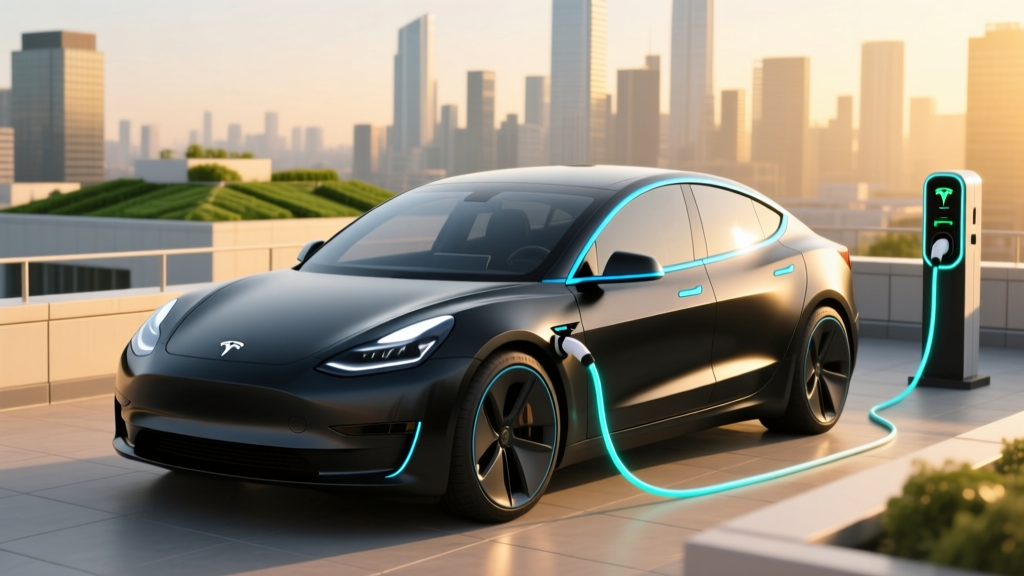
Tesla's long-rumored affordable compact EV — widely referred to by enthusiasts and media as the "Model 2" — has dominated EV forums and headline cycles for years. As of early 2026, Tesla has not officially listed a vehicle called "Model 2" on its consumer site, but the company has confirmed a next-generation, lower-cost platform is in advanced development, with production targeted for late 2026 or early 2027 at Gigafactory Texas and potentially Gigafactory Berlin.
This profile compiles every verified statement from Tesla earnings calls, SEC filings, and executive interviews alongside informed engineering estimates based on Tesla's current cell chemistry, manufacturing roadmap, and competitive positioning. Where numbers are projected rather than confirmed, we label them clearly. If you're researching the new Tesla Model 2 to decide whether to wait or buy now, this is the most data-grounded briefing available.
Release Timeline and Production Status
During Tesla's Q3 2025 earnings call, CEO Elon Musk reiterated that the next-generation compact vehicle would begin production on a newly designed "unboxed" manufacturing line, targeting a start date in the second half of 2026. Tesla's 2025 Impact Report references a "smaller, more accessible platform" without using the Model 2 nameplate.
Industry analysts at BloombergNEF and Morgan Stanley project initial US deliveries could begin in Q1 2027 if the timeline holds, with European production following mid-2027 from Berlin. Tesla has not opened reservations for this vehicle as of this writing. Any third-party site claiming to take deposits is not affiliated with Tesla.
Projected Range, Battery, and Efficiency
Tesla's next-gen platform is expected to use a structural battery pack with a revised 4680-type cell. Based on Tesla's stated goal of reducing per-kWh cost by roughly 50% versus the Model Y, and on supply-chain reporting from Panasonic and CATL, two battery chemistries are likely:
- Base trim: LFP (lithium iron phosphate) — lower energy density but longer cycle life, no cobalt or nickel, and tolerant of daily 100% charging.
- Long Range trim: High-nickel NMC or NCA in a dry-electrode 4680 format — higher energy density for extended range.
| Attribute | Base (LFP est.) | Long Range (NMC est.) |
|---|---|---|
| Usable Battery Capacity | ~50 kWh | ~65 kWh |
| Chemistry | LFP (CATL or in-house) | NMC / NCA 4680 |
| EPA Est. Range (projected) | ~220–240 miles | ~280–310 miles |
| Efficiency (est.) | ~25 kWh/100 mi | ~23 kWh/100 mi |
| EPA MPGe (est.) | ~135 MPGe combined | ~145 MPGe combined |
Charging Speed: DC Fast Charge and Home Level 2
Charging speed is often the most misunderstood EV spec. Power is measured in kW (how fast energy flows); energy is measured in kWh (how much the battery holds). A 150 kW peak charge rate does not mean you receive 150 kWh in one hour — the rate tapers as the battery fills, especially above 80% state of charge.
Based on Tesla's current Supercharger architecture and the thermal limits of LFP chemistry, here's what we project for the Model 2:
| Charging Level | Base (LFP) | Long Range (NMC) |
|---|---|---|
| Level 1 (120V, 12A) | ~1.4 kW / ~4 mi/hr | ~1.4 kW / ~4 mi/hr |
| Level 2 (240V, 32A Wall Connector) | ~7.7 kW / ~25 mi/hr | ~7.7 kW / ~28 mi/hr |
| DC Fast Charge (peak) | ~150 kW (est.) | ~200 kW (est.) |
| 10–80% DCFC Time (proj.) | ~28–32 min | ~20–24 min |
| Connector (US) | NACS (native) | NACS (native) |
Tesla's smaller pack will likely be thermally constrained compared to the Model Y's larger battery, meaning the LFP base variant may sustain its peak rate for a shorter window before tapering. On a V3 Supercharger (250 kW capable), expect the base Model 2 to average around 90–110 kW across a full 10–80% session, not the headline peak. Preconditioning the battery via the car's navigation-routed warm-up is essential for achieving advertised speeds.
Performance and Drivetrain
Tesla has historically reserved dual-motor AWD for Long Range and Performance trims. For the Model 2, the base variant is expected to be single-motor rear-wheel drive, with a dual-motor AWD option on the Long Range.
| Spec | Base RWD | Long Range AWD |
|---|---|---|
| Drivetrain | Single-motor RWD | Dual-motor AWD |
| Horsepower (est.) | ~220 hp | ~350 hp |
| 0–60 mph (est.) | ~6.5 sec | ~4.5 sec |
| Top Speed | ~125 mph | ~135 mph |
These figures would position the base Model 2 against the Chevrolet Bolt EV's successor and the Nissan Leaf replacement, while the Long Range AWD would compete with the Hyundai Ioniq 5 and Volkswagen ID.4 on performance.
Pricing, Trims, and Federal Tax Credit Eligibility
Tesla executives have repeatedly stated a target base price of approximately $25,000 before incentives. Achieving that price depends heavily on the unboxed manufacturing process reducing production costs by an estimated 40–50%. Realistically, initial trims may start closer to $27,000–$30,000 before Tesla achieves full production scale.
| Trim | Est. MSRP | Est. After §30D Credit |
|---|---|---|
| Base RWD (LFP) | $25,000–$28,000 | $17,500–$20,500* |
| Long Range AWD | $33,000–$37,000 | $25,500–$29,500* |
*Federal tax credit amounts are estimates based on current IRS §30D rules. Eligibility depends on:
- MSRP cap: Sedans/hatchbacks must be ≤$55,000 (the Model 2 clears this easily).
- Buyer income cap: Modified AGI ≤$150,000 (single), ≤$225,000 (head of household), ≤$300,000 (joint).
- Battery sourcing: Critical minerals and battery components must meet escalating domestic-content thresholds that tighten each year through 2032. An LFP pack sourced from CATL (China) may disqualify the base trim from the full $7,500 unless Tesla qualifies under FEOC (Foreign Entity of Concern) exemptions or sources from a qualifying partner.
- Point-of-sale transfer: Buyers can elect to transfer the credit to the dealer at purchase, reducing the upfront price — subject to dealer participation and IRS registration.
The battery-sourcing requirement is the single largest wildcard. Tesla's LFP supply chain is heavily tied to Chinese refining, which could limit the base trim to the $3,750 half-credit (or zero) if FEOC restrictions apply at launch. The Long Range NMC variant, using North American nickel and refined materials, is more likely to qualify for the full $7,500. Consult a tax professional before relying on credit projections.
Cargo Space, Interior, and Tech
Tesla's compact platform is expected to ride on a shortened wheelbase (~106–108 inches), yielding a subcompact crossover footprint similar to the Hyundai Kona Electric. Based on patent filings and camouflaged prototype measurements:
- Rear legroom (est.): ~35–37 inches
- Cargo behind rear seats (est.): ~18–22 cu ft
- Cargo with seats folded (est.): ~48–55 cu ft
- Frunk (est.): ~2–3 cu ft (small, for charging cables)
The interior will almost certainly feature Tesla's minimalist single-screen architecture — likely a 15.4-inch center display with no instrument cluster. Expected tech includes:
- Tesla Autopilot (SAE Level 2 driver assist — not self-driving; hands-on-wheel supervision required)
- Full Self-Driving (Supervised) available as a paid add-on, still Level 2
- Over-the-air software updates
- Native NACS Supercharger integration with battery preconditioning
- Heat pump for cold-climate efficiency (standard on all recent Teslas)
- Sentry Mode dashcam recording and cabin overheat protection
Who the Tesla Model 2 Is For — and Who Should Look Elsewhere
✅ Strong Fit
- Urban commuters with home charging and daily drives under 80 miles
- Second-car households replacing a gas commuter with a low-cost EV
- Tesla ecosystem loyalists who want Supercharger access at the lowest entry price
- Tech-forward buyers comfortable with screen-only controls and OTA updates
- Buyers in states with ZEV incentives stacking on top of §30D
❌ Look Elsewhere If
- You need 300+ miles of real-world highway range today — consider Model 3 Long Range or Hyundai Ioniq 6
- You regularly tow — subcompact EVs are not rated for meaningful towing
- You need three-across rear seating or large cargo capacity
- You want physical buttons, a head-up display, or CarPlay/Android Auto
- You need a vehicle now — the Model 2 is still 9–15 months from likely delivery
Key Competitors to Cross-Shop
If the Model 2's timeline doesn't align with your purchase window, these are the current or near-term alternatives in the $25,000–$38,000 compact EV segment:
- Chevrolet Bolt EV / Bolt EUV (next-gen, 2026): GM's NACS-equipped successor with CCS-to-NACS adapter support, ~260-mile range, likely strong §30D eligibility.
- Hyundai Kona Electric (2025 refresh): ~261-mile EPA range, NACS adapter available, more traditional interior with physical controls.
- Nissan Leaf successor (2026–2027): Expected to abandon CHAdeMO for NACS; range and pricing TBD.
- Tesla Model 3 RWD (current): ~$38,990 base, 272-mile EPA range, available now — the most direct internal competitor.
Frequently Asked Questions
What is the real-world range of the Tesla Model 2?
Projected EPA range is approximately 220–240 miles for the base LFP trim and 280–310 miles for the Long Range NMC trim. Real-world highway range at 75 mph will likely be 15–20% below EPA; cold-weather range (below 30°F) may drop 25–35% for LFP and 20–25% for NMC.
How fast does the Tesla Model 2 charge?
Estimated peak DC fast-charge rate is ~150 kW (base LFP) to ~200 kW (Long Range NMC). A 10–80% session should take roughly 28–32 minutes for the base and 20–24 minutes for the Long Range. Home Level 2 charging at 7.7 kW adds approximately 25–28 miles of range per hour.
How much does the Tesla Model 2 cost after tax credits?
Projected base MSRP is $25,000–$28,000. If the full $7,500 federal §30D credit applies (and buyer income, MSRP cap, and battery-sourcing requirements are met), the effective price could drop to roughly $17,500–$20,500. Battery-sourcing rules are the biggest variable — the LFP base trim may qualify for only $3,750 or zero depending on FEOC determinations at launch.
Does the Tesla Model 2 qualify for the federal EV tax credit?
It will qualify for at least partial credit if Tesla meets IRS §30D battery-sourcing and critical-mineral requirements. The MSRP cap ($55,000 for cars) is easily satisfied. Buyer income caps apply. The LFP battery's Chinese supply chain is the main risk factor for full credit eligibility. Always verify current-year rules on IRS.gov or with a tax professional before purchasing.
Is the Tesla Model 2 worth waiting for versus buying a Model 3 or competitor now?
If you can wait 9–15 months, need the lowest possible entry price, and your daily driving is under 80 miles, the Model 2 could be the best value in Tesla's lineup. If you need a vehicle now, regularly drive 200+ miles between charges, or want proven long-term reliability data, a current Model 3 RWD, Chevrolet Bolt, or Hyundai Kona Electric is a more practical choice today.
Will the Tesla Model 2 have Autopilot or Full Self-Driving?
Yes — Tesla's basic Autopilot (SAE Level 2 driver assist) is expected to be standard. Full Self-Driving (Supervised) will likely be available as a paid option. Neither system is self-driving; the driver must remain attentive with hands on the wheel at all times. Only Level 4 services like Waymo operate without a human driver in defined geographic zones.
What connector does the Tesla Model 2 use?
The Model 2 will use the NACS (North American Charging Standard) connector natively, giving it direct access to Tesla's Supercharger network — currently the most reliable and widespread DC fast-charging network in North America, with over 25,000 stalls in the US as of early 2026.