Quick Verdict: Does a New Tesla Lease Make Sense Right Now?
If you're researching a new Tesla lease in 2026, you're likely weighing two questions: which Tesla model fits your life, and whether leasing beats buying at today's interest rates and incentive structures. Tesla's Model 3 sedan and Model Y crossover remain the brand's volume leaders, and both sit under the IRS §30D MSRP caps that unlock the $7,500 federal tax credit — a credit that, critically, can now be transferred to the dealer at point of sale, effectively acting as a down payment reduction on a lease or purchase.
Leasing a Tesla through Tesla Financial Services (or a third-party lessor) has a distinct advantage: the leasing company claims the §30D credit and typically passes it through as a capitalized-cost reduction, lowering your monthly payment. But lease terms, residual values, and money factors vary — and Tesla's direct-lease program has historically offered less flexibility than third-party options. Below, we profile both the Model 3 and Model Y with the exact specs, pricing, and ownership economics you need before signing.
2026 Tesla Model 3 & Model Y: Core Specs at a Glance
| Spec | Model 3 RWD | Model 3 Long Range AWD | Model Y Long Range AWD | Model Y Performance |
|---|---|---|---|---|
| EPA Range | 272 mi | 341 mi | 320 mi | 277 mi |
| Battery (usable) | ~57.5 kWh (LFP) | ~75 kWh (NMC) | ~75 kWh (NMC) | ~75 kWh (NMC) |
| Max DC Fast Charge | 170 kW | 250 kW | 250 kW | 250 kW |
| 10–80% DC Time | ~30 min | ~25 min | ~27 min | ~27 min |
| Level 2 Home Rate | 11.5 kW (~44 mi/hr) | 11.5 kW (~44 mi/hr) | 11.5 kW (~44 mi/hr) | 11.5 kW (~44 mi/hr) |
| 0–60 mph | 5.8 sec | 4.2 sec | 4.8 sec | 3.5 sec |
| Horsepower | 271 hp | 346 hp | 384 hp | 455 hp |
| Drivetrain | RWD | Dual-Motor AWD | Dual-Motor AWD | Dual-Motor AWD |
| Combined MPGe | 132 MPGe | 125 MPGe | 117 MPGe | 111 MPGe |
| Efficiency (kWh/100mi) | 25 | 27 | 29 | 30 |
| Base MSRP | $38,990 | $44,990 | $44,990 | $49,990 |
Sources: fueleconomy.gov (EPA), Tesla official specs. Pricing reflects 2026 MSRP before destination. Confirm current figures at time of order.
Real-World Range: What the EPA Sticker Doesn't Tell You
- City/commute driving (moderate climate): ~300–315 mi achievable
- Sustained highway (70+ mph): expect ~260–280 mi
- Cold weather (below 32°F, highway): ~210–240 mi
- DC fast-charge road trip (10–80% cycles): effective ~250 mi between stops
Tesla's heat pump (standard on all current trims) reduces cold-weather loss compared to older EVs, but physics still wins: expect 20–30% range reduction in freezing conditions at highway speeds.
The Model 3 RWD's LFP battery deserves special mention. LFP (lithium iron phosphate) chemistry is heavier and less energy-dense than NMC, which is why the RWD trim carries a smaller battery and lower EPA range. However, LFP cells tolerate repeated 100% charging without accelerated degradation — Tesla recommends you charge the RWD to 100% regularly. That means your usable daily range on the RWD is closer to the full 272 mi, whereas NMC owners typically set an 80% daily ceiling (~273 mi on the Long Range), narrowing the real-world gap significantly.
For the Model 3 Long Range, the 341-mi EPA figure is class-leading among sedans in this price bracket. In real-world mixed driving, owners consistently report 300–320 mi without hypermiling. On a 75-mph highway run in summer, expect roughly 280–300 mi before you're hunting for a Supercharger.
Charging Speed: Supercharger Network and Home Level 2
| Charging Level | Power | Miles Added per Hour | Best Use Case |
|---|---|---|---|
| Level 1 (120V household) | ~1.4 kW | ~3–5 mi/hr | Emergency/overnight trickle |
| Level 2 (240V home Wall Connector) | 11.5 kW | ~44 mi/hr | Daily home charging |
| DC Fast (V2 Supercharger) | 150 kW | ~200+ mi in 15 min | Road trips |
| DC Fast (V3/V4 Supercharger) | 250 kW peak | ~200 mi in 15 min | Road trips (fastest) |
A critical nuance many first-time lessees miss: the peak 250 kW rate only applies in the lower portion of the charge curve (roughly 10–45% State of Charge on NMC packs). Above 60%, charging power tapers progressively — by 80%, you're often pulling 60–90 kW, and above 90% it drops to under 30 kW. The advertised "10–80% in ~25 minutes" is accurate, but a 10–100% session will take 45+ minutes. Plan road-trip stops around the 10–80% window for maximum efficiency.
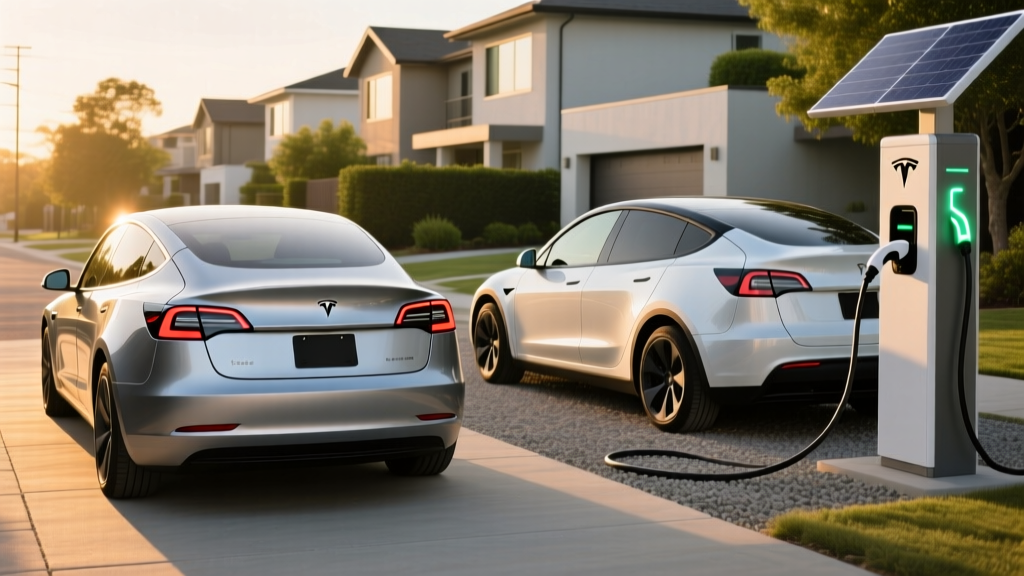
At home, the Tesla Wall Connector on a 60-amp circuit delivers up to 11.5 kW (48 amps continuous). A full overnight session (8 hours) adds roughly 350 miles — more than enough for any daily commute. Installation costs vary: expect $800–$2,000 for a straightforward install near your panel, or $2,500–$5,000+ if you need a panel upgrade to 200 amps. Always get a quote from a licensed electrician before committing to a lease, as your charging setup will define your daily ownership experience.
With Tesla's NACS (North American Charging Standard) now adopted by Ford, GM, Rivian, Hyundai, and others, Supercharger access is no longer a Tesla-exclusive advantage — but the network's reliability and density (over 6,000 U.S. Superchargers as of early 2026, per Tesla's Supercharger page) remain the strongest public-charging ecosystem available.
Lease Pricing, Monthly Payments, and Tax Credit Impact
| Trim | Base MSRP | §30D Credit Applied | Est. Monthly (w/ $3K down) | Money Factor (est.) |
|---|---|---|---|---|
| Model 3 RWD | $38,990 | –$7,500 | $349–$399 | ~0.0025 (6.0% APR equiv.) |
| Model 3 Long Range | $44,990 | –$7,500 | $449–$499 | ~0.0025 |
| Model Y Long Range | $44,990 | –$7,500 | $429–$479 | ~0.0023 |
| Model Y Performance | $49,990 | –$7,500 | $519–$569 | ~0.0025 |
Estimates based on typical Tesla Financial Services lease programs and third-party lessors as of early 2026. Actual payments depend on credit tier, down payment, residual values, and regional incentives. Confirm with Tesla or a leasing broker.
Federal §30D Tax Credit: What You Need to Know for a Lease
- MSRP cap: Sedans (Model 3) ≤ $55,000; SUVs/trucks (Model Y) ≤ $80,000 — both qualify
- Buyer income cap: AGI ≤ $150K single / $225K head of household / $300K joint
- Battery sourcing: Critical minerals and battery components must meet phased-in domestic/FAT-partner thresholds (increasing annually through 2026)
- Point-of-sale transfer: Since 2024, you can transfer the $7,500 credit to the dealer/lessor at purchase, reducing your down payment or capitalized cost
- Lease loophole: In a lease, the lessor (not you) technically claims the credit under §45W commercial rules — most lessors pass the $7,500 through as a cap-cost reduction, but this is not guaranteed. Always confirm with the lessor before signing.
Source: IRS Clean Vehicle Credits
The lease-vs-buy math in 2026 tilts toward leasing for many buyers. Tesla's direct purchase APRs have hovered around 6–7% for well-qualified buyers, while lease money factors (when converted to APR equivalents) can sometimes undercut purchase financing — particularly on the Model Y, where Tesla has periodically offered subsidized lease rates to maintain volume. At lease end, Tesla Financial Services does not currently offer a purchase option on most new leases (a significant change from earlier programs), meaning you'll return the vehicle or walk away. If you want eventual ownership, buying with the §30D point-of-sale transfer may be preferable.
Interior, Cargo, and Daily Livability
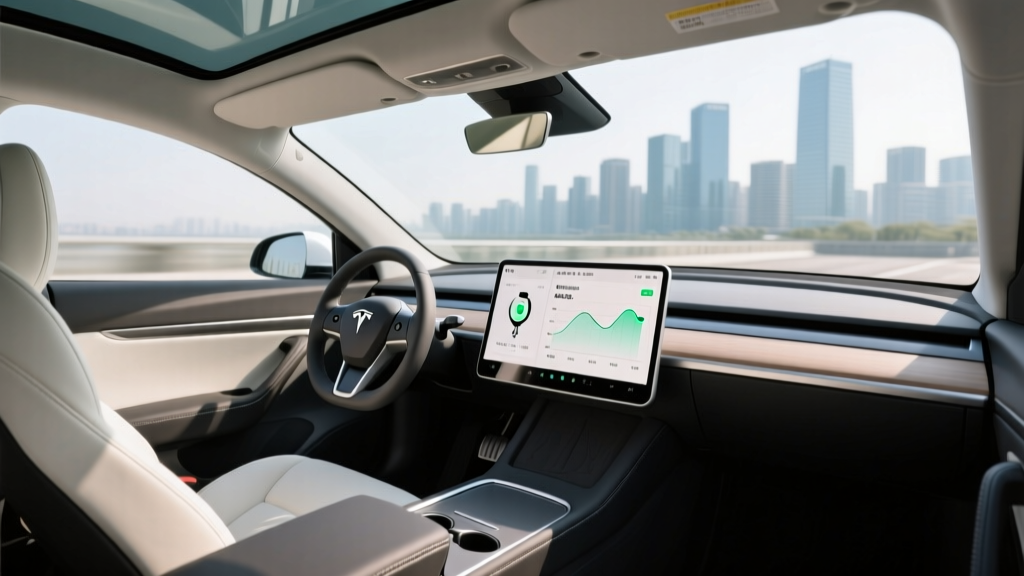
The Model 3's minimalist interior remains polarizing but functional. The 15.4-inch center touchscreen handles all vehicle controls, navigation, and entertainment (Netflix, YouTube, and Spotify are built in). Rear-seat legroom measures 35.2 inches — adequate for adults on shorter trips but tighter than a Toyota Camry. Cargo volume is 23 cu ft (trunk + frunk combined), enough for a week's groceries or two carry-on suitcases.
The Model Y, built on the same platform but taller and longer, offers substantially more utility: 76 cu ft of cargo space with rear seats folded (30 cu ft behind the second row) and an available third-row seat that accommodates small children. Rear legroom stretches to 40.5 inches, making it genuinely family-friendly. The rear hatch design makes loading bulky items far easier than the Model 3's sedan trunk.
Both vehicles include Tesla's basic Autopilot (SAE Level 2 driver assistance) — adaptive cruise control and lane-centering on highways. Full Self-Driving (Supervised), Tesla's $8,000 optional upgrade, adds automated lane changes, traffic-light recognition, and city-street navigation, but remains a Level 2 system requiring continuous driver supervision. Despite the "FSD" name, it is not autonomous driving.
Battery Warranty, Degradation, and Long-Term Costs
Tesla's battery and drive-unit warranty covers 8 years or 100,000 miles (whichever comes first) on the Model 3 RWD, and 8 years or 120,000 miles on Long Range and Model Y variants. The warranty guarantees at least 70% battery capacity retention over that period.
Real-world degradation data from fleet analyses and owner reporting suggests NMC packs lose roughly 5–8% capacity over the first 100,000 miles, with the steepest drop in year one (2–3%) before leveling off. LFP packs in the RWD trim show similar or slightly better longevity, with the added benefit that regular 100% charging doesn't accelerate wear as it does with NMC chemistry.
For a 36-month lease at 10,000–12,000 miles per year, battery degradation is a non-issue — you'll return the car well within warranty and with 90%+ capacity remaining. This is one of the structural advantages of leasing: you're insulated from long-term battery replacement risk (a $12,000–$16,000 out-of-warranty expense on these platforms).
Pros and Cons: Leasing a Tesla in 2026
- Supercharger network access — still the most reliable DC fast-charging ecosystem in the U.S.
- Class-leading efficiency: Model 3 RWD at 132 MPGe / 25 kWh/100mi is among the most efficient EVs sold
- §30D tax credit pass-through on leases lowers effective monthly cost
- OTA updates add features over the lease term
- Strong residual values reduce lease payments vs. competitors
- No battery-degradation risk during a 36-month term
- No lease-end purchase option on most Tesla Financial Services agreements
- Build quality inconsistencies still reported (panel gaps, paint, trim alignment)
- Model 3 rear seat and cargo space lag midsize sedan competitors
- FSD ($8,000 add-on) remains Level 2 — not autonomous despite the name
- Insurance costs run 15–30% higher than comparable gas vehicles
- Tesla's lease money factors are not always competitive vs. third-party lessors
Who Should Lease a Tesla — and Who Should Look Elsewhere?
Choose a Model 3 lease if: You're a solo commuter or couple prioritizing efficiency, low running costs, and a premium tech experience. The RWD trim at ~$349–$399/mo (after credit) is one of the cheapest ways into a new Tesla, and LFP chemistry means zero charging-habit anxiety.
Choose a Model Y lease if: You need family cargo space, all-wheel drive for snow-belt winters, or road-trip comfort. The Long Range AWD at 320 mi EPA is the sweet spot — enough range for 4+ hour drives with a single Supercharger stop.
Look elsewhere if: You want a lease-end buyout option (consider Hyundai Ioniq 5 or Ford Mustang Mach-E leases through traditional dealers), you need a truck bed (Rivian R1T or Ford F-150 Lightning), or you prioritize plush interior materials over minimalist tech (BMW i4, Genesis GV60).
Frequently Asked Questions
Can I negotiate a Tesla lease?
Tesla sells direct with no-deal, fixed pricing — you cannot negotiate the vehicle price or the money factor through Tesla Financial Services. However, you can sometimes secure better terms through a third-party leasing company that sources the vehicle from Tesla and applies their own residual/money-factor assumptions. Always compare both routes.
Does a new Tesla lease qualify for the $7,500 federal tax credit?
Technically, the leasing company claims the commercial clean-vehicle credit (§45W) on a leased vehicle, not the lessee. In practice, most lessors pass the full $7,500 through as a capitalized-cost reduction, lowering your monthly payment. Confirm this pass-through in writing before signing — it's not legally required, though market competition has made it standard.
What happens at the end of a Tesla lease?
As of 2026, Tesla Financial Services generally does not offer a lease-purchase option. You return the vehicle, pay any excess mileage or wear charges (typically $0.20/mile over the limit), and walk away. You can then lease or purchase a new Tesla. Third-party lessors may offer buyout options — another reason to compare.
How much does it cost to charge a Tesla at home vs. Superchargers?
At the U.S. average residential electricity rate of ~$0.16/kWh, fully charging a Model Y Long Range (75 kWh) costs roughly $12 for 320 miles — about $0.037 per mile. Supercharger pricing varies by location and time of day but averages $0.25–$0.35/kWh nationally, bringing road-trip costs to roughly $0.06–$0.08 per mile. Both are significantly cheaper than a comparable gas vehicle at $0.12–$0.15 per mile.
Is Tesla insurance expensive?
Tesla offers its own insurance product in many states, priced dynamically based on your real-time driving behavior (via the Tesla app's Safety Score). For careful drivers, Tesla Insurance can be competitive — often $100–$180/month. Traditional insurers tend to charge more for Teslas due to higher repair costs and parts pricing. Always quote both Tesla Insurance and at least two traditional carriers before committing.