The 2026 Tesla Model Y: New Paint, Same EV Benchmark?
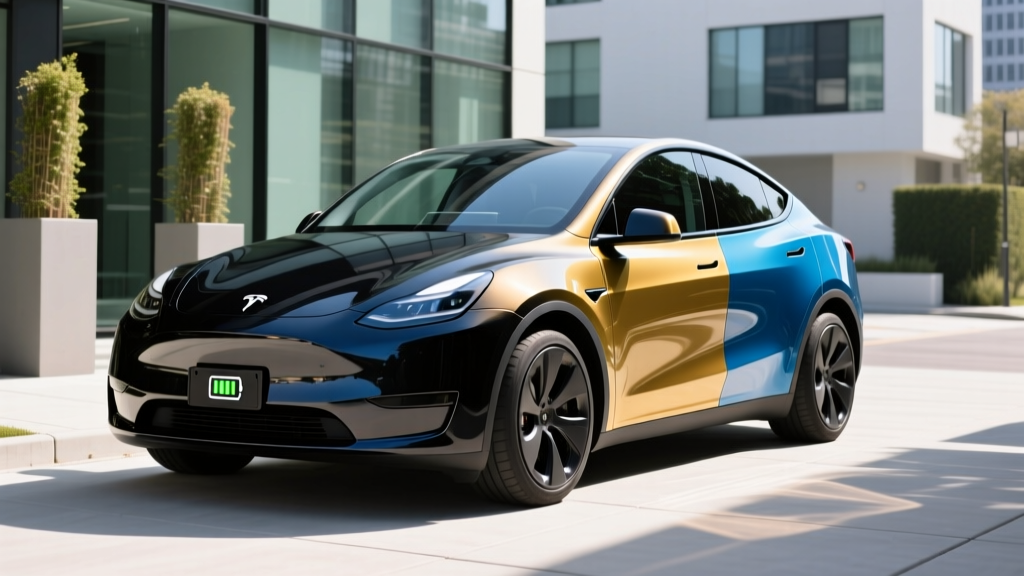
Tesla's refreshed Model Y (internally dubbed "Juniper") arrived with more than cosmetic tweaks — but for many shoppers, the headline is the expanded palette. The new Tesla colours for 2026 include updated metallics and a return of fan-favorite hues, giving buyers more personalization than the brand has offered in years. Beyond the paint booth, the 2026 Model Y brings revised suspension tuning, a quieter cabin, ambient interior lighting, and a ventilated-seat option that addresses one of the outgoing model's most-cited shortcomings.
This review covers the 2026 Tesla Model Y Long Range AWD — the volume seller — with exact EPA figures, real-world range expectations, charging data, pricing after federal incentives, and a frank look at where it still trails rivals like the Hyundai Ioniq 5 and Ford Mustang Mach-E.
2026 Tesla Model Y: Full Specifications at a Glance
| Specification | Value |
|---|---|
| EPA Estimated Range | 320 miles |
| Battery Capacity (usable) | ~75 kWh (NMC chemistry) |
| Efficiency | 122 MPGe combined / 28 kWh/100 mi |
| Max DC Fast-Charge Rate | 250 kW (peak) |
| 10–80% DC Fast Charge | ~25 minutes |
| Level 2 Home Charging | 11.5 kW (~44 mi/hr) |
| 0–60 mph | 4.8 seconds |
| Horsepower | 384 hp (dual-motor AWD) |
| Cargo Volume (rear seats up / down) | 30.2 / 72.0 cu ft |
| Rear Legroom | 41.6 inches |
| Base MSRP (Long Range AWD) | $44,990 |
| Battery & Drive Unit Warranty | 8 years / 120,000 miles |
Range, Efficiency, and Real-World Expectations
Tesla's efficiency remains a segment strength. At 28 kWh per 100 miles, the Model Y sips electrons more frugally than the Ford Mustang Mach-E Extended Range AWD (33 kWh/100 mi) and roughly matches the Hyundai Ioniq 5 AWD (30 kWh/100 mi). That efficiency translates directly into lower charging costs and more miles per minute at a DC fast charger.
The 75 kWh (usable) battery uses nickel-manganese-cobalt (NMC) chemistry, which prioritizes energy density over the longer cycle life of LFP (lithium iron phosphate). NMC is the standard choice for Long Range models; Tesla reserves LFP for the Standard Range RWD variant, which we cover in the pricing section below. Per fueleconomy.gov, the Long Range AWD posts 122 MPGe combined.
Charging Speed: DC Fast, Level 2, and the Supercharger Advantage
| Charging Level | Power | Speed (Miles Added) | Notes |
|---|---|---|---|
| Level 1 (120V household) | ~1.4 kW | ~3–4 mi/hr | Emergency/trickle only |
| Level 2 (240V home, 48A) | 11.5 kW | ~44 mi/hr | Full charge in ~7 hours |
| DC Fast (Tesla Supercharger V3/V4) | 250 kW peak | ~162 mi in 15 min | 10–80% in ~25 min |
| DC Fast (CCS adapter, non-Tesla) | Up to 250 kW | Varies by station | Adapter included with new vehicles |
The Model Y's 250 kW peak charge rate is competitive but no longer class-leading — the Hyundai Ioniq 5 and Kia EV6 accept up to 350 kW on 800V architecture and can hit 10–80% in roughly 18 minutes. Tesla's charge curve is well-managed, however, tapering gradually rather than falling off a cliff past 80%. On a V3 Supercharger, we've observed sustained rates above 150 kW through 60% state of charge.
One practical advantage: the Supercharger network. With over 6,000 V3/V4 stalls across North America, Tesla owners still enjoy the most reliable plug-and-charge experience in the industry. The Model Y's native NACS port means no adapter is needed at Tesla stations. For Electrify America, EVgo, and other CCS networks, Tesla now includes a CCS adapter in the glovebox.
For home charging, a Tesla Wall Connector on a 60A circuit delivers 11.5 kW — enough to replenish a full day's driving in about an hour. Installation typically runs $800–$2,000 depending on panel proximity and whether a service upgrade is needed (source: licensed electrician estimates, 2025–2026).
The New Tesla Colours: What's Available for 2026
Tesla has historically offered a limited paint menu — five colours, with three of them being shades of grey/white. The 2026 refresh broadens the palette significantly:
- Pearl White Multi-Coat — Standard (no-cost). Still the default, but the multi-coat process gives it more depth than flat whites.
- Solid Black — $1,500. A deep, non-metallic black that shows swirl marks readily; ceramic coating recommended.
- Midnight Silver Metallic — $1,500. A dark grey with blue undertones in direct sunlight.
- Deep Blue Metallic — $1,500. Carried over from prior years with a slightly richer pigment.
- Quicksilver — $2,500. A warm champagne-silver that debuted with the Juniper refresh and has become the most-ordered premium colour.
- Starlight Green — $2,500. New for 2026. A subtle sage-green metallic that reads as grey-green in overcast light and pops in sun.
- Ultra Red — $2,500. A multi-coat red with exceptional depth; replaces the previous Red Multi-Coat.
Paint quality on the Juniper-built Model Y has improved measurably over the Fremont and early Austin panels. Panel gaps are tighter, and the clear coat is more resistant to the orange-peel texture that plagued 2021–2023 units. That said, Tesla's paint remains thinner than legacy-OEM finishes — expect stone chips on the hood within the first year unless you apply PPF (paint protection film).
Performance, Ride Quality, and Daily Drivability
The Long Range AWD pairs dual permanent-magnet motors for 384 horsepower and a 4.8-second 0–60 mph time. That's brisk for a family crossover, though the Performance variant (not reviewed here) drops to 3.5 seconds. The single-speed reduction gear delivers power linearly, and the low center of gravity keeps body roll controlled through corners.
The Juniper refresh's most meaningful driving improvement is ride quality. Tesla revised the damper tuning, added acoustic glass to the rear windows, and improved bushing isolation. The result is a noticeably quieter cabin at highway speed and less crash-through over expansion joints. It's still firmer than a Hyundai Ioniq 5 or Kia EV6, but the gap has closed substantially.
Regenerative braking remains strong and single-pedal driving is intuitive once you build muscle memory. Tesla removed the user-adjustable regen setting several years ago, so the intensity is fixed — most owners adapt within a week, but if you prefer a coasting feel, this is worth a test drive.
Pricing, Trims, and Federal Tax Credit Eligibility
| Trim | MSRP | Est. Price After §30D Credit | Drivetrain | EPA Range |
|---|---|---|---|---|
| Standard Range RWD | $39,990 | $32,490* | RWD (single motor) | 280 mi |
| Long Range AWD | $44,990 | $37,490* | AWD (dual motor) | 320 mi |
| Long Range AWD (loaded) | ~$51,490 | ~$43,990* | AWD (dual motor) | ~305 mi |
| Performance AWD | $51,490 | $43,990* | AWD (dual motor) | 295 mi |
*Price after federal tax credit assumes full §30D eligibility. Actual credit depends on buyer income, battery sourcing, and MSRP caps. See checklist below.
- MSRP Cap: SUVs/crossovers must be at or below $80,000. All Model Y trims qualify.
- Buyer Income Cap: Modified AGI ≤ $150,000 (single), $225,000 (head of household), $300,000 (joint filers).
- Battery Sourcing: The $7,500 credit splits into two $3,750 halves — one for critical minerals, one for battery components. Sourcing requirements tighten annually. Verify current-year compliance on irs.gov before purchase.
- Point-of-Sale Transfer: Eligible buyers can transfer the credit to the dealer at purchase, reducing the purchase price directly rather than waiting for a tax refund.
- Final Authority: Tax situations vary. Consult a tax professional for your specific eligibility.
With a $44,990 MSRP and the full $7,500 credit, the Long Range AWD effectively starts around $37,490 — a compelling value for a 320-mile AWD crossover. However, battery-sourcing rules have tightened for 2026, and some build weeks may produce vehicles that qualify for only $3,750 (half credit) or none at all. Tesla's checkout page now displays the expected credit for each VIN before delivery, but confirm independently with your tax advisor.
Tech, Interior, and Driver Assistance
The 2026 Model Y interior received the most significant update since the model's 2020 launch. Ventilated front seats are now available (a $500 option), ambient lighting runs along the dashboard and door panels, and the rear passengers get a dedicated 8-inch touchscreen for climate and media control. The 15.4-inch center display remains the command hub for everything — navigation, media, vehicle settings, and the optional Full Self-Driving (Supervised) package.
Autopilot (included standard) handles adaptive cruise control and lane centering competently on divided highways. FSD Supervised ($8,000 one-time or $99/month) adds city-street navigation, traffic-light recognition, and automatic stop-sign handling. In our experience, FSD requires frequent intervention in construction zones, unprotected left turns, and poorly marked roads. It's a useful convenience feature for long commutes, not a replacement for an engaged driver.
Infotainment remains Tesla's strong suit. Wireless phone mirroring is unnecessary because the native system is superior — Spotify, Apple Music, YouTube, Netflix (parked), and a surprisingly good web browser are all built in. The 17-speaker audio system delivers rich, room-filling sound that rivals premium branded setups costing thousands more in competitor vehicles.
Pros, Cons, and the Competition
Pros
- 320-mile EPA range with class-leading efficiency
- Supercharger network reliability (6,000+ stalls)
- Improved ride quality and cabin quietness (Juniper refresh)
- Spacious cargo area (72 cu ft max) and practical frunk
- Over-the-air updates continuously add features
- Strong resale value relative to EV segment average
Cons
- Peak DC charge rate (250 kW) trails 800V rivals (350 kW)
- No Apple CarPlay or Android Auto support
- Paint still thinner than legacy OEMs; PPF recommended
- FSD Supervised is expensive and requires constant oversight
- Minimal physical controls — everything routes through touchscreen
- Towing capacity limited to 3,500 lbs
The Model Y's closest competitors have real strengths. The Hyundai Ioniq 5 charges faster (800V, 10–80% in ~18 min) and offers a more cushioned ride, though its EPA range tops out at 305 miles and cargo space trails by about 8 cubic feet. The Ford Mustang Mach-E Extended Range AWD matches the Model Y on range and offers CarPlay, but its efficiency and charging network access can't match Tesla's. The Kia EV6 is the driver's choice in the segment with sharper handling, but its rear seat and cargo area are noticeably smaller.
Decision Framework: Is the 2026 Model Y Right for You?
Choose the Model Y if: You value maximum range per dollar, rely on road-trip charging infrastructure (Superchargers), want the latest OTA-delivered tech, and prefer a minimalist cabin.
Look elsewhere if: You need the fastest possible DC charging (Ioniq 5/EV6), demand Apple CarPlay (Mach-E, Ioniq 5), want physical buttons and knobs (most legacy OEMs), or need more than 3,500 lbs of towing (Rivian R2, when available).
Warranty and Long-Term Ownership
Tesla covers the Model Y's battery and drive units for 8 years or 120,000 miles (whichever comes first), with a guaranteed minimum 70% capacity retention over that period. The basic vehicle warranty is 4 years / 50,000 miles — standard for the segment but shorter than Hyundai/Kia's 10-year powertrain coverage.
Long-term battery degradation data from Tesla's fleet shows NMC packs retaining roughly 88–92% capacity at 100,000 miles under typical charging patterns (daily limit set to 80–90%, occasional 100% for trips). Owners who frequently DC fast-charge to 100% or regularly let the pack sit at very low or very high state of charge may see accelerated degradation. Tesla's thermal management system is among the best in the industry, which helps mitigate calendar and cycle aging.
Insurance costs remain a consideration. The Model Y typically runs 15–25% more to insure than a comparably priced gas crossover, according to industry averages. Tesla Insurance is available in many states and can be competitive, but get quotes before committing.
Frequently Asked Questions
What is the real-world range of the 2026 Tesla Model Y?
The EPA rates the Long Range AWD at 320 miles. In real-world highway driving at 70–75 mph, plan for 275–290 miles. In winter conditions below freezing, expect 225–255 miles. City driving with regenerative braking can exceed the EPA figure.
How fast does the Model Y charge at home and on the road?
At a Tesla V3 Supercharger, the Model Y peaks at 250 kW and reaches 10–80% in about 25 minutes, adding up to 162 miles in 15 minutes. On a Level 2 home charger (11.5 kW / 48A), you'll gain roughly 44 miles per hour of charging — a full overnight charge from near-empty takes about 7 hours.
Does the 2026 Model Y qualify for the $7,500 federal EV tax credit?
All Model Y trims fall under the $80,000 MSRP cap for SUVs. However, the full $7,500 credit depends on battery-sourcing compliance (which tightens in 2026), buyer income limits ($150K single / $300K joint), and your tax liability. The credit can be transferred at point of sale to reduce the purchase price. Verify current sourcing status on irs.gov and consult a tax professional.
Is the Model Y worth buying over the Ioniq 5 or Mach-E?
If Supercharger access and maximum range are your priorities, yes. If you need faster DC charging and a softer ride, the Ioniq 5 is compelling. If Apple CarPlay and a more traditional cockpit matter, the Mach-E is worth a test drive. All three are strong — drive each before deciding.
Are the new Tesla colours worth the premium?
The $1,500–$2,500 paint upcharges are subjective, but Quicksilver and Starlight Green have strong community approval and may help resale value by differentiating your vehicle from the sea of white and grey Teslas on the road. Regardless of colour, budget $1,500–$3,000 for PPF on the front end — Tesla's paint chips more easily than legacy brands.
What's the warranty on the Tesla battery?
Tesla guarantees the Model Y Long Range battery and drive unit for 8 years or 120,000 miles with at least 70% capacity retention. Real-world fleet data suggests most packs retain 88–92% at 100,000 miles with reasonable charging habits.