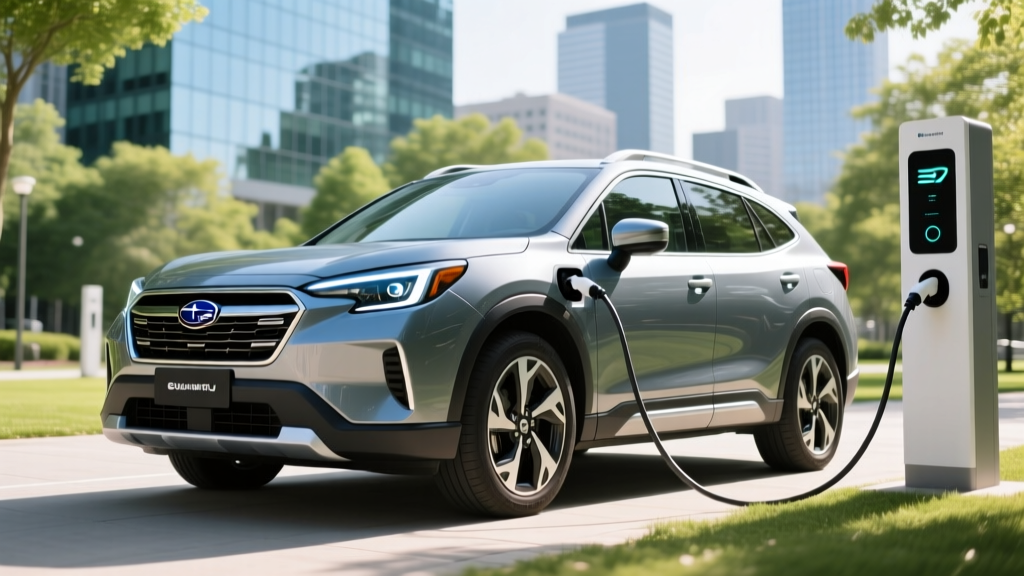
Quick Answer: The new Subaru EV — the Subaru Solterra — is a dual-motor, all-wheel-drive electric SUV built on the Toyota/Subaru co-developed e-TNGA platform. For 2026, the Solterra offers an EPA-estimated range of up to 227 miles (Limited trim with the Efficiency Plus package), a 72.8 kWh lithium-ion battery, DC fast charging up to 150 kW, and a starting MSRP around $44,995. It qualifies for partial or full federal tax credits depending on your income and the vehicle's battery-sourcing compliance. The Solterra is best for Subaru loyalists who need standard AWD and moderate daily range, but its highway efficiency and charging speed lag behind rivals like the Hyundai Ioniq 5 and Tesla Model Y.
What Is the New Subaru EV?
Subaru's sole battery-electric vehicle is the Solterra, introduced for the 2023 model year and refreshed for 2025 with faster DC charging and slightly improved range. As of 2026, it remains the only new Subaru EV available for purchase in the U.S. Subaru has announced plans for additional electrified models, but no second dedicated EV has reached showrooms yet.
The Solterra was co-developed with Toyota (which sells its twin, the bZ4X) on the shared e-TNGA skateboard platform. Subaru's contribution centers on the X-MODE AWD system, 8.3 inches of ground clearance, and off-road-oriented driving modes — differentiators for buyers who use their vehicles on forest roads, ski trips, or gravel driveways.
| Spec | Value |
|---|---|
| EPA Range (Limited, Efficiency Plus pkg) | 227 mi |
| EPA Range (Premium / Touring) | 222 mi / 214 mi |
| Real-World Highway Range (est.) | ~180–200 mi |
| Real-World Cold-Weather Range (est.) | ~155–175 mi |
| Battery Capacity | 72.8 kWh (usable ~68 kWh) |
| Battery Chemistry | Lithium-ion (NMC) |
| DC Fast Charge Peak Rate | 150 kW |
| 10–80% DC Fast Charge Time | ~35 minutes |
| Level 2 AC Charge Rate | 11 kW (onboard charger) |
| Level 2 Full Charge Time (0–100%) | ~7.5 hours |
| Drivetrain | Dual-motor AWD (standard all trims) |
| Horsepower | 215 hp combined |
| 0–60 mph | ~6.5 seconds |
| MPGe (combined) | 104 MPGe (Limited Efficiency Plus) |
| Ground Clearance | 8.3 inches |
| Battery Warranty | 8 years / 100,000 miles |
| Base MSRP (Premium) | $44,995 |
| Top Trim MSRP (Touring) | $51,995 |
Source: fueleconomy.gov, Subaru of America
Real-World Range: What the EPA Sticker Doesn't Tell You
The EPA-estimated 227-mile range applies to the Limited trim with the Efficiency Plus package under mixed city/highway driving. Here's what to expect in practice:
- City / suburban driving (30–45 mph): Range tracks close to EPA, often exceeding it thanks to regenerative braking. Expect 220–235 miles.
- Highway driving (70–80 mph): The Solterra's boxy shape and AWD drivetrain create drag. Expect 180–200 miles on a full charge at sustained interstate speeds.
- Cold weather (below 32°F): Battery chemistry slows and cabin heating draws significant power. Expect 155–175 miles, a 20–30% reduction from EPA. The Solterra lacks a heat pump on base trims, which worsens winter efficiency.
- Towing or heavy cargo: The Solterra is rated for only 2,000 lbs towing — not a workhorse. Even light trailering will cut range by 15–25%.
Range Reality Check: If your daily commute is under 60 miles round-trip and you can charge at home, the Solterra's real-world range is more than adequate. But if you regularly drive 200+ mile highway stretches between charging stops — think Denver to Vail, or Seattle to Spokane — you'll need to plan around DC fast chargers, especially in winter. Rivals like the Hyundai Ioniq 5 Long Range (318 mi EPA) and Tesla Model Y Long Range (310+ mi EPA) offer significantly more highway buffer.
Charging: Home Setup and Public Network Reality
The Solterra's 2025 refresh brought DC fast-charge capability up to 150 kW (from the initial 100 kW), a meaningful improvement. However, it still trails the 240–350 kW peak rates of competitors on 800-volt architectures.
| Level | Power | Miles Added per Hour | Use Case |
|---|---|---|---|
| Level 1 (120V household) | ~1.4 kW | ~4–5 mi/hr | Emergency / trickle top-up |
| Level 2 (240V, 48A) | 11 kW (onboard max) | ~33–37 mi/hr | Overnight home charging |
| DC Fast Charge | Peak 150 kW | ~200+ mi in 35 min (10–80%) | Road trips, public stations |
Home Charging Installation Costs
Most Solterra owners will want a Level 2 home charger. Here's what to budget:
| Item | Cost Range |
|---|---|
| Level 2 charger hardware (e.g., ChargePoint Home Flex, Emporia Vue) | $400–$700 |
| Electrician labor (240V/50A circuit run) | $500–$2,000 |
| Permit and inspection | $50–$250 |
| Electrical panel upgrade (if needed, 200A service) | $1,500–$4,000 |
| Total (no panel upgrade) | $950–$2,950 |
| Total (with panel upgrade) | $2,450–$6,950 |
Important: If your home has older 100A electrical service, you may need a panel upgrade to support a 48A continuous EV circuit. Have a licensed electrician assess your panel before purchasing a charger. The federal 30C tax credit can cover up to 30% of home charging equipment and installation costs (capped at $1,000), subject to income and census-tract eligibility.
Public Charging Compatibility
The Solterra uses the CCS1 connector for DC fast charging and J1772 for Level 2 AC. With the industry-wide shift to NACS (Tesla's connector), Subaru has confirmed that future models will adopt NACS natively, but the current Solterra ships with CCS. You can access Tesla Superchargers using a Magic Dock adapter at participating stations, or purchase a CCS-to-NACS adapter.
For road trips, the Solterra works with Electrify America, EVgo, and ChargePoint DC fast networks. Expect real-world charging sessions of 35 minutes for 10–80%, with the charge curve tapering significantly above 80% SoC — a normal characteristic of lithium-ion batteries to protect cell longevity.
Cost of Ownership: Solterra vs. Gas Outback
The Solterra's closest internal-combustion comparison is the Subaru Outback, the brand's best-selling wagon. Here's a 5-year ownership cost comparison:
| Category | Solterra Premium | Outback Premium (2.5L AWD) |
|---|---|---|
| MSRP (incl. destination) | $45,990 | $36,490 |
| Federal Tax Credit (§30D, estimated) | –$3,750 to –$7,500* | $0 |
| Effective Purchase Price | $38,490–$42,240 | $36,490 |
| Fuel / Electricity (5 years, 75k mi) | $3,000–$4,500** | $8,200–$10,500*** |
| Maintenance (5 years) | $600–$900 | $2,500–$3,500 |
| Insurance (5-year avg) | $9,500–$12,000 | $7,000–$9,000 |
| Estimated Depreciation (5 yr) | $16,000–$20,000 | $12,000–$15,000 |
| 5-Year Total (approx.) | $67,590–$79,640 | $64,190–$74,490 |
* Tax credit amount depends on battery-sourcing compliance, buyer income caps ($150K single / $300K joint), and MSRP caps ($80K for SUVs). Verify current-year eligibility at irs.gov.
** Based on $0.13–$0.18/kWh home charging; public DC fast charging is more expensive ($0.35–$0.55/kWh).
*** Based on $3.30–$4.20/gal and 28 MPG combined for the Outback 2.5L.
The takeaway: Over 5 years, the Solterra costs roughly the same or slightly more than a gas Outback, depending on your tax-credit eligibility, electricity rates, and how much public fast charging you rely on. The savings widen in years 6–10 as the EV's lower maintenance costs (no oil changes, fewer brake replacements due to regen, no transmission fluid) compound. However, the Solterra's higher insurance premiums and steeper depreciation partially offset fuel savings.
Federal Tax Credit: What You Actually Qualify For
The §30D Clean Vehicle Credit can reduce your federal tax liability by up to $7,500 on a new Solterra purchase — but not every buyer gets the full amount. Current rules include:
- MSRP cap: Vehicle must be under $80,000 (Solterra qualifies at all trims)
- Buyer income cap: AGI must not exceed $150,000 (single), $225,000 (head of household), or $300,000 (joint)
- Battery sourcing: A percentage of critical minerals and battery components must be sourced from the U.S. or FTA partners — this percentage increases annually and affects whether you receive $3,750 or the full $7,500
- Point-of-sale transfer: As of 2024, you can transfer the credit to the dealer at purchase, reducing your out-of-pocket cost immediately rather than waiting for tax filing
- Lease loophole: Leased EVs may qualify for the full $7,500 commercial credit passed through as a lease incentive, regardless of sourcing or income caps — check with your dealer
Because battery-sourcing rules tighten each year, the exact credit amount for a 2026 Solterra may differ from 2025. Always confirm current eligibility via the DOE's fueleconomy.gov tax credit lookup and consult a tax professional for your specific situation.
Common Misconceptions About the Solterra
| Myth | Fact |
|---|---|
| "The Solterra can't handle winter." | It has standard dual-motor AWD, 8.3 inches of ground clearance, and X-MODE. Traction is excellent. Range drops 20–30% in deep cold — true for all EVs — but the vehicle itself is highly capable in snow. |
| "It charges too slowly for road trips." | At 150 kW peak, a 10–80% charge takes ~35 minutes. That's slower than the Ioniq 5's ~18 minutes at 240 kW, but still practical for a meal or rest stop. Plan accordingly. |
| "The battery will need replacing soon." | Subaru warranties the battery for 8 years/100,000 miles against degradation below 70% capacity. NMC chemistry in modern thermal-managed packs typically retains 85–90% capacity at 100k miles based on industry data. |
| "I can't charge at Tesla Superchargers." | You can, using a CCS-to-NACS adapter or at Superchargers equipped with the Magic Dock. Subaru has committed to NACS adoption on future models. |
| "It's basically a Toyota bZ4X with a badge." | They share the e-TNGA platform and battery, but Subaru tunes the suspension, AWD system, and X-MODE differently. The Solterra has more ground clearance (8.3" vs 8.1") and Subaru-specific off-road modes. Interior layouts differ slightly. |
Decision Framework: Is the Solterra the Right New Subaru EV for You?
Choose the Solterra if:
- You're a Subaru loyalist who values standard AWD, X-MODE, and 8.3" ground clearance for dirt roads, snow, and outdoor recreation
- Your daily commute is under 80 miles round-trip and you have reliable home Level 2 charging
- You qualify for at least $3,750 in federal tax credits, narrowing the price gap with gas alternatives
- You prefer Subaru's EyeSight driver-assistance system (SAE Level 2) and brand reliability reputation
- You don't regularly take 300+ mile highway road trips without stopping
Look at alternatives if:
- Maximum range is your top priority — the Hyundai Ioniq 5 (318 mi) or Tesla Model Y Long Range (310+ mi) offer 40%+ more highway buffer
- You need the fastest possible DC charging — the Ioniq 5 and Kia EV6 on 800V architecture charge 10–80% in ~18 minutes
- You lack home charging access and rely entirely on public infrastructure — the Solterra's 227-mile range means more frequent stops
- You need 3-row seating or significant cargo volume — the Solterra seats 5 with 23.8 cu ft of cargo space behind the rear seats
- Towing capacity matters — the Solterra is rated for only 2,000 lbs vs. 2,700 lbs for the gas Outback
What First-Time EV Buyers Should Know Before Purchasing
If the Solterra is your first EV, here's what to prepare for:
- Home charging is essential. Relying solely on public charging is more expensive ($0.35–$0.55/kWh vs. $0.13–$0.18/kWh at home) and less convenient. Confirm your home's electrical panel can support a 240V/48A circuit before committing.
- Plan road trips around chargers. Use apps like PlugShare or A Better Routeplanner to map DC fast-charger locations. The Solterra's CCS connector is widely supported, but check station status — not all listed chargers are operational.
- Precondition the battery. When navigating to a DC fast charger, the Solterra preconditions its battery to optimal temperature, enabling faster charging. Always use the nav system to route to chargers for this benefit.
- Insurance costs more. EV insurance premiums run 15–30% higher than comparable gas vehicles due to repair costs and battery replacement risk. Get quotes before purchasing.
- Maintenance is minimal but different. No oil changes, no spark plugs, and brake pads last longer (regen braking reduces wear). But you'll still need tire rotations (EVs wear tires faster due to instant torque and weight), cabin air filter changes, and brake fluid checks.
- Understand kW vs. kWh. kW (kilowatts) measures power — how fast you charge. kWh (kilowatt-hours) measures energy — how much the battery holds. The Solterra's 72.8 kWh battery charged at 11 kW takes ~7.5 hours. Don't confuse the two.
Frequently Asked Questions
Is Subaru making a new EV to replace the Solterra?
Subaru has announced plans to introduce additional EVs, including a larger 3-row SUV expected later this decade, built on a next-generation platform. As of 2026, the Solterra remains the only new Subaru EV available for purchase. Any future models are still in the announced/preliminary stage with no confirmed U.S. pricing or specs.
Does the Solterra qualify for the full $7,500 federal tax credit?
It depends on battery-sourcing compliance for the specific model year and your income. Under current §30D rules, the Solterra may qualify for $3,750 (meeting one of the two sourcing thresholds) or the full $7,500 (meeting both). Check the latest eligibility at irs.gov before purchasing. Leasing may unlock the full credit regardless of sourcing.
How does the Solterra compare to the Toyota bZ4X?
Both share the e-TNGA platform and 72.8 kWh battery. The Solterra differentiates with Subaru's X-MODE AWD system, slightly higher ground clearance, and unique exterior/interior styling. Range and charging specs are nearly identical. Pricing is comparable, though trim structures differ. If you prioritize off-road capability and Subaru's AWD reputation, the Solterra is the better pick. If you prefer Toyota's dealer network or slightly lower pricing on base trims, the bZ4X is worth comparing.
Can I tow with the Solterra?
Yes, but capacity is limited to 2,000 lbs (braked trailer). That's enough for a small utility trailer, a couple of dirt bikes, or a light pop-up camper, but not a full-size boat or travel trailer. Towing will also reduce range by 15–25%.
What happens if the Solterra battery degrades?
Subaru's battery warranty covers capacity loss below 70% for 8 years or 100,000 miles. Industry data suggests modern NMC packs with active thermal management typically retain 85–90% capacity at 100k miles. If the battery does fall below the warranty threshold, Subaru will repair or replace it at no cost. Out-of-warranty battery replacement costs are estimated at $8,000–$15,000 based on current industry figures, though prices are expected to decline as battery manufacturing scales.
Is the Solterra's EyeSight system self-driving?
No. EyeSight is an SAE Level 2 driver-assistance system. It provides adaptive cruise control, lane-centering, and automatic emergency braking, but the driver must remain fully engaged with hands on the wheel and eyes on the road at all times. It is not autonomous driving and does not replace driver attention.