The Short Answer on Subaru's Electric Lineup
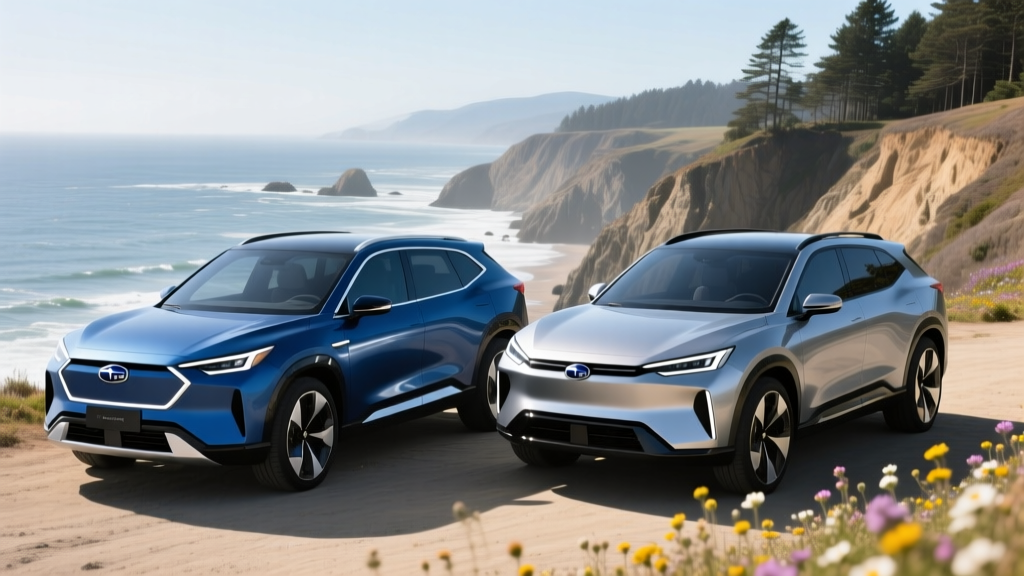
Subaru currently sells one all-electric vehicle — the Solterra SUV — and has announced a second, the smaller Uncharted crossover, expected to arrive at dealers in late 2026 or early 2027. The 2026 Solterra starts around $38,495, offers an EPA-estimated 227 miles of range (in base form with 18-inch wheels), and charges at up to 150 kW on DC fast chargers. The upcoming Uncharted targets a lower entry price near $34,000 with approximately 250 miles of projected range. Both models come standard with Subaru's symmetrical all-wheel drive and EyeSight driver-assist suite. Whether either makes sense for you depends heavily on your home charging situation, local climate, and how the federal §30D tax credit applies to your income and the vehicle's battery sourcing.
What Subaru Electric Models Can You Actually Buy?
As of the 2026 model year, Subaru's electric portfolio is compact but growing. Here's where each model stands:
2026 Subaru Solterra — Available Now
The Solterra is Subaru's first dedicated battery-electric vehicle, co-developed with Toyota (which sells the mechanically similar bZ4X). Built on the e-Subaru Global Platform, it's a compact crossover aimed at buyers who want Subaru's hallmark AWD capability in an electric package. For 2026, Subaru has made incremental improvements to charging speed and thermal management compared to the initial 2023 launch model.
Subaru Uncharted — Announced, Not Yet On Sale
Subaru has confirmed the Uncharted as a smaller, more affordable electric crossover positioned below the Solterra. Preliminary specs suggest a single-motor front-wheel-drive option alongside an AWD variant. This model is not yet available for purchase — treat all specs as estimated until EPA certification and official pricing are released.
| Specification | 2026 Solterra (AWD) | Uncharted (Estimated) |
|---|---|---|
| Status | On sale now | Announced; late 2026/early 2027 |
| Battery (usable) | 71.4 kWh (NMC) | ~65 kWh (est.) |
| EPA Range | 227 mi (18" wheels) / 222 mi (20" wheels) | ~250 mi (FWD est.) |
| Drivetrain | Dual-motor AWD (215 hp) | FWD or AWD (TBD) |
| 0-60 mph | ~6.5 seconds | TBD |
| Peak DC Fast Charge | 150 kW | TBD |
| 10-80% DC Charge Time | ~35 minutes | TBD |
| Level 2 Charging (AC) | 7.2 kW (~25 mi/hr) | TBD |
| Base MSRP | $38,495 | ~$34,000 (est.) |
| Battery Warranty | 8 years / 100,000 miles | TBD |
Real-World Range: What the EPA Sticker Doesn't Tell You
EPA Estimate: 227 miles (Solterra, 18" wheels, Premium trim)
Real-World Expectation: Plan for 180-200 miles in mixed highway driving at 70-75 mph. In cold weather (below 30°F), expect a further reduction to roughly 155-175 miles due to battery chemistry limitations and cabin heating demands. The Solterra does not currently include a heat pump on all trims, which increases energy consumption in winter compared to EVs equipped with one.
The Solterra's 71.4 kWh usable battery (NMC chemistry) delivers an EPA-rated efficiency of approximately 102 MPGe combined — adequate for the segment but behind leaders like the Hyundai Ioniq 5 (114 MPGe) and Tesla Model Y (122 MPGe). The efficiency gap matters most on road trips, where you'll stop more frequently to charge.
On the positive side, Subaru's AWD system provides genuine traction advantages in snow and rain, which is exactly what loyal Subaru buyers expect. The trade-off is higher energy consumption from running two motors and the added weight of the AWD hardware.
Charging the Solterra: Home, Public, and What It Costs
Understanding the difference between kW (power — how fast energy flows) and kWh (energy — how much the battery holds) is essential. The Solterra's 71.4 kWh battery is the fuel tank; the 150 kW peak charge rate is the pump speed.
| Charging Level | Power | Miles Added per Hour | Typical Use Case |
|---|---|---|---|
| Level 1 (120V household) | ~1.4 kW | ~4-5 miles | Overnight top-up; emergency |
| Level 2 (240V home/public) | 7.2 kW | ~25 miles | Daily home charging; full charge in ~10 hrs |
| DC Fast Charging | Up to 150 kW | ~150+ mi in 30 min | Road trips; 10-80% in ~35 min |
DC Fast Charging Reality Check
The Solterra's 150 kW peak rate is modest by 2026 standards — competitors like the Ioniq 5 and Kia EV6 can peak at 240 kW or higher on 800V architectures. More importantly, the Solterra's charge curve tapers noticeably above 80% state of charge, meaning that last 20% can take nearly as long as the first 80%. On road trips, plan to charge from 10-80% and drive on rather than waiting for a full battery.
One practical note: the Solterra uses the CCS1 connector for DC fast charging and J1772 for Level 2 AC. Subaru has not yet transitioned to the NACS (Tesla-style) connector, though adapters are available for accessing Tesla Supercharger stations.
Home Charging Installation Costs
| Component | Cost Range |
|---|---|
| Level 2 charger (hardware) | $350 - $700 |
| Electrician labor (240V/40A circuit) | $500 - $2,000 |
| Permit and inspection | $50 - $300 |
| Electrical panel upgrade (if needed) | $1,500 - $4,000 |
| Total (no panel upgrade) | $900 - $3,000 |
| Total (with panel upgrade) | $2,400 - $7,000 |
If you live in an apartment or lack access to a dedicated parking space with electrical infrastructure, Level 2 home charging may not be feasible. In that scenario, evaluate your access to reliable public Level 2 or DC fast chargers before committing. Relying solely on public charging is more expensive and less convenient than home charging for daily use.
Solterra vs. Gas Subaru: 5-Year Cost Breakdown
How does the Solterra compare financially to a similarly priced gas-powered Subaru, like the Outback? Here's a five-year estimate assuming 15,000 miles per year (75,000 total), electricity at $0.16/kWh (national average), and gas at $3.40/gallon.
| Category | Solterra Premium (AWD) | Outback Base (AWD) |
|---|---|---|
| MSRP | $38,495 | $32,495 |
| Est. Federal Tax Credit (§30D) | Up to $7,500* | $0 |
| Effective Purchase Price | ~$30,995* | $32,495 |
| Fuel/Energy (75,000 mi) | ~$3,570 (home charging) | ~$9,000 |
| Maintenance (75,000 mi) | ~$600 | ~$2,400 |
| Insurance (5-year est.) | ~$8,500 | ~$7,200 |
| 5-Year Total (est.) | ~$43,665 | ~$51,095 |
*Federal tax credit eligibility depends on your taxable income, the vehicle's battery sourcing, and MSRP caps. The Solterra's eligibility under current IRS §30D rules is subject to critical-mineral and battery-component requirements that change annually. Consult a tax professional and verify current-year eligibility at purchase. Point-of-sale transfer is available if you qualify.
The Solterra's higher insurance cost (typically 15-25% above a comparable gas model) partially offsets fuel and maintenance savings. The purchase price advantage hinges entirely on qualifying for the federal credit.
Common Misconceptions About the Solterra
| Myth | Fact |
|---|---|
| "227 miles of range isn't enough for any road trip." | With DC fast charging at 150 kW, you can add ~120 miles in about 20 minutes. Most road trips require one or two brief stops — manageable with route planning. |
| "The battery will need replacing in a few years." | Subaru warranties the battery for 8 years/100,000 miles with a capacity-retention threshold. NMC batteries in modern EVs typically retain 85-90% capacity after 100,000 miles based on industry data from fueleconomy.gov. |
| "It charges as fast as a Tesla." | At 150 kW peak, the Solterra is roughly 40% slower than Tesla's V3/V4 Superchargers (250+ kW) or Hyundai's 800V vehicles. Plan for longer stops. |
| "AWD in an EV is just marketing." | Dual-motor AWD provides genuine traction benefits in snow, mud, and rain. Subaru's system can independently torque-vector front and rear axles, which is a real capability advantage. |
| "I don't need home charging — public stations are everywhere." | Public DC charging costs 2-3x more than home Level 2, and station reliability varies significantly by network. Daily public charging is impractical for most owners. |
Decision Framework: Is a New Subaru Electric Right for You?
Choose the Solterra if:
- You have access to Level 2 home charging (garage or dedicated outdoor outlet)
- You live in a region with moderate-to-cold winters and value AWD traction
- Your typical daily driving is under 80 miles round-trip
- You qualify for the federal tax credit, bringing the effective price below a gas Outback
- You plan to keep the vehicle 5+ years to recoup the upfront premium through fuel savings
Choose a gas or hybrid Subaru instead if:
- You live in an apartment or lack reliable home charging access
- You frequently drive 300+ miles in a single day through areas with sparse charging infrastructure
- You do not qualify for the §30D tax credit due to income limits or battery-sourcing rules
- You need maximum cargo space (the Outback offers 75.7 cu ft vs. the Solterra's ~57 cu ft)
Wait for the Uncharted if:
- You want a more affordable entry point to Subaru's electric lineup
- A smaller crossover suits your needs (city commuting, fewer passengers)
- You're willing to wait until late 2026/early 2027 for availability and confirmed EPA specs
What First-Time EV Buyers Should Know Before Committing
If the Solterra is your first electric vehicle, a few ownership realities differ sharply from the gas-car experience:
Preconditioning matters. The Solterra allows you to precondition the battery (warm it to optimal temperature) before arriving at a DC fast charger. This significantly improves charging speed, especially in cold weather. Set a departure time in the vehicle's app, and it will warm the battery automatically while plugged in at home.
Regenerative braking changes how you drive. The Solterra offers adjustable regen levels via paddle shifters. At maximum regen, you can drive mostly using the accelerator pedal alone — lifting off slows the car substantially and recovers energy. It takes a week or two to adapt, but most EV owners come to prefer it.
Tire costs are higher. EVs are heavier and deliver instant torque, which accelerates tire wear. Budget for tire replacement every 30,000-40,000 miles rather than the 50,000+ miles typical for gas vehicles.
Software updates happen overnight. Subaru pushes over-the-air updates that can adjust range estimates, charging behavior, and infotainment features. Your car may improve incrementally without a dealer visit.
Frequently Asked Questions
Does the Subaru Solterra qualify for the $7,500 federal tax credit?
Eligibility under IRS §30D depends on current-year battery-sourcing and critical-mineral requirements, your taxable income (capped at $150,000 single / $300,000 joint), and the vehicle's MSRP (capped at $80,000 for SUVs). These rules tighten annually. Verify the Solterra's eligibility in your purchase year and consult a tax professional. If eligible, you can transfer the credit to the dealer at point of sale for an immediate price reduction.
How does the Solterra compare to the Toyota bZ4X?
The two vehicles share the same platform, battery, and powertrain. Differences are mostly cosmetic and feature-related. The Solterra includes standard AWD on all trims (the bZ4X offers FWD on base models) and Subaru's X-MODE traction software. Pricing is similar, though trim-level feature content varies.
Can I tow with the Solterra?
The 2026 Solterra is rated to tow up to 2,000 pounds when properly equipped — enough for a small utility trailer or a pair of dirt bikes, but not a camper or boat. Towing significantly reduces range; expect a 30-50% reduction depending on trailer weight and aerodynamics.
Is Subaru's EyeSight system self-driving?
No. EyeSight is a SAE Level 2 driver-assistance system, meaning it can manage steering, acceleration, and braking under certain conditions, but you must remain fully attentive and keep your hands on the wheel. It is not autonomous driving. Subaru does not currently offer a hands-free highway driving system comparable to GM's Super Cruise or Ford's BlueCruise.
What happens if the battery degrades significantly?
Subaru's battery warranty covers defects and excessive capacity loss for 8 years or 100,000 miles. If capacity drops below the warranty threshold (typically 70% of original), Subaru will repair or replace the battery at no cost. Out-of-warranty battery replacement currently ranges from $12,000 to $18,000 depending on labor and parts availability — a significant expense, though most NMC batteries retain usable capacity well beyond 150,000 miles in real-world fleet data.
Sources: EPA fueleconomy.gov, Subaru of America, IRS §30D Clean Vehicle Credits