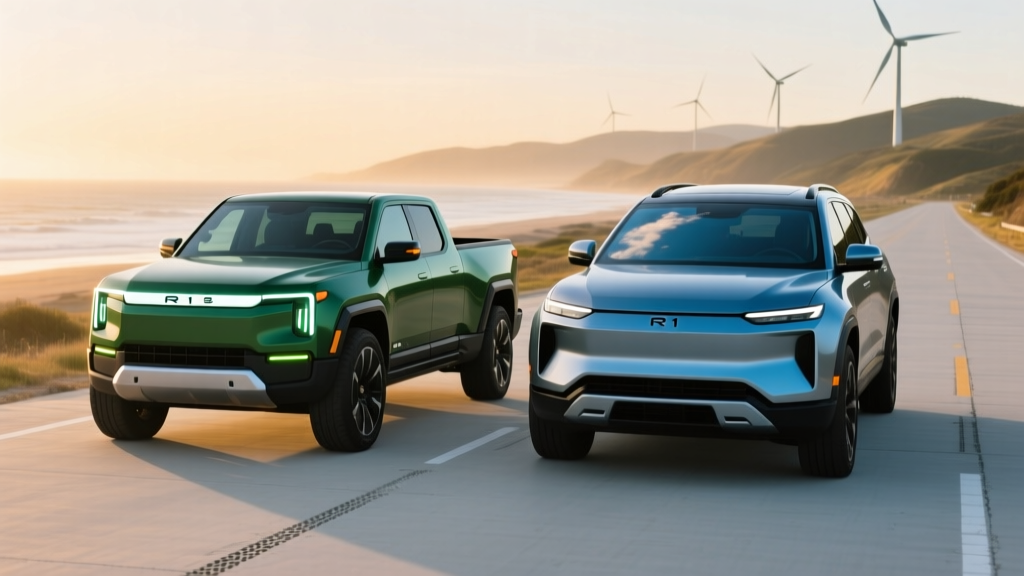
If you've been searching when does the new Rivian come out, you're likely tracking the transition from the first-generation R1T and R1S to Rivian's heavily revised Gen 2 lineup. The short answer: Rivian began delivering the Gen 2 R1T and R1S in late 2024 after revealing the updated models in June 2024, and by early 2026 the Gen 2 platform is in full production with updated trims and pricing. Whether you're considering the truck (R1T) or the three-row SUV (R1S), the Gen 2 represents a substantial rework of the powertrain, electrical architecture, interior, and software — not a simple refresh.
Below, we break down exactly what's available for the 2026 model year, what's changed, the real-world specs that matter for buyers, and whether the new Rivian earns its premium price tag against competitors like the Tesla Cybertruck, Ford F-150 Lightning, and Chevrolet Silverado EV.
Rivian Gen 2 Release Timeline: What's Available Now
Rivian announced the Gen 2 R1T and R1S in June 2024 with a comprehensive suite of upgrades. Customer deliveries of Gen 2 vehicles began in the fall of 2024, and production at the Normal, Illinois factory has been ramping steadily. As of early 2026, all new R1T and R1S vehicles rolling off the line are Gen 2 specification. Lead times have improved considerably from the 2022–2023 waitlists, with typical delivery windows now measured in weeks to a few months depending on configuration.
Rivian has also hinted at a smaller, more affordable R2 SUV platform (expected at a lower starting price), but as of this writing the R2 remains in announced/pre-production status with deliveries targeted for 2026. If you're asking "when does the new Rivian come out" hoping for the R2, expect concrete order configurators to open closer to the production start date.
2026 Rivian R1T & R1S: Full Spec Breakdown
The Gen 2 lineup carries over two battery sizes and three motor configurations. Here are the key specifications for the 2026 model year, based on Rivian's official specifications and EPA data:
| Specification | Dual-Motor Standard | Dual-Motor Max | Tri-Motor Max | Quad-Motor |
|---|---|---|---|---|
| EPA Range (est.) | ~270 mi | ~420 mi | ~415 mi | ~328 mi |
| Battery Capacity (usable) | ~95 kWh (LFP) | ~141 kWh (NMC) | ~141 kWh (NMC) | ~141 kWh (NMC) |
| Horsepower | 533 hp | 533 hp | 850 hp | 1,025 hp |
| 0–60 mph | 4.5 sec | 4.5 sec | 2.9 sec | 2.5 sec |
| Drivetrain | AWD (dual-motor) | AWD (dual-motor) | AWD (tri-motor) | AWD (quad-motor) |
| Max Tow Capacity | 11,000 lbs | 11,000 lbs | 11,000 lbs | 11,000 lbs |
| Peak DC Fast Charge | ~200 kW | ~220 kW | ~220 kW | ~220 kW |
| Base MSRP (R1T) | $69,900 | $83,900 | $99,900 | $113,900 |
Note: R1S (SUV) pricing typically runs $3,000–$5,000 higher than equivalent R1T trims. Specs are preliminary for some trims and subject to EPA final certification.
Real-World Range: What the EPA Sticker Doesn't Tell You
The Max Pack's EPA-estimated ~420 miles is among the highest of any production EV. However, expect real-world highway range of approximately 340–370 miles at 70–75 mph in moderate temperatures. In cold weather (below 30°F), range can drop 20–30%, yielding roughly 290–320 miles on a full charge. The Standard Pack (LFP) will see similar percentage reductions from its ~270-mile EPA figure, translating to roughly 210–230 highway miles in winter conditions.
Rivian's switch to LFP (lithium iron phosphate) chemistry for the Standard Pack is a significant move. LFP batteries offer longer cycle life and tolerate regular 100% charging without degradation concerns, but they sacrifice energy density — hence the lower range in a similar physical footprint. The Max Pack retains NMC (nickel manganese cobalt) chemistry for maximum energy density. If you regularly charge at home and drive under 200 miles daily, the Standard Pack's LFP battery may actually deliver better long-term ownership economics despite the range trade-off.
For towing, plan on a 40–50% range reduction. Pulling a 7,000-pound trailer at highway speeds will cut the Max Pack's range to roughly 210–250 miles — a reality common to all electric trucks, including the F-150 Lightning and Silverado EV.
Charging Speed: DC Fast Charging and Home Setup
The Gen 2 Rivian uses the North American Charging Standard (NACS) connector natively — a major upgrade from the Gen 1's CCS port that required adapters for Tesla Supercharger access. Gen 2 owners can plug directly into Tesla Superchargers, Electrify America, and other NACS-equipped networks.
| Charging Level | Power / Rate | Speed (Approx.) | Notes |
|---|---|---|---|
| Level 1 (120V household) | ~1.4 kW | ~3–4 mi/hr | Emergency/top-up only |
| Level 2 (240V home) | 11.5 kW (48A) | ~25–30 mi/hr | Full charge overnight (~14 hrs Max Pack) |
| Level 2 (240V Wall Connector) | Up to 19.2 kW (80A) | ~40–44 mi/hr | Requires 100A circuit; vehicle supports up to 19.2 kW onboard |
| DC Fast Charge (Max Pack) | Peak ~220 kW | 10–80% in ~30 min | Adds ~140 mi in 15 min under ideal conditions |
| DC Fast Charge (Standard LFP) | Peak ~200 kW | 10–80% in ~28 min | Smaller battery charges faster in absolute time |
The Gen 2's charge curve is improved over Gen 1, but like all EVs, peak kW is not sustained. The Max Pack hits ~220 kW at low state of charge and begins tapering above 50% SoC, dropping significantly past 80%. For road-trip planning, budget roughly 30 minutes for a 10–80% stop and avoid charging past 80% unless your destination requires it — the time cost per mile added increases dramatically above that threshold.
Home charging at 19.2 kW (the Gen 2's upgraded onboard charger capacity) is a standout feature. Most competitors max out at 11.5 kW on Level 2, meaning Rivian owners with a properly installed 100-amp dedicated circuit can replenish the Max Pack significantly faster overnight. Expect a home charger installation to run $1,200–$3,500 depending on panel capacity and run length — consult a licensed electrician for your specific situation.
Pricing, Trims, and Federal Tax Credit Eligibility
The 2026 Rivian R1T starts at $69,900 for the Dual-Motor Standard Pack and climbs to $113,900+ for the Quad-Motor with Max Pack. The R1S SUV carries a premium of roughly $3,000–$5,000 across trims. Adventure and Ascend trim packages add interior and off-road equipment at additional cost.
| Trim / Config | MSRP (R1T) | §30D Credit Eligible? | Est. After-Credit Price |
|---|---|---|---|
| Dual-Motor Standard Pack | $69,900 | Potentially (see below) | ~$62,400 |
| Dual-Motor Max Pack | $83,900 | Exceeds MSRP cap | $83,900 |
| Tri-Motor Max Pack | $99,900 | Exceeds MSRP cap | $99,900 |
| Quad-Motor | $113,900 | Exceeds MSRP cap | $113,900 |
- MSRP Cap: Pickup trucks (R1T) must be under $80,000 MSRP; SUVs (R1S) must be under $80,000. Only the Dual-Motor Standard Pack R1T qualifies on price.
- Income Cap: Buyer AGI must not exceed $150,000 (single), $225,000 (head of household), or $300,000 (joint).
- Battery Sourcing: Critical minerals and battery component requirements phase in annually — check IRS.gov §30D guidance for current-year sourcing rules before purchasing.
- Point-of-Sale Transfer: Eligible buyers can transfer the credit to the dealer at purchase, reducing the out-of-pocket price directly.
Consult a tax professional before relying on credit eligibility — rules are subject to change and individual circumstances vary.
Bottom line: the only Rivian configuration likely to qualify for the full $7,500 federal credit is the base Dual-Motor Standard Pack R1T, and even then, battery-sourcing compliance must be confirmed for the specific production batch. Higher trims exceed the MSRP cap entirely.
Performance, Tech, and Daily Ownership
The Gen 2 powertrain is a generational leap. Rivian replaced the Gen 1's four separate motors (in the quad-motor config) with a new in-house-designed drive unit that's smaller, lighter, and more powerful. The Tri-Motor delivers 850 hp and a 2.9-second 0–60 time — sports-car acceleration in a 7,000-pound truck. The Quad-Motor pushes past 1,000 hp for those who want the ultimate performance variant.
Inside, the Gen 2 features a redesigned center console with improved storage, a larger 15.6-inch infotainment display running Rivian's proprietary software, and upgraded materials. The Rivian Driver+ system provides hands-on adaptive cruise and lane centering (SAE Level 2) — it is not autonomous driving and requires continuous driver attention. Enhanced Highway Assist adds lane-change-on-indicator functionality on supported highways, but keep your hands on the wheel.
Cargo and utility specs remain strong:
- R1T bed: 4.5 feet (54 inches) with the gear tunnel providing an additional ~11 cu ft of enclosed, lockable storage
- R1T frunk: ~11 cu ft (front trunk with drain for use as a cooler)
- R1S cargo: ~104 cu ft with second and third rows folded; ~46 cu ft behind the second row
- Ground clearance: Up to 14.9 inches (max off-road ride height with air suspension)
- Water fording: Up to 3.3 feet
The gear tunnel — a pass-through compartment behind the rear seats accessible from both sides of the truck — remains one of the R1T's most practical and distinctive features, ideal for storing long items, camping gear, or groceries out of sight.
Warranty and Long-Term Ownership
Rivian covers the Gen 2 with the following warranty structure:
- Battery & Drive Units: 8 years / 175,000 miles (whichever comes first)
- Bumper-to-Bumper: 5 years / 60,000 miles
- Capacity Retention: Rivian warrants the battery against degradation below 70% of original capacity during the warranty period
The 175,000-mile battery warranty is competitive with the industry standard (most manufacturers offer 8 years/100,000 miles per fueleconomy.gov guidelines). Rivian's service network has expanded significantly since 2022, with mobile service vans covering many metro areas and fixed service centers in major markets. However, service coverage in rural areas remains a consideration — check Rivian's service locator for your ZIP code before purchasing.
Efficiency: MPGe and Operating Costs
The Dual-Motor Max Pack achieves an EPA-estimated ~73 MPGe combined (approximately 46 kWh/100 miles). The Standard Pack, being lighter, edges slightly higher. For context, the F-150 Lightning Extended Range returns roughly 70 MPGe combined, while the Tesla Cybertruck AWD lands around 72 MPGe.
At a national average electricity cost of $0.16/kWh, charging the Max Pack from empty to full costs approximately $22.50 at home — translating to roughly $0.05–0.06 per mile. Compare that to a gas truck averaging 18 MPG at $3.50/gallon ($0.19/mile), and the per-mile fuel savings are substantial, especially for high-mileage drivers. Public DC fast charging is more expensive (typically $0.35–$0.50/kWh), but still generally cheaper per mile than gasoline.
Pros, Cons, and the Verdict
- Class-leading range (420 mi Max Pack)
- Native NACS — direct Supercharger access
- 19.2 kW Level 2 onboard charging
- Gear tunnel is genuinely useful
- 11,000-lb towing capacity
- Excellent off-road capability with air suspension
- LFP option for longevity-focused buyers
- Base price starts near $70K; most trims exceed tax credit cap
- Max Pack charges slower than 800V competitors (Hyundai/Kia)
- Service network still growing outside metro areas
- Third-row seat in R1S is tight for adults
- Towing cuts range by 40–50%
- Software still maturing vs. Tesla's ecosystem
Should You Buy the 2026 Rivian?
The 2026 Rivian R1T and R1S are best suited for buyers who need genuine truck or three-row SUV utility combined with electric propulsion — and who have home charging access. If you regularly tow, go off-road, haul gear in the bed or gear tunnel, or need three rows with electric range, the Rivian has few direct peers. The R1T competes with the Ford F-150 Lightning (lower price, less range), Chevrolet Silverado EV (more range options, less refined interior), and Tesla Cybertruck (faster charging, polarizing design, stainless-steel body).
Choose the Rivian R1T if: you want a premium electric truck with best-in-class range, genuine off-road chops, the unique gear tunnel, and native Supercharger access — and your budget accommodates the $70K+ entry point.
Choose the Rivian R1S if: you need a three-row electric SUV with real cargo volume, air-suspension versatility, and can accept that the third row is best for children or short trips.
Look elsewhere if: your budget is under $60K (consider the F-150 Lightning Pro or wait for the R2), you primarily drive in urban settings where a smaller EV suffices, or you need the absolute fastest DC charging available (800V platforms like the Hyundai Ioniq 5 and Kia EV9 charge faster).
Frequently Asked Questions
When does the new Rivian come out?
The Gen 2 R1T and R1S began customer deliveries in fall 2024 and are in full production for the 2026 model year. The smaller, more affordable R2 SUV is announced with deliveries targeted for 2026, but exact timing has not been confirmed. Order now at rivian.com for current lead-time estimates.
What is the real-world range of the 2026 Rivian?
The Max Pack's EPA-estimated ~420 miles translates to roughly 340–370 highway miles in moderate weather and 290–320 miles in cold conditions. The Standard Pack's ~270 EPA miles yields approximately 210–230 highway miles in winter. Towing reduces range by 40–50% across all configurations.
How fast does the 2026 Rivian charge?
On DC fast charging, the Max Pack peaks at ~220 kW and charges 10–80% in approximately 30 minutes. At home on Level 2, the Gen 2's 19.2 kW onboard charger adds roughly 40–44 miles per hour (with a 100A circuit), meaning a full Max Pack charge takes about 7–8 hours — faster than most competitors.
Does the 2026 Rivian qualify for the federal EV tax credit?
Only the Dual-Motor Standard Pack R1T (MSRP $69,900) falls under the $80,000 MSRP cap for trucks. However, eligibility also depends on buyer income limits ($150K single / $300K joint), battery critical-mineral sourcing compliance, and point-of-sale transfer rules. Check IRS §30D guidance and consult a tax professional before purchasing.
Is the Rivian worth buying over the F-150 Lightning or Cybertruck?
The Rivian commands a price premium but delivers more range (420 vs. 320 miles for the Lightning Extended Range), native NACS charging, a unique gear tunnel, and a more refined interior. The F-150 Lightning is the value pick; the Cybertruck offers faster 800V charging and a polarizing design. Test-drive all three and compare real-world utility for your use case before deciding.
What battery chemistry does the Rivian use?
The Standard Pack uses LFP (lithium iron phosphate) chemistry — ideal for daily charging to 100% with minimal degradation concerns. The Max Pack uses NMC (nickel manganese cobalt) for maximum energy density and range. Both are covered by Rivian's 8-year/175,000-mile battery warranty.