Quick Verdict: The Premium EV That Punches Above Its Price
The new Polestar 2 has quietly become one of the most compelling electric sedans on the market, sitting at the intersection of Scandinavian design, genuine driving dynamics, and practical daily usability. After spending time with the current-generation lineup — from the base Standard Range Single Motor to the Long Range Dual Motor with Performance Pack — the Polestar 2 distinguishes itself not through spec-sheet dominance but through execution. The ride quality, interior materials, and Google-native infotainment system feel a class above its $49,900 starting price, even if rivals like the Tesla Model 3 and Hyundai IONIQ 6 offer marginally better range-per-dollar.
This review breaks down every number that matters: real-world range expectations, charging speeds across all three charge levels, battery chemistry trade-offs, tax credit eligibility under current IRS §30D rules, and exactly who should put this car on their shortlist.
Range, Efficiency, and the Real-World Reality Check
- Standard Range Single Motor: EPA 276 miles — expect ~225–245 miles highway, ~195–215 miles in freezing weather
- Long Range Single Motor: EPA 320 miles — expect ~265–285 miles highway, ~230–250 miles in freezing weather
- Long Range Dual Motor: EPA 298 miles — expect ~245–265 miles highway, ~210–230 miles in freezing weather
Source: EPA Fuel Economy Guide
The Polestar 2 Long Range Single Motor delivers the best efficiency in the lineup at an EPA-rated 114 MPGe combined (29 kWh/100 miles). The Standard Range model comes in at 109 MPGe combined, while the Dual Motor variant drops to 100 MPGe combined (33 kWh/100 miles). These numbers are competitive with the segment, though the Hyundai IONIQ 6 SE Long Range achieves a superior 140 MPGe combined thanks to its slippery 0.21 Cd drag coefficient.
In mixed driving during moderate temperatures (55–75°F), owners consistently report achieving 90–95% of the EPA sticker on the Single Motor variants. Highway driving at sustained 70–75 mph speeds reduces range by approximately 15–20% across all trims — a physics reality for any EV, not a Polestar-specific shortcoming. Cold weather (below 32°F) imposes a 25–30% range penalty, mitigated somewhat by the Polestar 2's standard heat pump on Long Range trims, which efficiently warms the cabin and battery without drawing heavily from the traction pack.
| Specification | Standard Range SM | Long Range SM | Long Range DM |
|---|---|---|---|
| EPA Range | 276 mi | 320 mi | 298 mi |
| Battery (usable) | 69 kWh (LFP) | 79 kWh (NMC) | 79 kWh (NMC) |
| Drivetrain | RWD | RWD | AWD |
| Horsepower | 299 hp | 299 hp | 421 hp (w/ Perf. Pack) |
| 0–60 mph | 5.9 sec | 5.9 sec | 4.2 sec |
| Max DC Fast Charge | 135 kW | 205 kW | 205 kW |
| 10–80% DCFC Time | ~30 min | ~26 min | ~26 min |
| Level 2 Rate | 11 kW | 11 kW | 11 kW |
| MPGe Combined | 109 MPGe | 114 MPGe | 100 MPGe |
| Cargo Volume | 14.4 cu ft trunk + 1.4 cu ft frunk | ||
| Base MSRP | $49,900 | $53,400 | $58,900 |
Battery Chemistry: LFP vs. NMC in the Polestar 2 Lineup
Polestar made a deliberate chemistry split across the lineup that buyers need to understand before purchasing. The Standard Range Single Motor uses a 69 kWh (usable) lithium iron phosphate (LFP) battery, while both Long Range trims use a 79 kWh (usable) nickel manganese cobalt (NMC) pack.
This matters for ownership in practical ways:
- LFP (Standard Range): Tolerates regular 100% charging without accelerated degradation, meaning you can charge to full daily without guilt. LFP cells have a longer cycle life (typically 3,000+ cycles) and are less expensive to replace. The trade-off is lower energy density (hence the smaller pack and shorter range) and slightly reduced performance in extreme cold.
- NMC (Long Range): Higher energy density enables the 320-mile EPA range, and NMC cells deliver stronger cold-weather performance. However, NMC batteries degrade faster when routinely charged to 100% — Polestar recommends setting a daily charge limit of 80–90% and only charging to 100% before long trips.
Both chemistries are covered by Polestar's battery warranty: 8 years or 100,000 miles, whichever comes first, with a capacity retention threshold of 70%. This aligns with industry standards, though some competitors (Hyundai, Kia) offer 10-year/100,000-mile coverage. The general powertrain warranty is 4 years/50,000 miles, and the basic vehicle warranty is 4 years/50,000 miles.
Charging Speed: DC Fast, Level 2, and Level 1 Breakdown
| Charge Level | Power / Voltage | Miles Added per Hour | Notes |
|---|---|---|---|
| Level 1 (120V household) | ~1.4 kW | ~4–5 mi/hr | Emergency/trickle only; ~65+ hours for full charge |
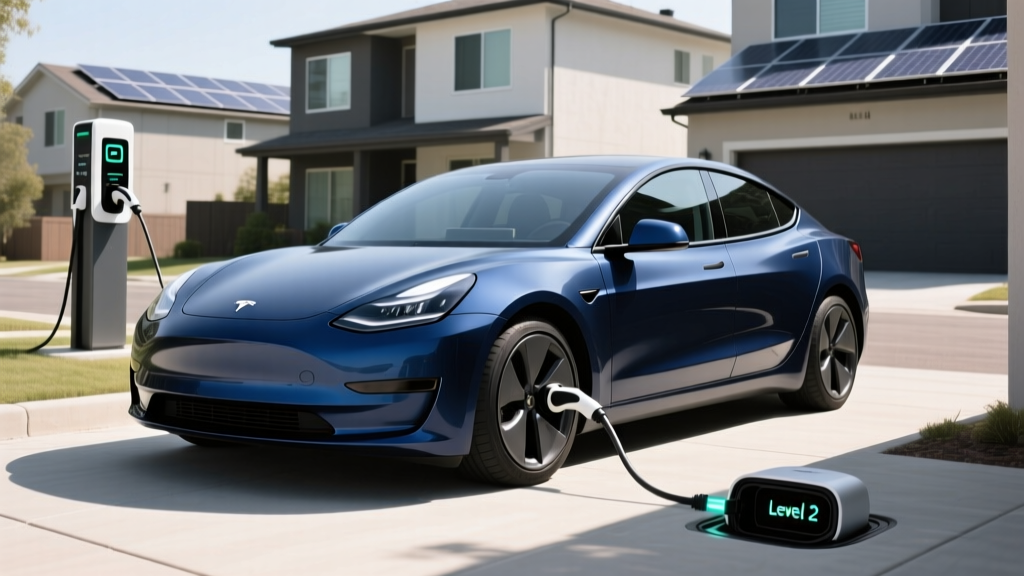
| Level 2 (240V home) | 11 kW (48A) | ~33–37 mi/hr | Full charge in ~7–8 hours; requires 60A circuit |
| DC Fast (Standard Range) | 135 kW peak | ~150 mi in 30 min | 10–80% in ~30 min; CCS connector |
| DC Fast (Long Range) | 205 kW peak | ~180 mi in 25 min | 10–80% in ~26 min; CCS connector |
The Long Range models' 205 kW peak DC fast-charge capability is competitive but not class-leading — the Hyundai IONIQ 5 and IONIQ 6 both support up to 240–350 kW on 800V architecture, achieving 10–80% in roughly 18 minutes. The Polestar 2 uses a conventional 400V architecture, which caps its peak charge rate.
A critical real-world note on the charge curve: the Long Range trims sustain approximately 175–190 kW between 10–40% State of Charge, then taper to ~120 kW through 60%, and drop further to ~50–60 kW above 80%. This means the advertised 10–80% time of 26 minutes assumes you unplug at 80% — pushing to 90% or 100% on a DC fast charger adds significant time and is rarely worth the wait unless you need maximum range for the next leg of a trip. Always precondition the battery via the Polestar app or navigation-routed preconditioning before arriving at a DC fast charger; skipping this step in cold weather can double your charge time.
For home Level 2 charging, the Polestar 2's onboard charger accepts up to 11 kW (three-phase) or approximately 7.4 kW on standard single-phase 240V/32A North American residential service. On a typical home Level 2 setup (NEMA 14-50 or hardwired Wall Connector at 32–48A), expect a full overnight charge from 20% in 7–10 hours depending on your circuit amperage. This is adequate for daily use — virtually every owner wakes up to a full battery each morning.
Performance and Driving Dynamics
The Polestar 2's driving character is where Volvo's performance heritage (via Polestar's lineage) genuinely shows. The Long Range Dual Motor with the optional Performance Pack delivers 421 horsepower and 487 lb-ft of torque, achieving a 4.2-second 0–60 mph time. That puts it in the same acceleration bracket as a BMW M340i, though the instant torque delivery of the dual electric motors makes the Polestar feel quicker in real-world passing situations than the stopwatch suggests.
The Performance Pack also includes manually adjustable Öhlins dampers and Brembo front brakes — a rarity at this price point and a signal that Polestar intends this car for driving enthusiasts, not just efficiency-minded commuters. The adjustable dampers offer 22 settings, though most owners will find a comfortable middle ground and leave them there.
The Single Motor variants (299 hp, 5.9-second 0–60) are brisk rather than thrilling, which is appropriate for the target buyer. The rear-wheel-drive layout gives the Single Motor a more natural, balanced feel through corners compared to the front-heavy torque distribution of many AWD EVs. Ride quality across all trims is firm but controlled — noticeably stiffer than a Toyota bZ4X, but more composed over broken pavement than a Tesla Model 3 Performance.
Interior, Tech, and Daily Livability
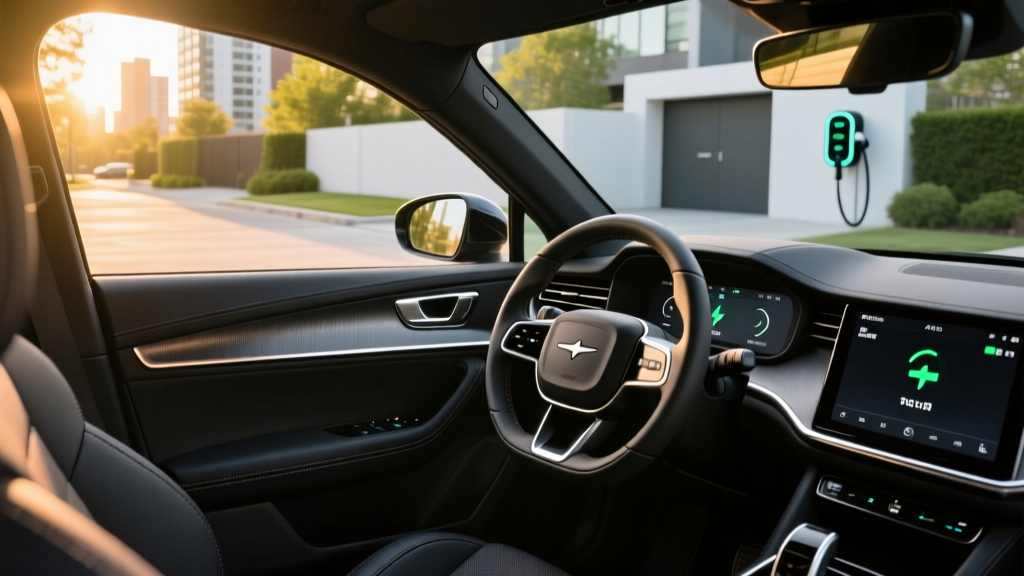
The Polestar 2 interior leans heavily into Scandinavian minimalism: a portrait-oriented 11.2-inch center touchscreen running Google built-in (Maps, Assistant, and Play Store), a 12.3-inch digital driver display, and physical controls for climate and volume — a welcome decision in an era of touchscreen-only frustration. The Google-native OS means navigation is always Google Maps with live traffic and integrated EV route planning that accounts for charging stops and battery preconditioning.
Practical dimensions:
- Front legroom: 42.2 inches
- Rear legroom: 34.0 inches (tight for tall adults on long trips)
- Trunk: 14.4 cubic feet (hatchback/liftback design makes loading easy)
- Frunk: 1.4 cubic feet (enough for charging cables and a small bag)
The rear seat is the Polestar 2's most honest limitation. With 34.0 inches of legroom, it falls noticeably short of the Tesla Model 3 (35.2 inches) and Hyundai IONIQ 6 (37.4 inches). Two adults will be comfortable; three across is a squeeze, and the pronounced center tunnel (a vestige of the CMA platform shared with the Volvo XC40) makes the middle seat impractical for anyone over about 5'6".
Driver assistance comes via Polestar's Pilot Pack, which includes adaptive cruise control with stop-and-go, lane centering, and blind-spot monitoring. This is a Level 2 SAE driver-assist system — it requires continuous driver engagement and hands on the wheel. It does not offer hands-free driving on mapped highways the way GM's Super Cruise or Ford's BlueCruise do. The system is competent and well-calibrated, but buyers expecting Tesla Autopilot-level autonomy or true hands-free highway cruising will be disappointed.
Pricing, Trims, and Federal Tax Credit Eligibility
| Trim | Base MSRP | Est. §30D Credit | Effective Price |
|---|---|---|---|
| Standard Range Single Motor | $49,900 | Up to $7,500* | ~$42,400* |
| Long Range Single Motor | $53,400 | Up to $7,500* | ~$45,900* |
| Long Range Dual Motor | $58,900 | Up to $7,500* | ~$51,400* |
*Tax credit eligibility depends on multiple IRS §30D requirements. See checklist below.
- MSRP cap: Sedans must be ≤$55,000. The Standard Range SM ($49,900) and Long Range SM ($53,400) qualify on price. The Dual Motor ($58,900) exceeds the sedan cap and does NOT qualify unless reclassified — verify with your dealer and tax professional.
- Buyer income cap: Modified AGI must not exceed $150,000 (single), $225,000 (head of household), or $300,000 (joint). (Source: IRS)
- Battery sourcing: The vehicle must meet critical minerals and battery component requirements that phase in annually. Polestar manufactures the Polestar 2 in China (Luqiao plant), which creates potential complications under the foreign entity of concern (FEOC) rules that took effect in 2024–2025. Confirm current-year eligibility with your dealer before purchase.
- Point-of-sale transfer: As of 2024, eligible buyers can transfer the credit to the dealer at purchase for an immediate price reduction rather than waiting to claim it on their tax return.
- Final assembly: Must occur in North America to qualify. The Polestar 2 is assembled in China, which has historically disqualified it from §30D. However, commercial leasing under §45W may offer an alternative path — consult a tax professional.
This is the critical issue with the Polestar 2 and the federal tax credit: final assembly in China has historically disqualified the Polestar 2 from the §30D new vehicle credit due to the North American final assembly requirement. Buyers should verify current eligibility directly with Polestar or a qualified tax professional before factoring the credit into their budget. Some lessees may qualify under the separate commercial clean vehicle credit (§45W), which does not carry the same assembly requirement — but this benefits the lessor, and savings may or may not be passed through in lease pricing.
Pros, Cons, and Who Should Buy the Polestar 2
- Premium interior materials and build quality at a mainstream price
- Google-native infotainment with excellent route planning and voice control
- Öhlins dampers and Brembo brakes available (Performance Pack) — genuinely enthusiast-grade hardware
- Standard heat pump on Long Range trims improves cold-weather range retention
- LFP battery option (Standard Range) allows daily 100% charging without degradation concern
- Hatchback/liftback cargo versatility with 14.4 cu ft trunk
- Competitive 205 kW DC fast charging on Long Range trims
- Rear seat legroom (34.0 in) is tightest in the class — not ideal for families with tall teens
- China-built; likely ineligible for §30D federal tax credit due to final assembly rule
- 400V architecture limits peak DC charge rate vs. 800V rivals (Ioniq 5/6, Taycan)
- Level 2 ADAS only — no hands-free highway driving feature available
- Dual Motor trim exceeds $55,000 sedan MSRP cap even if assembly issue were resolved
- Small 1.4 cu ft frunk — barely fits charging cables
- Choose the Polestar 2 if: You want a premium-feeling electric sedan with genuine driving dynamics, prioritize interior quality and Google-native tech, mostly drive solo or with one passenger, and have reliable home Level 2 charging. The Long Range Single Motor at ~$53,400 is the sweet spot.
- Look elsewhere if: You regularly carry rear-seat passengers (Hyundai IONIQ 6 or Tesla Model 3 offer more room), need the federal tax credit to make the math work (Model 3 RWD qualifies), want hands-free highway driving (GM Super Cruise or Ford BlueCruise vehicles), or prioritize the fastest possible DC charging (Hyundai/Kia 800V models).
- Consider leasing if: The §45W commercial credit might reduce lease payments — ask the dealer to compare lease vs. purchase pricing directly.
Frequently Asked Questions
What is the real-world range of the new Polestar 2?
The Long Range Single Motor achieves an EPA-estimated 320 miles, and in real-world mixed driving at moderate temperatures, owners report 285–305 miles. Highway-only driving at 75 mph drops this to roughly 265–285 miles, and freezing temperatures reduce range by 25–30% to approximately 230–250 miles. The heat pump on Long Range trims helps mitigate cold-weather losses.
How fast does the Polestar 2 charge at home and on the road?
On a home Level 2 charger (240V, 32–48A), the Polestar 2 gains roughly 33–37 miles of range per hour, fully charging overnight in 7–10 hours. On a DC fast charger, Long Range trims peak at 205 kW and charge from 10–80% in approximately 26 minutes. The Standard Range model peaks at 135 kW with a 10–80% time of about 30 minutes.
Does the Polestar 2 qualify for the $7,500 federal EV tax credit?
Likely not under the §30D new vehicle credit. The Polestar 2 is assembled in China, and the §30D credit requires North American final assembly. Additionally, the Dual Motor trim's $58,900 MSRP exceeds the $55,000 sedan cap. However, leasing may unlock savings through the §45W commercial credit — consult a tax professional and your Polestar dealer for current-year specifics. (IRS §30D rules)
Is the Polestar 2 worth buying vs. the Tesla Model 3 or Hyundai IONIQ 6?
The Polestar 2 wins on interior quality, ride refinement, and enthusiast hardware (Öhlins/Brembo). The Tesla Model 3 wins on Supercharger network access, range efficiency, and confirmed tax credit eligibility. The Hyundai IONIQ 6 wins on MPGe efficiency (140 MPGe), rear-seat space, and 800V DC fast-charge speed. Your priority ranking among these attributes should drive your decision.
What are the biggest pros and cons of the Polestar 2?
The biggest strengths are premium build quality, Google-native tech, engaging driving dynamics, and the LFP battery option on the Standard Range trim. The biggest weaknesses are tight rear-seat legroom, likely ineligibility for the federal tax credit due to China assembly, and a 400V architecture that limits peak DC charging speed compared to 800V competitors.
How long will the Polestar 2 battery last?
Polestar warranties the battery for 8 years or 100,000 miles with a 70% capacity retention guarantee. Industry data from similar NMC and LFP packs suggests most EV batteries retain 85–92% capacity after 100,000 miles when properly maintained (avoiding frequent 100% charges on NMC, minimizing DC fast charging in extreme heat). Battery replacement cost, if needed out of warranty, typically ranges from $12,000–$18,000 depending on the pack size and labor.