Quick Answer: Which New Mercedes Electric Car Fits You?
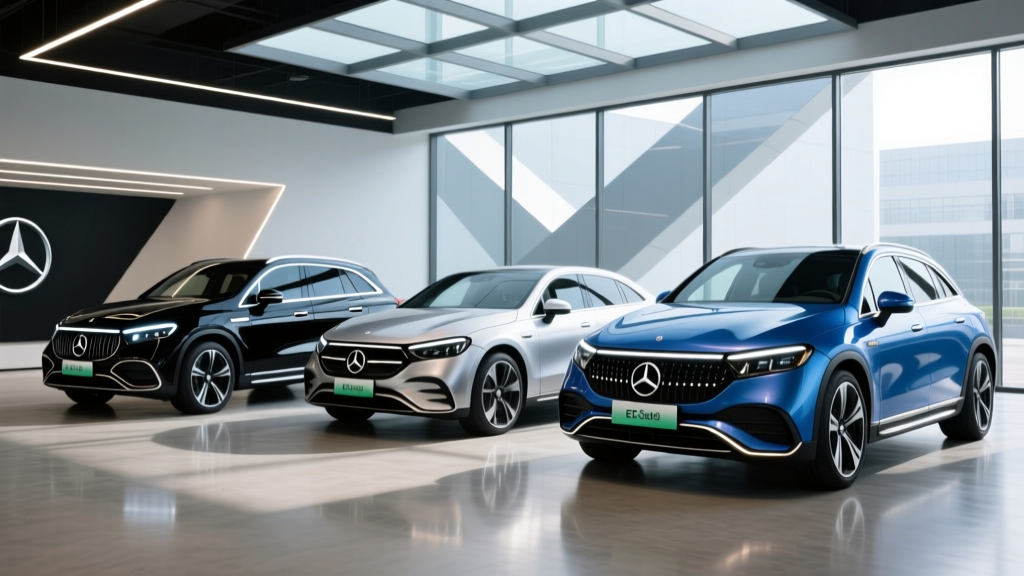
If you're shopping for a new Mercedes electric car in 2026, the lineup breaks down into three practical tiers: the EQB (compact SUV, ~245 mi EPA, starts ~$54,000) for urban families; the EQE Sedan/SUV (mid-size, ~260-305 mi EPA, starts ~$75,000) for daily commuters who want S-Class comfort; and the EQS Sedan/SUV (flagship, ~305-350 mi EPA, starts ~$105,000) for maximum range and luxury. None currently qualify for the full federal §30D tax credit due to battery-sourcing and MSRP-cap rules, so budget accordingly. The real decision comes down to whether you have Level 2 home charging, your typical daily miles, and whether you prioritize range or cabin space.
The 2026 Mercedes EQ Lineup at a Glance
Mercedes-Benz has streamlined its EV offerings around the dedicated EVA platform (EQE, EQS) and the adapted MFA2 platform (EQB). Here's the full spec breakdown you need before stepping into a dealership:
| Model | EPA Range | Battery (kWh usable) | Chemistry | Peak DC Charge | 10-80% Time | 0-60 mph | HP | Base MSRP |
|---|---|---|---|---|---|---|---|---|
| EQB 300 4MATIC | 245 mi | 66.5 kWh | NMC | 100 kW | ~32 min | 7.7 sec | 225 | $54,150 |
| EQE 350+ Sedan | 305 mi | 90.6 kWh | NMC | 170 kW | ~31 min | 6.2 sec | 288 | $75,050 |
| EQE 350 4MATIC SUV | 260 mi | 90.6 kWh | NMC | 170 kW | ~31 min | 6.4 sec | 288 | $78,050 |
| EQE 500 4MATIC Sedan | 275 mi | 90.6 kWh | NMC | 170 kW | ~31 min | 4.5 sec | 469 | $89,050 |
| EQS 450+ Sedan | 350 mi | 108.4 kWh | NMC | 200 kW | ~31 min | 5.9 sec | 355 | $105,550 |
| EQS 580 4MATIC SUV | 305 mi | 108.4 kWh | NMC | 200 kW | ~31 min | 4.3 sec | 536 | $120,550 |
Sources: EPA fueleconomy.gov, Mercedes-Benz USA. Real-world highway range typically runs 10-15% below EPA estimates; cold-weather (below 30°F) can reduce range by 20-30% due to cabin heating and battery resistance.
Real-World Range Reality Check
EPA sticker: EQS 450+ Sedan = 350 miles
Expect in practice: ~295-310 mi on a mixed highway commute at 70 mph; ~250-275 mi in sustained sub-freezing temperatures. The EQS's 108.4 kWh battery provides a large buffer, but the vehicle's 5,800-lb curb weight works against efficiency at higher speeds. Plan road trips around ~250-mile legs to keep a comfortable 15-20% reserve.
New Mercedes Electric Car vs. Gas Equivalent: The Cost Math
The most common question from luxury-car shoppers: does a new Mercedes electric car actually save money compared to a gas-powered E-Class or S-Class? The answer depends heavily on your electricity rate, annual mileage, and how long you keep the vehicle.
| Cost Factor | EQE 350+ Sedan (EV) | E 350 Sedan (Gas) | EQS 450+ Sedan (EV) | S 500 Sedan (Gas) |
|---|---|---|---|---|
| Base MSRP | $75,050 | $59,950 | $105,550 | $117,300 |
| Federal Tax Credit (§30D) | $0 (MSRP/sourcing)* | N/A | $0 (MSRP/sourcing)* | N/A |
| Fuel/Energy (15k mi/yr) | ~$540/yr (home L2)** | ~$2,250/yr (premium) | ~$570/yr (home L2)** | ~$2,700/yr (premium) |
| Maintenance (annual avg) | ~$400 | ~$1,200 | ~$450 | ~$1,500 |
| 5-Year Fuel + Maint. | ~$4,700 | ~$17,250 | ~$5,100 | ~$21,000 |
| 5-Year Total (purchase + ops) | ~$79,750 | ~$77,200 | ~$110,650 | ~$138,300 |
*Mercedes EQ models exceed the §30D MSRP cap ($55,000 sedans / $80,000 SUVs) and/or use battery cells that do not meet current critical-mineral sourcing thresholds. Always verify current-year eligibility at IRS.gov.
**Based on $0.14/kWh national average. DC fast charging on road trips adds ~$0.30-$0.45/kWh.
The takeaway: the EQE costs slightly more over five years than a gas E-Class when you factor in the higher purchase price without a tax credit offset. However, the EQS undercuts the S-Class by nearly $28,000 over five years because it starts at a lower MSRP and saves roughly $3,000/year in fuel and maintenance. The breakeven point for the EQE versus the E-Class is approximately year 7-8, depending on local electricity rates and whether your state offers additional rebates.
Charging at Home vs. Public Networks: What You Need to Know
Owning a new Mercedes electric car is a fundamentally different experience depending on whether you can install a Level 2 charger at home. Here's the practical breakdown:
| Charging Level | Power (kW) | Miles Added/Hour | Typical Use Case | Cost per Full Charge |
|---|---|---|---|---|
| Level 1 (120V outlet) | 1.4 kW | 3-5 mi/hr | Overnight top-up only | ~$12-15 (home) |
| Level 2 (240V, 48A) | 11.5 kW | 28-35 mi/hr | Daily home charging | ~$12-15 (home) |
| DC Fast Charge | 100-200 kW | 180-400 mi/hr* | Road trips | ~$25-45 (public) |
*Peak rate at low SoC; charging speed tapers significantly above 80% to protect the NMC battery. A Mercedes EQS at a 200 kW charger will peak near 200 kW around 10-30% SoC, then taper to ~80 kW by 70% and ~40 kW above 85%.
Home Charging Installation Costs
| Item | Cost Range |
|---|---|
| Level 2 EVSE (Mercedes Wallbox or ChargePoint Home Flex) | $500 - $750 |
| Electrician: 240V/50A circuit install (existing panel capacity) | $800 - $2,000 |
| Electrical panel upgrade (200A → 400A, if needed) | $2,500 - $5,000 |
| Permit & inspection | $100 - $400 |
| Total (no panel upgrade) | $1,400 - $3,150 |
| Total (with panel upgrade) | $3,900 - $8,150 |
Mercedes includes the Mercedes-Benz Wallbox Home (11.5 kW) with new EQ purchases in most markets. The EQE and EQS both accept up to 11.5 kW on AC Level 2, meaning a full 0-100% charge takes roughly 9.5 hours for the EQS — easily done overnight. The EQB tops out at 7.2 kW on some trims, extending a full charge to ~10 hours.
If you live in an apartment or lack garage access, you'll rely on public DC fast charging and workplace Level 2. Mercedes' Mercedes me Charge network aggregates Electrify America, EVgo, and ChargePoint stations through the vehicle's navigation. Expect to pay $0.35-$0.48/kWh at DC fast chargers — roughly 3x the cost of home charging, but still less than premium gasoline per mile.
Battery Longevity, Warranty & Degradation
Every new Mercedes electric car uses NMC (nickel manganese cobalt) battery chemistry, which offers high energy density (enabling the EQS's 350-mile range) but is more sensitive to sustained high-SoC storage than LFP cells. Here's what to expect:
| Factor | NMC (Mercedes EQ) | LFP (Tesla Model 3 RWD, BYD) |
|---|---|---|
| Energy Density | High (~250 Wh/kg cell-level) | Moderate (~170 Wh/kg) |
| Recommended Daily Charge Limit | 80% (set in MBUX) | 100% OK daily |
| Expected Degradation (8yr/100k mi) | ~10-15% capacity loss | ~5-10% capacity loss |
| Cold-Weather Performance | Moderate loss (~20-30%) | Slightly better retention |
| Cycle Life | ~1,000-1,500 full cycles | ~3,000+ full cycles |
Mercedes battery warranty: 8 years / 100,000 miles, whichever comes first, guaranteeing a minimum of 70% state-of-health (SoH). If the battery drops below 70% capacity within that window, Mercedes will repair or replace modules to bring it above the threshold. Battery replacement outside warranty currently ranges from $20,000-$35,000 depending on the model — a number that matters for long-term ownership planning.
To maximize NMC battery life in your Mercedes EV:
- Set the daily charge limit to 80% in the MBUX system (use 100% only before road trips)
- Use preconditioning (scheduled departure) to warm the battery before DC fast charging in cold weather
- Avoid leaving the car at 100% SoC for extended periods, especially in hot climates
- Prefer Level 2 home charging over frequent DC fast charging — heat from high-C-rate charging accelerates degradation
Tax Credits, Incentives & the MSRP Cap Problem
Here's a frustration many luxury EV shoppers encounter: the federal §30D clean vehicle credit has an MSRP cap of $55,000 for sedans and $80,000 for SUVs/vans/pickups, plus buyer income limits ($150K single / $300K joint) and strict battery-sourcing and critical-mineral requirements.
§30D Federal Tax Credit Checklist (2026 Rules)
- ✅ Vehicle MSRP under $55,000 (sedans) or $80,000 (SUVs) — most Mercedes EQ models exceed this
- ✅ Buyer adjusted gross income under $150K (single) / $225K (HOH) / $300K (joint)
- ✅ Battery components manufactured or assembled in North America (phased thresholds by year)
- ✅ Critical minerals sourced from US or FTA-partner countries
- ✅ Vehicle assembled in North America (Mercedes EQS/EQE are built in Germany — disqualifying)
- ✅ Point-of-sale transfer available for qualifying vehicles (reduces purchase price at dealer)
In practice, the EQE Sedan, EQS Sedan, and EQS SUV are all assembled in Bremen or Sindelfingen, Germany, which alone disqualifies them from §30D regardless of MSRP. The EQB is assembled in Kecskemét, Hungary — also ineligible. The EQE SUV is the sole model built in Vance, Alabama, but its starting MSRP of $78,050 pushes right against the $80K SUV cap, and higher trims exceed it.
What to do instead: Check your state's EV incentives — California, Colorado, New York, and others offer rebates of $2,000-$7,500 that may not have the same MSRP or sourcing restrictions. Some utility companies also offer $500-$1,500 rebates for Level 2 charger installation. Consult AFDC's state incentive database for current programs in your area, and speak with a tax professional about eligibility.
Decision Framework: Which New Mercedes Electric Car Should You Buy?
Choose Based on Your Driving Pattern
Choose the EQB if: You need a compact luxury SUV for city driving and school runs, your daily commute is under 60 miles, you have home Level 2 charging, and you want the lowest entry price into the Mercedes EV lineup. The 245-mile EPA range is sufficient for daily use but limits road-trip flexibility — plan for one charging stop on drives over 200 miles.
Choose the EQE 350+ Sedan if: You want E-Class luxury with a dedicated EV platform, you commute 30-80 miles daily, and you value a quiet, one-pedal driving experience. The 305-mile range handles most weekend trips without charging. This is the sweet spot for Mercedes EV buyers who prioritize ride comfort and MBUX tech over maximum performance.
Choose the EQE 500 4MATIC if: You want AMG-line performance (469 HP, 4.5-second 0-60) without stepping to a full AMG model. You accept the 275-mile range trade-off for the dual-motor power and all-wheel drive, especially if you live in a region with snow or rain.
Choose the EQS 450+ Sedan if: You're cross-shopping an S-Class and want the lowest 5-year operating cost in the flagship segment. The 350-mile EPA range is the longest in the Mercedes lineup, the 108.4 kWh battery provides genuine road-trip flexibility, and the MBUX Hyperscreen (56-inch glass dashboard) is the most advanced interior tech Mercedes offers. At $105,550, it undercuts an equivalently optioned S-Class.
Choose the EQS SUV if: You need three rows of seating, you frequently carry 5+ passengers, and you want flagship EV luxury with up to 305 miles of range. The $120,550 starting price is steep, but it's one of very few three-row luxury EVs available, competing primarily with the Rivian R1S and Tesla Model X.
Do NOT choose a Mercedes EV if: You lack home or workplace charging access and your area has sparse public DC fast-charging infrastructure. You need the federal $7,500 tax credit to make the math work (most models don't qualify). You regularly drive 400+ miles in a single day in cold weather — the charging stops and range loss will test your patience compared to a hybrid or diesel alternative.
Common Misconceptions About Mercedes Electric Cars
| Myth | Fact |
|---|---|
| "The EQS gets 350 miles no matter how you drive." | 350 miles is the EPA combined estimate. At sustained 80 mph highway speeds, expect ~290-310 miles. In sub-20°F weather with cabin heat, expect ~250-275 miles. |
| "Mercedes EVs charge as fast as a Tesla." | The EQS peaks at 200 kW — strong, but below Tesla's 250 kW V3 Superchargers and Hyundai/Kia's 350 kW E-GMP platform. Expect 10-80% in ~31 minutes for Mercedes vs. ~18 minutes for an Ioniq 5. |
| "I'll save $7,500 with the federal tax credit." | Most Mercedes EQ models are built outside the US and/or exceed MSRP caps, making them ineligible for §30D. The EQE SUV (Alabama-built) may partially qualify on lower trims — verify at IRS.gov. |
| "The battery will need replacing in 5 years." | NMC batteries in Mercedes EVs are warrantied for 8 years/100,000 miles at 70% SoH. Real-world data from earlier EVs suggests 10-15% degradation at 100K miles — meaning a 350-mile EQS would still deliver ~295-310 miles of range. |
| "Level 1 (standard outlet) charging is enough." | At 1.4 kW, Level 1 adds only ~4 miles per hour. A full EQS charge would take 75+ hours. You need Level 2 (240V) for practical daily ownership. |
Insurance, Depreciation & Long-Term Ownership Costs
Luxury EVs carry higher insurance premiums than their gas counterparts — typically 15-25% more, driven by higher repair costs for battery-adjacent damage and specialized parts. Expect annual premiums of $2,800-$4,200 for an EQE and $3,500-$5,500 for an EQS, depending on your driving record and state. Get quotes from your insurer before purchasing.
Depreciation is the largest ownership cost for any luxury vehicle. Mercedes EQ models have seen steeper first-year depreciation than comparable gas models — the EQS lost roughly 35-45% of its value in the first year on the used market (2023-2024 data), partly due to Tesla price wars resetting luxury EV expectations and buyer hesitation about German EV tech reliability. If you plan to sell within 3 years, lease instead — Mercedes frequently offers subsidized lease rates on EQ models to move inventory.
Maintenance savings are genuine: no oil changes, no spark plugs, no transmission fluid, and regenerative braking significantly extends brake pad life (many EQ owners report 80,000+ miles on original pads). Budget for cabin air filters ($150-250), tire rotation ($50-80), and brake fluid flushes ($120-180) as your primary recurring service items.
Frequently Asked Questions
Does Mercedes make a fully electric G-Wagon?
Yes — the Mercedes G 580 with EQ Technology (electric G-Class) launched for the 2025 model year with four individual motors, ~280 miles of EPA range, a 116 kWh battery, and a starting price above $160,000. It qualifies as a niche halo product rather than a volume model, and it does not qualify for the federal tax credit due to price and assembly location (Graz, Austria).
Can I use Tesla Superchargers with a Mercedes EQ?
As of 2026, Mercedes EQ vehicles use the CCS1 connector natively. Mercedes has announced NACS (Tesla connector) adoption for future models, and adapters are becoming available for existing CCS vehicles to access Tesla's V3/V4 Supercharger network. Check Mercedes me Charge for the latest network compatibility updates, and confirm adapter availability with your dealer before relying on Supercharger access for road trips.
Is Mercedes' Drive Pilot system self-driving?
No. Mercedes Drive Pilot is certified as SAE Level 3 in limited conditions (specific highway sections in Nevada and California, speeds up to 40 mph, clear weather, marked roads). This means you can legally take your eyes off the road in those narrow conditions, but you must be ready to resume control within ~10 seconds when prompted. Outside those geofenced conditions, the vehicle operates as a Level 2 driver-assist system — you must remain fully engaged. This is not comparable to Waymo's Level 4 robotaxi service, which operates without any human driver present.
What happens if the battery fails out of warranty?
Out-of-warranty NMC battery replacement for a Mercedes EQ currently costs $20,000-$35,000 depending on the model and whether individual modules can be replaced versus the full pack. Mercedes has begun offering battery repair at the module level (replacing only degraded sections) rather than full-pack replacement, which can reduce costs to $5,000-$12,000 for partial repairs. Third-party EV battery repair shops are also emerging as a lower-cost option.
Should I lease or buy a new Mercedes electric car?
For most buyers in 2026, leasing is the financially safer choice. Benefits include: lower monthly payments, no exposure to steep EV depreciation, the ability to upgrade to newer battery/charging tech every 3 years, and Mercedes often bundles maintenance and complimentary charging into lease deals. The main drawback: you won't benefit from any potential long-term battery durability exceeding the lease term, and you'll face mileage restrictions (typically 10,000-15,000 mi/yr). If you drive under 12,000 miles annually and prefer always having the latest tech, lease. If you plan to keep the car 7+ years and drive it into the ground, buying may work — but budget for potential out-of-warranty battery costs.
How does the Mercedes EQ lineup compare to BMW i and Audi e-tron?
The Mercedes EQS offers the longest EPA range (350 mi) among German luxury flagships, beating the BMW i7 xDrive60 (~318 mi) and Audi e-tron GT (~238 mi). The EQE competes closely with the BMW i5 and Audi e-tron GT on price and range. Where Mercedes leads is interior technology (the MBUX Hyperscreen is unmatched in screen real estate) and ride comfort. Where it trails competitors is DC charging speed — BMW's iX and i5 support up to 205 kW, and Porsche/Audi's 800V architecture enables 270+ kW charging. If fast road-trip charging is your top priority, the Porsche Taycan or Audi e-tron GT charge faster; if maximum range and luxury are paramount, the EQS wins.