Should You Buy a New Lexus EV in 2026?
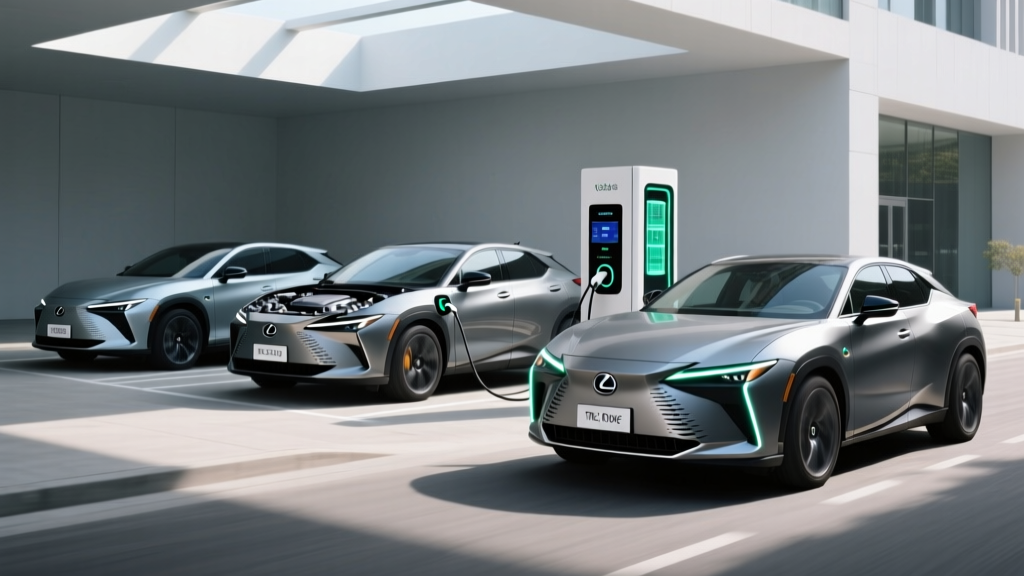
The 2026 Lexus RZ lineup offers two battery-electric options: the dual-motor RZ 450e (220 miles EPA, 308 hp, starting at $55,150) and the single-motor RZ 300e (266 miles EPA, 201 hp, starting at $48,650). Both qualify for a partial federal tax credit of up to $3,750 under current §30D rules depending on battery sourcing. The RZ excels in refinement, build quality, and Lexus reliability reputation, but its EPA range trails competitors like the Genesis Electrified GV70 (236 mi) and BMW iX xDrive50 (324 mi). If you prioritize luxury interior quality, quiet ride, and dealer service over maximum range or fastest charging, the RZ is a strong pick. If you need 300+ miles or DC fast charging above 175 kW, look elsewhere.
2026 Lexus RZ Lineup at a Glance
Lexus now offers the RZ in two distinct powertrain configurations for the 2026 model year. Here's exactly what separates them.
| Specification | RZ 300e (FWD) | RZ 450e (AWD) |
|---|---|---|
| EPA Range | 266 mi | 220 mi (18" wheels) / 196 mi (20" wheels) |
| Battery (usable) | 72.8 kWh, NMC | 72.8 kWh, NMC |
| Power | 201 hp | 308 hp |
| 0–60 mph | 7.4 sec | 5.0 sec |
| Max DC Fast Charge | 150 kW (peak) | 150 kW (peak) |
| 10–80% DC Charge | ~30 min | ~30 min |
| Level 2 (240V) Rate | 7.7 kW | 7.7 kW |
| Combined MPGe | 117 MPGe | 102 MPGe |
| Base MSRP | $48,650 | $55,150 |
| Battery Warranty | 8 yr / 100,000 mi | 8 yr / 100,000 mi |
Real-world range caveat: EPA estimates assume mixed driving at moderate temperatures. In highway-dominant driving at 75 mph, expect roughly 210–225 miles from the RZ 300e and 175–190 miles from the RZ 450e. In cold weather (below 32°F), reduce those numbers by 15–25% due to cabin heating demands and reduced battery chemistry efficiency. If your commute is under 60 miles round-trip and you can charge at home, either model covers daily needs easily. For road trips exceeding 200 miles between chargers, the RZ 450e with 20-inch wheels becomes a planning challenge.
Charging: What to Expect at Home and on the Road
The RZ uses a CCS1 connector for DC fast charging and a J1772 inlet for Level 1 and Level 2 AC charging. Lexus equips both models with a 150 kW peak DC fast-charge capability — adequate but not class-leading. Competitors like the Hyundai Ioniq 5 and Kia EV6 accept up to 240 kW and 350 kW respectively on 800V architectures, completing 10–80% in roughly 18 minutes versus the RZ's 30 minutes.
| Charging Level | Power (kW) | Miles Added per Hour | Typical Use Case |
|---|---|---|---|
| Level 1 (120V household) | ~1.4 kW | ~4–5 mi/hr | Overnight trickle; emergency top-up |
| Level 2 (240V home/public) | 7.7 kW | ~25–28 mi/hr | Primary home and destination charging |
| DC Fast Charge (CCS) | Up to 150 kW | ~180–200 mi in 30 min | Road trips; highway corridor stops |
Charge curve reality: The RZ peaks at 150 kW only between roughly 10–35% state of charge (SoC). From 35–60%, expect sustained rates of 90–110 kW. Above 80%, charging slows dramatically to protect battery health — often dropping below 40 kW. This means a 10–80% session takes about 30 minutes, but pushing from 80–100% can add another 25–30 minutes. Plan road-trip stops around 10–80% sessions for time efficiency.
Home charging setup: A full Level 2 home installation (240V, 40-amp circuit, hardwired wall connector) typically costs $800–$2,500 depending on panel proximity and local permitting, according to the U.S. Department of Energy. If your electrical panel is at capacity, a panel upgrade can add $1,500–$3,000. At 7.7 kW, the RZ's 72.8 kWh battery charges from empty to full in roughly 9.5 hours — easily covered by an overnight session on a standard Level 2 home charger.
Lexus RZ vs. Gas and Hybrid: Cost & Efficiency Comparison
The most common alternative to the RZ is Lexus's own RX lineup — the midsize luxury SUV that dominates the segment. Here's how the RZ 450e stacks up against the gas-powered RX 350 and the RX 350h hybrid on key ownership metrics over five years and 75,000 miles.
| Metric | RZ 450e AWD | RX 350 AWD (Gas) | RX 350h AWD (Hybrid) |
|---|---|---|---|
| Base MSRP | $55,150 | $51,400 | $53,200 |
| Fed. Tax Credit (§30D) | Up to $3,750* | $0 | $0 |
| Effective Starting Price | ~$51,400 | $51,400 | $53,200 |
| EPA Efficiency | 102 MPGe | 24 MPG combined | 36 MPG combined |
| Fuel/Energy Cost (5 yr, 75k mi) | ~$3,800† | ~$10,200† | ~$6,800† |
| Maintenance (5 yr est.) | ~$1,800 | ~$3,600 | ~$3,200 |
| 5-Yr Total Fuel + Maint. | ~$5,600 | ~$13,800 | ~$10,000 |
*Tax credit eligibility depends on battery component and critical-mineral sourcing under current-year IRS §30D rules. Income caps apply: $150,000 single / $300,000 joint filers. The RZ qualifies for up to $3,750 (critical minerals portion) as of 2026; verify before purchase.
†Energy/fuel costs based on national average electricity rate of $0.17/kWh and gasoline at $3.50/gal. Your local rates will vary — see fueleconomy.gov for personalized estimates.
The numbers tell a clear story: after the tax credit, the RZ 450e's effective price matches the gas RX 350, and the RZ saves roughly $8,200 in fuel and maintenance over five years compared to the gas model. Against the RX 350h hybrid, the RZ still saves about $4,400 in running costs, but the hybrid offers 410 miles of total range and zero charging logistics — a meaningful advantage for apartment dwellers or those without reliable home charging access.
Real-World Ownership: What First-Time Lexus EV Buyers Must Know
Home Charging Is Non-Negotiable for Most Owners
Public DC fast charging costs $0.35–$0.55/kWh on networks like Electrify America and EVgo, which can make per-mile costs approach or even exceed a fuel-efficient hybrid like the RX 350h. The economics of EV ownership work best when 80–90% of your charging happens at home on Level 2 power at residential electricity rates ($0.10–$0.20/kWh depending on your state). If you live in an apartment or condo without charging access, the RZ's value proposition weakens considerably. Confirm your charging situation before committing.
Insurance Costs Are Higher
EV insurance premiums run 15–25% higher than equivalent gas vehicles, according to industry data. The RZ 450e's higher repair costs for battery-adjacent components and specialized aluminum body panels contribute. Expect annual premiums of $2,200–$3,000 depending on your state, driving record, and coverage level. Always get a quote from your insurer before purchasing.
Depreciation: The Elephant in the Room
Luxury EVs have experienced steeper depreciation than their gas counterparts in recent years. The Lexus RZ has held value somewhat better than competitors due to the brand's reliability reputation, but expect 45–55% depreciation over five years versus 35–40% for a gas RX 350. This narrows the total-cost-of-ownership advantage. If you lease, this risk transfers to the lessor — and Lexus often offers attractive lease deals on the RZ that effectively account for depreciation.
The Battery Degradation Question
The RZ uses an NMC (nickel-manganese-cobalt) lithium-ion battery with an active thermal management system. Lexus warranties the battery for 8 years or 100,000 miles against defects and capacity loss below 70%. Real-world data from similar NMC packs suggests 8–12% degradation over 100,000 miles under normal use. To maximize longevity, avoid routinely charging to 100% or letting the battery sit below 10% — keeping daily SoC between 20–80% is the sweet spot for NMC chemistry.
Common EV Misconceptions — Fact-Checked for Lexus Buyers
| Myth | Fact |
|---|---|
| "The RZ gets the full $7,500 federal tax credit." | As of 2026, the RZ qualifies for up to $3,750 (critical-minerals portion only). Battery component sourcing rules under IRS §30D disqualify the remaining $3,750. Income and MSRP caps also apply. |
| "EVs need no maintenance." | EVs eliminate oil changes, spark plugs, and transmission fluid. But tires wear 15–20% faster due to instant torque and heavier weight. Cabin air filters, brake fluid, wiper blades, and the cabin heat-pump system still require service. |
| "The battery will need replacing in 5 years." | Modern NMC batteries with active thermal management are designed for 150,000–200,000+ miles before reaching 70% capacity. The 8-year/100,000-mile warranty protects against premature failure. Full replacement, if ever needed, runs $12,000–$18,000 out of warranty. |
| "Charging takes too long for road trips." | A 10–80% DC fast charge takes ~30 minutes in the RZ — comparable to a rest stop with food and restroom. Route planning with apps like PlugShare or the Lexus app minimizes wait. That said, road-tripping an EV does require more upfront planning than a gas car. |
| "AWD EVs handle snow perfectly." | The RZ 450e's DIRECT4 AWD system provides excellent traction, but cold temperatures reduce range by 15–25% and winter tires remain essential for braking and cornering on ice. No EV is exempt from winter physics. |
Decision Framework: Is the New Lexus EV Right for You?
Choose the Lexus RZ 300e if:
- Your daily round-trip commute is under 80 miles
- You want maximum range from the RZ platform (266 mi EPA)
- You don't need AWD (you live in a mild-winter climate)
- You prioritize lower cost — $48,650 starting, potentially ~$44,900 after tax credit
- You value a quiet, refined ride over sporty acceleration
Choose the Lexus RZ 450e if:
- You need AWD for snow or rain-heavy climates
- You want the 5.0-second 0–60 mph acceleration and 308 hp
- Your daily commute is under 60 miles (range is tighter at 220 mi)
- You frequently carry passengers and want the extra passing power
- You're willing to plan charging stops on road trips more carefully
Look at a competitor if:
- You need 300+ miles of EPA range — consider the BMW iX xDrive50 (324 mi, ~$88,000) or Tesla Model X (335 mi, ~$82,000)
- You want the fastest DC charging available — the Hyundai Ioniq 5 (240 kW peak) or Porsche Macan EV (270 kW peak) charge significantly faster
- You lack home charging access — the RX 350h hybrid (36 MPG, 410+ mi total range) eliminates charging logistics entirely
- You want three rows — the RZ is strictly a two-row, five-passenger SUV
Frequently Asked Questions
Does the Lexus RZ qualify for any state incentives?
State incentives vary widely and change frequently. States like California, Colorado, and Massachusetts have offered rebates or tax credits for EV purchases, often $1,500–$5,000. Check your state's energy office or department of revenue for current programs. Some utilities also offer $250–$500 rebates for installing a Level 2 home charger.
Can I use Tesla Superchargers with the Lexus RZ?
Not natively. The RZ uses a CCS1 connector, while Tesla Superchargers use the NACS connector. As of 2026, a CCS-to-NACS adapter is available from third-party manufacturers, and Tesla has begun opening select Supercharger stalls to non-Tesla EVs via the Tesla app. However, availability is limited and not all Supercharger locations support non-Tesla vehicles. Check the Tesla app or PlugShare for compatible stations before relying on this option for road trips.
How does the RZ compare to the Toyota bZ4X?
The RZ shares its e-TNGA platform and 72.8 kWh battery with the Toyota bZ4X, but Lexus tunes the RZ for a quieter cabin, firmer ride quality, more premium materials, and the DIRECT4 AWD system on the 450e. The bZ4X starts around $38,000 with similar range but a less refined driving experience. If budget is the priority, the bZ4X offers nearly identical electric fundamentals at a $10,000–$17,000 discount. If luxury and dealer experience matter, the RZ justifies the premium.
What happens if I need a battery replacement out of warranty?
Full battery replacement on the RZ would cost approximately $12,000–$18,000 at a Lexus dealer, including parts and labor. However, NMC batteries with active thermal management rarely require full replacement — individual module repairs may be possible at lower cost. The 8-year/100,000-mile warranty covers capacity loss below 70%, and most owners will sell or trade the vehicle before reaching the point of significant degradation.
Is the Lexus RZ a good first EV?
Yes, with one condition: you must have reliable home charging. The RZ's moderate range and 150 kW charging speed are perfectly adequate for daily driving and occasional road trips when you can start each morning with a full battery from your garage. The Lexus dealer network, strong build quality, and familiar luxury-SUV driving dynamics make it a low-stress entry into EV ownership. Without home charging, however, you'll spend more time and money at public chargers than you would with a hybrid — making the RX 350h a more practical first step.