The Real Cost of Going Electric in the Garden State
New Jersey has quietly become one of the more EV-friendly states on the East Coast, with a growing charging network, utility rebates, and proximity to major metro areas that make daily electric driving practical. But the question every buyer asks is whether the numbers actually pencil out. Between the New Jersey electric vehicle tax credit landscape, federal incentives, higher insurance premiums, and fluctuating resale values, the total cost of EV ownership involves more variables than most dealer brochures let on.
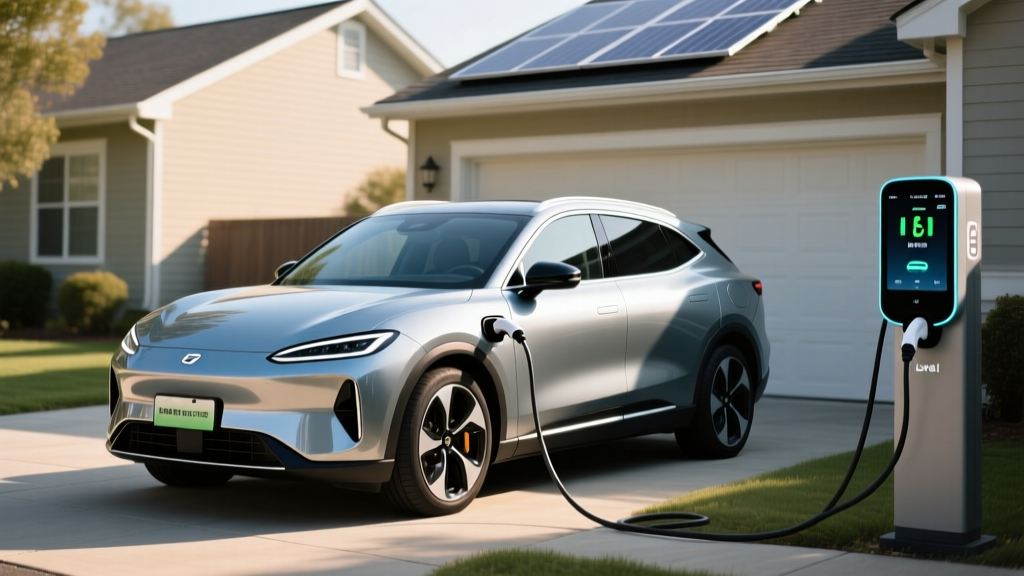
This guide breaks down every major cost factor for a New Jersey EV buyer in 2026 — from the purchase price after incentives to the per-mile fuel cost, maintenance savings, insurance reality, and five-year depreciation. We'll use a popular mid-size crossover, the Hyundai Ioniq 5 SEL AWD, as our working example to keep the math concrete.
MSRP: ~$49,500 | Battery: 77.4 kWh usable (NMC) | EPA Range: 290 miles
Peak DC Charge Rate: 240 kW (10–80% in ~18 min) | Level 2: 10.9 kW | 0–60 mph: 5.1 sec | 320 HP
MPGe: 110 combined | Warranty: 10 yr / 100,000 mi battery & powertrain
Federal Tax Credit: IRS §30D Eligibility in 2026
The federal Clean Vehicle Credit under IRS §30D remains the single largest purchase incentive available, but qualifying for the full $7,500 requires clearing several hurdles simultaneously. The rules tightened significantly after the Inflation Reduction Act, and they continue to evolve year to year.
§30D Tax Credit Eligibility Checklist (2026)
- Maximum credit: Up to $7,500 ($3,750 for critical minerals + $3,750 for battery components)
- Buyer income caps (MAGI): $150,000 single / $225,000 head of household / $300,000 married filing jointly
- Vehicle MSRP caps: $80,000 for SUVs, vans, and trucks; $55,000 for sedans and other body styles
- Battery sourcing: Critical minerals and battery components must meet escalating domestic/free-trade-partner sourcing thresholds
- Final assembly: Vehicle must undergo final assembly in North America
- Point-of-sale transfer: Buyers can transfer the credit to the dealer at purchase for an immediate price reduction (rather than waiting to claim on tax return)
- One credit per VIN: Credit is tied to the vehicle, not the buyer — a used or previously credited car won't qualify again under §30D
Source: IRS.gov — Clean Vehicle Credit. Rules subject to change; consult a tax professional for your specific situation.
For the Ioniq 5 SEL AWD at ~$49,500, the MSRP cap is not an issue (it's an SUV under $80,000). Whether the buyer qualifies depends on their income and whether Hyundai's battery supply chain meets the critical-mineral and component sourcing thresholds for the 2026 model year. Hyundai has moved significant battery production to its Georgia Meta Plant, improving eligibility, but the critical-mineral prong is the variable most likely to reduce the credit to $3,750 or zero for some trims and model years. Always verify the specific VIN on fueleconomy.gov before purchasing.
New Jersey State Incentives and Utility Rebates
New Jersey's state-level EV incentive landscape has shifted over the past few years. The state previously offered a point-of-sale rebate of up to $4,000 through the Charge Up New Jersey program, but funding has been inconsistent and the program has undergone restructuring. As of 2026, buyers should check the current status of state rebates through the NJ Clean Energy Program before counting on a specific dollar amount.
Incentives by Region — New Jersey
Important: State and local incentives vary by jurisdiction, change frequently, and may have income or vehicle-price qualifications. Always verify current amounts through official state and utility sources.
- State rebate (Charge Up NJ): Check current availability and amount — historically up to $4,000 for vehicles under $50,000 MSRP, subject to funding
- PSE&G utility rebate: Some programs offer rebates for home Level 2 charger installation — check PSE&G's current EV programs
- JCP&L / Atlantic City Electric: Check for regional charger-install or off-peak charging incentives
- HOV lane access: NJ offers HOV lane access for qualifying EVs on certain corridors — a non-monetary but time-saving perk
- Reduced registration fees: NJ does not currently offer a reduced EV registration fee (some states do), and EVs are subject to a supplemental registration fee to offset lost gas-tax revenue
New Jersey also exempts qualifying zero-emission vehicles from the state's 6.625% sales tax, which on a $49,500 Ioniq 5 saves approximately $3,277 at purchase — a meaningful, if less-discussed, incentive.
Charging Cost vs. Gasoline: The Per-Mile Math
The most consistent advantage of EV ownership is fuel cost — but the actual savings depend heavily on how and where you charge. New Jersey's residential electricity rate averages roughly $0.17–$0.19 per kWh in 2026, while public DC fast charging on networks like Electrify America or EVgo typically runs $0.35–$0.55 per kWh.
| Scenario | Rate / Assumption | Cost per Mile |
|---|---|---|
| Home Level 2 (NJ avg residential) | $0.18/kWh × 3.0 mi/kWh | $0.060 |
| Public DC Fast Charger | $0.45/kWh × 3.0 mi/kWh | $0.150 |
| Gas car (28 MPG combined) | $3.40/gal ÷ 28 MPG | $0.121 |
| Gas car (22 MPG combined, truck/SUV) | $3.40/gal ÷ 22 MPG | $0.155 |
At $0.06 per mile on home charging, a driver covering 12,000 miles per year spends roughly $720 annually on electricity — compared to $1,452 for a 28 MPG gas car or $1,860 for a 22 MPG SUV. That's a savings of $730–$1,140 per year, or $3,650–$5,700 over five years. The caveat: if you rely primarily on public DC fast charging, the per-mile cost actually exceeds a fuel-efficient gas car. Home charging access is the economic linchpin of EV ownership.
Maintenance Savings: Where EVs Quietly Win
Electric vehicles eliminate several recurring maintenance items that gas-car owners take for granted. No engine means no oil changes, no spark plugs, no timing belts, no exhaust system repairs, and no transmission fluid swaps. Regenerative braking significantly reduces brake pad wear — many EV owners report original brake pads lasting 80,000+ miles.
| Item | EV (Ioniq 5) | Gas SUV (28 MPG) |
|---|---|---|
| Oil changes (2×/yr) | $0 | $600 |
| Brake pads (replacement) | $0–$250 | $600–$900 |
| Transmission fluid | $0 | $200–$400 |
| Engine air filter / spark plugs | $0 | $250–$400 |
| Cabin filter, wipers, tires, fluid top-offs | $1,200 | $1,200 |
| 5-Year Total (est.) | $1,200–$1,450 | $2,850–$3,500 |
That's a conservative maintenance savings of $1,400–$2,050 over five years. The Hyundai Ioniq 5's 10-year/100,000-mile powertrain warranty also provides significant peace of mind on the most expensive components. Tires remain a shared cost — and EVs tend to wear tires slightly faster due to instant torque and heavier curb weight, so budget for a tire rotation every 5,000–7,500 miles and a replacement set around 35,000–45,000 miles.
Insurance Costs: The Uncomfortable Truth
EV insurance premiums are typically 15–25% higher than equivalent gas vehicles, and New Jersey has some of the highest average auto insurance rates in the country. The reasons are structural, not arbitrary:
- Higher repair costs: EV battery packs and power electronics are expensive to replace after collision damage. Even minor structural damage near the battery can trigger a full-pack replacement for safety reasons.
- Specialized labor: Fewer body shops have high-voltage certification, limiting repair competition and raising labor rates.
- Higher vehicle MSRP: Insurers base premiums partly on replacement cost, and EVs still carry a price premium over comparable gas models.
- Total-loss frequency: Insurers are more likely to total an EV after battery-adjacent damage, increasing claim payouts.
For our Ioniq 5 SEL AWD example, expect annual premiums in New Jersey to range from $2,200–$3,200 depending on driving record, coverage level, and zip code — compared to roughly $1,800–$2,600 for a similarly priced gas SUV. That's an additional $400–$600 per year, or $2,000–$3,000 over five years, that partially offsets fuel and maintenance savings. Always get insurance quotes before finalizing an EV purchase.
Depreciation and Resale Value Trends
EV depreciation has been one of the most volatile ownership variables in recent years. After a period of strong residuals during the 2021–2022 supply crunch, EV resale values fell sharply in 2023–2024 as Tesla's aggressive price cuts rippled through the used market, new models proliferated, and consumer demand softened in some segments.
As of 2026, the depreciation picture has stabilized somewhat but remains less favorable than for mainstream gas vehicles:
- Average 5-year EV depreciation: 50–60% of original MSRP (varies significantly by brand and model)
- Average 5-year gas SUV depreciation: 40–50%
- Hyundai Ioniq 5 specific: Has held value better than many non-Tesla EVs due to strong reviews, 800V charging architecture, and competitive pricing, but still trails gas equivalents by roughly 5–10 percentage points
- Key depreciation factors: Battery health perception, federal credit availability on new models (which suppresses used prices), charging-standard transitions (CCS to NACS), and rapid model-year improvements that make older EVs feel dated
On a $49,500 Ioniq 5, expect a 5-year resale value of approximately $22,000–$25,000, representing depreciation of $24,500–$27,500. A comparably priced gas SUV might retain $27,000–$30,000. This $2,500–$5,500 depreciation gap is the single largest cost headwind for EV ownership and is highly sensitive to market conditions at trade-in time.
5-Year Total Cost of Ownership: The Full Picture
Here's how all the numbers come together for our 2026 Hyundai Ioniq 5 SEL AWD example, driven 12,000 miles per year in New Jersey with primarily home charging:
| Category | Amount | Notes |
|---|---|---|
| Purchase price (MSRP) | $49,500 | Before incentives |
| NJ sales tax exemption | −$3,277 | 6.625% ZEV exemption |
| Federal §30D credit (if eligible) | −$7,500 | Subject to sourcing/income rules |
| Net purchase cost | $38,723 | With full incentives applied |
| Home charging (5 years) | $3,600 | $0.06/mi × 60,000 mi |
| Home charger install (Level 2) | $800–$2,000 | 240V/40A circuit, varies by panel |
| Insurance (5 years) | $13,500 | ~$2,700/yr NJ average |
| Maintenance (5 years) | $1,300 | Tires, cabin filter, wipers, fluid |
| Depreciation (5 years) | $25,500 | Est. resale ~$24,000 from net cost |
| Estimated 5-Year Total Cost | ~$44,700–$46,800 | Varies with incentives and market |
For comparison, a gas SUV like the Hyundai Tucson Hybrid Limited (~$40,000 MSRP, 38 MPG combined) over the same period would cost roughly $43,000–$47,000 over five years, with higher fuel and maintenance costs offset by lower insurance and better depreciation. The EV wins on operating costs but gives back some of that advantage at trade-in time and at the insurance counter.
Frequently Asked Questions
How much does it really cost to own an EV over 5 years in New Jersey?
For a mid-range EV like the Ioniq 5 at ~$49,500 MSRP, expect a 5-year total cost of approximately $45,000–$47,000 including purchase (after incentives), charging, insurance, maintenance, and depreciation. The actual number varies significantly based on whether you qualify for the full $7,500 federal credit, how much you pay for insurance in your zip code, and what the used-EV market looks like at trade-in time.
Do I qualify for the federal EV tax credit?
You may qualify for up to $7,500 under IRS §30D if your modified adjusted gross income falls below the caps ($150K single / $300K married filing jointly), the vehicle's MSRP is under the applicable limit ($80K for SUVs), the battery meets critical-mineral and component sourcing requirements, and the vehicle was assembled in North America. Use the VIN lookup tool on fueleconomy.gov to confirm eligibility for a specific vehicle, and consult a tax professional for your personal situation. You can transfer the credit to the dealer at point of sale for an immediate price reduction.
How much do I save on fuel and maintenance?
A New Jersey EV owner charging primarily at home saves roughly $700–$1,100 per year on fuel compared to a 22–28 MPG gas SUV, plus $300–$400 per year on maintenance (no oil changes, reduced brake wear, no spark plugs or timing belts). Combined, that's approximately $1,000–$1,500 in annual operating savings, or $5,000–$7,500 over five years. These savings shrink significantly if you rely on public DC fast charging at $0.35–$0.55/kWh.
Are EVs more expensive to insure in New Jersey?
Yes — typically 15–25% more than comparable gas vehicles. New Jersey already has some of the highest average auto insurance premiums in the US, and the EV surcharge compounds that. Expect to pay $400–$600 more per year to insure an EV like the Ioniq 5 compared to a similarly priced gas SUV. The higher cost reflects expensive battery repairs, specialized labor requirements, and higher total-loss frequency. Always get a firm insurance quote before committing to a purchase.
How well do EVs hold their value?
EV depreciation has been steeper than gas vehicles, averaging 50–60% over five years compared to 40–50% for mainstream gas SUVs. Factors include rapid technology improvements making older models feel dated, aggressive new-vehicle pricing undercutting used values, and consumer uncertainty about long-term battery health. Some models (Hyundai Ioniq 5, Tesla Model Y) have held value better than others, but expect to lose more at trade-in time than with a gas equivalent — roughly $2,500–$5,500 more over five years on a ~$50,000 vehicle.
Does New Jersey offer a state EV tax credit or rebate?
New Jersey's Charge Up New Jersey rebate program has historically offered point-of-sale rebates of up to $4,000, but funding availability has been inconsistent and program rules have changed. Additionally, New Jersey exempts qualifying zero-emission vehicles from its 6.625% sales tax — a savings of $2,500–$5,000+ depending on vehicle price. Check the NJ Clean Energy Program and your local utility for current incentive availability before relying on specific amounts in your purchase budget.