The Quick Answer: Is the New Escalade Electric Worth It?
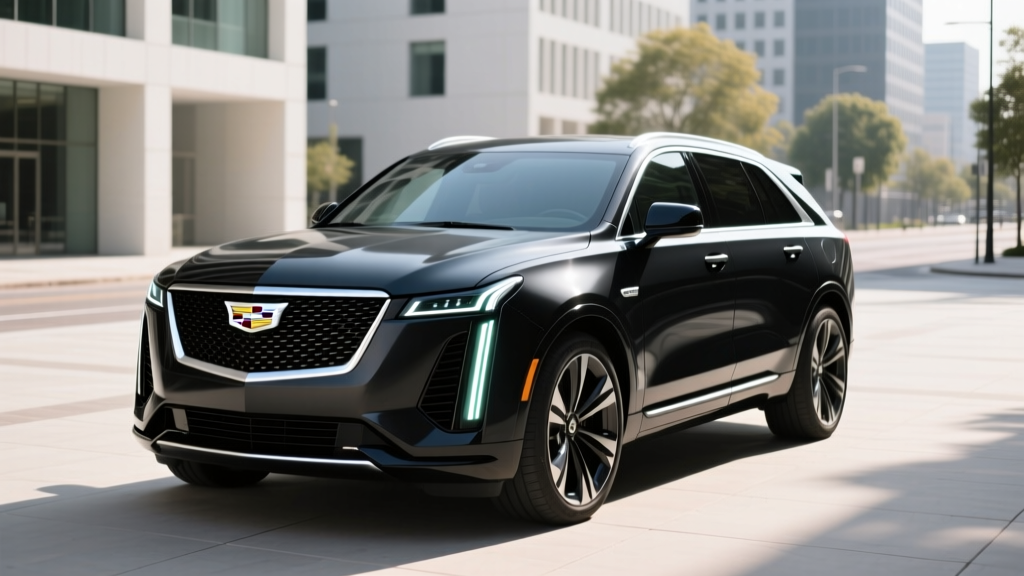
The 2026 Cadillac Escalade IQ — the new Escalade electric — starts at $129,990 MSRP and delivers an EPA-estimated 460 miles of range from a massive 200+ kWh Ultium battery pack. It produces up to 750 horsepower and can DC fast-charge at up to 350 kW (10–80% in roughly 25 minutes on a capable charger). It does not qualify for the $7,500 federal §30D tax credit due to its MSRP exceeding the $80,000 SUV cap. Real-world highway range drops to roughly 370–400 miles, and cold-weather driving can shave another 15–20%. This is a luxury flagship EV, not a value play — buyers should weigh it against the gas Escalade, the Rivian R1S, and the Mercedes EQS SUV based on total ownership cost, charging logistics, and daily driving needs.
2026 Cadillac Escalade IQ: Core Specifications
The Escalade IQ rides on GM's BT1 electric platform shared with the Chevrolet Silverado EV and GMC Sierra EV. Cadillac positions it as the halo EV of the brand, with a 55-inch hyperscreen, Super Cruise hands-free driving, and air suspension. Here are the numbers that matter:
| Specification | Escalade IQ Luxury | Escalade IQ Sport |
|---|---|---|
| Base MSRP | $129,990 | $130,690 |
| EPA Range | 460 miles | 450 miles |
| Battery (usable) | ~200 kWh (NMC) | ~200 kWh (NMC) |
| Horsepower | 680 hp (Velocity Max: 750 hp) | 680 hp (Velocity Max: 750 hp) |
| 0–60 mph | ~4.7 sec (Velocity Max: ~3.8 sec) | ~4.7 sec (Velocity Max: ~3.8 sec) |
| Peak DC Fast Charge | 350 kW | 350 kW |
| 10–80% DC Charge | ~25 minutes | ~25 minutes |
| Level 2 Charge Rate | 19.2 kW | 19.2 kW |
| MPGe (combined) | ~62 MPGe | ~60 MPGe |
| Towing Capacity | 8,000 lbs | 8,000 lbs |
| Battery/Powertrain Warranty | 8 years / 100,000 miles | 8 years / 100,000 miles |
Note: Velocity Max mode temporarily unlocks peak horsepower and torque for hard acceleration. Specs are preliminary for the 2026 model year; confirm with Cadillac's official Escalade IQ page before purchasing.
Real-World Range vs. EPA Sticker: What to Actually Expect
The 460-mile EPA figure is impressive on paper — it's one of the longest EPA-rated ranges of any production EV sold in the U.S. But the Escalade IQ is a 9,000+ pound luxury SUV pushing a brick-like frontal area. Real-world efficiency tells a more nuanced story.
EPA Sticker: 460 miles
Real-World Highway (70–80 mph, moderate weather): ~370–400 miles
Cold Weather (below 32°F, mixed driving): ~310–350 miles
City/Suburban (with regen braking): ~420–450 miles
Why the gap? The EPA test cycle includes substantial low-speed and city driving, where regenerative braking recaptures energy and aerodynamic drag is minimal. At sustained highway speeds, the Escalade IQ's mass and drag coefficient work against it. In cold weather, battery preconditioning and cabin heating draw additional energy, even with the heat pump Cadillac includes.
For most owners, 370+ miles of highway range is more than sufficient for daily use and road trips — the average American drives roughly 37 miles per day, according to the FHWA. But if you regularly tow or drive in sub-freezing climates, plan for 30–35% range reduction and route your trips around DC fast-charger availability.
Charging the Escalade IQ: Speeds, Connectors, and Home Setup
The Escalade IQ uses the NACS (Tesla-style) connector natively, giving it access to Tesla Supercharger V4 stalls (with adapters for legacy CCS networks where needed). Its 800-volt architecture enables peak charge rates of up to 350 kW.
| Charging Level | Power (kW) | Miles Added Per Hour | Notes |
|---|---|---|---|
| Level 1 (120V household) | ~1.4 kW | ~3–4 mi/hr | Emergency/trickle only; full charge takes days |
| Level 2 (240V, 48A) | 11.5 kW | ~28 mi/hr | Standard home charger; overnight full charge ~16 hrs |
| Level 2 (240V, 80A) | 19.2 kW | ~47 mi/hr | Requires 100A circuit; overnight full charge ~10 hrs |
| DC Fast (350 kW peak) | Up to 350 kW | ~700+ mi/hr (peak) | 10–80% in ~25 min; tapers significantly above 80% |
Home charging reality: With a 200+ kWh battery, even an 11.5 kW Level 2 charger needs roughly 16–17 hours for a 0–100% charge. Most owners will rarely drain the battery fully, so a typical overnight session (8–10 hours) adds roughly 230–290 miles — more than enough to top off after daily driving. However, if you plan to install a 19.2 kW charger to leverage the IQ's full Level 2 acceptance rate, you'll likely need a 200-amp electrical panel upgrade (costing $1,500–$3,500 depending on your home), plus the charger hardware ($600–$1,200) and electrician labor ($800–$2,000). Budget $3,000–$6,000 total for a full high-power home charging setup.
Charging curve reality: The 350 kW peak rate is not sustained. Like all EVs, the Escalade IQ's charge rate tapers as the battery fills. Expect roughly 300–350 kW from 10–40% SoC, dropping to ~150–200 kW by 60%, and below 50 kW past 80%. This is why the 10–80% metric (~25 min) is far more useful than peak kW claims. Plan road-trip stops around the 10–80% window to avoid wasting time at the taper end.
Escalade IQ vs. Gas Escalade: Cost and Ownership Comparison
The natural cross-shop is the internal-combustion Cadillac Escalade. Here's how the two stack up on the metrics that affect your wallet:
| Metric | 2026 Escalade IQ (Electric) | 2026 Escalade (Gas, 6.2L V8) |
|---|---|---|
| Starting MSRP | $129,990 | $83,895 (Premium Luxury) |
| Federal Tax Credit (§30D) | $0 (exceeds $80K SUV cap) | N/A |
| Fuel/Energy Cost per Mile | ~$0.05–$0.07 (home charging) | ~$0.18–$0.22 (premium gas, 16 MPG combined) |
| Annual Fuel/Energy (15,000 mi) | ~$750–$1,050 | ~$2,700–$3,300 |
| Annual Maintenance | ~$300–$500 | ~$800–$1,200 |
| 5-Year Fuel + Maintenance | ~$5,250–$7,750 | ~$17,500–$22,500 |
| Estimated Insurance (annual) | ~$3,200–$4,000 | ~$2,600–$3,200 |
| EPA Efficiency | ~62 MPGe | ~16 MPG combined |
The bottom line: The Escalade IQ saves roughly $2,000–$3,000 per year in fuel and maintenance compared to the gas Escalade. Over five years, that's $10,000–$15,000 in operational savings. However, the IQ's $46,000+ higher starting MSRP means you will not break even on purchase price alone within a typical ownership window. The IQ is a technology and luxury upgrade, not a cost-saving purchase versus its gas sibling.
Higher EV insurance premiums (typically 15–25% more than equivalent gas vehicles, per industry data) also narrow the savings gap. Get quotes from your insurer before committing.
Federal Tax Credit and Incentive Reality
The Escalade IQ does not qualify for the federal §30D clean vehicle credit. Under current IRS rules, SUVs must have an MSRP at or below $80,000 to be eligible. At nearly $130,000, the IQ exceeds that cap by a wide margin.
§30D Credit Requirements (2026):
- MSRP cap: $80,000 for SUVs, $55,000 for sedans — Escalade IQ fails this test
- Buyer income cap: $300K joint / $150K single — varies by filer
- Battery critical minerals and component sourcing thresholds —Escalade IQ battery sourcing is under GM's Ultium supply chain
- Point-of-sale transfer available for eligible vehicles (not applicable here)
Some states offer additional EV incentives that may not carry the same MSRP caps. Check your state's energy office or DMV for local rebate programs. Consult a tax professional for personalized eligibility guidance.
Decision Framework: Who Should Buy the New Escalade Electric?
Buy the Escalade IQ if:
- You want a flagship luxury EV with 400+ real-world miles of range and don't need the $7,500 tax credit
- You have reliable home Level 2 charging (garage or dedicated parking with 240V access)
- You value near-silent operation, instant torque, and Super Cruise hands-free highway driving
- Your daily driving is under 200 miles and you road-trip fewer than 10 times per year
- You want the latest Cadillac tech (55-inch screen, AKG 40-speaker audio, Executive Rear Seating)
Stick with the gas Escalade or consider alternatives if:
- The $46,000+ price premium over the gas Escalade strains your budget without offsetting tax credits
- You lack home charging access and rely on street parking or apartment living
- You regularly tow heavy loads over long distances (towing cuts EV range by 30–50%)
- You live in a region with sparse DC fast-charging infrastructure and frequently drive 400+ mile routes
- You prefer the Rivian R1S (starts ~$82,000, qualifies for tax credit in some trims, more off-road capable) or Mercedes EQS SUV (starts ~$105,000, slightly less range but more established luxury EV service network)
Common Misconceptions About the Escalade IQ
| Myth | Fact |
|---|---|
| "460 miles means I'll always get 460 miles." | Real-world highway driving yields ~370–400 miles. Cold weather reduces this further to ~310–350 miles. Your driving style, terrain, and climate control usage all affect the outcome. |
| "I'll save money versus the gas Escalade." | You'll save on fuel and maintenance (~$2,000–$3,000/year), but the IQ's $46,000+ price premium and no tax credit mean you won't break even on total cost of ownership within 5–7 years. |
| "It charges as fast as a gas car refuels." | A 10–80% DC fast charge takes ~25 minutes at a 350 kW station. That's 3–4x longer than pumping gas. Plan road trips accordingly. |
| "The battery will need expensive replacement soon." | GM's Ultium battery carries an 8-year/100,000-mile warranty covering capacity below 70%. NMC chemistry in a liquid-cooled pack with active thermal management typically degrades 8–12% over 100,000 miles based on industry data. |
| "Super Cruise means I don't have to pay attention." | Super Cruise is an SAE Level 2 driver-assistance system. You must remain attentive, and the driver-monitoring camera enforces this. It is not self-driving. |
SAE Automation Level: Cadillac Super Cruise is Level 2 — partial automation with hands-free operation on mapped highways, but the driver must remain engaged and ready to take over at any time. It is not Level 4 (driverless). See NHTSA's guidance on automated vehicles for details.
What First-Time EV Buyers Need to Know Before Ordering
If the Escalade IQ is your first electric vehicle, here are the practical realities no brochure will emphasize:
1. Home charging is non-negotiable for convenience. Public charging works for road trips, but daily life with an EV means plugging in at home every night. If you can't install a Level 2 charger (due to apartment living, HOA restrictions, or street parking), an EV this size becomes significantly less practical. Confirm your charging plan before ordering.
2. Your electrical panel may need upgrading. A 200+ kWh battery benefits from a high-amperage Level 2 charger. Installing a 19.2 kW (80A) charger requires a 100A dedicated circuit, which most older 100A or 150A home panels cannot support. A panel upgrade to 200A or 400A adds $1,500–$4,000 to your installation cost. Get a licensed electrician's assessment early.
3. Efficiency drops when towing. The IQ's 8,000-lb tow rating is legitimate, but expect range to drop by 30–50% when towing near capacity. A 460-mile EPA range becomes roughly 230–300 miles with a heavy trailer. Plan your tow-trip charging stops accordingly.
4. Tire costs are higher. The Escalade IQ's weight (likely 9,000+ lbs) and instant torque accelerate tire wear. Replacement tires for 24-inch wheels can cost $400–$600 each. Budget for tire replacement every 25,000–35,000 miles.
5. Software updates change the car. GM's Ultifi platform delivers over-the-air updates that can add features, adjust charging behavior, or change the UI. This is a benefit (free improvements) but also means the car you take delivery of may not be the car you have a year later.
Frequently Asked Questions
Does the new Escalade electric qualify for any tax credits?
No. The 2026 Cadillac Escalade IQ's MSRP of ~$130,000 exceeds the federal §30D cap of $80,000 for SUVs. Some state-level incentives may still apply — check your state's energy office for details.
How long does it take to charge the Escalade IQ at home?
On a standard 11.5 kW Level 2 home charger, a full 0–100% charge takes roughly 16–17 hours. Most owners won't fully deplete the battery, so a typical overnight session (8–10 hours) adds 230–290 miles of range. At 19.2 kW (with a 100A circuit), that same overnight session adds roughly 380–470 miles.
Can the Escalade IQ tow a boat or camper?
Yes, with an 8,000-lb maximum tow rating. However, towing significantly reduces range — expect a 30–50% reduction depending on trailer weight and aerodynamics. Plan for more frequent DC fast-charging stops when towing.
Is Super Cruise standard on the Escalade IQ?
Super Cruise with hands-free highway driving on compatible roads is expected to be standard or widely available across trims. It includes a 3-year connectivity subscription; after that, a monthly or annual fee applies. Confirm inclusion and subscription terms with your dealer.
How does the Escalade IQ compare to the Rivian R1S?
The Rivian R1S starts roughly $47,000 lower (~$82,000 for Dual-Motor), offers up to ~410 miles EPA range (Max Pack), and may qualify for the $7,500 federal credit in eligible trims. The R1S is more off-road capable and seats up to seven, but lacks the Escalade IQ's ultra-luxury interior, 55-inch hyperscreen, and 460-mile range. Choose the IQ for maximum luxury and range; choose the R1S for value, versatility, and tax-credit eligibility.
What happens if the battery degrades?
GM warrants the Ultium battery for 8 years or 100,000 miles against capacity loss below 70% of original. Real-world degradation for liquid-cooled NMC packs typically runs 8–12% over the first 100,000 miles, meaning you'd likely retain 88–92% capacity — well within warranty threshold. Out-of-warranty replacement cost for a pack this size is estimated at $25,000–$35,000+ based on current industry pricing, though costs are expected to decline over the vehicle's lifespan.