The Short Answer: Is a New Electric Mercedes Worth It in 2026?
If you're considering a new electric Mercedes, here's what matters most: the 2026 lineup spans from the compact EQB SUV (starting ~$54,000, 236 miles EPA) to the flagship EQS sedan (~$105,000, up to 390 miles EPA). Expect real-world highway range to drop 15–20% below EPA figures, and cold-weather driving to cut range by up to 30%. DC fast charging peaks at 200–240 kW depending on model, with 10–80% sessions taking 28–32 minutes. Federal tax credit eligibility under IRS §30D is limited — most Mercedes EVs exceed the $55,000 sedan or $80,000 SUV MSRP caps, though the EQB may qualify depending on trim and your income. Home Level 2 charging is nearly essential for ownership satisfaction; relying solely on public charging adds cost and friction.
The 2026 Electric Mercedes Lineup at a Glance
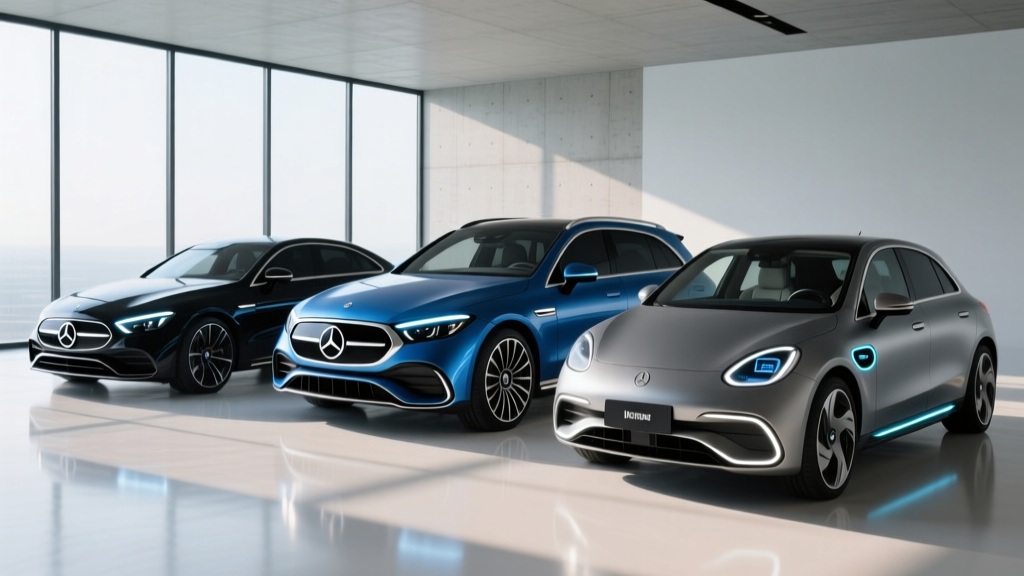
Mercedes-Benz has consolidated its EV strategy around the EQ brand, with models built on the dedicated EVA2 platform (EQS, EQE) and adapted MFA2 architecture (EQB). Here's how the core lineup stacks up on the numbers that matter most.
| Spec | 2026 EQB 300 4MATIC | 2026 EQE 350+ | 2026 EQE SUV 350 4MATIC | 2026 EQS 450+ |
|---|---|---|---|---|
| Base MSRP | $54,100 | $76,050 | $79,050 | $105,550 |
| Battery (usable, kWh) | 66.5 kWh (NMC) | 90.6 kWh (NMC) | 90.6 kWh (NMC) | 108.4 kWh (NMC) |
| EPA Range | 236 mi | 308 mi | 279 mi | 390 mi |
| Real-World Highway (~75 mph) | ~190–205 mi | ~250–270 mi | ~225–245 mi | ~310–340 mi |
| Efficiency (MPGe combined) | 91 MPGe | 96 MPGe | 87 MPGe | 97 MPGe |
| Peak DC Fast Charge | 100 kW | 170 kW | 170 kW | 200 kW |
| 10–80% DCFC Time | ~32 min | ~32 min | ~32 min | ~31 min |
| Level 2 Charge Rate | 11 kW | 9.6 kW | 9.6 kW | 11 kW |
| 0–60 mph | 7.7 sec | 6.2 sec | 6.4 sec | 5.9 sec |
| Horsepower | 225 hp | 288 hp | 288 hp | 355 hp |
| Battery Warranty | 8 yr / 100,000 mi | 8 yr / 100,000 mi | 8 yr / 100,000 mi | 8 yr / 100,000 mi |
Sources: fueleconomy.gov, Mercedes-Benz USA. Real-world highway estimates based on independent testing data and account for aero drag at sustained speeds. Cold-weather range (below 32°F) can reduce these figures by an additional 20–30%.
Real-World Range Reality Check
The EPA sticker is a laboratory estimate — your mileage will vary. On the EQS 450+, the 390-mile EPA figure assumes a mix of city and highway driving at moderate temperatures. On a 75-mph highway run in 40°F weather, expect closer to 270–300 miles before you'll want to stop. The EQB's smaller battery means highway road trips require more planning: plan charging stops every 170–190 miles in mixed conditions.
Charging Speed Deep Dive: What the Numbers Actually Mean
Mercedes uses the CCS1 connector across its US EV lineup (NACS adapter availability for Tesla Supercharger access has expanded through partnerships). But peak kW ratings don't tell the whole story — the charge curve matters far more for real road trips.
Here's the distinction that trips up many first-time EV buyers: kW (kilowatts) measures charging power — how fast energy flows into the battery at a given moment. kWh (kilowatt-hours) measures battery capacity — the total energy stored. A 200 kW peak rate on the EQS doesn't mean sustained 200 kW across the entire session.
| Charging Level | Power (kW) | Typical Miles Added/Hour | Best For |
|---|---|---|---|
| Level 1 (120V household) | 1.2–1.4 kW | 3–5 mi/hr | Emergency top-ups, PHEVs |
| Level 2 (240V home/public) | 7.2–11 kW | 22–40 mi/hr | Daily home charging |
| DC Fast Charge (CCS) | 100–200 kW | 150–400 mi/hr (peak) | Road trips, quick stops |
The charge curve taper is real. On the EQE and EQS, the battery management system sustains near-peak rates from roughly 10–50% SoC, then progressively tapers. From 80–100%, charging slows dramatically to protect cell longevity — adding that last 20% can take as long as the first 70%. For road trips, plan 10–80% stops and skip topping off unless you need the range to reach your destination.
Home charging prerequisite: A Level 2 home charger (240V, 40–48 amp circuit) is nearly mandatory for a satisfying ownership experience. Expect to pay $800–$1,500 for a quality Level 2 unit (ChargePoint Home Flex, Emporia Vue, or Wallbox Pulsar Plus) plus $500–$2,000 for professional electrician installation depending on your panel capacity and run length. If your home has a 100-amp electrical panel, a $1,500–$3,000 panel upgrade to 200 amps may be required — get a quote before purchasing the car.
Cost of Ownership: Electric Mercedes vs. Gas Equivalent
Let's compare the 2026 EQE 350+ against its closest gas sibling, the 2026 Mercedes E 350 sedan, over a 5-year / 60,000-mile ownership period.
| Cost Category | 2026 EQE 350+ (EV) | 2026 E 350 (Gas) | Notes |
|---|---|---|---|
| Base MSRP | $76,050 | $62,300 | EV premium: ~$13,750 |
| Federal Tax Credit (§30D) | $0 (exceeds $55K sedan cap) | $0 | See IRS §30D rules below |
| Fuel/Energy (5 yr, 60K mi) | $4,320 (home L2 @ $0.14/kWh) | $9,900 (gas @ $3.50/gal, 26 MPG) | EV saves ~$5,580 |
| Maintenance (5 yr) | $2,100 (cabin filter, fluid checks, tires) | $4,800 (oil, filters, brakes, spark plugs) | EV saves ~$2,700 |
| Insurance (5 yr avg) | $14,400 ($240/mo avg) | $11,400 ($190/mo avg) | EV costs ~$3,000 more |
| Depreciation (est. 5 yr) | $38,000 (~50%) | $28,000 (~45%) | EV loses ~$10,000 more |
| Total 5-Year Cost | $96,870 | $88,400 | Gas still cheaper overall |
Energy cost assumes 90% home Level 2 charging at national average residential rate of $0.14/kWh (per EIA data). Public DC fast charging at $0.35–$0.50/kWh would raise EV fuel costs substantially. Depreciation estimates reflect current luxury EV resale trends.
The Bottom Line on Cost
The EQE saves roughly $8,280 on fuel and maintenance over 5 years but gives back most of that through higher purchase price, insurance premiums, and steeper depreciation. The EQE becomes cost-competitive with the E 350 only if you qualify for a state-level rebate (California's CVRP, Colorado's state credit, etc.), drive high annual miles (15,000+ per year amplifies fuel savings), or secure below-average electricity rates. For low-mileage drivers, the gas E 350 remains the financial winner.
Federal Tax Credit: Does a New Electric Mercedes Qualify?
This is where many Mercedes EV buyers face disappointment. Under current IRS §30D rules, the federal clean vehicle credit has strict MSRP caps:
- Sedan cap: $55,000 MSRP (disqualifies EQE and EQS sedans)
- SUV/truck/van cap: $80,000 MSRP (EQB and EQE SUV may qualify at base trims)
- Buyer income limits: $150K single / $225K head of household / $300K joint (modified AGI)
- Battery sourcing: Critical minerals and battery components must meet phased percentage thresholds from US or FTA-partner countries
- Point-of-sale transfer: Eligible buyers can transfer the credit to the dealer for an upfront price reduction
- Assembly: Vehicle must undergo final assembly in North America
As of the 2026 model year, the EQB 300 4MATIC at $54,100 sits under the $80,000 SUV cap and is assembled in Kecskemét, Hungary — which means it likely does not meet the North American final assembly requirement. The EQE SUV (assembled in Bremen, Germany) faces the same issue. Always verify eligibility on the IRS clean vehicle credit page and the DOE's tax credit lookup tool before relying on the credit in your purchase math.
Key caveat: Tax credit rules are subject to legislative change. Consult a tax professional before making purchase decisions based on credit eligibility.
Common Misconceptions About Electric Mercedes Ownership
| Myth | Fact |
|---|---|
| "The battery will need replacing in 5 years and costs $30,000." | Mercedes warranties the battery for 8 years/100,000 miles with a 70% capacity retention threshold. NMC chemistry in the EVA2 platform shows ~5–8% degradation over 100,000 miles based on fleet data. Out-of-warranty replacement runs $15,000–$25,000 depending on model — expensive, but rarely needed within normal ownership. |
| "I can charge exclusively at public stations." | You can, but you'll pay 2–4x more per kWh than home charging, spend 30–45 minutes per session, and deal with occasional station downtime. Public-only ownership works for apartment dwellers but requires discipline and route planning. |
| "Electric Mercedes are self-driving." | Mercedes' Drive Pilot is an SAE Level 3 system available only in limited conditions (specific highways, under 40 mph, good weather, in Nevada and California). The standard Driver Assistance Package is SAE Level 2 — you must remain engaged with hands on or near the wheel at all times. |
| "All Mercedes EVs qualify for the $7,500 tax credit." | Most do not, due to MSRP caps and the North American assembly requirement. Check each model individually on fueleconomy.gov. |
| "Regenerative braking means I never need brake service." | Regen dramatically reduces brake wear, but brake fluid still needs flushing every 2 years, and calipers can seize from disuse. Budget $200–$400 for periodic brake inspections. |
Real-World Ownership: What First-Time Buyers Should Know
Before You Buy: Honest Limitations
- Cold-weather range loss is real. In sub-freezing temperatures, expect 20–30% range reduction. The EQS's heat pump mitigates this somewhat, but the EQB's smaller battery makes winter range anxiety a genuine concern in northern climates.
- Charging deserts exist. Rural areas in the Mountain West, Great Plains, and parts of the Southeast still have sparse DC fast-charging coverage. If you regularly drive these corridors, a gas or hybrid vehicle may be more practical.
- Insurance premiums run higher. Luxury EVs carry 15–25% higher insurance costs due to repair complexity, battery replacement risk, and higher parts costs. Get quotes before committing.
- Depreciation is steeper. Luxury EVs have depreciated faster than gas equivalents in recent years, driven by rapid tech advancement and Tesla price cuts pulling down the segment. Expect 45–55% value loss over 5 years.
Home charging access is the single biggest ownership variable. If you have a garage or driveway with 240V access, daily EV ownership is effortless — plug in at night, wake up to a full battery every morning, and visit a gas station never again. If you live in an apartment without charging infrastructure, ownership becomes a logistics challenge. Solutions include workplace charging, public Level 2 networks (ChargePoint, EVgo), and DC fast-charging hubs — but each adds time and cost.
Driving patterns matter. The EV value proposition improves dramatically with high annual mileage (15,000+ miles/year) because fuel savings compound. If you drive under 8,000 miles annually, the EV premium over a gas Mercedes is harder to justify financially.
Decision Framework: Which New Electric Mercedes Is Right for You?
Choose Based on Your Situation
Choose the EQB if: You want the most affordable entry into a Mercedes EV, need a compact SUV with optional third-row seating, primarily drive in-city or suburban routes under 40 miles daily, and have reliable home Level 2 charging. Accept that road trips require more frequent stops (every ~170–190 miles).
Choose the EQE 350+ if: You want a premium midsize sedan with strong real-world range (~250+ miles highway), value the smooth EVA2 platform ride quality, and primarily want a daily commuter with occasional road-trip capability. Best for drivers who don't need SUV cargo space.
Choose the EQE SUV if: You need SUV practicality with solid range, regularly carry passengers or cargo, and want Mercedes' latest MBUX Hyperscreen interior. Plan road trips around the ~230-mile real-world highway range.
Choose the EQS 450+ if: Budget is secondary, you want maximum range (310+ real-world miles), and you value flagship luxury with SAE Level 3 Drive Pilot availability. Best for high-mileage luxury sedan buyers who can absorb the depreciation curve.
Consider a plug-in hybrid (PHEV) instead if: You lack reliable home charging, regularly drive in charging-desert regions, need towing capability, or want to avoid range anxiety entirely. The Mercedes S 580e PHEV offers ~30 miles of electric-only range with a gas backup — a practical bridge for many buyers.
Frequently Asked Questions
Does Mercedes use NACS or CCS connectors?
As of the 2026 model year, Mercedes-Benz EVs sold in the US use the CCS1 connector for DC fast charging and the J1772 connector for Level 2 AC charging. Mercedes has announced plans to adopt the NACS (Tesla-style) connector on future models, and adapters for Tesla Supercharger access are available through Mercedes dealerships and third-party suppliers.
How long does a Mercedes EV battery last?
Mercedes warranties its EV batteries for 8 years or 100,000 miles, whichever comes first, guaranteeing a minimum of 70% capacity retention. Real-world fleet data from EVA2-platform vehicles shows approximately 5–8% degradation over the first 100,000 miles. With proper care (avoiding sustained 100% SoC, limiting DC fast-charging frequency, using preconditioning), NMC batteries can deliver 150,000–200,000+ miles before falling below the 70% threshold.
Is Mercedes Drive Pilot actually self-driving?
No. Drive Pilot is an SAE Level 3 conditional automation system — it can handle all driving tasks in very specific conditions (divided highways, under 40 mph, clear weather, mapped routes in Nevada and California). The driver can look away from the road when the system is active but must be ready to resume control within ~10 seconds when prompted. Outside these narrow conditions, the vehicle reverts to Level 2 driver assistance requiring full driver attention. This is not comparable to Level 4 driverless services like Waymo.
What does it cost to charge a Mercedes EV at home?
At the US average residential electricity rate of ~$0.14/kWh (per EIA), fully charging the EQS 450+ (108.4 kWh usable) costs approximately $15.18. The EQB (66.5 kWh) costs about $9.31 for a full charge. Over 12,000 miles of annual driving, expect to spend $500–$900 on home electricity depending on your model and local rates — compared to $1,500–$2,200 on gasoline for an equivalent gas Mercedes.
Can I tow with a Mercedes electric SUV?
Yes, with limits. The EQE SUV is rated for up to 1,650 pounds of towing capacity (braked trailer). The EQS SUV can tow up to 3,500 pounds when equipped with the optional tow package. Note that towing significantly reduces range — expect a 30–50% range reduction depending on trailer weight and aerodynamics. The EQB is not rated for towing in the US market.