The Bottom Line on the New Electric Ford Truck
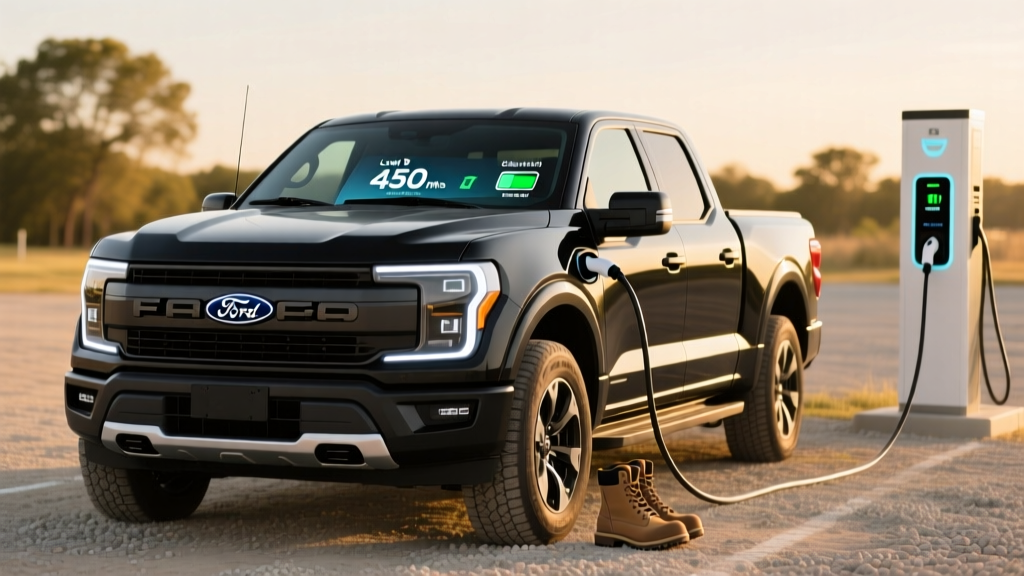
If you're researching a new electric Ford truck, you're looking at the F-150 Lightning — Ford's full-size electric pickup. Here's what matters most: The 2026 F-150 Lightning offers an EPA-estimated 230 to 320 miles of range depending on battery pack, starts around $54,995 (before incentives), and qualifies for a federal tax credit of up to $7,500 under current IRS §30D rules — though eligibility depends on your income, the truck's MSRP cap compliance, and battery sourcing. Real-world highway range drops to roughly 200–270 miles. Charging at home on a 48-amp Level 2 setup adds about 15–19 miles per hour. Compared to a gas F-150, the Lightning costs more upfront but saves $1,500–$2,500 annually on fuel and maintenance for average drivers. It's best for truck owners with home charging access, daily commutes under 200 miles, and occasional towing needs under 7,500 lbs.
2026 F-150 Lightning: The Specs That Actually Matter
Ford has iterated the Lightning since its 2022 launch, and the current lineup offers two battery options across multiple trims. Let's cut through the marketing and look at the numbers that affect your daily ownership.
| Spec | Standard Range | Extended Range |
|---|---|---|
| Battery Capacity (usable) | ~98 kWh (LFP/NMC) | ~131 kWh (NMC) |
| EPA Range | ~230 mi | ~320 mi |
| Real-World Highway Range | ~185–200 mi | ~255–275 mi |
| Peak DC Fast Charge | ~150 kW | ~150 kW |
| 10–80% DC Fast Charge | ~36 min | ~41 min |
| Level 2 Home Charge (48A) | ~15 mi/hr | ~19 mi/hr |
| Horsepower | 452 hp | 580 hp |
| 0–60 mph | ~5.0 sec | ~3.8 sec |
| Max Towing | 7,700 lbs | 10,000 lbs |
| Payload | ~2,000 lbs | ~1,800 lbs |
| MPGe (combined) | ~76 MPGe | ~70 MPGe |
Real-world range reality check: EPA estimates assume mixed driving at moderate temperatures. In our experience, highway driving at 70+ mph reduces range by 15–20%. Cold weather (below 30°F) can cut range by an additional 20–30%, meaning a Standard Range Lightning in a Minnesota winter might deliver only 135–155 miles on the highway. If your commute or worksite requires reliable 200+ mile daily range in all conditions, the Extended Range pack is essential.
🔋 Range vs. Reality: The Extended Range Lightning's 320-mile EPA sticker is achievable at city speeds in mild weather. Plan for 255–275 miles on highway road trips and 200–220 miles in freezing temperatures with the heater running. Towing a 5,000-lb trailer? Expect 150–180 miles before needing a charge.
Lightning vs. Gas F-150: The Real Cost Comparison
The most common question from truck shoppers: does the electric F-150 actually save money compared to the gas version? The answer depends on your driving volume, local electricity rates, and how long you keep the truck.
| Cost Factor | F-150 Lightning (Extended Range) | F-150 Gas (4x4, V6 EcoBoost) |
|---|---|---|
| Starting MSRP | ~$69,995 | ~$49,500 |
| Federal Tax Credit (§30D) | Up to $7,500* | $0 |
| Effective Starting Price | ~$62,495 | $49,500 |
| Fuel/Energy Cost per Mile | ~$0.04–0.06 (home charging) | ~$0.14–0.18 (gas at $3.40/gal, 20 MPG) |
| Annual Fuel Cost (15,000 mi) | ~$600–$900 | ~$2,100–$2,700 |
| Annual Maintenance | ~$200–$400 | ~$800–$1,200 |
| 5-Year Fuel + Maintenance | ~$4,000–$6,500 | ~$14,500–$19,500 |
| Estimated Insurance (annual avg) | ~$2,200–$2,800 | ~$1,700–$2,200 |
*Federal tax credit eligibility depends on buyer income caps ($150K single / $300K joint), MSRP caps ($80K for trucks), and battery critical-mineral sourcing requirements. Verify current rules at IRS.gov. Point-of-sale transfer is available, reducing your dealer price directly.
The breakeven math: After applying the $7,500 credit, the Extended Range Lightning costs roughly $13,000 more than a comparably equipped gas F-150 XLT. At annual fuel and maintenance savings of $2,000–$2,800, you break even in approximately 5–6 years. If you drive more than 15,000 miles annually or pay above-average gas prices, breakeven comes sooner. If you drive less than 10,000 miles a year, the gas F-150 may remain cheaper over a typical ownership period.
Charging the F-150 Lightning: Home, Public, and Jobsite Reality
Charging logistics determine whether an electric truck fits your life. Here's what F-150 Lightning ownership actually looks like.
Home Charging (Where 80%+ of Charging Happens)
Ford offers the Charge Station Pro (80-amp hardwired unit) for Extended Range models, enabling ~30 miles of range per hour of charging — enough to fully replenish the 131 kWh battery overnight. The Standard Range model includes a 48-amp mobile charger that adds ~15 miles per hour.
| Installation Component | Cost Range |
|---|---|
| Level 2 EVSE Equipment (48–80A) | $500–$1,300 |
| Electrician Labor (240V circuit run) | $800–$2,500 |
| Panel Upgrade (if needed, 100A→200A) | $1,500–$4,000 |
| Permit & Inspection | $100–$400 |
| Total Typical Installation | $1,400–$4,200 |
Panel upgrade gotcha: The 80-amp Charge Station Pro requires a 100-amp dedicated circuit. Many homes with 100-amp main panels cannot support this without a full panel upgrade. Before purchasing, have a licensed electrician perform a load calculation. Homes with existing 200-amp service typically handle a 48-amp charger without upgrades.
Public DC Fast Charging
The Lightning uses the NACS (Tesla) connector on current models, granting access to Tesla Superchargers via Ford's integrated charge port. At a 150 kW peak, the Lightning charges from 10–80% in roughly 36–41 minutes. However, the charge curve tapers significantly above 80% — going from 80–100% can take another 25+ minutes. For road trips, plan stops at 20–25% remaining and charge to 80% for the fastest turnaround.
For current charging network reliability data, check fueleconomy.gov and Ford's in-vehicle charging navigation, which preconditions the battery for faster charging when a DC station is set as your destination.
What First-Time EV Truck Buyers Need to Know
If this is your first electric vehicle — especially a truck — several ownership realities differ significantly from gas pickups.
| Common Misconception | The Reality |
|---|---|
| "Electric trucks can't tow." | The Lightning tows up to 10,000 lbs. But towing cuts range by 40–50%. Plan charging stops every 150 miles with a heavy trailer. |
| "The battery will need replacing in 5 years." | Ford warranties the battery for 8 years/100,000 miles with a minimum 70% capacity retention. Real-world degradation data shows most EV batteries retain 85–90% capacity at 100K miles. |
| "I'll save money immediately." | Upfront cost is higher even with tax credits. Savings accumulate over 4–6 years through lower fuel and maintenance costs. |
| "Charging takes too long." | Home charging happens while you sleep — zero time cost. Road-trip DC fast charging adds 35–45 minutes every 200–250 miles. |
| "Electric trucks are slow and weak." | The Extended Range Lightning hits 0–60 in 3.8 seconds with 580 hp and delivers instant torque. It outperforms most gas V8 F-150s off the line. |
Key First-Time Buyer Considerations
- Home charging is non-negotiable for most owners. Without a garage or driveway where you can install a 240V Level 2 charger, daily EV truck ownership becomes inconvenient and expensive (relying on public DC fast charging costs 2–3x more per mile).
- Insurance costs 20–35% more for the Lightning vs. a gas F-150. Get quotes before purchasing — premiums vary significantly by insurer and region.
- The frunk (front trunk) adds 14.1 cu ft of lockable, weatherproof storage — a practical advantage no gas truck offers. Useful for tools, groceries, or gear you want secured.
- Pro Power Onboard turns the Lightning into a mobile generator (up to 9.6 kW of exportable power). Contractors and jobsite users can run power tools, lights, and equipment directly from the truck — no separate generator needed.
- Tire costs are higher. The Lightning weighs over 6,000 lbs and delivers instant torque. Expect tire replacement every 25,000–35,000 miles with all-season tires, and budget $1,200–$1,800 for a set of four LT-rated tires.
Battery, Warranty, and Long-Term Durability
The F-150 Lightning's battery pack is its most expensive component, and longevity concerns are the top objection from prospective buyers.
Ford's battery warranty: 8 years or 100,000 miles (whichever comes first), guaranteeing the pack retains at least 70% of original capacity. If capacity drops below 70% within the warranty period, Ford will repair or replace the battery at no cost.
Replacement cost context: An out-of-warranty Lightning battery replacement currently runs $15,000–$25,000 depending on pack size and labor. However, industry data from NHTSA and fleet operators shows that modern NMC and LFP battery packs rarely require full replacement — most degradation plateaus after 3–4 years, and packs routinely exceed 150,000 miles before approaching the 70% threshold.
Maximizing battery life: For NMC packs (Extended Range), daily charging to 80–90% rather than 100% reduces long-term degradation. For LFP packs (some Standard Range trims), Ford recommends periodic 100% charges for cell balancing. Minimize repeated DC fast charging in extreme heat, and use the truck's scheduled charging feature to avoid sitting at 100% SoC for extended periods.
Decision Framework: Is the New Electric Ford Truck Right for You?
Choose the F-150 Lightning IF:
- You have home charging access (garage, driveway, or dedicated parking with 240V outlet capability)
- Your daily driving is under 200 miles (round-trip commute + errands)
- You value low running costs and plan to keep the truck 5+ years
- You want Pro Power Onboard for jobsite or tailgate use
- You live in an area with access to public fast charging for road trips (Tesla Supercharger network, Electrify America)
- You qualify for the federal §30D tax credit (income under caps, truck MSRP under $80K)
- You want instant torque, quiet operation, and the frunk for secure storage
Stick with a Gas or Hybrid F-150 IF:
- You cannot install home charging (apartment, street parking, HOA restrictions)
- You regularly drive more than 250 miles per day or tow heavy trailers long distances
- You operate in extreme cold climates with frequent sub-zero temperatures and no garage
- You plan to keep the truck under 3 years (insufficient time to recoup the upfront premium)
- Your work requires remote-area operation far from charging infrastructure (rural job sites, backcountry)
- You need maximum towing range — a gas F-150 can tow 500+ miles on a tank; the Lightning manages ~150 miles while towing heavy
Consider the F-150 PowerBoost Hybrid as a Middle Ground
If you're not ready for full electric, Ford's F-150 PowerBoost hybrid delivers ~24 MPG combined (vs. ~20 MPG for the standard EcoBoost), retains Pro Power Onboard (up to 7.2 kW), and eliminates range and charging concerns entirely. It costs roughly $5,000–$8,000 less than the Lightning before incentives, making it a practical bridge for buyers who want some electrification benefits without the charging lifestyle change.
Trim Pricing and Tax Credit Eligibility (2026)
| Trim | Approx. MSRP | Battery | §30D Credit Eligible? |
|---|---|---|---|
| Pro (Standard Range) | ~$54,995 | 98 kWh | Yes (up to $7,500)* |
| XLT (Standard Range) | ~$59,995 | 98 kWh | Yes (up to $7,500)* |
| Lariat (Extended Range) | ~$74,995 | 131 kWh | Yes (up to $7,500)* |
| Platinum (Extended Range) | ~$84,995 | 131 kWh | May exceed $80K MSRP cap** |
*Eligibility requires buyer AGI under $150K (single) / $225K (head of household) / $300K (joint), final assembly in North America, and battery critical-mineral/component sourcing thresholds that shift annually. Consult a tax professional and verify at IRS.gov.
**The §30D credit has an $80,000 MSRP cap for trucks and SUVs. Fully optioned Platinum trims may exceed this. Confirm the specific vehicle's MSRP on the window sticker before relying on the credit.
Frequently Asked Questions
How long does it take to charge the F-150 Lightning at home?
On a 48-amp Level 2 charger (240V), the Standard Range pack charges from empty to full in roughly 10–12 hours. The Extended Range pack on an 80-amp Charge Station Pro takes about 8–10 hours. Most owners plug in nightly and never start the day with less than 90% charge — similar to charging a phone.
Can the F-150 Lightning power my house during an outage?
Yes, with Ford's Home Integration System (an additional ~$3,895 installed), the Lightning can provide up to 9.6 kW of backup power via bi-directional charging. This can sustain essential circuits (refrigerator, lights, HVAC fan, outlets) for approximately 3 days on a full Extended Range battery. This is a genuine advantage over gas trucks, which cannot directly power home circuits without a separate transfer switch and inverter.
What happens to range when towing with the Lightning?
Expect a 40–50% range reduction when towing near maximum capacity. A 320-mile Extended Range Lightning might deliver 150–180 miles while towing a 7,000-lb trailer at highway speeds. For frequent heavy towing over long distances, a gas or diesel F-150 remains more practical due to faster refueling and longer range under load.
Is the Lightning good in snow and off-road?
The Lightning comes standard with AWD (dual motors) and offers respectable ground clearance (~8.9 inches). The instant torque and low center of gravity (battery pack under the floor) provide confident traction in snow and mud. However, the truck's 6,000+ lb curb weight means longer braking distances on ice — winter tires are strongly recommended in snowy climates.
How does the Lightning's bed and payload compare to the gas F-150?
The Lightning has a 5.5-foot bed (same as the gas SuperCrew short-bed configuration) with payload capacity of 1,800–2,000 lbs depending on trim. The 14.1-cu-ft frunk adds secure, weatherproof storage that the gas F-150 doesn't offer. Total cargo versatility is arguably better in the Lightning for most non-commercial users.