The Bottom Line on the Neuron EV Truck
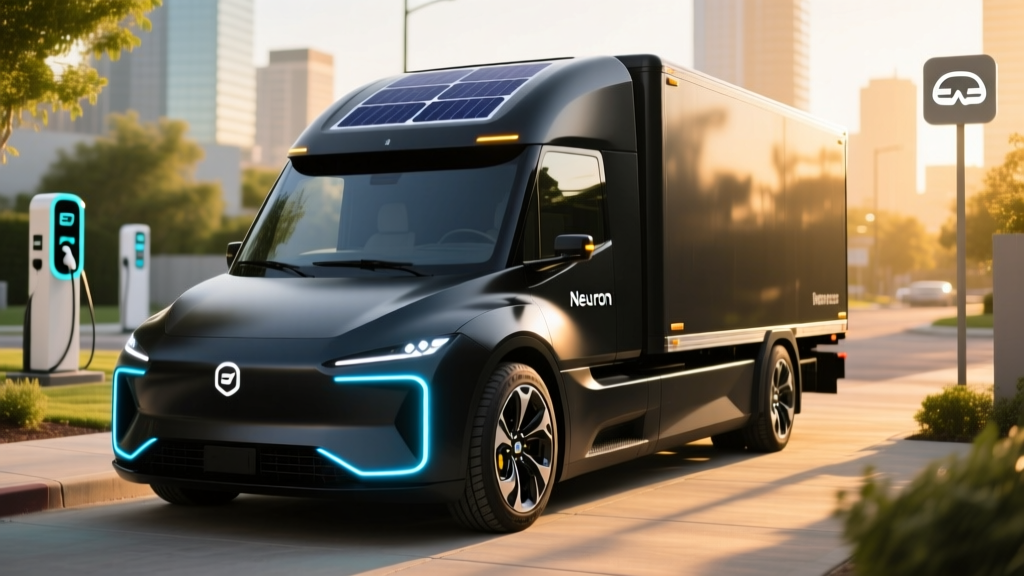
The Neuron EV truck (branded the T.ONE) remains an announced, pre-production vehicle as of early 2026. Neuron Electric has published preliminary specifications — including a targeted EPA range of up to 500 miles, a modular skateboard platform, and a starting price estimated around $50,000 — but the truck is not yet available for purchase or delivery. Final EPA certification, crash-test ratings, and confirmed pricing have not been released. If you're researching this truck, treat all figures below as manufacturer estimates until independent testing and production begin.
What Is the Neuron EV Truck?
Neuron Electric, a California-based startup, has been developing the T.ONE — a modular electric pickup designed around a single chassis that can accept swappable rear bodies (a flatbed, a cargo box, or an enclosed utility shell). The concept targets commercial fleets and owner-operators who want one vehicle that can reconfigure for different jobs throughout the week.
The company has showcased prototypes and secured some fleet pre-orders, but as of 2026, it has not entered volume production. That matters for buyers: pre-production vehicles frequently see spec changes between announcement and delivery, and startup timelines in the EV truck segment have a history of slipping (see: Tesla Cybertruck's multi-year delays, Lordstown Motors' collapse, and Fisker's bankruptcy).
If the T.ONE reaches production, it would compete in a space already occupied by the Ford F-150 Lightning, the Rivian R1T, the Chevrolet Silverado EV, and the Tesla Cybertruck — all of which are shipping to customers today with confirmed EPA ratings.
Announced Specs and What They Mean
Based on Neuron's public disclosures and concept-stage materials, here is what the company has targeted. Again, these are preliminary and subject to change:
| Specification | Estimated / Targeted | Notes |
|---|---|---|
| EPA Range | Up to 500 mi | Likely top-trim with largest battery pack; expect lower trims at ~300–350 mi |
| Battery Capacity | ~150–200 kWh (est.) | Chemistry not confirmed; NMC likely for energy density |
| Peak DC Fast Charge | ~250 kW (est.) | 10–80% in roughly 25–35 min if sustained curve holds |
| Level 2 Charge Rate | ~11.5–19.2 kW | Full charge overnight on 240V; time varies with pack size |
| 0–60 mph | ~4.5–6.0 sec (est.) | Dual-motor AWD expected on higher trims |
| Towing Capacity | ~10,000 lb (target) | Unconfirmed; towing drastically reduces range |
| Payload Capacity | ~2,000 lb (target) | Varies with rear module configuration |
| Starting MSRP | ~$50,000 (est.) | Final trim pricing TBD |
| Platform | Modular skateboard | Swappable rear bodies (flatbed, cargo, utility) |
Real-World Range Reality Check
A targeted 500-mile EPA figure would place the T.ONE at the top of the electric pickup segment if achieved. But context matters:
- Highway driving at 75 mph typically shaves 15–20% off EPA range for pickups due to their boxy aerodynamics. Expect ~400–425 miles highway on the largest pack.
- Cold weather (below 32°F) can reduce range by 20–30% depending on cabin heating demand and battery preconditioning capability.
- Towing a 7,000 lb trailer can halve range entirely. Every production EV truck tested to date shows 45–55% range loss under heavy tow.
On smaller battery trims targeting ~300–350 miles EPA, real-world highway range could drop to 250–280 miles — adequate for most commutes but a planning concern for road trips in charging-sparse corridors.
Neuron T.ONE vs. Production Electric Trucks: How Does It Compare?
Since the T.ONE isn't yet buyable, the practical question is whether to wait or choose a shipping competitor. Here's how Neuron's targets stack up against 2026 production models:
| Model | EPA Range | Battery (kWh) | Peak DC Charge | 10–80% | 0–60 | Base MSRP | Status |
|---|---|---|---|---|---|---|---|
| Neuron T.ONE (est.) | ~500 mi | ~150–200 | ~250 kW | ~25–35 min | ~4.5–6s | ~$50,000 | Announced |
| Ford F-150 Lightning | 230–320 mi | 98–131 | 150 kW | ~41 min | ~4.0s | $54,995 | Shipping |
| Rivian R1T (Dual) | 270–420 mi | 95–149 | 220 kW | ~30 min | ~4.5s | $69,900 | Shipping |
| Chevy Silverado EV | 280–440 mi | 100–200 | 350 kW | ~20 min | ~4.5s | $55,000 | Shipping |
| Tesla Cybertruck AWD | 318–340 mi | ~123 | 250 kW | ~28 min | ~4.1s | $79,990 | Shipping |
Key takeaway: Neuron's 500-mile target would be best-in-class, but it likely requires a 180+ kWh battery pack — which adds weight, cost, and charging time. The Chevy Silverado EV 4WT already approaches 440 miles EPA with a 200 kWh pack, so the benchmark is real but comes at a premium price and long charge sessions.
EV Truck vs. Gas Truck: The Cost Equation
If you're cross-shopping a Neuron T.ONE (or any EV truck) against a conventional gas pickup like the Ford F-150 XLT or Ram 1500, here's how ownership economics compare over five years and 75,000 miles:
| Cost Category | EV Truck (~$55,000 MSRP) | Gas Truck (~$48,000 MSRP) | Notes |
|---|---|---|---|
| Purchase Price (after incentives) | ~$47,500 | $48,000 | EV assumes $7,500 §30D credit if eligible; see IRS caveats below |
| Fuel / Electricity | ~$4,500 | ~$11,250 | EV: $0.13/kWh home avg, 2.5 kWh/mi. Gas: $3.50/gal, 20 MPG combined |
| Maintenance | ~$1,500 | ~$4,500 | EV: no oil changes, fewer brake replacements (regen). Gas: oil, filters, transmission fluid, more brake wear |
| Insurance (avg.) | ~$9,000 | ~$7,500 | EV insurance premiums run 15–25% higher on average |
| Estimated Depreciation | ~$22,000 | ~$18,000 | EV trucks have shown steeper depreciation; startup brands carry added risk |
| Total 5-Year Cost | ~$84,500 | ~$89,250 | EV saves ~$4,750 if credit applies; gap narrows without credit |
Critical caveats:
- The federal §30D tax credit of up to $7,500 requires the buyer to meet income caps ($150K single / $300K joint), the vehicle MSRP must not exceed $80,000 for trucks, and the battery must meet critical-mineral and component-sourcing thresholds that change annually. As of 2026, many EVs have lost partial or full credit eligibility due to updated sourcing rules. Confirm eligibility on IRS.gov before purchasing.
- The credit can now be transferred at point of sale, reducing your purchase price directly rather than waiting for a tax refund.
- Insurance costs vary significantly by state, driving record, and insurer. Get a quote before committing.
- Depreciation for startup EV brands is highly uncertain. If Neuron were to fold (as Lordstown and Fisker did), resale value could collapse.
Real-World Ownership Considerations for EV Truck Buyers
Home Charging: The Make-or-Break Factor
Every EV truck owner we've surveyed rates home Level 2 charging as the single most important ownership factor. For a large-battery truck (150+ kWh), a standard 120V Level 1 outlet adds only about 3–5 miles of range per hour — a full charge could take 40+ hours. You need a 240V Level 2 setup:
- 40-amp circuit / 9.6 kW charger: Adds ~28–35 miles per hour. Full charge in ~16–20 hours for a large pack. Installation: $800–$2,000 if your panel supports it.
- 60-amp circuit / 14.4 kW charger: Adds ~42–50 miles per hour. Full charge in ~12–15 hours. Installation: $1,200–$3,000. May require a panel upgrade ($1,500–$4,000) if you have a 100-amp service.
- 80-amp circuit / 19.2 kW charger: Fastest home option. Adds ~55–65 miles per hour. Requires 200-amp service minimum. Installation: $2,000–$5,000+.
If you live in an apartment, rely on street parking, or lack a garage, EV truck ownership becomes significantly harder. Public DC fast charging works, but daily reliance on it is expensive ($0.35–$0.55/kWh at many networks) and adds time to your routine.
Climate and Driving Patterns
EV trucks lose more range to cold weather and high-speed driving than sedans due to their mass and aerodynamic drag. If you live in the upper Midwest or Northeast and regularly drive highway distances in winter, plan for 30–40% range reduction on the worst days. A heat pump (if equipped) helps with cabin efficiency but doesn't fully offset battery chemistry limitations in sub-freezing temperatures.
Common Misconceptions About EV Trucks
| Myth | Fact |
|---|---|
| "EV trucks can't tow seriously." | They can tow — the F-150 Lightning is rated for 10,000 lb. But towing at capacity cuts range roughly in half. Plan charging stops accordingly. |
| "The battery will need replacing in a few years." | Modern EV batteries (NMC and LFP) are warrantied for 8 years / 100,000 miles minimum, with federally mandated capacity retention thresholds. Data from Tesla, Nissan, and Chevrolet shows most packs retain 85–90% capacity after 150,000 miles. |
| "EVs are worse for the environment because of battery mining." | Lifecycle analyses from Argonne National Lab and the ICCT show EVs produce fewer total emissions than gas vehicles over their lifetime in every US grid region, even accounting for battery manufacturing. The grid is also getting cleaner each year. |
| "500 miles of range means I'll never need to stop." | 500 miles is the EPA test-cycle estimate under mixed conditions. Sustained highway driving, cold weather, cargo load, and terrain all reduce this. Real-world range on a road trip may be 350–420 miles. |
| "I'll save $7,500 no matter what." | The §30D credit has income caps, MSRP caps, and battery-sourcing requirements that disqualify many buyers and some vehicles. Always verify current-year eligibility on IRS.gov. |
Decision Framework: Should You Wait for the Neuron T.ONE?
Choose to WAIT for the Neuron T.ONE if:
- You need a modular, reconfigurable truck bed for commercial use and no current production truck offers that flexibility.
- Your timeline allows a 1–3 year wait with no guarantee of delivery or final specs.
- You're comfortable with startup risk — the possibility of delays, spec changes, or the company not reaching production.
- You've secured a refundable reservation and aren't depending on this vehicle for near-term operations.
Choose a PRODUCTION electric truck NOW if:
- You need a truck within 6 months for work or personal use.
- You want EPA-certified range numbers, NHTSA crash-test ratings, and established dealer/service networks.
- You plan to use the §30D tax credit and want certainty about vehicle eligibility under current sourcing rules.
- Resale value and long-term serviceability matter to you — established OEMs carry far less risk than pre-revenue startups.
Choose a gas or hybrid truck if:
- You lack home charging access and your area has sparse public DC infrastructure.
- You regularly tow heavy loads over long distances (200+ miles) where EV charging stops add unacceptable downtime.
- Your daily driving involves remote job sites far from charging networks.
- You want the lowest upfront cost with no incentive dependency — a base F-150 XL or Silverado WT starts well under $40,000.
Frequently Asked Questions
Can I buy the Neuron EV truck right now?
No. As of 2026, the Neuron T.ONE is in pre-production. Neuron Electric has accepted fleet reservations and showcased prototypes, but no production vehicles have been delivered to retail customers. A firm production start date has not been publicly confirmed.
What will the Neuron T.ONE actually cost?
Neuron has suggested a starting price around $50,000, but final trim pricing has not been published. For context, competing electric trucks from Ford, Chevrolet, and Rivian range from roughly $55,000 to $100,000+ depending on battery size and trim. If the T.ONE undercuts $50,000 with a large battery, it would be extremely aggressive — and buyers should watch for whether that price holds through production.
Will the Neuron T.ONE qualify for the $7,500 federal EV tax credit?
It's too early to confirm. The §30D credit requires the vehicle to meet battery-sourcing and critical-mineral thresholds, the buyer to be under income caps ($150,000 single / $300,000 joint), and the truck's MSRP to stay under $80,000. Neuron has not disclosed battery cell sourcing. Check IRS.gov closer to the vehicle's on-sale date for a definitive answer.
How does the Neuron T.ONE's modular bed system work?
Neuron's concept uses a standardized mounting interface on the skateboard chassis that allows the rear body to be swapped — for example, from a flatbed for weekday job-site work to an enclosed cargo module for deliveries. The swap mechanism and how quickly it can be done (minutes vs. hours, DIY vs. dealer) have not been detailed in public documentation. This is a genuinely novel feature if executed well, but it adds mechanical complexity and potential service concerns.
What's the biggest risk in reserving a Neuron T.ONE?
The primary risk is that the company may not reach volume production. The EV startup graveyard includes Lordstown Motors, Bollinger Motors (pivoted away from its original truck), and Fisker — all of which accepted reservations and deposits before failing or restructuring. Ensure any reservation deposit is fully refundable, and don't make operational plans dependent on a delivery date from a pre-production company.
Should I get a home charger before my EV truck arrives?
Yes — ideally, install your Level 2 charger before the truck arrives. For a large-battery EV truck, we recommend a 60-amp circuit with a 48-amp (11.5 kW) or higher charger. Budget $1,200–$3,000 for a licensed electrician to install a NEMA 14-50 outlet or hardwired EVSE, plus the cost of the charger itself ($400–$700 for a quality unit). If your home has 100-amp electrical service, you may need a panel upgrade to 200 amps ($1,500–$4,000 additional). Consult a licensed electrician for a site assessment.